
Joseph E. Stiglitz
Author of Globalization and Its Discontents
About the Author
Joseph Stiglitz is professor of economics at Columbia University. Influential economist and Columbia University professor Joseph Eugene Stiglitz was born in Gary, Indiana on February 9, 1943. He received his undergraduate degree from Amherst College and his Ph.D. from MIT in 1967. He was awarded show more the John Bates Clark Medal in 1979 and the Nobel Memorial Prize in Economic Sciences in 2001. Stiglitz has taught at Yale University, Stanford University, Duke University, Oxford University, and Princeton University. In 2000, he founded the Initiative for Policy Dialogue. Stiglitz worked for the Clinton Administration beginning in 1993 and was the Chairman of the Council of Economic Advisers from 1995 to 1997. For the next three years he served as the World Bank's Senior Vice President and Chief Economist. Stiglitz chaired the Commission of Experts on Reforms of the International Monetary and Financial System in 2009. He has written several hundred articles and many books, including Making Globalization Work and Freefall: America, Free Markets, and the Sinking of the World Economy. His title The Price of Inequality made The New York Times Best Seller List for 2012. (Bowker Author Biography) show less
Series
Works by Joseph E. Stiglitz
The Price of Inequality: How Today's Divided Society Endangers Our Future (2012) 1,324 copies, 23 reviews
The Roaring Nineties: A New History of the World's Most Prosperous Decade (2003) 472 copies, 4 reviews
People, Power, and Profits: Progressive Capitalism for an Age of Discontent (2019) 268 copies, 5 reviews
Creating a Learning Society: A New Approach to Growth, Development, and Social Progress (2014) 93 copies, 1 review
Globalization and Its Discontents Revisited: Anti-Globalization in the Era of Trump (2017) 81 copies
Rewriting the Rules of the American Economy: An Agenda for Growth and Shared Prosperity (2015) 58 copies
The Stiglitz Report: Reforming the International Monetary and Financial Systems in the Wake of the Global Crisis (2010) 52 copies
Rewriting the Rules of the European Economy: An Agenda for Growth and Shared Prosperity (2020) 21 copies
The Washington Consensus Reconsidered: Towards a New Global Governance (2008) — Editor — 18 copies, 1 review
The Quest for Security: Protection Without Protectionism and the Challenge of Global Governance (2013) 14 copies
La globalizzazione e i suoi oppositori. Antiglobalizzazione nell'era di Trump. Nuova ediz. (2018) 5 copies
Towards a General Theory of Deep Downturns Presidential Address from the 17th World Congress of the International Economic Association in 2014 (2016) 4 copies
New Ideas about Old Age Security: Toward Sustainable Pension Systems in the 21st Century (2001) 3 copies
Richesse des nations et bien-être des individus : performances économiques et progrès social (2009) 2 copies
Les routes de la liberté 2 copies
Governance, Equity, and Global Markets: The Annual Bank Conference on Development Economics - Europe (2001) 2 copies
În cădere liberă 1 copy
Prețul inegalității 1 copy
Financial Systems for Eastern Europe's Emerging Democracies (OCCASIONAL PAPERS (INTERNATIONAL CENTER FOR ECONOMIC GROWTH)) (1993) 1 copy
Euro 1 copy
Marea divizare 1 copy
Associated Works
Tagged
Common Knowledge
- Canonical name
- Stiglitz, Joseph E.
- Legal name
- Stiglitz, Joseph Eugene
- Birthdate
- 1943-02-09
- Gender
- male
- Education
- Massachusetts Institute of Technology (Ph.D.|Economics|1967)
Amherst College (B.A.|1964) - Occupations
- economist
professor - Organizations
- Columbia University
Democratic Party
Council of Economic Advisers
World Bank - Awards and honors
- Nobel Prize (Economics, 2001)
John Bates Clark Medal (1979)
Légion d'Honneur (Officier, 2012)
Loeb Prize (2010)
Order of the Gran Cruz con Placa de Oro (2003)
Bruno Kreisky Prize (2003) (show all 18)
Rechtenwald Prize (1998)
National Academy of Sciences (Fellow, 1988)
American Academy of Arts and Sciences (Fellow, 1983)
Econometric Society (Fellow, 1973)
British Academy (Corresponding Fellow, 1993)
Royal Society (Foreign Member,2009)
American Philosophical Society (1997)
Sydney Peace Prize (2018)
UAP Scientific Prize (1989)
Pontifical Academy of Social Sciences (Member, 2003)
John Kenneth Galbraith Award (2004)
La Medalla de la Orden Nacional "Al Mérito" (2006) - Relationships
- Schiffrin, André (father-in-law)
Schiffrin, Anya (wife) - Nationality
- USA
- Birthplace
- Gary, Indiana, USA
- Places of residence
- New York, New York, USA
- Associated Place (for map)
- USA
Members
Reviews
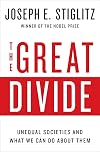
You don’t have to be a Nobel Prize winner in economics to figure out what has been happening to Americans, but you might have to be one to validate what half of America has already known on a personal level for some time: that there has been a steep economic trajectory downward for the majority of the country over the past several decades. It takes courage to point out the truth when there are those who are quick to declare us treasonous for suggesting that Americans are not still number show more one in education, healthcare, child poverty and a dozen other measures of the good life that has transformed the old middle class into the new working poor.
Joseph Stiglitz is quick to blame homeowners who over-extended themselves, aided by greedy commission-paid mortgage lenders and only gives a passing nod to the fact that you cannot pay even the lowest mortgage or rent payment without a job to give you income. It doesn’t take a PHD to figure out that it’s simple: No income, no outgo. One acquaintance of mine, half of a comfortably well-off couple, suggested to a mutual friend, a single mother who bemoaned her tough road, that perhaps the woman was living beyond her means. The single woman, an intelligent and educated woman holding down three jobs at the time and not able to secure a better job, replied that at the moment, food and shelter were beyond her means.
What Stiglitz hasn’t addressed, or perhaps hasn’t seen, is that the downturn that has lasted decades now, the unimpeded drop to the bottom, has changed our lives and our buying habits, perhaps forever. Employers know they don’t have to pay living wages to attract a flood of applicants for each position, so they don’t. Simple supply and demand. Even if the economy turned completely around tomorrow, many of us have become like the old people some of us knew as children, penny-pinching people that will not buy anything, will not consume in the way that kept the U.S. economy afloat in the past – we are simply out of the habit of buying anything. When we really need something, our first stop is now Walmart or the Dollar Store. One look at their earnings tells the story. Who do the auto manufacturers, hard goods and soft goods dealers think are going to be buying their offerings? Maybe there will be enough consumers to keep them going and maybe not, but this change in our personal spending habits will certainly have a long-term, decades perhaps, effect on our economy.
Joseph Stiglitz does address somewhat the issue of mortgage foreclosure and has it exactly right that lenders used their financial clout to seize property that people were not even behind in when it came to making payments. “So sue us!” the lenders laughed as they unleashed their own legal teams and started foreclosure procedures on millions of homeowners. The people who lost their homes are reluctant to make a thirty year commitment again, especially if the loss occurred later in their lives. Fewer homeowners mean more vacant homes or more likely, more landlords. Landlords don’t spend a lot of money on redecorating, home additions, or landscaping so those businesses will have a smaller share of the pie than they might have had. Without home ownership, citizens are less likely to feel that they have a stake in the country, they literally do not “take ownership” of their community. There are places now where home sellers know they cannot sell to anyone except the wealthy of the same state since populations are leaving those states as fast as they can, bound for what they hope will be better places with more job opportunities, lower taxes and smaller utility bills. Many people are leaving the country altogether. The numbers of expatriates are growing with millions currently living or retiring outside of the country. While the only jobs available for many in the last decade have been in the military, there are cutbacks there as well. With increasing numbers of disabled veterans and orphaned dependents, there will be more financial needs from the system. It sometimes seems that the only other jobs available to enterprising young people are selling illegal drugs and with some police departments both large and small losing the war on crime, it is looking more and more like opposing armies that are just about equally matched.
Stiglitz mentions that the laying off of teachers is bad for our future, but there has been no money to pay them living wages and education has been sacrificed to the detriment of an educated population. The founding fathers understood the importance of an informed citizenry and saw to it that we were one of the first, if not THE first civilized country to offer free education to all of its citizens. Looking back at the dark ages, we see that refuge has been sought in the educational centers of the world, notably Leiden, Paris, England’s Merchant Taylors School, and among the Puritans in our own country who made quality university education a priority. Our educated population has no jobs though. There are people with Masters and PHDs who are incredibly under-employed now and if you are over age 30, the situation is even worse, the idea being that young people will work for very little just to have a job and that older, more experienced people might ask for more reasonable wages. Job experience has been lost and so has a level of service, the commodity that has become the most scarce in the new economy.
The author correctly notes that human jobs have been rapidly replaced by machines and while we generally think of assembly line jobs where one person spends all day twisting and tightening a bolt, the truth is that other, “thinking”, jobs have been replaced. Decisions about who gets extended credit, including mortgages and insurance, as well as what we pay for the interest rates and premiums, are made almost completely by machine now, with credit scoring being the main determining factor. Our assigned number is decided by what credit we have, how long we have had it, and how recently we have used it, in addition to how well we pay our bills on time. The numbers go against the financially strapped, the young, and non-credit users. The highest credit scores are found among the elderly. Indeed, there has been more growth in the cash economy, the extent of which no one knows. Many companies and services now offer cash discounts and as customers, we don’t ask why although we have some ideas.
I was stunned that someone with such excellent credentials knew what I knew, came to the same conclusion that I had, and bothered to write about “average” people. I still don’t understand why no one is doing anything about it since it seems to me that it will eventually destroy the entire country. Is it simply that everyone is so busy trying to get their share of the goods that they don’t care about anyone or anything else, including their own legacy and descendants? Do they believe the country can continue on this track forever? Do they feel helpless about what to do to change it? Or do those who have financial security just not think it is that much of a problem? Joseph Stiglitz has some ideas that he puts forth about the direction to remedy our woes but even if we had more concrete and specific ideas, there is not the will to change anything. Our political leaders pay lip service to what we want to hear during the upcoming election cycle but do not offer much more. The 99% tried the Occupy Wall Street movement to bring problems to the attention of our leaders but maybe it is still too early for wide-spread economic revolution. Maybe we will go on this way for another 500 years with a completely underground economy like many banana republics but cycles do appear to be getting shorter so I don’t believe it will be that long. In any case, given the short span of each human life, only a century more or less, it seems we will have to make our own way through the divide, through the great valley.
Don’t let the title or Joseph Stiglitz' excellent credentials put you off: This is a highly readable book with some very short chapters that anyone can understand and appreciate if they know how to write a check. If it helps, think of it as a convenient collection of issues relevant to everyday lives of any adult in the 21st century. Read the book and map out your own family’s survival plan. Joseph Stiglitz has lifted a light illuminating the shadows, speaking about what has been hidden behind the privacy of our front doors. show less
Joseph Stiglitz is quick to blame homeowners who over-extended themselves, aided by greedy commission-paid mortgage lenders and only gives a passing nod to the fact that you cannot pay even the lowest mortgage or rent payment without a job to give you income. It doesn’t take a PHD to figure out that it’s simple: No income, no outgo. One acquaintance of mine, half of a comfortably well-off couple, suggested to a mutual friend, a single mother who bemoaned her tough road, that perhaps the woman was living beyond her means. The single woman, an intelligent and educated woman holding down three jobs at the time and not able to secure a better job, replied that at the moment, food and shelter were beyond her means.
What Stiglitz hasn’t addressed, or perhaps hasn’t seen, is that the downturn that has lasted decades now, the unimpeded drop to the bottom, has changed our lives and our buying habits, perhaps forever. Employers know they don’t have to pay living wages to attract a flood of applicants for each position, so they don’t. Simple supply and demand. Even if the economy turned completely around tomorrow, many of us have become like the old people some of us knew as children, penny-pinching people that will not buy anything, will not consume in the way that kept the U.S. economy afloat in the past – we are simply out of the habit of buying anything. When we really need something, our first stop is now Walmart or the Dollar Store. One look at their earnings tells the story. Who do the auto manufacturers, hard goods and soft goods dealers think are going to be buying their offerings? Maybe there will be enough consumers to keep them going and maybe not, but this change in our personal spending habits will certainly have a long-term, decades perhaps, effect on our economy.
Joseph Stiglitz does address somewhat the issue of mortgage foreclosure and has it exactly right that lenders used their financial clout to seize property that people were not even behind in when it came to making payments. “So sue us!” the lenders laughed as they unleashed their own legal teams and started foreclosure procedures on millions of homeowners. The people who lost their homes are reluctant to make a thirty year commitment again, especially if the loss occurred later in their lives. Fewer homeowners mean more vacant homes or more likely, more landlords. Landlords don’t spend a lot of money on redecorating, home additions, or landscaping so those businesses will have a smaller share of the pie than they might have had. Without home ownership, citizens are less likely to feel that they have a stake in the country, they literally do not “take ownership” of their community. There are places now where home sellers know they cannot sell to anyone except the wealthy of the same state since populations are leaving those states as fast as they can, bound for what they hope will be better places with more job opportunities, lower taxes and smaller utility bills. Many people are leaving the country altogether. The numbers of expatriates are growing with millions currently living or retiring outside of the country. While the only jobs available for many in the last decade have been in the military, there are cutbacks there as well. With increasing numbers of disabled veterans and orphaned dependents, there will be more financial needs from the system. It sometimes seems that the only other jobs available to enterprising young people are selling illegal drugs and with some police departments both large and small losing the war on crime, it is looking more and more like opposing armies that are just about equally matched.
Stiglitz mentions that the laying off of teachers is bad for our future, but there has been no money to pay them living wages and education has been sacrificed to the detriment of an educated population. The founding fathers understood the importance of an informed citizenry and saw to it that we were one of the first, if not THE first civilized country to offer free education to all of its citizens. Looking back at the dark ages, we see that refuge has been sought in the educational centers of the world, notably Leiden, Paris, England’s Merchant Taylors School, and among the Puritans in our own country who made quality university education a priority. Our educated population has no jobs though. There are people with Masters and PHDs who are incredibly under-employed now and if you are over age 30, the situation is even worse, the idea being that young people will work for very little just to have a job and that older, more experienced people might ask for more reasonable wages. Job experience has been lost and so has a level of service, the commodity that has become the most scarce in the new economy.
The author correctly notes that human jobs have been rapidly replaced by machines and while we generally think of assembly line jobs where one person spends all day twisting and tightening a bolt, the truth is that other, “thinking”, jobs have been replaced. Decisions about who gets extended credit, including mortgages and insurance, as well as what we pay for the interest rates and premiums, are made almost completely by machine now, with credit scoring being the main determining factor. Our assigned number is decided by what credit we have, how long we have had it, and how recently we have used it, in addition to how well we pay our bills on time. The numbers go against the financially strapped, the young, and non-credit users. The highest credit scores are found among the elderly. Indeed, there has been more growth in the cash economy, the extent of which no one knows. Many companies and services now offer cash discounts and as customers, we don’t ask why although we have some ideas.
I was stunned that someone with such excellent credentials knew what I knew, came to the same conclusion that I had, and bothered to write about “average” people. I still don’t understand why no one is doing anything about it since it seems to me that it will eventually destroy the entire country. Is it simply that everyone is so busy trying to get their share of the goods that they don’t care about anyone or anything else, including their own legacy and descendants? Do they believe the country can continue on this track forever? Do they feel helpless about what to do to change it? Or do those who have financial security just not think it is that much of a problem? Joseph Stiglitz has some ideas that he puts forth about the direction to remedy our woes but even if we had more concrete and specific ideas, there is not the will to change anything. Our political leaders pay lip service to what we want to hear during the upcoming election cycle but do not offer much more. The 99% tried the Occupy Wall Street movement to bring problems to the attention of our leaders but maybe it is still too early for wide-spread economic revolution. Maybe we will go on this way for another 500 years with a completely underground economy like many banana republics but cycles do appear to be getting shorter so I don’t believe it will be that long. In any case, given the short span of each human life, only a century more or less, it seems we will have to make our own way through the divide, through the great valley.
Don’t let the title or Joseph Stiglitz' excellent credentials put you off: This is a highly readable book with some very short chapters that anyone can understand and appreciate if they know how to write a check. If it helps, think of it as a convenient collection of issues relevant to everyday lives of any adult in the 21st century. Read the book and map out your own family’s survival plan. Joseph Stiglitz has lifted a light illuminating the shadows, speaking about what has been hidden behind the privacy of our front doors. show less
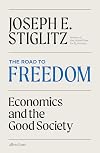
Economists are known for making equivocal statements, hedging their bets behind catch-all clauses like "ceteris paribus" (all other things equal), or imaginary scenarios like the Pareto principle and the hypothetical possibility of compensating losers. Stiglitz in his, his most recent book, eschews such cowardice, and strides forth to make strong statements on the failures of the neo-classical free-market model of global optimum. He lays bare the self-serving nature of free-market show more fundamentalists, whose promises of raising all the boats if the wealthy were left alone to create more and more wealth. The outcome has been, as is now accepted by many, that the rich have only managed to transfer more and more of income and wealth into their coffers, often with sharp practices that verge on fraud. Stiglitz comes out strongly in favour of progressive taxation, a significant role for government in providing social welfare and regulation of social media, and states that if the economy is made more equitable, it will benefit not only the less well off, but also, indirectly, the rich, as there will be more social cohesion and stability. Stiglitz is a strong voice for a somewhat updated version of social democracy, and countries that are now transitioning into the middle-income levels would do well to learn from him. show less
Globalization and Its Discontents Revisited: Anti-Globalization in the Era of Trump by Joseph E. Stiglitz
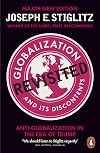
Stiglitz's books never fail to enlighten and amaze the reader with his engaging, transparent, non-condescending approach and jargon-free style. This book is the 2017 update of the first edition, which was published in 2002 in the aftermath of the financial turmoil of the late 1990s. Obviously this revised edition now is informed by the crisis of 2008-9.
The author, a distinguished Nobel award-winning academic economist who has also served in important and influential positions in the US show more government as well as the World Bank (though he seems to have outstayed his welcome here), repeatedly points out the flaws in the 'market fundamentalism' of the IMF-World Bank establishments, and the damage that these institutions wreaked upon many countries in the developing world, in the transitioning economies of the erstwhile Soviet Bloc (including, and especially, the Russian Federation). He points out that only those few countries that resisted the pressures of the IMF-WB combine to open up their economies completely to (among other impositions) short-term capital flights, were able to avoid serious damage: such as China, India to some extent, Malaysia, Poland. Countries like Thailand, which faithfully obeyed the diktats of the 'Washington Consensus', suffered crippling economic contractions, social unrest, and long-term depression of their growth prospects.
At every turn, the spectre of Donald Trump and his America-centric tariff wars looms in the book's narrative, making it all the more relevant and timely today on the eve of Trump's taking over the American government for the second time at the start of 2025. show less
The author, a distinguished Nobel award-winning academic economist who has also served in important and influential positions in the US show more government as well as the World Bank (though he seems to have outstayed his welcome here), repeatedly points out the flaws in the 'market fundamentalism' of the IMF-World Bank establishments, and the damage that these institutions wreaked upon many countries in the developing world, in the transitioning economies of the erstwhile Soviet Bloc (including, and especially, the Russian Federation). He points out that only those few countries that resisted the pressures of the IMF-WB combine to open up their economies completely to (among other impositions) short-term capital flights, were able to avoid serious damage: such as China, India to some extent, Malaysia, Poland. Countries like Thailand, which faithfully obeyed the diktats of the 'Washington Consensus', suffered crippling economic contractions, social unrest, and long-term depression of their growth prospects.
At every turn, the spectre of Donald Trump and his America-centric tariff wars looms in the book's narrative, making it all the more relevant and timely today on the eve of Trump's taking over the American government for the second time at the start of 2025. show less
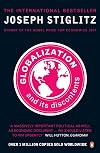
There's a strange paradox when it comes to the functioning of the international economic institutions born out Bretton Woods. Collective actions paid for by the taxpayers, created to prevent the potential negative effects of an unregulated 'free' market, they became indeed, over the past few decades, powerful organisations to the point of being antidemocratic, and dogmatically motivated by the free market ideology they were supposed to defend us against in the first place! Here's a paradox show more which, sadly, has had catastrophic consequences upon how globalisation has been working so far, as Joseph Stiglitz demonstrates in here.
Nobel Prize winner for Economics (2001), ex-adviser to Bill Clinton, and ex-vice-president of the World Bank, the man has a lot to say, and he surely doesn't shy away from exposing disturbing facts. Highly critical especially of the IMF, here's not one of your usual alter-globalization pamphlet. It is, on the contrary, a fascinating look from within, a series of relevant analyses allowing the reader to rethink capitalism, pondering how to get back to its roots far from the selfish and unbridled greed practiced these days.
The 'Invisible Hand' which was professed by Adam Smith is indeed not some sort of mumbo-jumbo. It's a powerful and relevant mechanism, yet one that can only work under very strict societal conditions (e.g. the availability of infrastructures guaranteeing access to private property...). The problem is that, such necessary conditions have been c0mplety overlooked by the ideologues of 'laisser-faire' capitalism, the so-called 'experts' ruling over the institutions named above, and those critical thinking is about as narrow minded as the Washington Consensus. Joseph Stiglitz shows himself here to be merciless indeed: to impose economics measures upon whole countries without even bothering to take into account the particularisms of such societies in the first place is more than nonsensical and antidemocratic, it can only have terrible consequences.
The multiplying examples he provides (from the ruined education of entire generations in some African countries to the agrarian reforms in South America) are telling enough. They're also dressing a damning picture of the IMF.
The IMF, in fact, didn't only betray the Keynesian ideal it originated from; it completely failed in one of its core mission -reduce poverty. Worse, reading the pages dedicated to Russia (who followed such directives to the letter) as opposed to what happened in Asia (where, on the contrary, political leaders decided to be more critical and distant) is also highly instructive. It shows how the dogmatism of free market ideologues has done nothing but worsen already existing crises.
Here's a enlightening book. Sure, it's a harsh criticism of a whole ideology; but, being put forth by an insider, it's certainly more than welcome, especially considering that the author, also, offers liberal alternatives which remain a glimpse of hope for a different globalisation. Maybe (maybe) we're not all doomed, then? For those interested in world economics, it's a must-read. show less
Nobel Prize winner for Economics (2001), ex-adviser to Bill Clinton, and ex-vice-president of the World Bank, the man has a lot to say, and he surely doesn't shy away from exposing disturbing facts. Highly critical especially of the IMF, here's not one of your usual alter-globalization pamphlet. It is, on the contrary, a fascinating look from within, a series of relevant analyses allowing the reader to rethink capitalism, pondering how to get back to its roots far from the selfish and unbridled greed practiced these days.
The 'Invisible Hand' which was professed by Adam Smith is indeed not some sort of mumbo-jumbo. It's a powerful and relevant mechanism, yet one that can only work under very strict societal conditions (e.g. the availability of infrastructures guaranteeing access to private property...). The problem is that, such necessary conditions have been c0mplety overlooked by the ideologues of 'laisser-faire' capitalism, the so-called 'experts' ruling over the institutions named above, and those critical thinking is about as narrow minded as the Washington Consensus. Joseph Stiglitz shows himself here to be merciless indeed: to impose economics measures upon whole countries without even bothering to take into account the particularisms of such societies in the first place is more than nonsensical and antidemocratic, it can only have terrible consequences.
The multiplying examples he provides (from the ruined education of entire generations in some African countries to the agrarian reforms in South America) are telling enough. They're also dressing a damning picture of the IMF.
The IMF, in fact, didn't only betray the Keynesian ideal it originated from; it completely failed in one of its core mission -reduce poverty. Worse, reading the pages dedicated to Russia (who followed such directives to the letter) as opposed to what happened in Asia (where, on the contrary, political leaders decided to be more critical and distant) is also highly instructive. It shows how the dogmatism of free market ideologues has done nothing but worsen already existing crises.
Here's a enlightening book. Sure, it's a harsh criticism of a whole ideology; but, being put forth by an insider, it's certainly more than welcome, especially considering that the author, also, offers liberal alternatives which remain a glimpse of hope for a different globalisation. Maybe (maybe) we're not all doomed, then? For those interested in world economics, it's a must-read. show less
Lists
Awards


You May Also Like


Associated Authors
Statistics
- Works
- 108
- Also by
- 4
- Members
- 8,579
- Popularity
- #2,804
- Rating
- 3.7
- Reviews
- 125
- ISBNs
- 508
- Languages
- 23
- Favorited
- 7


