
Amartya Sen
Author of Development as Freedom
About the Author
Amartya Sen, winner of the 1998 Nobel Prize in Economics, is Lamont University Professor at Harvard University. His many books include Rationality and Freedom (Harvard).
Image credit: Amartya Sen, pictured at the Edinburgh International Book Festival, on 29 août 2010
Series
Works by Amartya Sen
The Argumentative Indian: Writings on Indian History, Culture and Identity (2005) — Author — 1,271 copies, 25 reviews
Bienestar, justicia y mercado/ Wellbeing, Justice and Markets and Freedoms (Pensamiento Contemporaneo/ Contemporary Thought) (Spanish Edition) (1997) 12 copies
Nuevo examen de la desigualdad / New test of inequality (El Libro Universitario. Ensayo) (Spanish Edition) (1995) 7 copies
Civil Paths to Peace: Report of the Commonwealth Commission on Respect and Understanding (2007) 2 copies
Mérito e Justiça 2 copies
Özgürlükle Kalkınma 1 copy
Tagore and his India 1 copy
Ekonomija blaginje 1 copy
Human rights and Asian values (Morgenthau memorial lecture on ethics & foreign policy) (1997) 1 copy
From Campus to Campus 1 copy
Poverty and inequality 1 copy
Il tenore di vita 1 copy
IDENTITETI DHE DHUNA 1 copy
Aarthik Vishamtayen 1 copy
L'altra India 1 copy
Em Casa no Mundo - Memórias 1 copy
Why Tagore still Matters 1 copy
Em Casa no Mundo - eBook 1 copy
Associated Works
World, Mind, and Ethics: Essays on the Ethical Philosophy of Bernard Williams (1995) — Contributor — 19 copies
Ethics of Consumption: The Good Life, Justice, and Global Stewardship (Philosophy and the Global Context) (1998) — Contributor — 17 copies
Thailand's new politics : King Prajadhipok's Institute yearbook 2001 (2002) — Contributor — 3 copies
Arvo 1 copy
Tagged
Common Knowledge
- Other names
- অমর্ত্য সেন
Sen, Amartya Kumar - Birthdate
- 1933-11-03
- Gender
- male
- Education
- University of Cambridge (Trinity College, PhD, economics)
University of Cambridge (Trinity College, BA)
Presidency College, Calcutta (BA) - Occupations
- economist
university professor - Organizations
- Harvard University
Trinity College, Cambridge - Awards and honors
- Nobel Prize (1998 ∙ Economics)
Master, Trinity College, University of Cambridge (1998 ∙ 2004)
Order of the Companions of Honour (2000)
National Humanities Medal (2011)
Leontief Prize for Advancing the Frontiers of Economic Thought (2000)
Global Economy Prize (2007) (show all 11)
Great Cross of the National Order of Scientific Merit
Johan Skytte Prize in Political Science (2017)
Bodley Medal (2019)
Friedenspreis des Deutschen Buchhandels (2020)
Charleston-EFG John Maynard Keynes Prize (2015) - Relationships
- Dobb, Maurice (teacher)
Sen, K. M. (grandfather)
Dev Sen, Antara (daughter)
Sen, Indrani (daughter)
Rothschild, Emma (spouse)
Sen, Nabaneeta Dev (spouse) - Nationality
- India
- Birthplace
- Santiniketan, West Bengal
- Places of residence
- Santiniketan, West Bengal
Calcutta, West Bengal
Cambridge, England, UK
Cambridge, Massachusetts, USA - Associated Place (for map)
- West Bengal
Members
Reviews
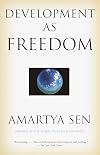
這是一本能夠改變觀念的書,而非僅僅傳達知識的書,由印度學者Amartya Sen發表的Development as Freedom,認為讓人民享有基本的自由,是經濟發展的要素;更進一步衍申,經濟發展本身並非我們努力的目標,而是為了自由、人權等普世價值。 show more 亞理斯多德曾說道:「財富並非我們追求的善,它僅止於有用、且是為了別的緣故而已」。經濟、發展、財富本身並非目的,它們的用途在於讓我們達到實質的自由,包括平等、人權、弱者得到照顧,讓每個人都有能力去作他認為有價值的事情,不受壓迫與剝削等等。Amartya Sen透過實證與人文精神,精闢地闡述自由的重要性。 這本書改變我看事情的視野,也深化我去看問題的本質,不會讓101大樓或火箭昇空去誤導我們的觀念,因為我們該評價的不是財富,而是分享、慈悲、為他人著想。(中譯本由商周出版) show less
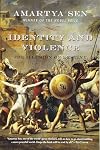
This book along with Appiah's Cosmopolitanism heavily shaped my opinions regarding identity. Sen's argument basically rests on two pillars. 1) Human beings do not have a singular identity but overlapping, contrasting and plural identities. 2) Identity is not discovered, immutable natural fact, but the choice of people. To the first point, Sen points to the conceptional errors of categorizing people in one box (he has a lot to say about Huntington's Clash of the Civilizations). He argues that show more these boxes almost always reduce the diversity found within cultures and do not adequately account for the historical ebb and flow of cultures mingling and adapting to each other. Singular identity classifications are inadequate in describing people. More importantly this singular identity thesis lends itself to sectarian violence. Intriguers take emphasize one identity in order to foment violence against other groups, who lose their shared identities. Sen argues that both intriguers and good intentioned scholars fall into this trap and perpetuate this conception and dangerous idea. He applies this to post colonial anti-west rhetoric, Islamic fundamentalism, and well intentioned government programs seeking to "grow" federated communities. Secondly, Sen argues that identity is choice, we may be constrained by factors beyond our control, but ultimately we choose what identity to partake in (that of culture, profession, religion..) and what weight to put on each identity. He argues that we should have the freedom to choose our identities rather than be forced to allow anyone's choice be stifled in name of tradition or cultural "diversity". With any luck, Sen's ideas will be influential and change our ways of seeing identity. Definitely theoretical, but hints at the world we can become. show less

The overarching ideas in this book are solid. Sen argues that individual freedom is both the means and the end of economic development, and that development shouldn’t simply be measured by Gross National Product or absolute wealth levels. His economic ideas are an unexpected synthesis of Adam Smith and Karl Marx (amongst others) that result in what I’d call gentle capitalism. I appreciate both the evidence he supplies and his careful analyses of opposing viewpoints.
Unfortunately, like show more his biggest influences, Sen has an unrealistically rosy view of human nature. We humans may not be inherently nasty or selfish, but neither are we perfectly rational beings who always know what is best for ourselves and our neighbors. There is certainly plenty of room for improvement in the world, and I’m confident that the world is improving now thanks in part to people like Sen. However, he too often seems to ignore the difference between the way the world SHOULD be and the way the world CAN be. show less
Unfortunately, like show more his biggest influences, Sen has an unrealistically rosy view of human nature. We humans may not be inherently nasty or selfish, but neither are we perfectly rational beings who always know what is best for ourselves and our neighbors. There is certainly plenty of room for improvement in the world, and I’m confident that the world is improving now thanks in part to people like Sen. However, he too often seems to ignore the difference between the way the world SHOULD be and the way the world CAN be. show less
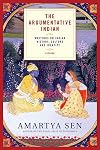
Finished reading Amartya Sen’s The Argumentative Indian. It is an erudite collection of essays on various aspects of Indian culture, art, religion and identity. It is just what an intellectual from the liberal school would write. So there were no surprises, as I found myself in agreement with his views on almost all the topics. In fact, I found that he has expressed my ideas and philosophy in a much more precise, pragmatic and understated manner. I would love to cultivate such a manner of show more writing, which persuades through examples from a panoramic and eclectic selection of thought, put down in an understated and dispassionate manner, rather than in my usual hectoring style.
He starts the book by reflecting on the strain of heterodoxy ever present in India, even though this country is generally considered to be the repository of Asian values, which uphold hierarchy at the cost of merit, and do not encourage dissent. Even the Bhagawat Gita which distils the essence of Hindu religious philosophy is basically an argument between two points of view, he says. These two points of view are summed up in T.S. Eliot’s Four Quartets, when Ulysses decides to Fare Forward rather than take recourse to Fare Well. In the Bhagawat Gita, the debate is on whether it is right to fare forward in the name of duty, when the certain consequences of that action would not result in the welfare ( Fare Well ) of large numbers of friends and relatives of the warring cousins, but on the contrary bring certain death and destruction to them. Arjuna is definitely justified in hesitating to take a course of action that would decimate his larger clan. Though eventually Krishna’s argument prevails, that the only way of action is doing one’s duty, faring forward, yet enough space and thought is given to dissenting viewpoints. Sen argues there never has been any stifling of radical ideas, whether in the area of philosophy or social arrangements including caste. Even in the Mahabharata lower caste thinkers are shown questioning the basis of the caste system in open forums. One such questioner asked the same questions
“We all seem to be affected by desire, anger, sorrow, worry, hunger, and labour; how do we have caste differences then?”
asked by Shylock a thousand years later:
I am a Jew. Hath not a Jew eyes? Hath not a Jew hands, organs, dimensions, senses, affections, passions; fed with the same food, hurt with the same weapons, subject to the same diseases, healed by the same means, warmed and cooled by the same winter and summer as a Christian is? If you prick us do we not bleed? If you tickle us do we not laugh? If you poison us do we not die? And if you wrong us shall we not revenge?
This tradition of dissent, argument and heterodoxy has infused the culture and society of India with plurality and diversity of approach, and thought, so that local variations interact with external influences to make an ever changing dynamic of the country.
But there is one perspective that he holds that I am not convinced about. He argues that Indian culture is a mix of Hindu, Muslim, British, Persian, Greek and Arab influences, and not exclusively or predominantly based on Hindu influences. The basis for this argument is that the Hindu religion is so intermeshed with culture, rites, traditions, and these vary across time as well as space, so there is no such thing as a definitive Hindu religion, such as those laid down in the book religions. From this flows his idea that Indian culture is not the same as Hindu culture. While this is a fine goal for a liberal to aspire to, it does not quite reflect the reality. I would agree that Hindu religion and Indian culture are not congruent, but at the same time recognise that there are vast swathes of overlap.
The collection of essays is just what I would prescribe for a dilettante interested in knowing more what being an Indian means: it seeks to establish the Indian identity, which superimposes itself on the other primary identities. Here I cannot help but remember Fukuyama’s essay on the Black Hole of State Policy, which reflects upon the problem of Bureaucracy in underdeveloped societies being hijacked by the vested interests and motives of the primary identities of its members, because multiple identities flow from development. Amartya Sen is confident that Indians have these multiple identities, which make them see themselves as Indians first and their other sub-identities of community, caste, religion, etc being subsumed under this. I feel he is being optimistic.
The book is well worth reading, especially for Indian people educated in convents and raised on English language and literature, who would like to know more about where they come from and who they really are. show less
He starts the book by reflecting on the strain of heterodoxy ever present in India, even though this country is generally considered to be the repository of Asian values, which uphold hierarchy at the cost of merit, and do not encourage dissent. Even the Bhagawat Gita which distils the essence of Hindu religious philosophy is basically an argument between two points of view, he says. These two points of view are summed up in T.S. Eliot’s Four Quartets, when Ulysses decides to Fare Forward rather than take recourse to Fare Well. In the Bhagawat Gita, the debate is on whether it is right to fare forward in the name of duty, when the certain consequences of that action would not result in the welfare ( Fare Well ) of large numbers of friends and relatives of the warring cousins, but on the contrary bring certain death and destruction to them. Arjuna is definitely justified in hesitating to take a course of action that would decimate his larger clan. Though eventually Krishna’s argument prevails, that the only way of action is doing one’s duty, faring forward, yet enough space and thought is given to dissenting viewpoints. Sen argues there never has been any stifling of radical ideas, whether in the area of philosophy or social arrangements including caste. Even in the Mahabharata lower caste thinkers are shown questioning the basis of the caste system in open forums. One such questioner asked the same questions
“We all seem to be affected by desire, anger, sorrow, worry, hunger, and labour; how do we have caste differences then?”
asked by Shylock a thousand years later:
I am a Jew. Hath not a Jew eyes? Hath not a Jew hands, organs, dimensions, senses, affections, passions; fed with the same food, hurt with the same weapons, subject to the same diseases, healed by the same means, warmed and cooled by the same winter and summer as a Christian is? If you prick us do we not bleed? If you tickle us do we not laugh? If you poison us do we not die? And if you wrong us shall we not revenge?
This tradition of dissent, argument and heterodoxy has infused the culture and society of India with plurality and diversity of approach, and thought, so that local variations interact with external influences to make an ever changing dynamic of the country.
But there is one perspective that he holds that I am not convinced about. He argues that Indian culture is a mix of Hindu, Muslim, British, Persian, Greek and Arab influences, and not exclusively or predominantly based on Hindu influences. The basis for this argument is that the Hindu religion is so intermeshed with culture, rites, traditions, and these vary across time as well as space, so there is no such thing as a definitive Hindu religion, such as those laid down in the book religions. From this flows his idea that Indian culture is not the same as Hindu culture. While this is a fine goal for a liberal to aspire to, it does not quite reflect the reality. I would agree that Hindu religion and Indian culture are not congruent, but at the same time recognise that there are vast swathes of overlap.
The collection of essays is just what I would prescribe for a dilettante interested in knowing more what being an Indian means: it seeks to establish the Indian identity, which superimposes itself on the other primary identities. Here I cannot help but remember Fukuyama’s essay on the Black Hole of State Policy, which reflects upon the problem of Bureaucracy in underdeveloped societies being hijacked by the vested interests and motives of the primary identities of its members, because multiple identities flow from development. Amartya Sen is confident that Indians have these multiple identities, which make them see themselves as Indians first and their other sub-identities of community, caste, religion, etc being subsumed under this. I feel he is being optimistic.
The book is well worth reading, especially for Indian people educated in convents and raised on English language and literature, who would like to know more about where they come from and who they really are. show less
Lists
Awards


You May Also Like


Associated Authors
Statistics
- Works
- 93
- Also by
- 12
- Members
- 6,879
- Popularity
- #3,557
- Rating
- 3.9
- Reviews
- 86
- ISBNs
- 329
- Languages
- 19
- Favorited
- 7


