
Bill McKibben
Author of Deep Economy: The Wealth of Communities and the Durable Future
About the Author
Bill McKibben grew up in Lexington, Massachusetts. He was president of the Harvard Crimson newspaper in college. Immediately after college he joined the New Yorker magazine as a staff writer, and wrote much of the "Talk of the Town" column from 1982 to early 1987. After quitting this job, he soon show more moved to the Adirondack Mountains of upstate New York. His first book, The End of Nature, was published in 1989 by Random House after being serialized in the New Yorker. It is regarded as the first book for a general audience about climate change, and has been printed in more than 20 languages. Several editions have come out in the United States, including an updated version published in 2006. His next book, The Age of Missing Information, was published in 1992. It is an account of an experiment: McKibben collected everything that came across the 100 channels of cable tv on the Fairfax, Virginia system (at the time among the nation's largest) for a single day. He spent a year watching the 2,400 hours of videotape, and then compared it to a day spent on the mountaintop near his home. This book has been widely used in colleges and high schools, and was reissued in 2006. McKibben's latest book is entitled, Eaarth: Making a Life on a Tough New Planet. Bill currently resides with his wife, writer Sue Halpern, and his daughter, Sophie in Ripton, Vermont. He is a scholar in residence at Middlebury College. 030 (Bowker Author Biography) show less
Image credit: Bill McKibben
Works by Bill McKibben
Wandering Home: A Long Walk Across America's Most Hopeful Landscape, Vermont's Champlain Valley and New York's Adirondack (2005) 210 copies, 9 reviews
The Flag, the Cross, and the Station Wagon: A Graying American Looks Back at His Suburban Boyhood and Wonders What the Hell Happened (2022) 140 copies, 11 reviews
Long Distance: Testing the Limits of Body and Spirit in a Year of Living Strenuously (2000) 102 copies, 1 review
Fight Global Warming Now: The Handbook for Taking Action in Your Community (2007) 87 copies, 1 review
Here Comes the Sun: A Last Chance for the Climate and a Fresh Chance for Civilization (2025) 81 copies, 3 reviews
The Best American Science and Nature Writing 2024: A Thought-Provoking Anthology with Award-Winning Environmental Insights, Perfect for Fall 2024 (2024) 65 copies, 1 review
Connectedness: An Incomplete Encyclopedia of the Anthropocene (STRANDBERG PUBL) (2020) 11 copies, 1 review
Associated Works
Worldchanging: A User's Guide for the 21st Century (2006) — Introduction, some editions — 1,085 copies, 15 reviews
This Is an Uprising: How Nonviolent Revolt Is Shaping the Twenty-First Century (2016) — Foreword — 328 copies, 5 reviews
The World Is Blue: How Our Fate and the Ocean's Are One (2009) — Foreword, some editions — 174 copies, 1 review
The David Suzuki Reader: A Lifetime of Ideas from a Leading Activist and Thinker (2003) — Editor — 116 copies, 2 reviews
I'm With the Bears: Short Stories from a Damaged Planet (2011) — Introduction — 107 copies, 4 reviews
A Spring without Bees: How Colony Collapse Disorder Has Endangered Our Food Supply (2008) — Foreword, some editions — 91 copies, 6 reviews
Making Peace with the Land: God's Call to Reconcile with Creation (Resources for Reconciliation) (2012) — Foreword — 90 copies, 1 review
Over: The American Landscape at the Tipping Point (2008) — Introduction, some editions — 51 copies, 1 review
The World According to Tomdispatch: America In The New Age of Empire (2008) — Contributor — 31 copies
Gaia in Turmoil: Climate Change, Biodepletion, and Earth Ethics in an Age of Crisis (2009) — Foreword, some editions — 17 copies, 1 review
A Passion for This Earth: Writers, Scientists, and Activists Explore Our Relationship With Nature and the Environment (2008) — Foreword, some editions — 15 copies
Tagged
Common Knowledge
- Canonical name
- McKibben, Bill
- Legal name
- McKibben, William Ernest
- Other names
- MCKIBBEN, William Ernest
MCKIBBEN, Bill - Birthdate
- 1960-12-08
- Gender
- male
- Education
- Harvard University (BA|1982)
- Occupations
- writer
environmentalist - Organizations
- The New Yorker
Harvard Crimson (president)
350.org (founder)
Middlebury College (scholar in residence)
Post Carbon Institute (fellow)
Middlebury Fellowships in Environmental Journalism (director) (show all 7)
Third Act (co-founder) - Awards and honors
- Guggenheim Fellowship (1993)
Lannan Literary Award (2000)
Gandhi Peace Award (2013)
Right Livelihood Prize (2014)
Lyndhurst Fellowship - Relationships
- Sue Halpern (wife)
- Nationality
- USA
- Birthplace
- Palo Alto, California, USA
- Places of residence
- Adirondack Mountains, New York, USA
Ripton, Vermont, USA
Lexington, Massachusetts, USA - Associated Place (for map)
- USA
Members
Reviews
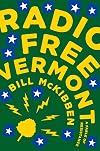
The writers of the reviews I've read have taken McKibben at face value in this piece of fiction, supposing that he's endorsing secession (and quickly moving on to mention the significant ethical considerations of such a pathway). After listening to a few interviews with McKibben on the subject, I can assure you that he has no such agenda. It's better to think of this book as a dark night of the soul of sorts, or a flight of fancy.
If you've ever heard McKibben speak, you'll remember how he show more begins by rattling off a list of the latest disasters around the globe related to climate change. He's a driven and seemingly-tireless man. I couldn't think of a more "presidential" human. And yet, even such luminary must occasionally have a little fun, and this is where "Radio Free Vermont" comes in.
As you might have guessed from the title, this book is about a resistance movement in Vermont, a secessionist resistance movement. It's also a book about craft beer, biathlon (cross-country skiing and shooting), and Vermont history, culture, and spirit.
I found it both riveting and fun, if a little unbelievable at points. It hit close to home, as I have many Vermont ties, and like to romanticize the place.
Expectedly, there was an undertone of Global Weirding—a strong sense of nostalgia for the magic and rejuvenating powers of winter, and the ways they've been mortally wounded by our relentless "progress."
There are some dark undertones to the text; the protagonists are classified as a "terrorist cell," and the FBI and security contractors are deployed to eliminate them, which felt like a Margaret Atwood attitude. That said, McKibben would be in a better place than most to guess as to what sort of how our government might escalate force against its own citizens, especially in this fascist age of Trump.
If you like Vermont, if you like McKibben, or you're just a little rebellious around the edges, you'll have a lot of fun with this book. show less
If you've ever heard McKibben speak, you'll remember how he show more begins by rattling off a list of the latest disasters around the globe related to climate change. He's a driven and seemingly-tireless man. I couldn't think of a more "presidential" human. And yet, even such luminary must occasionally have a little fun, and this is where "Radio Free Vermont" comes in.
As you might have guessed from the title, this book is about a resistance movement in Vermont, a secessionist resistance movement. It's also a book about craft beer, biathlon (cross-country skiing and shooting), and Vermont history, culture, and spirit.
I found it both riveting and fun, if a little unbelievable at points. It hit close to home, as I have many Vermont ties, and like to romanticize the place.
Expectedly, there was an undertone of Global Weirding—a strong sense of nostalgia for the magic and rejuvenating powers of winter, and the ways they've been mortally wounded by our relentless "progress."
There are some dark undertones to the text; the protagonists are classified as a "terrorist cell," and the FBI and security contractors are deployed to eliminate them, which felt like a Margaret Atwood attitude. That said, McKibben would be in a better place than most to guess as to what sort of how our government might escalate force against its own citizens, especially in this fascist age of Trump.
If you like Vermont, if you like McKibben, or you're just a little rebellious around the edges, you'll have a lot of fun with this book. show less
I was very lucky to live most of my life in small towns. Reading Radio Free Vermont was a reminder of why I love those towns. People who are there for you no matter what you do, even if you start a revolution accidentally. Those life long friends will be there to hide you when you are wanted for terrorism (really?) and when you need to be broken out of jail. They will even let you set their houses on fire all for a good cause.
I enjoyed the antics of Vern, Perry and his initial revolution show more move: literally turning Walmart into a crapper- it was such good writing that I even plugged my nose and wanted to gag reading the actions of Perry's sewer warfare; Sylvia, Trance, and even Vern's mother kept me entertained through out this "fable". Where would Vern be without good friends?
Sometimes you just have to start a resistance; a rebellion and make people think. Do they want largess, or do they want to continue to know their neighbors, chit chat, have a great howdy when you walk down the street and have someones back, or do you want strangers, supplies from some other state or do you want your own products when you provide some of the best in your own area? Capitalism, big corporate take overs and largess, doesn't sound great looking through Vern's eyes.
Bill Mckibben's quality writing kept me laughing and leg slapping the whole way through his "fable" at the same time as causing me to think about what I want to protect in my little corner of the nation.
I appreciate the opportunity to read this book before it is published. I thank Penguin First to Read for that chance in lieu of my honest review.
I give this book a 4 for a little bit of reality and a whole lot of great writing! show less
I enjoyed the antics of Vern, Perry and his initial revolution show more move: literally turning Walmart into a crapper- it was such good writing that I even plugged my nose and wanted to gag reading the actions of Perry's sewer warfare; Sylvia, Trance, and even Vern's mother kept me entertained through out this "fable". Where would Vern be without good friends?
Sometimes you just have to start a resistance; a rebellion and make people think. Do they want largess, or do they want to continue to know their neighbors, chit chat, have a great howdy when you walk down the street and have someones back, or do you want strangers, supplies from some other state or do you want your own products when you provide some of the best in your own area? Capitalism, big corporate take overs and largess, doesn't sound great looking through Vern's eyes.
Bill Mckibben's quality writing kept me laughing and leg slapping the whole way through his "fable" at the same time as causing me to think about what I want to protect in my little corner of the nation.
I appreciate the opportunity to read this book before it is published. I thank Penguin First to Read for that chance in lieu of my honest review.
I give this book a 4 for a little bit of reality and a whole lot of great writing! show less
The Flag, the Cross, and the Station Wagon: A Graying American Looks Back at His Suburban Boyhood and Wonders What the Hell Happened by Bill McKibben
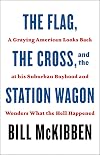
I've got to admit that there was a lot in Bill McKibben's "The Flag, the Cross, and the Station Wagon" that was new to me, but mostly because I'm not really much of a scholar of American history. I didn't, for example, know that there were slaves in Massachusetts before the American Revolution, and that it took a few years and a few court decisions to free them afterwards. Because I was raised Catholic, there's a lot about the history of mainline American Protestantism that I don't know. And show more because I'll probably never own a home in the United States, I'm not really much of an expert on zoning. I can't say I know all that much about the ongoing campaign for reparations for the work done by Black Americans during the antebellum and Jim Crow periods. So all of that, taken together, made this one pretty interesting.
There's no shortage of think pieces and treatises on why and how we -- "we" meaning Americans -- ended up here -- here being "Donald J. Trump, 45th President of the United States. A lot of McKibben's arguments will almost certainly be familiar, in one way or another, to the sort of lefties who invest serious time in reading political think pieces and sociological surveys. Even so, the this book does have a few things to offer the reader. The first is the author's gentle presence -- on the page, McKibben is unfailingly perceptive and empathetic. He's not the sort of writer to simply accuse an entire group of people of bigotry and leave it there. The decisions, he reminds us, are always tough, and the missed opportunities are heartbreaking. This is a wonderfully personal book. McKibben takes the time to describe the events that he considers to be pivotal to the development of his home town and to his perspective on it: this sort of clear-eyed retrospection is welcome in any kind of book. McKibben also offers something in "The Flag, the Cross, and the Station Wagon" that seems in genuinely short supply: hope. It's admirable that after a lifetime of activism, he still believes that reaching out to others and appealing to their best selves may enable us to effect real change. He freely admits that not all the campaigns that he worked on were successful -- his story about trying to put Jimmy Carter's original water heaters back on the White House roof dances back and forth over the line that separates comedy and tragedy -- but he doesn't seem to regret much, and he's still hopeful about the future. This struck me as the sort of book that the author felt he had to write, perhaps for his own peace of mind, and perhaps because he felt that he should take stock of his career as he moves closer to its end. But it also might be the sort of book that politically engaged Americans might need at precisely this uncertain point in our history. Recommended. show less
There's no shortage of think pieces and treatises on why and how we -- "we" meaning Americans -- ended up here -- here being "Donald J. Trump, 45th President of the United States. A lot of McKibben's arguments will almost certainly be familiar, in one way or another, to the sort of lefties who invest serious time in reading political think pieces and sociological surveys. Even so, the this book does have a few things to offer the reader. The first is the author's gentle presence -- on the page, McKibben is unfailingly perceptive and empathetic. He's not the sort of writer to simply accuse an entire group of people of bigotry and leave it there. The decisions, he reminds us, are always tough, and the missed opportunities are heartbreaking. This is a wonderfully personal book. McKibben takes the time to describe the events that he considers to be pivotal to the development of his home town and to his perspective on it: this sort of clear-eyed retrospection is welcome in any kind of book. McKibben also offers something in "The Flag, the Cross, and the Station Wagon" that seems in genuinely short supply: hope. It's admirable that after a lifetime of activism, he still believes that reaching out to others and appealing to their best selves may enable us to effect real change. He freely admits that not all the campaigns that he worked on were successful -- his story about trying to put Jimmy Carter's original water heaters back on the White House roof dances back and forth over the line that separates comedy and tragedy -- but he doesn't seem to regret much, and he's still hopeful about the future. This struck me as the sort of book that the author felt he had to write, perhaps for his own peace of mind, and perhaps because he felt that he should take stock of his career as he moves closer to its end. But it also might be the sort of book that politically engaged Americans might need at precisely this uncertain point in our history. Recommended. show less
I found this book to be a breath of fresh air and totally enjoyable, start to finish. The writing is humorous and tongue in cheek, yet the message of this fable is heavy and important. The author gives a good look at the quirkiness of the small and mostly rural state of Vermont and how that impacts the outlook an perspective of most Vermonters. He presents global warming as real and how it can or will impact the small rural state, and he presents the differences which those who migrate to show more Vermont encounter in fitting in and being good citizens. I thoroughly and heartily recommend this book to everyone. It's a joy to read. It isn't long, and it's unlike anything else i've read. It's presented as a fable, but one which is in touch with reality, and that fits. show less
Lists
Awards


You May Also Like


Associated Authors
Statistics
- Works
- 50
- Also by
- 29
- Members
- 6,692
- Popularity
- #3,655
- Rating
- 3.8
- Reviews
- 172
- ISBNs
- 150
- Languages
- 11
- Favorited
- 23
