
Paul Hawken
Author of Natural Capitalism: Creating the Next Industrial Revolution
About the Author
Works by Paul Hawken
Blessed Unrest: How the Largest Movement in the World Came into Being and Why No One Saw It Coming (2007) 895 copies, 12 reviews
Drawdown: The Most Comprehensive Plan Ever Proposed to Reverse Global Warming (2016) — Editor — 631 copies, 13 reviews
Carbono: El libro de la vida 2 copies
Associated Works
Small is Beautiful: A Study of Economics as if People Mattered (1973) — Introduction — 3,147 copies, 44 reviews
Tagged
Common Knowledge
- Birthdate
- 1946-02-08
- Gender
- male
- Nationality
- USA
- Associated Place (for map)
- USA
Members
Reviews
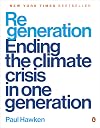
This book is part sequel and part update to the author's previous work Drawdown: The Most Comprehensive Plan Ever Proposed to Reverse Global Warming. Although it's more recent and hence a bit more up to date on recent facts, figures, and the current state of technologies, politics, and society (e.g. the Covid-19 pandemic), it isn't nearly as good. It retains the main drawback of Drawdown, rather than a cohesive and consistent narrative, it's a loosely organised mishmash collection of show more contributions by different authors, which vary wildly in both tone and quality.
But the biggest problem is that all of the numbers and specifics and details have stripped out [a few a relegated to an appendix]. Where Drawdown provided a pretty clear plan for combatting global warming, this book takes a more humanistic and animistic approach, more appropriate to a spiritual or religious text than a scientific, political, or technological one. Only about a third of the content actually deals with climate change, the rest is a rehash of traditional environmentalist (updated for the 21st century with a renewed emphasis on indigenous knowledge) and marginally related social justice causes such as universal healthcare.
The focus away from hard facts and numbers has also lead to a lot of contradictory ideas, spurious logic, and leaps of faith. For instance, the forest fires in the American West are blamed on poor forest management policies, and contrasted to those of the indigenous population. Only several pages later is it revealed that the modern approach is 200x as productive, and supports a population thousands of times larger than would be supported if we reverted to the traditional ways. Similarly, we are urged to switch to electric vehicles to eliminate the carbon emissions not only from internal combustion engines, but also from the associated infrastructure such as the steel used to construct gas stations. As if the doubling of the electrical grid and installation of thousands of charging stations would be an entirely carbon-free endeavor. While I agree that the net benefit likely outweighs the negatives, to present it without any supporting calculations is irresponsible. Especially given that the very next chapter addresses the challenges of enhancing the electrical grid to meet the increased demand.
In a way I can't fault the author for trying. Serious solutions with plans of action and specific targets have been largely ignored. So maybe resorting to waxing poetic about majestic chestnut trees and orphaned meerkats is the way to spur action. But given the current political and social climate, it seems too preachy, and preaching to the choir at that. Don't get me wrong, I wholeheartedly agree with 90% of the book's content and ideas, I just don't think it will help convince anyone who isn't already on board. show less
But the biggest problem is that all of the numbers and specifics and details have stripped out [a few a relegated to an appendix]. Where Drawdown provided a pretty clear plan for combatting global warming, this book takes a more humanistic and animistic approach, more appropriate to a spiritual or religious text than a scientific, political, or technological one. Only about a third of the content actually deals with climate change, the rest is a rehash of traditional environmentalist (updated for the 21st century with a renewed emphasis on indigenous knowledge) and marginally related social justice causes such as universal healthcare.
The focus away from hard facts and numbers has also lead to a lot of contradictory ideas, spurious logic, and leaps of faith. For instance, the forest fires in the American West are blamed on poor forest management policies, and contrasted to those of the indigenous population. Only several pages later is it revealed that the modern approach is 200x as productive, and supports a population thousands of times larger than would be supported if we reverted to the traditional ways. Similarly, we are urged to switch to electric vehicles to eliminate the carbon emissions not only from internal combustion engines, but also from the associated infrastructure such as the steel used to construct gas stations. As if the doubling of the electrical grid and installation of thousands of charging stations would be an entirely carbon-free endeavor. While I agree that the net benefit likely outweighs the negatives, to present it without any supporting calculations is irresponsible. Especially given that the very next chapter addresses the challenges of enhancing the electrical grid to meet the increased demand.
In a way I can't fault the author for trying. Serious solutions with plans of action and specific targets have been largely ignored. So maybe resorting to waxing poetic about majestic chestnut trees and orphaned meerkats is the way to spur action. But given the current political and social climate, it seems too preachy, and preaching to the choir at that. Don't get me wrong, I wholeheartedly agree with 90% of the book's content and ideas, I just don't think it will help convince anyone who isn't already on board. show less
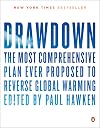
Maybe a decade ago now, I read “Blessed Unrest.” What I took away from this book was that humanity is responding to global warming on a massive scale in a decentralized and intuitive way. People all over the world are working in concert, without the need for centralized planning, or even an awareness of each others work, due to something innate in us.
Well, it seems like Hawken’s faith in humanity has waned over the intervening years. His new book, “Drawdown,” has its foundations show more not in cultural or spiritual realms, but instead is grounded in hard science, technology, and numbers. The book proclaims that it is “the most comprehensive plan ever proposed to reverse global warming,” and I don’t doubt it. Almost a hundred researches worked years to prepare this material, and each of the hundred solutions presented in the books is backed by a thirty-page technical white paper (available on their website), and cumulatively, their models cite tens of thousands of sources and millions of data points.
So, where does all of this get us? In the “plausible” scenario (conservatively optimistic), between 2020 and 2050 we “reduce” atmospheric CO2 emission equivalents by one teraton, and spend a net amount of $30 trillion. Supposedly this will stabilize atmospheric carbon, but not move us significantly into drawdown. In other words, if things go according to plan, we’ll still be stuck somewhere above 400ppm of carbon in the atmosphere at 2050, locking in catastrophic global warming (as the upper region of the “safe” limit is 350ppm).
For all the creative, amazing, and fascinating scenarios drawn up over the course of the book, I dearly wish that more weight was given to the social, political, and cultural aspects of this conversation. Ultimately, our technological “solutions” are nested within this context, and if anything, are more important than the solutions themselves.
So what kind of solutions are we talking about? As you guessed, green energy is part of the picture. But one of the biggest sectors under investigation was our relationship with land (primarily via agriculture and forestry). Other areas include Women and Girls, Buildings and Cities, Transport, Materials, and Coming Attractions (visionary but unproven concepts).
In some ways, this is a reactionary text. Fossil fuel companies knew what climate change was back in the ‘70s and ‘80s. By the ‘90s people understood it was a serious issue, and there were lots of good ideas about what we could do about it. And then the climate change deniers came along, and the whole backlash against preserving the future of humanity. And here we are well into the second decade of the 21st century—with our climate spiraling out of the range in which human habitation can occur, and, at least in the US, a political climate that will sooner implement Universal Basic Income and pay Reparations then address climate change in a substantive way.
In other words, well-meaning NorCal progressives like Hawken are freaking out—and for good reason! I too have found myself engaging in activities explicitly addressing climate change, even though I fundamentally believe that climate change is a surface-level issue that can only be solved by addressing more fundamental systems (such as culture). I don’t think we’re wasting our time to get all analytical on these issues. But I strongly recommend (for myself as much as others), that we don’t lose our felt sense of a connection with the words of mentors and organizations like Charles Eisenstein, Martin Prechtel, Timothy Morton, J. G. Bennett, and the Dark Mountain Project (as well as the younger and more idealistic version of Hawken) that remind us that climate change can only be addressed from a living-systems perspective that goes beyond solar panels, electric vehicles, and closed-loop recycling.
Drawdown is a page-turner for prescient geeks scrambling to hedge against the Anthropocene Extinction. I recommend you go out and get yourself a copy—you’ll be referencing it for years to come. But don’t stop there! Remember to commune with the more-than-human-world in which you’re immersed, make the space to grieve for the violence of these times, and ground into holistic work that lives into the now in a balanced and deeply human way. show less
Well, it seems like Hawken’s faith in humanity has waned over the intervening years. His new book, “Drawdown,” has its foundations show more not in cultural or spiritual realms, but instead is grounded in hard science, technology, and numbers. The book proclaims that it is “the most comprehensive plan ever proposed to reverse global warming,” and I don’t doubt it. Almost a hundred researches worked years to prepare this material, and each of the hundred solutions presented in the books is backed by a thirty-page technical white paper (available on their website), and cumulatively, their models cite tens of thousands of sources and millions of data points.
So, where does all of this get us? In the “plausible” scenario (conservatively optimistic), between 2020 and 2050 we “reduce” atmospheric CO2 emission equivalents by one teraton, and spend a net amount of $30 trillion. Supposedly this will stabilize atmospheric carbon, but not move us significantly into drawdown. In other words, if things go according to plan, we’ll still be stuck somewhere above 400ppm of carbon in the atmosphere at 2050, locking in catastrophic global warming (as the upper region of the “safe” limit is 350ppm).
For all the creative, amazing, and fascinating scenarios drawn up over the course of the book, I dearly wish that more weight was given to the social, political, and cultural aspects of this conversation. Ultimately, our technological “solutions” are nested within this context, and if anything, are more important than the solutions themselves.
So what kind of solutions are we talking about? As you guessed, green energy is part of the picture. But one of the biggest sectors under investigation was our relationship with land (primarily via agriculture and forestry). Other areas include Women and Girls, Buildings and Cities, Transport, Materials, and Coming Attractions (visionary but unproven concepts).
In some ways, this is a reactionary text. Fossil fuel companies knew what climate change was back in the ‘70s and ‘80s. By the ‘90s people understood it was a serious issue, and there were lots of good ideas about what we could do about it. And then the climate change deniers came along, and the whole backlash against preserving the future of humanity. And here we are well into the second decade of the 21st century—with our climate spiraling out of the range in which human habitation can occur, and, at least in the US, a political climate that will sooner implement Universal Basic Income and pay Reparations then address climate change in a substantive way.
In other words, well-meaning NorCal progressives like Hawken are freaking out—and for good reason! I too have found myself engaging in activities explicitly addressing climate change, even though I fundamentally believe that climate change is a surface-level issue that can only be solved by addressing more fundamental systems (such as culture). I don’t think we’re wasting our time to get all analytical on these issues. But I strongly recommend (for myself as much as others), that we don’t lose our felt sense of a connection with the words of mentors and organizations like Charles Eisenstein, Martin Prechtel, Timothy Morton, J. G. Bennett, and the Dark Mountain Project (as well as the younger and more idealistic version of Hawken) that remind us that climate change can only be addressed from a living-systems perspective that goes beyond solar panels, electric vehicles, and closed-loop recycling.
Drawdown is a page-turner for prescient geeks scrambling to hedge against the Anthropocene Extinction. I recommend you go out and get yourself a copy—you’ll be referencing it for years to come. But don’t stop there! Remember to commune with the more-than-human-world in which you’re immersed, make the space to grieve for the violence of these times, and ground into holistic work that lives into the now in a balanced and deeply human way. show less
This is far and away one of the best works of climate activism I've ever read. The book is expansive, demonstrating the diverse and many avenues we have to combat climate change from all sides. Mainstream media harps so often on the same means of becoming carbon neutral, like electric cars and wind turbines. Hawken's collection obviously includes and contextualizes these popular solutions, but emphasizes every time that one cannot wipe their hands after buying a Tesla and recycling. show more Precluding the worst of climate change requires redefining our way of life. The book feels like optimistic realism: you can see the solutions are not idyllic and radical. Hawken consistently makes an appeal to the importance of stability for regular people, and adduces the ways these solutions flow with our everyday lives.
My only reservation with this book is simply the lack of footnotes. For a book so full of data and statistics, examples of companies the world over researching and working against climate change, there are no footnotes to back any of them up. When you look them up, of course, the data are real and verifiable, but it would be nice to have that index of sources and resources. show less
My only reservation with this book is simply the lack of footnotes. For a book so full of data and statistics, examples of companies the world over researching and working against climate change, there are no footnotes to back any of them up. When you look them up, of course, the data are real and verifiable, but it would be nice to have that index of sources and resources. show less
Maybe the best title ever. It is what it says - the Most Comprehensive Plan Ever Proposed to Reverse Global Warming. In it are 100 environmental practices, ranked from 1 to 100 as most impactful. Most take just two pages, include ample descriptions for the noob, and give a summarized breakdown of the numbers. Tons and tons of researchers and contributors worked to make this book and thousands of references, but it's stylized and written to communicate, not overwhelm. In short, it's show more brilliant, and one of the most hopeful (and needed) projects I know of.
For me, it felt like environmental science 101. Maybe you have, but I hadn't ever heard of Methane Digesters, Grid Flexibility, Silvopasture, or Utility Scale Photovoltics. Each are important for drawing down the amount of carbon in the atmosphere.
However, most important were the practical implications of the research. You might, "What can I actually do to reduce global warming?" This book is the "most comprehensive" answer to that question. So, things like adding solar panels, (eventually) trading our gas car for something electric, etc. everyone knows. Now it feels a little more pressing. But in particular, going to a plant based diet was (I believe) #3 or #4 most impactful practices. Zen master Thich Nhat Hanh has said, making the transition to a plant-based diet may be the most effective way an individual can stop climate change. I didn't realize this... and that doesn't even include the other reasons for going vegetarian.
Two others that surprised me were educating girls globally and family planning (#6 & #7), which go together. When we educate girls, we are improving the lives of families. Children are healthier, happier and fewer in number when girls are educated. This is vital!
Drawdown is also a non-profit, who happened to produce this wonderful book. Learn more at drawdown.org.
This is so important and I'm thankful for the work they're doing. show less
For me, it felt like environmental science 101. Maybe you have, but I hadn't ever heard of Methane Digesters, Grid Flexibility, Silvopasture, or Utility Scale Photovoltics. Each are important for drawing down the amount of carbon in the atmosphere.
However, most important were the practical implications of the research. You might, "What can I actually do to reduce global warming?" This book is the "most comprehensive" answer to that question. So, things like adding solar panels, (eventually) trading our gas car for something electric, etc. everyone knows. Now it feels a little more pressing. But in particular, going to a plant based diet was (I believe) #3 or #4 most impactful practices. Zen master Thich Nhat Hanh has said, making the transition to a plant-based diet may be the most effective way an individual can stop climate change. I didn't realize this... and that doesn't even include the other reasons for going vegetarian.
Two others that surprised me were educating girls globally and family planning (#6 & #7), which go together. When we educate girls, we are improving the lives of families. Children are healthier, happier and fewer in number when girls are educated. This is vital!
Drawdown is also a non-profit, who happened to produce this wonderful book. Learn more at drawdown.org.
This is so important and I'm thankful for the work they're doing. show less
Lists
Awards


You May Also Like


Associated Authors
Statistics
- Works
- 18
- Also by
- 3
- Members
- 4,377
- Popularity
- #5,730
- Rating
- 4.0
- Reviews
- 43
- ISBNs
- 100
- Languages
- 11
- Favorited
- 7