
William McDonough
Author of Cradle to Cradle: Remaking the Way We Make Things
About the Author
Image credit: wikimedia
Works by William McDonough
The Hannover Principles: Design for Sustainability, 10th Anniversary Edition (2007) 37 copies, 1 review
Environmentally intelligent textiles 2 copies
Gita Nagari 1 copy
Always On Strategy of Hope 1 copy
Design for living 1 copy
TED eco-cities in China 1 copy
Fashion is a verb 1 copy
Tower of tomorrow 1 copy
TED Talk Cradle to Cradle 1 copy
Powershift [videorecording] 1 copy
Foundation for the Carolinas 1 copy
the extravagant gesture 1 copy
Buildings that breathe 1 copy
Associated Works
The Green Book: The Everyday Guide to Saving the Planet One Simple Step at a Time (2007) — Foreword, some editions — 464 copies, 6 reviews
Tagged
Common Knowledge
- Birthdate
- 1951-02-20
- Gender
- male
- Occupations
- architect
- Nationality
- USA
- Associated Place (for map)
- USA
Members
Reviews
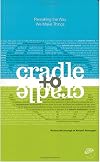
Have just finished reading Cradle to Cradle by William McDonough and Michael Braungart. As a reluctant environmentalist, I was very impressed. Living as I do in a small flat, I find that recycling regimes assume you have a garden for lots of separate bins, or a large amount of indoor space to store all your detritus until it gets to the recycling point. In some locales, you are even expected to buy a car to drive to the recycling bins - crazy! Every time you visit someone who has a different show more recycling regime you have to get used to throwing something out you usually recycle, and saving something, you would have thrown out in another local authority.
For years I have been moaning that everything is the wrong way around: 'Why do they make this so difficult? Why can't they just design things that are easy to recycle, or that can be re-used - this cannot be efficient!' After reading Cradle to Cradle I don't feel so much like a voice in the wilderness. I was impressed with the idea of products being designed with recycling in mind, either as biological or technological 'nutrients', although I wonder how this would work when some products are kept for years? It may be decades before some of these products are ready to be recycled and the system tested.
A lot of the book chronicles the exploits of the authors in their careers as architect and chemist, and by the end I had a mental image of them whizzing about the world solving the world's environmental woes, like environmental Supermen. It would be reassuring to learn that they weren't the only design practitioners trying to save the planet, but perhaps that's another book?
I also wonder what we as a society will leave behind if we really get to grips with recycling? The days of rummaging through waste tips to find antique jam jars and ginger bottles will be a thing of the past, and some artifacts may be lost to history in the urge to re-, down- and up-cycle?
An excellent book. Do the green thing and request it from your local library! show less
For years I have been moaning that everything is the wrong way around: 'Why do they make this so difficult? Why can't they just design things that are easy to recycle, or that can be re-used - this cannot be efficient!' After reading Cradle to Cradle I don't feel so much like a voice in the wilderness. I was impressed with the idea of products being designed with recycling in mind, either as biological or technological 'nutrients', although I wonder how this would work when some products are kept for years? It may be decades before some of these products are ready to be recycled and the system tested.
A lot of the book chronicles the exploits of the authors in their careers as architect and chemist, and by the end I had a mental image of them whizzing about the world solving the world's environmental woes, like environmental Supermen. It would be reassuring to learn that they weren't the only design practitioners trying to save the planet, but perhaps that's another book?
I also wonder what we as a society will leave behind if we really get to grips with recycling? The days of rummaging through waste tips to find antique jam jars and ginger bottles will be a thing of the past, and some artifacts may be lost to history in the urge to re-, down- and up-cycle?
An excellent book. Do the green thing and request it from your local library! show less
Instead of trying to reduce our negative effects on the world (being "eco-efficient") what you will find in this book is how to maximize our positive effects (how to be "eco-effective"). It involves truly taking responsibility for the things we create by considering from the start what happens to our products at their end; switching from a "cradle-to-grave" approach to a "cradle-to-cradle" approach where products are made of biological nutrients (material that can be thrown away safely, even show more beneficially) or technical nutrients (material that can be safely recovered and re-used by industry).
What's great is that the book itself serves as an example of what it describes: it's not made of paper. Instead it's made of a high grade plastic that can be re-used by the manufacturer indefinitely or, if you'd rather keep it, can be safely placed on your shelf for many years without much wear. The ink can be stripped from the pages by the manufacturer and re-used to print other such books. This kind of construction makes the book extremely durable and waterproof while also providing for the possibility of upcycling.
It's not perfect, however. The kind of systems required for manufacturers to implement their cradle-to-cradle approach will take time to develop, since they will essentially need to completely overhaul the ingredients that go into making their products. They even admit they couldn't yet completely eliminate all harmful materials from the book's construction. However, I believe that any shift we could make towards cradle-to-cradle design would be beneficial; at least it gets us thinking about how the things we make could be safer.
In any case, the world of abundance the writers describe in the book is inspiring. I hope one day we'll have, as they invite us to imagine, "buildings like trees; cities like forests." show less
What's great is that the book itself serves as an example of what it describes: it's not made of paper. Instead it's made of a high grade plastic that can be re-used by the manufacturer indefinitely or, if you'd rather keep it, can be safely placed on your shelf for many years without much wear. The ink can be stripped from the pages by the manufacturer and re-used to print other such books. This kind of construction makes the book extremely durable and waterproof while also providing for the possibility of upcycling.
It's not perfect, however. The kind of systems required for manufacturers to implement their cradle-to-cradle approach will take time to develop, since they will essentially need to completely overhaul the ingredients that go into making their products. They even admit they couldn't yet completely eliminate all harmful materials from the book's construction. However, I believe that any shift we could make towards cradle-to-cradle design would be beneficial; at least it gets us thinking about how the things we make could be safer.
In any case, the world of abundance the writers describe in the book is inspiring. I hope one day we'll have, as they invite us to imagine, "buildings like trees; cities like forests." show less
Offers an uncompromising, ethical, idealistic, visionary, impractical, narrow-minded, utterly unworkable proposal for solving the problems of waste and scarcity. Turns out, we've simply got to rebuild everything in the world in such a way that it produces no waste. Nature does it, why can't we? Well, for one thing, nature regulates itself by letting the population die out until there's a resource equilibrium, and I don't know if I want to let a couple billion poor people die.
Good show more intentions, but the book struck me as fatally out of touch. show less
Good show more intentions, but the book struck me as fatally out of touch. show less
The premise is great, but even when the author mentions the destruction of an ecosystem (such as the Exxon Valdez oil spill) there is no mention of the indigenous people whose lives, livelihoods, communities, and way of life were also destroyed.
The author also claims that pollution and other aspects of non-sustainable manufacturing are not because of immoral corporate decisions, but just "outdated design". Yikes.
The author also claims that pollution and other aspects of non-sustainable manufacturing are not because of immoral corporate decisions, but just "outdated design". Yikes.
Lists
You May Also Like


Associated Authors
Statistics
- Works
- 50
- Also by
- 1
- Members
- 2,349
- Popularity
- #10,919
- Rating
- 3.9
- Reviews
- 37
- ISBNs
- 42
- Languages
- 10
- Favorited
- 2