
Thomas Homer-Dixon
Author of The Upside of Down: Catastrophe, Creativity, and the Renewal of Civilization
About the Author
Thomas Homer-Dixon is author of Environment, Scarcity, and Violence and The Ingenuity Gap, winner of Canada's prestigious Governor-General's Award of Non-Fiction
Works by Thomas Homer-Dixon
The Upside of Down: Catastrophe, Creativity, and the Renewal of Civilization (2006) 371 copies, 7 reviews
The Ingenuity Gap: Facing the Economic, Environmental, and Other Challenges of an Increasingly Complex and Unpredictable Future (2000) 339 copies, 3 reviews
Tagged
Common Knowledge
- Legal name
- Homer-Dixon, Thomas Fraser
- Other names
- Homer-Dixon, Thomas F.
Homer-Dixon, Fraser - Birthdate
- 1956-04-22
- Gender
- male
- Education
- Massachusetts Institute of Technology (PhD | Political Science | 1989)
Carleton University (BA | Political Science | 1980) - Occupations
- political scientist
ecologist - Organizations
- University of Toronto
University of Waterloo - Awards and honors
- Governor General's Non-Fiction Award (2001)
Caldwell Prize (2000) - Nationality
- Canada
- Birthplace
- Victoria, British Columbia, Canada
- Associated Place (for map)
- British Columbia, Canada
Members
Reviews
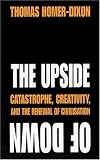
For me this is an important book at an important time. The author uses the analogy of the Roman empire's collapse to show the warning signs facing global civilisation by explaining how, like an ecological system, a complex civilisation is dependent on energy flows. And the more complex it becomes, the more energy it requires to maintain that complexity, but with diminishing returns. He uses Buzz Holling's "adaptive cycle" model, developed through study of forest ecology, to explain how a show more system increases its complexity and potential over time and eventually loses its resilience, its ability to withstand shocks. At this phase in the cycle the system is vulnerable and either catastrophically collapses into lower states of complexity - like the Roman empire - or deliberately does so in a more controlled manner in order to increase resilience. The latter path is the author's advice to us.
He lists the following "tectonic stresses" that he believes are building inexorably below the foundations of our societies: 1) population stress - not only growth but differing rates of growth between rich and poor societies; 2) energy stress - above all "peak oil" which seems to be almost upon us now; 3) environmental stress; 4) climate stress; and 5) economic stress resulting from instabilities in the global economic system and ever-widening wealth disparities within and between societies. Homer-Dixon's argument is that our global societies, tightly coupled and interdependent as they are and testing the limits of the ecosphere as they are, are vulnerable to synchronous shocks along any of the five fault lines outlined above.
The last chapters' posture is optimistic, but the project to restore resilience that he proposes is daunting, requiring global co-operation on an unprecedented level. Example: "...a value system that makes endless growth the primary source of our social stability and spiritual well-being will destroy us", but "growth, even in already obscenely rich societies, is sacrosanct." Can you envisage our political and economic elites willingly leading our societies into a different paradigm? I can't. show less
He lists the following "tectonic stresses" that he believes are building inexorably below the foundations of our societies: 1) population stress - not only growth but differing rates of growth between rich and poor societies; 2) energy stress - above all "peak oil" which seems to be almost upon us now; 3) environmental stress; 4) climate stress; and 5) economic stress resulting from instabilities in the global economic system and ever-widening wealth disparities within and between societies. Homer-Dixon's argument is that our global societies, tightly coupled and interdependent as they are and testing the limits of the ecosphere as they are, are vulnerable to synchronous shocks along any of the five fault lines outlined above.
The last chapters' posture is optimistic, but the project to restore resilience that he proposes is daunting, requiring global co-operation on an unprecedented level. Example: "...a value system that makes endless growth the primary source of our social stability and spiritual well-being will destroy us", but "growth, even in already obscenely rich societies, is sacrosanct." Can you envisage our political and economic elites willingly leading our societies into a different paradigm? I can't. show less
I liked the ideas about resiliency - we need to build much less fragile systems and societies. In particular, distributed power would be much better than just building more nuclear plants. In a way, taking on huge debt is also a massive reduction in resiliency. Although Homer-Dixon never put it this way, systems should be able to "fail gracefully" - this is a fundamental principle of computer system design.
I do wish there had been more thinking about solutions though. The book is mostly a show more catalogue of our impending doom, which has already been done a lot in other recent books. I would have liked more of Homer-Dixon's insights on how to better deal with our impended catastrophe. He seems to have given up hope to some extent - he's gone from promoting the idea that we can use our ingenuity to the fall-back position that maybe we can manage to only partially collapse, and then start again from that point.
I'm of two minds about the idea that the Internet will help us to collaborate and find solutions. While it is true that the Internet enables communities, it also enables you to feel like you're doing something by participating solely in virtual activities, without actually doing anything real in the real world. show less
I do wish there had been more thinking about solutions though. The book is mostly a show more catalogue of our impending doom, which has already been done a lot in other recent books. I would have liked more of Homer-Dixon's insights on how to better deal with our impended catastrophe. He seems to have given up hope to some extent - he's gone from promoting the idea that we can use our ingenuity to the fall-back position that maybe we can manage to only partially collapse, and then start again from that point.
I'm of two minds about the idea that the Internet will help us to collaborate and find solutions. While it is true that the Internet enables communities, it also enables you to feel like you're doing something by participating solely in virtual activities, without actually doing anything real in the real world. show less
The Ingenuity Gap: Facing the Economic, Environmental, and Other Challenges of an Increasingly Complex and Unpredictable by Thomas Homer-Dixon
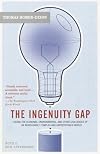
Great book with a stellar thesis and with a detailed (and credible) navigation of multiple fields. As you read this book you have nonstop ideas thrown at you and the majority are framed differently and connected more fluidly than usual. I found that he brought a refreshingly complex (rather than the simplitistic rich-Americans-heading-back-to-the-homestead) view to both environmental problems (especially the implication for the third world) and potential "solutions". I had one stylistic show more gripe - the author is successful academic and much of the book has an academic feel - in that context I was a little annoyed by the sections in the book where he felt it necessary to reduce the issue to a single person for the sake of having a story. Another Canadian book that should be more broadly available the US (great gift Mom!) show less
I'm not sure what it says about me to reveal that there wasn't much of the gloom and doom in the early part of the book that I didn't already know about. And having attended a great talk by Homer-Dixon about 8 years ago based on his last book, I had a pretty good idea of his 'take' on things. I'd heard much about the optimistic bent of this book, though (contrasting with Wright's Brief History of Progress, for example, with nary an optimistic note in sight), and so it might have been because show more of this that I was surprised that the optimistic message that we can see collapse as an opportunity for renewal as a kind of a tack-on. Sure, it's possible that we will come out of the next century in better shape than we are now, but it just doesn't seem likely to me. Still, I liked the book quite a lot. I liked some of the cleverer examples and points of comparison between our civilization and Ancient Rome. And it will be etched in my mind forever that a single tank of gas has the energy equivalent of 2 years of human labour. Kind of puts a new cast on that 20 mile drive for a can of coke that I used to find reasonable years ago when I lived far in the country. show less
Awards


You May Also Like


Statistics
- Works
- 10
- Members
- 840
- Popularity
- #30,424
- Rating
- 3.7
- Reviews
- 10
- ISBNs
- 37
- Languages
- 2
