
Linda McQuaig
Author of It's the Crude, Dude: War, Big Oil and the Fight for the Planet
About the Author
Works by Linda McQuaig
Associated Works
Twist and Shout: A Decade of Feminist Writing in THIS Magazine (1992) — Contributor — 6 copies, 1 review
Tagged
Common Knowledge
- Birthdate
- 1951
- Gender
- female
- Occupations
- journalist
- Nationality
- Canada
- Birthplace
- Toronto, Ontario, Canada
- Associated Place (for map)
- Ontario, Canada
Members
Reviews
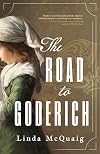
In Scotland in the 1830s, fifteen-year-old Callandra reluctantly agrees to marry Norbert Scott, a wealthy Presbyterian clergyman. Since she acquiesces only to save her family from destitution and since Norbert is emotionally cruel, it is not a happy marriage. Callandra’s only solace is her friendship with Lottie, a household servant. Then Norbert accepts a post in Goderich in Upper Canada. Their daughter Emma, Lottie, and Lottie’s brother Sam, a carpenter hired to build the church in show more Goderich, are to accompany them.
In an accident enroute to Goderich, Norbert drowns. Sam is mistaken for the long-awaited clergyman and he and Callandra and Emma decide to continue the deceit. Things start to unravel especially when Sam, a charismatic young man and natural leader, supports a rebellion against the elitists in control of Upper Canada.
There are events that stretch credibility. Callandra and Sam decide to deceive the entire community on the basis of a misunderstanding?! They give no thought to the possible consequences. They actually think that the truth will not be discovered in time? And the Presbyterian congregants accept a preacher who does not preach? Surely, Sam would have made some effort to familiarize himself further with the Bible and the rituals of worship, yet there’s no mention of him trying to educate himself in spiritual matters.
There are other problematic events. Rosalee can’t read but knows about “the silly book about women that [Callandra] was always reading.” Sam’s decision to accompany Callandra to Ethan’s farm is never explained; it’s just an obvious plot device to force the two together. When Emma inadvertently blurts out a secret, Blair doesn’t react and only in passing thinks of “the strange comments of the little girl”? Given Blair’s interest in speaking with Sam, what Emma says should have resulted in a dramatic reaction. The part of the trial with its revelations about a cabin seems unnatural and contrived. And then there’s the manipulation of the reader: we are mislead about events involving O’Reilly. Finally, there’s a lack of clarity about the passage of time which causes some confusion.
The character of Callandra is interesting. She’s a spirited young woman who struggles against the constraints faced by women who had little self-agency. Her love for and loyalty to her family has her willing to sacrifice her own happiness. But she is not a perfect person. Whereas she is largely a convincing character, the same cannot be said of Norbert. He is cold and arrogant; he has no love even for his daughter. Even in death, his selfishness comes to the fore. Callandra admits, “he was cruel right up to the end, showing no concern for anyone but himself.” He comes across as a cartoon villain – and much the same can be said for his mother and other characters as well.
The book’s style suggests non-fiction rather than fiction. There’s certainly a lot of telling versus showing. Obviously the author did a lot of research into the Upper Canada Rebellion, but the historical details weigh down the narrative. And given the focus of the story on relationships, a lot of the information is actually not needed.
I did appreciate the romantic twists which come as a surprise but are foreshadowed, but I found the book’s weak characterization and heavy-handed narration style off-putting.
Note: I received an eARC from the publisher via NetGalley.
Please check out my reader's blog (https://schatjesshelves.blogspot.com/) or substack (https://doreenyakabuski.substack.com/) for over 1,200 of my book reviews. show less
In an accident enroute to Goderich, Norbert drowns. Sam is mistaken for the long-awaited clergyman and he and Callandra and Emma decide to continue the deceit. Things start to unravel especially when Sam, a charismatic young man and natural leader, supports a rebellion against the elitists in control of Upper Canada.
There are events that stretch credibility. Callandra and Sam decide to deceive the entire community on the basis of a misunderstanding?! They give no thought to the possible consequences. They actually think that the truth will not be discovered in time? And the Presbyterian congregants accept a preacher who does not preach? Surely, Sam would have made some effort to familiarize himself further with the Bible and the rituals of worship, yet there’s no mention of him trying to educate himself in spiritual matters.
There are other problematic events. Rosalee can’t read but knows about “the silly book about women that [Callandra] was always reading.” Sam’s decision to accompany Callandra to Ethan’s farm is never explained; it’s just an obvious plot device to force the two together. When Emma inadvertently blurts out a secret, Blair doesn’t react and only in passing thinks of “the strange comments of the little girl”? Given Blair’s interest in speaking with Sam, what Emma says should have resulted in a dramatic reaction. The part of the trial with its revelations about a cabin seems unnatural and contrived. And then there’s the manipulation of the reader: we are mislead about events involving O’Reilly. Finally, there’s a lack of clarity about the passage of time which causes some confusion.
The character of Callandra is interesting. She’s a spirited young woman who struggles against the constraints faced by women who had little self-agency. Her love for and loyalty to her family has her willing to sacrifice her own happiness. But she is not a perfect person. Whereas she is largely a convincing character, the same cannot be said of Norbert. He is cold and arrogant; he has no love even for his daughter. Even in death, his selfishness comes to the fore. Callandra admits, “he was cruel right up to the end, showing no concern for anyone but himself.” He comes across as a cartoon villain – and much the same can be said for his mother and other characters as well.
The book’s style suggests non-fiction rather than fiction. There’s certainly a lot of telling versus showing. Obviously the author did a lot of research into the Upper Canada Rebellion, but the historical details weigh down the narrative. And given the focus of the story on relationships, a lot of the information is actually not needed.
I did appreciate the romantic twists which come as a surprise but are foreshadowed, but I found the book’s weak characterization and heavy-handed narration style off-putting.
Note: I received an eARC from the publisher via NetGalley.
Please check out my reader's blog (https://schatjesshelves.blogspot.com/) or substack (https://doreenyakabuski.substack.com/) for over 1,200 of my book reviews. show less
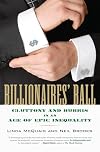
Billionaires' Ball is the latest (sad that the relentless lawless trend in America continues to generate the need for such examinations) book to examine the outrages and criminality that have beset Wall St in recent years. A very nice comparison to the Gilded Age and the policies that brought about the First Great Depression highlight this expose of current gluttony.
The rich get richer while the poor pay for it in every sense (last cents) of the word.
For anyone wondering about the current show more state of affairs, we have another must-read volume. That another volume is necessary is itself a crime. Whenever we get back to a reregulated, lawful marketplace, books like Billionaires'Ball will become primary sources on this disastrously corrupt era. show less
The rich get richer while the poor pay for it in every sense (last cents) of the word.
For anyone wondering about the current show more state of affairs, we have another must-read volume. That another volume is necessary is itself a crime. Whenever we get back to a reregulated, lawful marketplace, books like Billionaires'Ball will become primary sources on this disastrously corrupt era. show less
 This review was written for LibraryThing Early Reviewers.
This book lays out the argument for reducing the current inequality of income in the United States. Those who agree will find many statistics to back up their point of view. Those who disagree will probably not read the book--thus we have the phenomenon known as "preaching to the choir."
While the book is good as far as it goes, it does not go far enough. The authors take the enormous fortunes of the last few decades at face value. Yet other writers on economics have pointed out that our show more paper wealth is partly imaginary in that the totals of currency and debt far exceed the actual material wealth of the entire planet. The idea that our economic downturn may be at least partly associated with actual or potential shortages of essential materials does not enter the authors' world view. show less
While the book is good as far as it goes, it does not go far enough. The authors take the enormous fortunes of the last few decades at face value. Yet other writers on economics have pointed out that our show more paper wealth is partly imaginary in that the totals of currency and debt far exceed the actual material wealth of the entire planet. The idea that our economic downturn may be at least partly associated with actual or potential shortages of essential materials does not enter the authors' world view. show less
This review was written for LibraryThing Early Reviewers.The authors summarize the evolution of U.S. Tax policy from the mid-1930s to 2011, paying particular attention to changes since 1971 when business interests, relatively dormant since 1933 or so, began re-asserting themselves. They describe the political strategies and policy changes that enabled current gross inequalities in wealth and income to arise, argue that those inequalities militate against both the political principles and the self-interest of most Americans, and offer 7 changes to show more tax policy to reduce the “epic inequalities” of their subtitle.
They mark their own position early (“The shower of money raining down on Wall Street is simply the massive cut of American profits being grabbed by rapacious financial middlemen”) and present their work clearly as a polemic, arguing in favor of using tax policy to move wealth from its current top-heavy distribution. Even so, the accumulate their arguments slowly and carefully, avoiding most arm-waving and sloganeering and the book is well-organized and easy to read despite rich and sometimes difficult content.
By focusing on tax policy and promoting uncommon arguments (that the accumulation of wealth depends on the whole social/political environment and so every inhabitant of that environment should get a cut via tax-based redistribution – for instance) McQuaig and Brooks contribute a very valuable voice to our long-running deliberations about what, if anything, ought to be done.
Oddly, the authors are both Canadian but use “American” throughout to refer to citizens of the United States. I suspect a heavy editorial hand. show less
They mark their own position early (“The shower of money raining down on Wall Street is simply the massive cut of American profits being grabbed by rapacious financial middlemen”) and present their work clearly as a polemic, arguing in favor of using tax policy to move wealth from its current top-heavy distribution. Even so, the accumulate their arguments slowly and carefully, avoiding most arm-waving and sloganeering and the book is well-organized and easy to read despite rich and sometimes difficult content.
By focusing on tax policy and promoting uncommon arguments (that the accumulation of wealth depends on the whole social/political environment and so every inhabitant of that environment should get a cut via tax-based redistribution – for instance) McQuaig and Brooks contribute a very valuable voice to our long-running deliberations about what, if anything, ought to be done.
Oddly, the authors are both Canadian but use “American” throughout to refer to citizens of the United States. I suspect a heavy editorial hand. show less
This review was written for LibraryThing Early Reviewers.Lists
Awards


You May Also Like


Associated Authors
Statistics
- Works
- 18
- Also by
- 1
- Members
- 586
- Popularity
- #42,791
- Rating
- 3.8
- Reviews
- 14
- ISBNs
- 38
- Languages
- 1
- Favorited
- 1
