
Mark Kingwell
Author of In Pursuit of Happiness : Better Living from Plato to Prozac
About the Author
Works by Mark Kingwell
Associated Works
The Man with Six Senses (British Library Science Fiction Classics) (2013) — Introduction, some editions — 32 copies, 2 reviews
Tagged
Common Knowledge
- Legal name
- Kingwell, Mark Gerald
- Birthdate
- 1963-03-01
- Gender
- male
- Education
- University of Toronto
University of Edinburgh
Yale University - Nationality
- Canada
- Places of residence
- Toronto, Ontario, Canada
- Associated Place (for map)
- Ontario, Canada
Members
Reviews
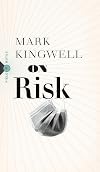
We live in a risk society. Nearly everything we do involves risk. Our ability to assess those risks and to make rational choices to either mitigate risk or act in the face of risk may largely determine our ultimate success, as individuals, as a polity, and as a species. So it makes sense, even for lay thinkers, to give a bit of effort over to understanding the nature of risk. Whether a breezy, sometimes glib, treatment by a serious philosopher who has written at length (and I assume less show more glibly) on such matters will be the ideal medium to foster such thinking remains to be seen. Certainly the innumerable recounting of film and television plots, and charming personal anecdotes will carry the reader some distance. But will it hold their interest when the going gets tough? Serious thinking, even philosophy, is rarely a light read. On the other hand, when a writer describes those he disagrees with as “wackadoodle” perhaps it’s clear that the mantle of serious thinking has been set aside.
This is a slight book that might just as persuasively have made all its useful points if it were a slim article in a journal. Despite those reservations, this book is still worth reading though for the good stuff it might be best to just read through the footnotes. show less
This is a slight book that might just as persuasively have made all its useful points if it were a slim article in a journal. Despite those reservations, this book is still worth reading though for the good stuff it might be best to just read through the footnotes. show less
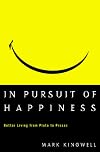
We all think that we know what happiness is, or at least that we would like more of it. But the pursuit of this rather abstract commodity may be at once the simplest and the most vexing of human endeavors. In Pursuit of Happiness: Better Living from Plato to Prozac is an exploration of the idea of happiness, the ways in which that idea has changed over the course of history, and how it influences not only individual lives, but also economic and political thinking, psychological show more investigation, medical practice -- in fact all facets of human life.Featuring Mark Kingwell's unique combination of cultural reportage, historical investigation, and philosophical reflection, In Pursuit of Happiness excavates layers of manipulation to seek out a happiness uncontaminated by technology, advertising, and popular culture. From a meditation on the relevance of Platonic ideas about happiness to a running commentary on the author's week at a "happy camp" in Massachusetts, this is an utterly absorbing and often hilarious exploration of just what it is that makes life worth living. show less

Risk is inescapable. Everyone does some level of risk assessment and has some level of risk tolerance that enables them to go about their day-to-day lives. The COVID-19 pandemic has turned the spotlight on the risks inherent in our day-to-day lives and illustrates yet again that risk, far from being a neutral or indifferent concept, has political, social, and racial dimensions. How can we reduce risk in our society and make it a more just and equitable one?
As a philosopher, Kingwell has a show more lot of resources to draw on in his discussion of risk. Not just the ancients, though: the Simpsons get a couple of look-ins, as does Hollywood. Overall, I found his style fairly readable, but I am more used to academic writing. I liked that this book made his citations obvious with footnotes rather than burying them in endnotes (or even blind endnotes).
This has a similar feel to the Oxford University Press “Very Short Introductions” series, at least in terms of page count and maybe font size, so if you like that series you may be tempted to check out this or other books in the series. show less
As a philosopher, Kingwell has a show more lot of resources to draw on in his discussion of risk. Not just the ancients, though: the Simpsons get a couple of look-ins, as does Hollywood. Overall, I found his style fairly readable, but I am more used to academic writing. I liked that this book made his citations obvious with footnotes rather than burying them in endnotes (or even blind endnotes).
This has a similar feel to the Oxford University Press “Very Short Introductions” series, at least in terms of page count and maybe font size, so if you like that series you may be tempted to check out this or other books in the series. show less

Mark Kingwell, a Professor of Philosopy at the University of Toronto, extols the virtues of baseball in Fail Better: Why Baseball Matters. The book, basically a collection of short essays, covers many elusive aspects of baseball, such as love of the game, its difficulty (from which the title is derived), its linearity, experiencing it through different media, nationalism, scoring conventions, the game's infinite elements, the field of play, nostalgia, etc. Most of the essays work very well: show more cogent with thought provoking insights. But some were just a bit too esoteric for my taste. show less
Lists
Awards


You May Also Like


Associated Authors
Statistics
- Works
- 29
- Also by
- 2
- Members
- 838
- Popularity
- #30,495
- Rating
- 3.5
- Reviews
- 12
- ISBNs
- 78
- Languages
- 2