
François Truffaut (1932–1984)
Author of Hitchcock: A Definitive Study of Alfred Hitchcock
About the Author
Francois Truffaut was one of the principal figures in the French New Wave movement of the 1950s and early 1960s. As a young critic for the avant-garde film magazine Les Cahiers du Cinema, he formulated the politique des auteurs---the idea that directors with a personal vision are the true authors show more of films, rather than conventional screenwriters or script-bound directors. An admirer of American films, Truffaut was much influenced by Alfred Hitchcock (see Vol. 1). In several of his own films, Truffaut, who had an unhappy childhood and youth, portrayed a fictionalized version of himself, a character called Antoine Doinel, to create personal cinema. The first of these films, which was also his first feature film, was The Four Hundred Blows (1959). It is still one of the most popular of his works. Other notable Truffaut films are Shoot the Piano Player (1960), the lyrical menage a trois Jules and Jim (1961), the Academy Award-winning Day for Night (1973), The Last Metro (1980), and The Woman Next Door (1981). (Bowker Author Biography) show less
Image credit: François Truffaut in TV set 'Apostrophes' in Paris, France on April 08, 1983
Series
Works by François Truffaut
The Adventures of Antoine Doinel (The 400 Blows / Antoine & Collette / Stolen Kisses / Bed & Board / Love on the Run) (2003) 31 copies
Criterion 101 — Director — 9 copies
Francois Truffaut - Collection 3 [Blu-ray] — Director — 2 copies
Il piacere degli occhi -2 2 copies
Dagbok med Fahrenheit 451 2 copies
Francois Truffaut Collection 2 copies
I film della mia vita 1 copy
La peau douce 1 copy
اعترافات هتشكوك 1 copy
All the Boys Are Called Patrick | The Mischief Makers — Director — 1 copy
Il cinema secondo Hitchcock 1 copy
La mia droga si chiama Julie 1 copy
Two English Girls and the Continent ( Les Deux anglaises et le continent ) ( Anne and Muriel ) [DVD] 1 copy
Lezione di cinema 1 copy
Il cinema secondo me 1 copy
Une histoire d'eau 1 copy
La mujer de al lado 1 copy
L'amore a vent'anni 1 copy
Mica scema la ragazza! 1 copy
Associated Works
Jules and Jim [Novel] (1953) — Introduction, some editions; Afterword, some editions — 538 copies, 9 reviews
Works in Progress Number 4: Selections from the Best in Books to be Published in Coming Months (1971) — Contributor — 7 copies
Tagged
Common Knowledge
- Canonical name
- Truffaut, François
- Legal name
- Truffaut, François Roland
- Birthdate
- 1932-02-06
- Date of death
- 1984-10-21
- Gender
- male
- Education
- self-taught
- Occupations
- film critic
film director
screenwriter
film producer
actor - Organizations
- Cahiers du cinema
- Relationships
- Bazin, Andre (mentor)
Moreau, Jeanne (actress) - Short biography
- François Truffaut was one of the most influential figures in film history. He was largely self-taught, but became one of France's leading film critics during the 1950s. His promotion of the "auteur theory" (politique des auteurs) eventually revolutionized film criticism and led to a re-evaluation of the work of Abel Gance, Max Ophuls, Roberto Rossellini, Alfred Hitchcock, Howard Hawks, Nicholas Ray, and others. He and his colleagues at the pioneering French film magazine Cahiers du cinéma developed a more personal, freewheeling vision of filmmaking that achieved world fame as the French New Wave (Nouvelle vague). Truffaut was born on to an unmarried mother, a circumstance that would shape much of his life and work. He was taken in by his maternal grandparents. In 1933, his mother married Roland Truffaut, an architectural draftsman, who adopted young François, but he didn't live with them until 1939. Many details from his childhood, freely reworked, can be found in Truffaut's semi-autobiographical debut film, Les 400 Coups (The 400 Blows, 1960). As a teenager, he joined various film clubs and societies, where he earned a reputation for his outspoken opinions on films and directors. He was befriended by older intellectuals and cultural figures such as André Bazin, Louise de Vilmorin, and Jean Cocteau. In 1950, Truffaut got a job as a society reporter for Elle magazine and quickly established a reputation as a film critic. Through his work at Cahiers du cinéma and his frequent attendance of screenings at the Cinématheque Française headed by Henri Langlois, Truffaut became friends with other young critics who eventually became leading filmmakers of the French New Wave. During the late 1950s and early 1960s, the peak of the New Wave, Truffaut created and directed a brilliant series of films. In the 1970s, he made other notable films, especially his homage to moviemaking Day for Night (1973), which won the Academy Award for Best Foreign Film. The Last Metro (1980), a portrayal of complicated moral choices during the Occupation, received 10 Césars, including Best Picture. In 1981, he published the book Les Films de ma vie (Films in my life); his correspondance was translated and published posthumously in 1988. In 1983, Truffaut was diagnosed with a brain tumor and died at age 52.
- Cause of death
- Tumeur du cerveau
- Nationality
- France
- Birthplace
- Paris, Île-de-France, France
- Places of residence
- Paris, Île-de-France, France
Neuilly-sur-Seine, Hauts-de-Seine, France - Place of death
- Neuilly-sur-Seine, Hauts-de-Seine, France
- Burial location
- Cimetière de Montmartre, Paris, France
- Associated Place (for map)
- France
Members
Reviews

"La Mariée Etait en Noir" is François Truffaut's homage / pastiche of the works of Alfred Hitchcock. The story, from the novel by Cornell Woolrich, sees Julie (Jeanne Moreau) as a mysterious femme fatale who kills successive men in meticulously planned assassinations. It is slowly revealed that she is on a mission of revenge to kill the five men who accidentally gunned downed her husband on the steps of the church moments after they were married. The film is beautifully constructed by show more Truffaut - it is taut, cool and stylish and isn't afraid to let the mystery linger. It is also full of gleeful references to Hitchcock, both in homage and at times comedically. The cinematography is beautiful and a great score by Bernard Hermann adds to the Hitchcockian charm. Topping it all off is Jeanne Moreau who is excellent as the bride on a "roaring rampage of revenge". show less
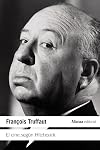
Una radiante lección de cine. 500 preguntas en casi 50 horas grabadas de una conversación mítica entre dos de los mejores cineastas de la historia: Alfred Hitchcock y François Truffaut, quien más que autor del libro, se consideraba un provocador del mismo. En primera persona, Hitchcock da una cátedra sobre los principales elementos de la cinematografía: producción, guion, fotografía, sonido, montaje y hasta promoción de películas; el mago del suspenso va desglosando su obra entera show more cinta por cinta, hablando de eventos personales y profesionales con los que tuvo que lidiar, además de confesar la gestación de ideas, guiones y la complejidad de la mise-en-scène. Es tal la importancia e influencia de El cine según Hitchcock, que directores de la talla de Martin Scorsese y Wes Anderson no sólo reconocen haberlo leído, sino que regresan a su lectura eventualmente. show less
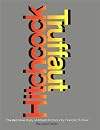
Truffaut's book-length interview with Hitchcock, while a fascinating self-examination of the director's career, succeeds far more in its exploration of the technical details of Hitchcock's work than the underlying meaning of the works.
Hitchcock is surprisingly candid here, often telling lengthy tales with minimal provocation from Truffaut, whose questions tend to guide the discussion more than it directs them.
Truffaut's own interjections, which attempt to elucidate a deeper significance to show more particular shots, are often trivialized by Hitchcock, who lets the Frenchman theorize but never certainly agrees or disagrees. At moments when Truffaut gets insistent on these points, the exchange tends to feel uncomfortable, but fortunately these subside quickly.
The truly inspired moments are those when Hitchcock relishes in divulging details of trick-shots and complex scenes, such as the infamous shower scene from Psycho. During these sequences, Hitch's technical wizardry shines and we see that his true skills lie in the creation, not the interpretation, of what we see on screen. It's a refreshing and informative perspective.
If nothing else, the book reveals two great cinematic minds engaging each other with a depth and respect that seems unfortunately old-fashioned but is nonetheless remarkable. Certainly a must-read for Hitchcock fans and film buffs alike. show less
Hitchcock is surprisingly candid here, often telling lengthy tales with minimal provocation from Truffaut, whose questions tend to guide the discussion more than it directs them.
Truffaut's own interjections, which attempt to elucidate a deeper significance to show more particular shots, are often trivialized by Hitchcock, who lets the Frenchman theorize but never certainly agrees or disagrees. At moments when Truffaut gets insistent on these points, the exchange tends to feel uncomfortable, but fortunately these subside quickly.
The truly inspired moments are those when Hitchcock relishes in divulging details of trick-shots and complex scenes, such as the infamous shower scene from Psycho. During these sequences, Hitch's technical wizardry shines and we see that his true skills lie in the creation, not the interpretation, of what we see on screen. It's a refreshing and informative perspective.
If nothing else, the book reveals two great cinematic minds engaging each other with a depth and respect that seems unfortunately old-fashioned but is nonetheless remarkable. Certainly a must-read for Hitchcock fans and film buffs alike. show less
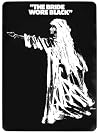
This film looks good, and it has interesting performances. But unlike a real Hitchcock film, there is virtually no suspense. The timeline is also rather confusing as to when the wedding shooting took place and how long afterwards Moreau is seeking revenge. Tarantino took this plot and made the two Kill Bill films with much more style and entertainment value.
Lists
Awards


You May Also Like


Associated Authors
Statistics
- Works
- 90
- Also by
- 11
- Members
- 4,012
- Popularity
- #6,287
- Rating
- 4.0
- Reviews
- 78
- ISBNs
- 242
- Languages
- 14
- Favorited
- 5


