
Akira Kurosawa (1910–1998)
Author of Something Like an Autobiography
About the Author
Kurosawa generally is recognized as the best of the modern Japanese filmmakers. He was the first Japanese director to gain international recognition, partly because his storytelling technique is not culture-bound. Rashomon (1950), a story of rape and terror that is told from several different show more viewpoints, received first prize at the Venice Film Festival in 1951; the film's title has become synonymous with the concept of subjective truth expressed in widely varying versions of the same story. The Seven Samurai (1954), a humanistic tale of samurai risking their lives to defend a poor village, is another Kurosawa classic. Kurosawa has always been attracted to Western literature, and two of his most notable films are based on Shakespeare's plays: Throne of Blood (1957), a retelling of Macbeth, and Ran (1985), a masterly reinterpretation of King Lear. (Bowker Author Biography) show less
Image credit: Courtesy of the NYPL Digital Gallery (image use requires permission from the New York Public Library)
Series
Works by Akira Kurosawa
Eclipse Series 7: Postwar Kurosawa (No Regrets for Our Youth / One Wonderful Sunday / Scandal / The Idiot / I Live in Fear) (2008) 22 copies
Eclipse Series 23: The First Films of Akira Kurosawa (Sanshiro Sugata / The Most Beautiful / Sanshiro Sugata, Part Two / The Men Who Tread on the Tiger's Tail) (2010) — Director — 18 copies
The Lower Depths [1936 Jean Renoir film] / The Lower Depths [1957 Akira Kurosawa film] (1936) — Director — 11 copies
Criterion 101 — Director — 9 copies
Samurai Swordplay - The Criterion Collection — Director — 9 copies
Sanshiro Sugata [1943 film] 7 copies
Akira Kurosawa - Samurai Collection 6 copies
Sanshiro Sugata Part II [1948 film] 5 copies
AK 100: 25 Films of Akira Kurosawa 4 copies
After the Rain [1999 film] — Screenwriter — 4 copies
Relato Autobiográfico 1 copy
Films of Akira Kurosawa 1 copy
Drawings 1 copy
Seven samurai 1 copy
Seven Sumurai [DVD] 1 copy
United Artists Cinema Greats Collection: Vol 4 A Fist Full of Dollars / Dr. No / The Magnificent Seven / The Pink Panther — Writer — 1 copy
Sogni 1 copy
Kurosawa: Crime Collection 1 copy
The Idiot [Region 4] 1 copy
Traume 1 copy
Rashomon 1 copy
Dodesu'ka-den / Dodeskaden 1 copy
Kagemusha l'ombra del guerriero (1980) ( The Shadow Warrior ) [ Blu-Ray, Reg.A/B/C Import - Italy ] 1 copy
Barbarossa 1 copy
O cinema de Kurosawa 1 copy
Scandal 1 copy
Akira Kurasawa Collection 1 copy
Associated Works
A.K. [1985 film] — Contributor — 2 copies
Essential Art House, Volume II (Black Orpheus / The 400 Blows / Ikiru / The Life and Death of Colonel Blimp / Pygmalion / La Strada) (2009) — Director — 1 copy
Tagged
Common Knowledge
- Canonical name
- Kurosawa, Akira
- Legal name
- 黒沢 明
Kurosawa Akira - Birthdate
- 1910-03-23
- Date of death
- 1998-09-06
- Gender
- male
- Education
- Doshusha School of Western Painting
- Occupations
- film director
screenwriter
producer
painter
editor - Organizations
- Photo Chemical Laboratories
Toho Studios - Awards and honors
- Lion d'Or (1951)
Oscar du meilleur film en langue étrangère (1951)
Palme d'Or (1980)
César du meilleur film étranger (1981)
Légion d'honneur (1984)
Oscar d'honneur (1990) - Cause of death
- stroke
- Nationality
- Japan
- Birthplace
- Shinagawa, Japan
- Places of residence
- Tokyo, Japan
- Place of death
- Setagaya, Tokyo, Japan
- Associated Place (for map)
- Tokyo, Japan
Members
Reviews
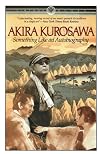
Something like an autobiography, and something much more like a memoir, which is no bad thing. Kurosawa explains that he'd rather his work speak for him, but that in his old age, he's been persuaded to write about himself.
The first half of the book beautifully evokes the pre-war Japan of his childhood, his adventures with his friends, his brother and parents. Then, his 'bohemian' period as a struggling painter and writer, then his almost accidental entry into the movie industry. The later show more chapters revolve around his film-making and studio politics, but always involve the personal, rather than dry history. He ends with the production of his classic film, Rashomon, on 1950, saying he'd now written enough and he was losing interest in the memoir project. An honest (though he questions his own honesty), fascinating, and conversational account of a major figure of 20th century culture. show less
The first half of the book beautifully evokes the pre-war Japan of his childhood, his adventures with his friends, his brother and parents. Then, his 'bohemian' period as a struggling painter and writer, then his almost accidental entry into the movie industry. The later show more chapters revolve around his film-making and studio politics, but always involve the personal, rather than dry history. He ends with the production of his classic film, Rashomon, on 1950, saying he'd now written enough and he was losing interest in the memoir project. An honest (though he questions his own honesty), fascinating, and conversational account of a major figure of 20th century culture. show less

Un texto excelente en el que Kurosawa hace un repaso a su vida y a su obra. Este libro nos deja un testimonio de la evolución de Japón entre 1910 y 1950 (Año que elige para finalizar el libro con el éxito de Rashomon) y a la vez habla de sus influencias tanto artísticas como vitales. Es una historia que fluye con rapidez y Kurosawa nos describe acontecimientos y personajes como el narrador nato que era. Por otra parte, no cuesta mucho darse cuenta de que muchos temas de sus películas show more están tomados de su propia vida (Por ejemplo, su choque con la burocracia censora no deja de recordar al comienzo de Vivir (Ikiru, 1952)
Muy recomendable. show less
Muy recomendable. show less
I'm not a huge film buff, but I do like "The Seven Samurai" and I know the influence this man had on George Lucas and Steven Spielberg. This autobiography does not extend beyond the release of Rashomon in 1950, although there are brief glimpses of moments beyond that up to 1983. The first half of the book is devoted to Kurosawa's childhood and education. Japan's culture is entirely foreign to my own but I could easily relate to early lessons learned about parents, siblings, bullies, teachers show more good and bad, self-confidence, success and failure, and the odd role that chance plays in one's life. Aimless in his youth, all of his varied artistic interests conspired to make him a powerful film director, a line of work he almost accidentally stumbled into.
Kurosawa's writing is informal and easy, and the material is well organized. He's very honest in his self-assessment, presenting a three-dimensional self portrait that acknowledges weaknesses; he even proposes what his blind spots might be, urging the reader to take these into account. I wasn't as taken up by the second half which mentioned only highlights of his experiences while making his first several films, and centered more on the people he worked with and circumstances he faced than his personal development. Its best aspect was the insight into Japanese film industry and how that contrasts with the Hollywood experience. This portion would be of more interest to film buffs. It wasn't enough to make me start looking for his early works, but I'll keep this biography as a handy reference for trivia if I ever track them down in future. show less
Kurosawa's writing is informal and easy, and the material is well organized. He's very honest in his self-assessment, presenting a three-dimensional self portrait that acknowledges weaknesses; he even proposes what his blind spots might be, urging the reader to take these into account. I wasn't as taken up by the second half which mentioned only highlights of his experiences while making his first several films, and centered more on the people he worked with and circumstances he faced than his personal development. Its best aspect was the insight into Japanese film industry and how that contrasts with the Hollywood experience. This portion would be of more interest to film buffs. It wasn't enough to make me start looking for his early works, but I'll keep this biography as a handy reference for trivia if I ever track them down in future. show less
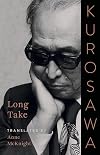
Long Take by Akira Kurosawa is a fascinating look at both the renowned director and film itself (through his lens).
Reading this will take the reader in many directions, and I would suggest taking the time to explore in each of those directions. You will certainly want to rewatch some of his films but you will also find yourself wanting to watch, or rewatch, many films by other directors or that have certain actors. I found that by taking breaks to watch a film here and there made the book so show more much more fun and informative. You obviously can't watch everything but pick one that seemed to capture the gist of his discussion and watch it, then return to the same section with the film fresh in your mind.
I think you almost have to have some familiarity with both his oeuvre and film history more generally to really appreciate this book, but if you have either one without the other it will still be well worth your time. This isn't the best book to serve as an introduction to Kurosawa but you also don't need to know his work inside out. Even if you only know a couple of his major films that will give you a good foundation to understand his views on filmmaking.
While he has a lot of strong opinions he comes across, to me at least, as understanding that opinions differ. This gives the reader space to disagree with some things he might think, though I didn't find much beyond what could be accounted for by the different periods and cultures in which we came of age. What usually happened was that I was given a different perspective through which to see things, whether John Ford films or Kurosawa's own, and thus added to my take on them.
Because this is a collection of interviews and interview essays it can easily be read in bits, which makes my desire to watch some film while reading a lot easier, I wasn't disrupting the flow of the book when I might take a day or two to follow one of the paths he opened up for me. It also means that if you're a reader who has short snippets of time to read this will work very well for you.
Highly recommended for those with a deep interest in and love for film, and certainly for any fans of Kurosawa. This would be an excellent companion if you wanted to explore Japanese film and how it has evolved over the years.
Reviewed from a copy made available by the publisher via NetGalley. show less
Reading this will take the reader in many directions, and I would suggest taking the time to explore in each of those directions. You will certainly want to rewatch some of his films but you will also find yourself wanting to watch, or rewatch, many films by other directors or that have certain actors. I found that by taking breaks to watch a film here and there made the book so show more much more fun and informative. You obviously can't watch everything but pick one that seemed to capture the gist of his discussion and watch it, then return to the same section with the film fresh in your mind.
I think you almost have to have some familiarity with both his oeuvre and film history more generally to really appreciate this book, but if you have either one without the other it will still be well worth your time. This isn't the best book to serve as an introduction to Kurosawa but you also don't need to know his work inside out. Even if you only know a couple of his major films that will give you a good foundation to understand his views on filmmaking.
While he has a lot of strong opinions he comes across, to me at least, as understanding that opinions differ. This gives the reader space to disagree with some things he might think, though I didn't find much beyond what could be accounted for by the different periods and cultures in which we came of age. What usually happened was that I was given a different perspective through which to see things, whether John Ford films or Kurosawa's own, and thus added to my take on them.
Because this is a collection of interviews and interview essays it can easily be read in bits, which makes my desire to watch some film while reading a lot easier, I wasn't disrupting the flow of the book when I might take a day or two to follow one of the paths he opened up for me. It also means that if you're a reader who has short snippets of time to read this will work very well for you.
Highly recommended for those with a deep interest in and love for film, and certainly for any fans of Kurosawa. This would be an excellent companion if you wanted to explore Japanese film and how it has evolved over the years.
Reviewed from a copy made available by the publisher via NetGalley. show less
Lists
Awards


You May Also Like


Associated Authors
Statistics
- Works
- 94
- Also by
- 6
- Members
- 4,009
- Popularity
- #6,297
- Rating
- 4.2
- Reviews
- 49
- ISBNs
- 205
- Languages
- 9