
Henri-Pierre Roché (1879–1959)
Author of Jules and Jim [Novel]
About the Author
Image credit: 3rd man in is Roché
Works by Henri-Pierre Roché
Associated Works
Tagged
Common Knowledge
- Birthdate
- 1879-05-28
- Date of death
- 1959-04-09
- Gender
- male
- Education
- Académie Julian, Paris, France
- Occupations
- author
journalist
art dealer
art collector
diplomat
novelist - Relationships
- Wood, Beatrice (lover)
- Short biography
- Henri-Pierre Roché was born in Paris, and studied art at the Académie Julian. He became a diplomat, journalist, art collector and dealer and was a friend of many young artists such as Max Jacob and Pablo Picasso. Gertrude Stein described him in her book The Autobiography of Alice B. Toklas. He was also a close friend of Marcel Duchamp, and went with him to New York City in 1916. There, he and Duchamp teamed up with Beatrice Wood (who was the lover of both men) to found The Blind Man, an avant-garde magazine that was followed the Dada art movement.
Late in his life, he wrote and published two successful novels, Jules and Jim (1952) and Les deux anglaises et le continent (Two English Girls, 1956). Both works were adapted into films by French director François Truffaut. - Nationality
- France
- Birthplace
- Paris, France
- Places of residence
- Paris, France
- Place of death
- Sèvres, Hauts-de-Seine, France
- Associated Place (for map)
- Paris, France
Members
Reviews
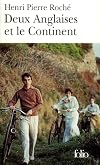
Originally published in 1956 when he was already in his seventies, this was the second of Roché's two novels, nowadays remembered mostly because François Truffaut adapted both of them for the cinema. This one was filmed in 1971 as Les deux anglaises et le continent — no doubt doctorates have been gained over the question of why Truffaut added a definite article to the title.
The story is set in the first decade of the 20th century, and is pretty much summed up by the title. Two English show more sisters, Ann and Muriel, make friends with a young Frenchman, Claude, and run through various phases of love and sexual attraction, complicated by the interference of their respective mothers.
As you would expect, the novel plays around a good deal with the contrast between the puritanical, Anglo-Saxon approach to sexual morality and enlightened "continental" openness. Roché's position, as someone who was a contemporary of the characters he is describing, but who is writing with the hindsight of fifty years, makes this particularly interesting, but you do feel occasionally that he must be exaggerating a bit. (Muriel's "confession" about her masturbation habit being a case in point.) The period titbits are quite fun - Toynbee Hall, amateur boxing matches and so on - but there are also points where you feel that Roché isn't quite as well-informed about the English as he likes to think. Muriel is supposed to be evangelical in her religious beliefs, for instance, but this doesn't come over at all in what she says and does: she talks more like a French Roman Catholic.
The main difficulty with the structure of the novel is that it's Claude's story, but it's mainly told through the voices of Ann and Muriel, in their letters and diaries. Claude's voice is largely absent. When we do hear it, mostly in the early part of the book, it confines itself to rather dry factual accounts of events or bits of sophomoric know-allism ("I can't marry you any more because I've read Nietzsche"). He is clearly meant to be continent as well as Continent. The women, Muriel in particular, are voluble, emotionally complex, and anything but enigmatic, but they are equally clearly the products of Claude's/Roché's fevered imagination, rather than real flesh-and-blood women. Muriel becomes obsessed with Claude (in his absence) to an extent that would be embarrassing even in a Brontë novel; Ann becomes a liberated modern woman practically overnight, thanks to Claude's sexual initiation service. Truffaut quietly improved the story quite a bit by shifting the focus to Claude, and foregrounding the way that we only see the women through his eyes. He uses a number of passages lifted from the earlier novel Jules et Jim to give more substance to Claude as a character (e.g. Jules's teenage suicide attempt is transferred verbatim to Claude) and has Claude publishing a story that is obviously Jules et Jim. show less
The story is set in the first decade of the 20th century, and is pretty much summed up by the title. Two English show more sisters, Ann and Muriel, make friends with a young Frenchman, Claude, and run through various phases of love and sexual attraction, complicated by the interference of their respective mothers.
As you would expect, the novel plays around a good deal with the contrast between the puritanical, Anglo-Saxon approach to sexual morality and enlightened "continental" openness. Roché's position, as someone who was a contemporary of the characters he is describing, but who is writing with the hindsight of fifty years, makes this particularly interesting, but you do feel occasionally that he must be exaggerating a bit. (Muriel's "confession" about her masturbation habit being a case in point.) The period titbits are quite fun - Toynbee Hall, amateur boxing matches and so on - but there are also points where you feel that Roché isn't quite as well-informed about the English as he likes to think. Muriel is supposed to be evangelical in her religious beliefs, for instance, but this doesn't come over at all in what she says and does: she talks more like a French Roman Catholic.
The main difficulty with the structure of the novel is that it's Claude's story, but it's mainly told through the voices of Ann and Muriel, in their letters and diaries. Claude's voice is largely absent. When we do hear it, mostly in the early part of the book, it confines itself to rather dry factual accounts of events or bits of sophomoric know-allism ("I can't marry you any more because I've read Nietzsche"). He is clearly meant to be continent as well as Continent. The women, Muriel in particular, are voluble, emotionally complex, and anything but enigmatic, but they are equally clearly the products of Claude's/Roché's fevered imagination, rather than real flesh-and-blood women. Muriel becomes obsessed with Claude (in his absence) to an extent that would be embarrassing even in a Brontë novel; Ann becomes a liberated modern woman practically overnight, thanks to Claude's sexual initiation service. Truffaut quietly improved the story quite a bit by shifting the focus to Claude, and foregrounding the way that we only see the women through his eyes. He uses a number of passages lifted from the earlier novel Jules et Jim to give more substance to Claude as a character (e.g. Jules's teenage suicide attempt is transferred verbatim to Claude) and has Claude publishing a story that is obviously Jules et Jim. show less

The film is so beautiful, and so iconic, that the book was almost bound to be a disappointment. As with Deux anglaises..., Truffaut improved the story considerably in tightening it up to fit within his medium. He certainly seems to have lifted the best of Roché's prose.
In the book, the sequence of apparently arbitrary, haphazard scenes covering something like twenty years in the lives of the main characters only slowly starts to take shape as a constructed narrative. It isn't easy to work show more out how much this is a deliberate literary device, and how much it is simply Roché sticking in assorted scenes from real life and then tweaking them a bit to fit the storyline. The back-and-forth between Jim and Kathe in the second half of the book does seem to go on for far too long, somehow. Many of the episodes don't add to our understanding of the characters at all, but just reinforce what we already know about them. On the other hand, the novel is only a little over 200 pages long - it obviously says something about the economy of Roché's style that he manages to present so many scenes in such a short space.
As others have said, Jules remains something of an enigma. Jim seems to be the main viewpoint character, with Jules always a rather passive figure in the background. As we get to the end of the book, it starts to appear as though it is Jules who is telling us the story, putting himself in Jim's position, but this is never quite made clear. And there are other odd silences. The First World War, with Jules and Jim fighting on opposite sides, is dismissed in a couple of sentences. Jules is a Jewish, German writer, living in Paris, with property and investments in Germany. All of these facts are explicitly presented to us in the text. They would clearly have had a big effect on what happened to him between the late twenties, when the story ends, and the late fifties, when Roché wrote it. But we are told nothing at all about this. Why does Roché set this up in our minds but not use it?
The really big silence in the text, of course, is the nature of the relationship between Jules and Jim. Are they just friends who happen to share a series of women? Are they in love with each other without knowing it? Are we supposed to assume that they have a sexual relationship we're not told about? The only hint we get is one very suggestive sentence: "Il jouissait du bon cigare de Jules bien plus que du sien." (pt.III, ch.III). This can't be accidental, but it might just be a deliberate tease for the overanalytical reader: Roché doesn't seem to be the sort of writer to miss out on the shock value of a salacious plot point, so I think he would have told us about it in so many words if Jules and Jim had had a sexual relationship.
Having read both his novels (and seen what Truffaut managed to do with them), I think my conclusion would be that Roché was a good writer, but not a particularly good novelist. His prose style is very agreeable to read, especially in small doses, and it is interesting to read his take on the early years of the century from the perspective of old age (especially from a writer who had lived through the whole modernist movement before he wrote his first novel!), but his characters remain infuriatingly pig-headed. It is curious too, how he can write two rather similar stories, but arbitrarily give one a tragic ending and the other a comic one. Are we supposed to conclude that that goes with a fundamental difference between a man loved by two women and a woman loved by two men? show less
In the book, the sequence of apparently arbitrary, haphazard scenes covering something like twenty years in the lives of the main characters only slowly starts to take shape as a constructed narrative. It isn't easy to work show more out how much this is a deliberate literary device, and how much it is simply Roché sticking in assorted scenes from real life and then tweaking them a bit to fit the storyline. The back-and-forth between Jim and Kathe in the second half of the book does seem to go on for far too long, somehow. Many of the episodes don't add to our understanding of the characters at all, but just reinforce what we already know about them. On the other hand, the novel is only a little over 200 pages long - it obviously says something about the economy of Roché's style that he manages to present so many scenes in such a short space.
As others have said, Jules remains something of an enigma. Jim seems to be the main viewpoint character, with Jules always a rather passive figure in the background. As we get to the end of the book, it starts to appear as though it is Jules who is telling us the story, putting himself in Jim's position, but this is never quite made clear. And there are other odd silences. The First World War, with Jules and Jim fighting on opposite sides, is dismissed in a couple of sentences. Jules is a Jewish, German writer, living in Paris, with property and investments in Germany. All of these facts are explicitly presented to us in the text. They would clearly have had a big effect on what happened to him between the late twenties, when the story ends, and the late fifties, when Roché wrote it. But we are told nothing at all about this. Why does Roché set this up in our minds but not use it?
The really big silence in the text, of course, is the nature of the relationship between Jules and Jim. Are they just friends who happen to share a series of women? Are they in love with each other without knowing it? Are we supposed to assume that they have a sexual relationship we're not told about? The only hint we get is one very suggestive sentence: "Il jouissait du bon cigare de Jules bien plus que du sien." (pt.III, ch.III). This can't be accidental, but it might just be a deliberate tease for the overanalytical reader: Roché doesn't seem to be the sort of writer to miss out on the shock value of a salacious plot point, so I think he would have told us about it in so many words if Jules and Jim had had a sexual relationship.
Having read both his novels (and seen what Truffaut managed to do with them), I think my conclusion would be that Roché was a good writer, but not a particularly good novelist. His prose style is very agreeable to read, especially in small doses, and it is interesting to read his take on the early years of the century from the perspective of old age (especially from a writer who had lived through the whole modernist movement before he wrote his first novel!), but his characters remain infuriatingly pig-headed. It is curious too, how he can write two rather similar stories, but arbitrarily give one a tragic ending and the other a comic one. Are we supposed to conclude that that goes with a fundamental difference between a man loved by two women and a woman loved by two men? show less
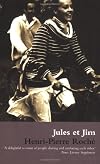
I'm not one of those readers who devours a book a day but I literally read this in 24 hours - I'm trying to work out why that was: firstly Roche's uses short, pithy sentences which makes for easy reading. Each chapter is only a few pages long so I was continuously persuaded to read one more... and finally, I wanted to connect to what was at the heart of the friendship of Jules and Jim. What actually ends up happening is that, from about half way through, you spend all your time pondering the show more destructive nature of Kate. For the sake of the men, it is an essential conundrum.
I am not sure how I feel about this as a novel. Like the foursome in Marber's Closer, there are no villians in the piece. You could fall in love with each of them. Each of them is tragic. All of them are infuriating. These characters have a liberal, laissez-faire attitude towards love and sex - there is a lot of bed-hopping going on here, whether for revenge, lust or habit. At the heart of it is a beautiful woman with a need to constant attention and a misplaced sense of injustice. I enjoyed it but was definitely relieved when it was over! Maybe their shenanigans were just too exhausting for me! And I never really understood Jules.... show less
I am not sure how I feel about this as a novel. Like the foursome in Marber's Closer, there are no villians in the piece. You could fall in love with each of them. Each of them is tragic. All of them are infuriating. These characters have a liberal, laissez-faire attitude towards love and sex - there is a lot of bed-hopping going on here, whether for revenge, lust or habit. At the heart of it is a beautiful woman with a need to constant attention and a misplaced sense of injustice. I enjoyed it but was definitely relieved when it was over! Maybe their shenanigans were just too exhausting for me! And I never really understood Jules.... show less

This is the book from which François Truffaut made his iconic film. It's the story of two friends, Jules and Jim, who both love Kate, who marries Jules, divorces him to marry Jim, but doesn't, and goes back to Jules, but continues her affair with Jim, not to mention other men. She's basically a selfish, self-centered woman, and it's hard to see why they love her. One can understand, perhaps the initial attraction, but these relationships span the period from 1907 until well into the '30s, show more when they're old enough to know better!
So it's a curious book, and I liked the laconic style - short sentences, short chapters. Yet one never feels one knows or understands the protagonists, and Kate is positively unlikable.
(I read it in translation, which, for the most part, seemed good. But there's one extended section involving a Nordic woman named Odile in which, to show that she did not speak French well, the translator has her speaking in a rather annoying pidgin (the author?translator?'s word). "Many them at café want teach me. Me no want." Now, I have no idea whether that's a decent translation of how a Scandinavian who didn't speak much French would torture the syntax, but it was irksome.) show less
So it's a curious book, and I liked the laconic style - short sentences, short chapters. Yet one never feels one knows or understands the protagonists, and Kate is positively unlikable.
(I read it in translation, which, for the most part, seemed good. But there's one extended section involving a Nordic woman named Odile in which, to show that she did not speak French well, the translator has her speaking in a rather annoying pidgin (the author?translator?'s word). "Many them at café want teach me. Me no want." Now, I have no idea whether that's a decent translation of how a Scandinavian who didn't speak much French would torture the syntax, but it was irksome.) show less
Lists
1950s (1)
Awards

You May Also Like


Associated Authors
Statistics
- Works
- 12
- Also by
- 2
- Members
- 635
- Popularity
- #39,693
- Rating
- 3.5
- Reviews
- 10
- ISBNs
- 51
- Languages
- 11
- Favorited
- 1