
Donald Spoto (1941–2023)
Author of The Dark Side of Genius: The Life of Alfred Hitchcock
About the Author
Donald Spoto was born on June 28, 1941 in New Rochelle, New York. He received a B.A. from Iona College in 1963 and a M.A. and Ph.D. in theology (New Testament studies) from Fordham University in 1966 and 1970, respectively. He taught theology, Christian mysticism, and biblical literature at the show more university level for twenty years. He has written more than 25 biographies of film and theatre celebrities including The Art of Alfred Hitchcock, The Kindness of Strangers: The Life of Tennessee Williams, Diana: The Last Year, Jacqueline Bouvier Kennedy Onassis: A Life, Enchantment: The Life of Audrey Hepburn, High Society: The Life of Grace Kelly, Possessed: The Life of Joan Crawford, and The Redgraves: A Family Epic. He also wrote biographies on religious figures including The Hidden Jesus: A New Life, Reluctant Saint: The Life of Francis of Assisi, and Joan: The Mysterious Life of the Heretic Who Became a Saint. (Bowker Author Biography) show less
Image credit: Donald Spoto 1992
Works by Donald Spoto
A Girl's Got To Breathe: The Life of Teresa Wright (Hollywood Legends Series) (2016) 16 copies, 2 reviews
Dynasty 1 copy
joana darc 1 copy
Audrey Hepburn - A Biografia 1 copy
Diana - Det sista året 1 copy
Associated Works
Reader's Digest Today's Best Nonfiction 26 1993: Everything She Ever Wanted / Martyr's Day / Marilyn Monroe: The Biography / Days of Grace: A Memoir (1993) — Author — 3 copies
Reader's Digest Today's Best Nonfiction 60 — Contributor — 1 copy
L'Avant-scène Opéra : Weill : Grandeur et décadence de Mahagonny [libretto + commentary] (1995) — Contributor — 1 copy
Tagged
Common Knowledge
- Canonical name
- Spoto, Donald
- Legal name
- Spoto, Donald Michael
- Birthdate
- 1941-06-28
- Date of death
- 2023-02-11
- Gender
- male
- Education
- Fordham University (MA|1966|PhD|1970)
Iona College (BA|1963) - Occupations
- professor
biographer
theologian - Organizations
- Danish Film Institute
University of Southern California
The New School for Social Research
College of New Rochelle
Fairfield University - Relationships
- Larsen, Ole Flemming (partner)
- Cause of death
- brain hemorrhage
- Nationality
- USA
- Birthplace
- New Rochelle, New York, USA
- Places of residence
- New Rochelle, New York, USA
Borup, Denmark - Place of death
- Køge, Denmark
- Associated Place (for map)
- New Rochelle, New York, USA
Members
Reviews
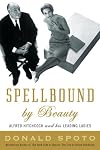
What made Alfred Hitchcock a great director were the very qualities that made him much less than a stellar human being.
Much has been written about Hitchcock's relationships with the actresses who starred in his films, but Donald Spoto makes those relationships the focus of his 2008 book "Spellbound by Beauty: Alfred Hitchcock and His Leading Ladies." Hitchcock was particularly smitten by Ingrid Bergman, Grace Kelly, Vera Miles and Tippi Hedren. The latter was a 31-year-model when the show more director noticed her on television and then, through a third party, signed her to a long-term contract without informing her what the contract was for or with whom. Hedren, with no acting experience, expected a series of bit parts for her $500 a week. Instead she became an underpaid star. He physically and sexually abused her through two films, "The Birds" and "Marnie," before she was able to free herself from his domination.
Other directors of his generation infamously used the casting couch method to put actresses in their films. The obese Hitchcock, who by his own admission had sex just once in life, had other approaches to bringing his fantasies to life. He tried to control the lives of his favorite stars, dictating what they wore, where they went and with whom they associated. Perhaps not coincidentally, "Vertigo," believed by many to be his greatest film, is also the movie that reveals the most about its director. In it, James Stewart plays a man obsessed with a certain woman who compels another woman, also played by Kim Novak, to transform herself into that ideal.
Spoto goes film by film through all of Hitchcock's movies, although naturally he gives less attention to those starring women the director didn't particularly like.
Alfred Hitchcock was something of a mess, both physically and psychologically. His fears, passions, obsessions and insecurities dominated his life and made him an unhappy man, loved by few. Yet somehow he translated all these qualities into his films, loved by many. show less
Much has been written about Hitchcock's relationships with the actresses who starred in his films, but Donald Spoto makes those relationships the focus of his 2008 book "Spellbound by Beauty: Alfred Hitchcock and His Leading Ladies." Hitchcock was particularly smitten by Ingrid Bergman, Grace Kelly, Vera Miles and Tippi Hedren. The latter was a 31-year-model when the show more director noticed her on television and then, through a third party, signed her to a long-term contract without informing her what the contract was for or with whom. Hedren, with no acting experience, expected a series of bit parts for her $500 a week. Instead she became an underpaid star. He physically and sexually abused her through two films, "The Birds" and "Marnie," before she was able to free herself from his domination.
Other directors of his generation infamously used the casting couch method to put actresses in their films. The obese Hitchcock, who by his own admission had sex just once in life, had other approaches to bringing his fantasies to life. He tried to control the lives of his favorite stars, dictating what they wore, where they went and with whom they associated. Perhaps not coincidentally, "Vertigo," believed by many to be his greatest film, is also the movie that reveals the most about its director. In it, James Stewart plays a man obsessed with a certain woman who compels another woman, also played by Kim Novak, to transform herself into that ideal.
Spoto goes film by film through all of Hitchcock's movies, although naturally he gives less attention to those starring women the director didn't particularly like.
Alfred Hitchcock was something of a mess, both physically and psychologically. His fears, passions, obsessions and insecurities dominated his life and made him an unhappy man, loved by few. Yet somehow he translated all these qualities into his films, loved by many. show less
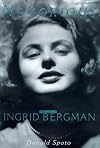
The Book Report: The subtitle says it all. For those who might be unfamiliar with Planet Earth, Ingrid Bergman was a stunningly beautiful film and stage actress of the 1930s to the 1980s. Donald Spoto, the author, will celebrate his 70th birthday this year (2011); he was a monk, a teacher, and then a pop-culture apologist/celebrist/analyst with some 20 celebrity biographies to his credit, plus several books on Christian/mystical themes.
My Review: Preston Sturges. Alfred Hitchcock. Grace show more Kelly. Miss Bergman. Diana, Princess of Wales. All subjects of Spoto's apparently unstoppable urge to biographize, expressed over the past 35-plus years. So look at that list: Is this author gay? Oh my goodness, yes. Gladly and openly so.
I start out each book, then, with a very strong connection to the author. He's One Of Mine. Small moments that might slip past a non-gay reader are here, smirking at me. I *love* that sense of being in on the joke. And that right there? That's the reason people read celebrity bios. They're in the know, they're totally equipped with gossip material, they are Inquiring Minds that are now sated. It's fun. It's harmless. It's hugely profitable.
Well....
IS it fun? For readers of the better quality books about figures of their personal interest, yes...for the fussbudgetty writers, probably...for the cooperative subjects, maybe. At any point in that chain, whether it be a writer whose passion for organizing and categorizing gives out before the job is done, finishing this type of fact-checking nightmare of a book can be awful, and not to mention the bliss and heaven of a source recanting important testimony! Or a cooperative subject who turns uncooperative!
Harmless? Hardly. Harmful in the extreme. We The People do *not* have the right to know what, for example, Ingrid Bergman felt in her last days on this earth as she slowly and painfully died of metastatic breast cancer. That her friends and family cooperated with Spoto, as Bergman herself had in a different context (a series of interviews about Alfred Hitchcock gave birth to this bio of Bergman, because she was very forthcoming with the author), does not absolve the reader of such a book as this of a defensible charge of prurience, and passive or active participation in a cultural trend that leaves those who are not resolutely anonymous with no zone of privacy anywhere ever. Contemplate that for a few seconds. What a horrifying thought. So spend that $30 and feel entitled to ALL THE DIRT!! The dirtier, the better. Then imagine that it's *your* life under this scrutiny.
Profits are made in stacks, for sure and certain, because the books keep a-comin'. Spoto alone has published 27 books to date. The publishers aren't in the charity game, so they're minting the spondulix or there wouldn't be any more.
Okay, all that said...this book was a blast! It gossiped my ears off for two whole days and the pictures were so cool! I loved the evocation of some of my favorite actors and movies and learned interesting new stuff about them all.
I admit it: I am part of the problem. But I have a smile on my face! show less
My Review: Preston Sturges. Alfred Hitchcock. Grace show more Kelly. Miss Bergman. Diana, Princess of Wales. All subjects of Spoto's apparently unstoppable urge to biographize, expressed over the past 35-plus years. So look at that list: Is this author gay? Oh my goodness, yes. Gladly and openly so.
I start out each book, then, with a very strong connection to the author. He's One Of Mine. Small moments that might slip past a non-gay reader are here, smirking at me. I *love* that sense of being in on the joke. And that right there? That's the reason people read celebrity bios. They're in the know, they're totally equipped with gossip material, they are Inquiring Minds that are now sated. It's fun. It's harmless. It's hugely profitable.
Well....
IS it fun? For readers of the better quality books about figures of their personal interest, yes...for the fussbudgetty writers, probably...for the cooperative subjects, maybe. At any point in that chain, whether it be a writer whose passion for organizing and categorizing gives out before the job is done, finishing this type of fact-checking nightmare of a book can be awful, and not to mention the bliss and heaven of a source recanting important testimony! Or a cooperative subject who turns uncooperative!
Harmless? Hardly. Harmful in the extreme. We The People do *not* have the right to know what, for example, Ingrid Bergman felt in her last days on this earth as she slowly and painfully died of metastatic breast cancer. That her friends and family cooperated with Spoto, as Bergman herself had in a different context (a series of interviews about Alfred Hitchcock gave birth to this bio of Bergman, because she was very forthcoming with the author), does not absolve the reader of such a book as this of a defensible charge of prurience, and passive or active participation in a cultural trend that leaves those who are not resolutely anonymous with no zone of privacy anywhere ever. Contemplate that for a few seconds. What a horrifying thought. So spend that $30 and feel entitled to ALL THE DIRT!! The dirtier, the better. Then imagine that it's *your* life under this scrutiny.
Profits are made in stacks, for sure and certain, because the books keep a-comin'. Spoto alone has published 27 books to date. The publishers aren't in the charity game, so they're minting the spondulix or there wouldn't be any more.
Okay, all that said...this book was a blast! It gossiped my ears off for two whole days and the pictures were so cool! I loved the evocation of some of my favorite actors and movies and learned interesting new stuff about them all.
I admit it: I am part of the problem. But I have a smile on my face! show less
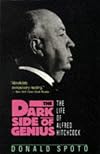
Alfred Hitchcock was an evil bastard. This might be ascertainable by viewing his films, but, for the most part, working within the Hollywood system constrained, or at least repressed, some of the more sadistic impulses. Not off the screen, though. An anecdote, by way of illustration. Hitchcock once bet an assistant cameraman that the latter wouldn't be willing to have himself shackled to a massive camera and spend the night alone on a particularly spooky sound stage. In a seemingly show more good-natured gesture, Hitchcock provided the man with a bottle of brandy to fortify himself, neglecting to mention that it was liberally spiked with a powerful laxative. The next morning, Hitchcock insisted that all cast and crew be assembled early in order to witness the poor slob's abasement. Master of suspense, indeed! show less
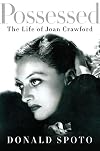
I get the feeling Spoto wants to like Joan Crawford. What I think makes it hard to bring her to life is that she was a dramatic actress who carefully cultivated her public image, so it becomes difficult to go behind her mask and learn what she was truly like.
Spoto's tries to dig, however. He looks for the good to balance out the bad. His final portrait is one of a kind and generous person (mentoring Ann Blyth, donating to a hospital) who had some faults. I don't know that there is a show more tremendous amount of new material, many of the stories I had heard already, and her faults are significant and go deeply to her character.
Crawford was obsessed with her career over her children, she had trouble maintaining healthy personal relationships, she drank for many years, she was imperious and manipulative on movie sets. At the end of her life, having achieved stardom, she seems to have repented or reconsidered, cutting out the booze, marrying and staying faithful to a man she and her children loved, and writing memoirs that were generous to her colleagues and co-stars.
Because she went out of her way to adopt children, acquiring them (sometimes through questionable means) on the market, and offering to their families and brokers a life of tremendous opportunity and wealth, her responsibility for them should be held to a very high standard. Instead of using her wealth and influence to help them adjust and build happy lives, she was clearly a control freak who could not abide by the whimsies of children, lost her temper frequently and tried to force them to accommodate her obsessions and compulsions. She failed to be present for them while making films and then tried to make it up to them by showering them with obscenely expensive gifts and smothering attention. She failed to provide a stable family life in their early years, with her string of sometimes violent and abusive relationships with men. Finally, for many years she drank as a way of coping, which also has long-term detrimental effects on children.
Spoto addresses the accusations (most famously, though not exclusively, made by her oldest daughter) but in fact in this book he is her partisan, and rather than criticize her character he treats the evidence as if it is a series of accessories that she shed as she grew older. All I can say is if you adopt four children and you wind up disinheriting two of them, your legacy is going to have to reflect, above all, the toxic family dynamic you provided in the place of a loving home.
Spoto tries to show that Crawford's contributions to the cinema were so significant that they should form the preponderance of her legacy. While this book indeed made me want to see many of them, especially the early dramas and comedies she made at MGM, on balance I felt he did not succeed in whitewashing the coldness and selfishness of her ambition, which cost her a happy family life and long-term respect and admiration. show less
Spoto's tries to dig, however. He looks for the good to balance out the bad. His final portrait is one of a kind and generous person (mentoring Ann Blyth, donating to a hospital) who had some faults. I don't know that there is a show more tremendous amount of new material, many of the stories I had heard already, and her faults are significant and go deeply to her character.
Crawford was obsessed with her career over her children, she had trouble maintaining healthy personal relationships, she drank for many years, she was imperious and manipulative on movie sets. At the end of her life, having achieved stardom, she seems to have repented or reconsidered, cutting out the booze, marrying and staying faithful to a man she and her children loved, and writing memoirs that were generous to her colleagues and co-stars.
Because she went out of her way to adopt children, acquiring them (sometimes through questionable means) on the market, and offering to their families and brokers a life of tremendous opportunity and wealth, her responsibility for them should be held to a very high standard. Instead of using her wealth and influence to help them adjust and build happy lives, she was clearly a control freak who could not abide by the whimsies of children, lost her temper frequently and tried to force them to accommodate her obsessions and compulsions. She failed to be present for them while making films and then tried to make it up to them by showering them with obscenely expensive gifts and smothering attention. She failed to provide a stable family life in their early years, with her string of sometimes violent and abusive relationships with men. Finally, for many years she drank as a way of coping, which also has long-term detrimental effects on children.
Spoto addresses the accusations (most famously, though not exclusively, made by her oldest daughter) but in fact in this book he is her partisan, and rather than criticize her character he treats the evidence as if it is a series of accessories that she shed as she grew older. All I can say is if you adopt four children and you wind up disinheriting two of them, your legacy is going to have to reflect, above all, the toxic family dynamic you provided in the place of a loving home.
Spoto tries to show that Crawford's contributions to the cinema were so significant that they should form the preponderance of her legacy. While this book indeed made me want to see many of them, especially the early dramas and comedies she made at MGM, on balance I felt he did not succeed in whitewashing the coldness and selfishness of her ambition, which cost her a happy family life and long-term respect and admiration. show less
Lists
Awards


You May Also Like


Associated Authors
Statistics
- Works
- 44
- Also by
- 4
- Members
- 4,552
- Popularity
- #5,523
- Rating
- 3.7
- Reviews
- 70
- ISBNs
- 318
- Languages
- 16
- Favorited
- 4
