
A. Scott Berg
Author of Lindbergh
About the Author
A. Scott Berg was born in Norwalk, Connecticut on December 4, 1949. He became fascinated with novelist F. Scott Fitzgerald while he was in high school. Berg even went so far as to attend Princeton University, from which he graduated in 1971, mainly because it was Fitzgerald's alma mater. While show more studying 20th-century literature at Princeton, Berg noticed that one name - that of editor Max Perkins - kept coming up in connection with authors such as Fitzgerald, Hemingway, and Wolfe. He decided to base his senior thesis on Max Perkins. Berg's research on Perkins continued for several years after graduation, eventually culminating in the 1978 publication of Max Perkins: Editor of Genius, which received the American Book Award. His other works include Goldwyn: A Biography and Kate Remembered, He also made The New York Times Best Seller List in 2013 for his title Wilson. Lindbergh won the Pulitzer Prize for Biography or Autobiography in 1998. He also wrote the story for a film entitled Making Love (1982). (Bowker Author Biography) show less
Works by A. Scott Berg
Kiss the Girls 1 copy
Associated Works
Tagged
Common Knowledge
- Legal name
- Berg, Andrew Scott
- Birthdate
- 1949-12-04
- Gender
- male
- Education
- Palisades Charter High School
Princeton University (1971) - Occupations
- biographer
author
writer - Organizations
- Princeton University's Board of Trustees, 1999 - 2003
- Awards and honors
- Guggenheim Fellowship (1982)
- Short biography
- Berg was born in Norwalk, Connecticut. The son of Barbara Berg and film producer Dick Berg, young Scott was raised Jewish. When Scott was eight, his family relocated to Los Angeles, California. While a sophomore at Palisades Charter High School, Scott researched the author F. Scott Fitzgerald (a favorite of Barbara's, who named her son in part after Fitzgerald) for a report and "developed a mania" for his writing. Berg read all of Fitzgerald's works and later recalled: "It was the first time I saw the fusion of an artist and his life, a tragic and romantic life." Scott applied to Princeton University, primarily because it was Fitzgerald's alma mater, and was accepted in 1967. After graduating from Princeton in 1971 he formulated a career plan at this time, and later recalled: "I did tell myself early on: I think it would be interesting, perhaps, to spend a career writing a half-dozen biographies of twentieth-century American cultural figures—each one, as I often use as my metaphor, a different wedge of the great apple pie."
A. Scott Berg lives with his partner Kevin McCormick, a film producer, in Los Angeles. - Nationality
- USA
- Birthplace
- Norwalk, Connecticut, USA
- Places of residence
- Norwalk, Connecticut, USA (birth)
Los Angeles, California, USA - Associated Place (for map)
- USA
Members
Discussions
Reevaluating Woodrow Wilson... in Pro and Con (October 2013)
Reviews
When a world history professor asked us about what prompted students to sign up for her class, I said I wanted to know about how World War II started. She said that the Second World War was really World War One, Part 2. That the punishments levied on Germany in the Treaty of Versailles were so onerous that they almost guaranteed another war. Of course Woodrow Wilson was a key player in the Treaty of Versailles. That alone piqued my interest in Wilson.
But A. Scott Berg’s portrait of show more President Wilson paints a portrait of a multi-faceted man. A preacher’s son who didn’t want to preach. A lawyer who didn’t care for the practice of law. A professor who was “most popular” wherever he taught. A college president who turned Princeton from a party campus to a highly regarded academic institution. A governor who turned his back on the corrupt politicians who brought him to power. A United States president who got things done and was hated by his Republican opponents so much that they sabotaged the League of Nations he had single-handedly fought for among the allied powers. A “rock star” among world leaders. And a writer of passionate love letters to both of his wives.
Wilson, the biography, will be appreciated by non-academic readers for its breezy style – and, yes, a 700-plus-page tome can be breezy – and for its even-handed treatment of its subject. I found myself wanting to pick the book up at odd hours and I never tired of the story. And Wilson, the man, will be appreciated for his many fine qualities -- and even his not-so-fine moments are put into context and made understandable.
I particularly enjoyed the chapter that outlined how the Wilson administration changed the country after its entry into World War I -- what a massive job they had! Just feeding the military recruits was a logistical accomplishment. I had no idea a president could be so “hands-on.”
If only every biography could be as well-written and as interesting as Wilson! show less
But A. Scott Berg’s portrait of show more President Wilson paints a portrait of a multi-faceted man. A preacher’s son who didn’t want to preach. A lawyer who didn’t care for the practice of law. A professor who was “most popular” wherever he taught. A college president who turned Princeton from a party campus to a highly regarded academic institution. A governor who turned his back on the corrupt politicians who brought him to power. A United States president who got things done and was hated by his Republican opponents so much that they sabotaged the League of Nations he had single-handedly fought for among the allied powers. A “rock star” among world leaders. And a writer of passionate love letters to both of his wives.
Wilson, the biography, will be appreciated by non-academic readers for its breezy style – and, yes, a 700-plus-page tome can be breezy – and for its even-handed treatment of its subject. I found myself wanting to pick the book up at odd hours and I never tired of the story. And Wilson, the man, will be appreciated for his many fine qualities -- and even his not-so-fine moments are put into context and made understandable.
I particularly enjoyed the chapter that outlined how the Wilson administration changed the country after its entry into World War I -- what a massive job they had! Just feeding the military recruits was a logistical accomplishment. I had no idea a president could be so “hands-on.”
If only every biography could be as well-written and as interesting as Wilson! show less
 This review was written for LibraryThing Early Reviewers.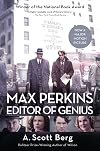
[Look Homeward, Angel] by Thomas Wolfe
[Max Perkins, Editor of Genius] by A. Scott Berg
“No leaf hangs for me in the forest; I shall lift no stone upon the heels; I shall find no door in any city. There is one voyage, the first, the last, the only one.”
Reading Thomas Wolfe is to mourn anew, each and every time. Forget the recent movement to abuse his writing as indulgent and overblown. Forget the neo-literary community, perched on a corpse they declare bloated, all the while picking and show more tearing with sour beaks. Attacking our heroes is the newest fad, and a distasteful one. And Wolfe isn’t the only classic that has suffered at the hands of revisionary criticism. Hemingway is now all too often considered boring and over simple and stereotypically uber-masculine; Fitzgerald’s work superficial and derivative, perhaps even plagiarized from his wife.
Thankfully, A. Scott Berg, with his [Editor of Genius], saw these men through the eyes of Max Perkins, the man who discovered them and midwifed their work. As the title suggests, Perkins saw them all as geniuses, particularly Wolfe. The editor had an intimidating task in distilling Wolfe’s mammoth text. Recent critics have tried to debunk the story about the manuscript’s delivery, but Berg quotes Wolfe’s agent, Madeline Boyd, requesting a truck to pick up the full work. As Perkins read, he was enchanted by the poetic and epic book. Working closely with the author, he reorganized and whittled, often foiled by Wolfe’s ability to replace several pages of new writing for the one or two cut. In the end, the book was an epic coming of age Southern tale. While the story still sags occasionally, the pay off in the last chapter is worth the effort. Eugene is ushered through his transformed hometown by the ghost of his deceased brother, assured that his journey is the only journey in life. It is easily one of the most perfect passages ever written.
Reading Berg’s history along with Wolfe’s debut, [Look Homeward, Angel] is a revelation. Seeing a photo of Wolfe standing next to a crate, filled with loose paper reaching up to knee-height, with a caption noting it’s one of three crates containing a manuscript, give Perkins’ the credit he’s due for translating the Wolfe’s beasts. But Wolfe is revealed, too. [Look Homeward, Angel]’s hero, Eugene Gant, is Wolfe himself – introverted, bookish, out of place in every circumstance except with a pen in his hand; overshadowed by a large and eccentric Southern family but a keen observer. In fact, the book was banned from Wolfe’s hometown after it was published because people were so angry with their fictionalized treatment. Reading about Gant’s youth and transformation into a writer is echoed in Perkins’ biography.
The most affecting passages in the biography are the ones detailing Perkins and Wolfe’s relationship. With five daughters, Perkins found the son he’d always wanted in Wolfe. And Wolfe had found a supportive and loving father. W.O. Gant, the substitute in [Look Homeward, Angel] for Wolfe’s real father, is an acerbic drunk with a piercing tongue. Nothing is ever good enough for W.O., and he casts himself as the eternal victim of the world’s conspiracies. Wolfe flourished under Perkins’ encouraging, and the two were easily one of the most creative partnerships ever seen.
Hemingway and Fitzgerald are showcased in Perkins’ story, as well. Not only the pugilistic bombast and the petulant child that have been substituted for their names over the years. But the secret creative zeal they both harbored, and the fragile egos that refuted the desperate need to create. Hemingway and Fitzgerald reacted in two very different ways during these battles. At one point in Perkins’ story, Fitzgerald is confined to bed with ‘grippe,’ sick to the bone over his financial situation, criticism of his work, and the progress of his next writing project. His treatment was to write about the illness, penning an article about all his daily aches and pains. Hemingway, on the other hand, was constantly on the defensive, raging against the world. Berg recounts him stringing up a tuna he’d caught and using it as a punching bag after someone told him tuna fishing was easy.
Given the genius Perkins corralled in just these three, it’s hard to believe he also edited Ring Lardner, Marjorie Kinnan Rawlings, James Jones, and Taylor Caldwell. And the biography is a rich source for other authors to seek out: Nancy Hale, Marcia Davenport, Martha Gellhorn, Will James, Etta Shiber, and Christine Watson – many would never have been known without Perkins’ eye for talent.
Though Perkins and Wolfe were estranged toward the end of Wolfe’s life, their love and admiration for one another never faltered. Wolfe’s last writing was a note from his deathbed remembering a climb to the top of a tall building with Perkins, the power and glory of life laid out before them. Perkins believed Wolfe was lost to the world much too early – and reading these two books is a testament to that obvious truth.
Bottom Line: The epitome of literary classics.
5 bones!!!!!
All time favorites. show less
[Max Perkins, Editor of Genius] by A. Scott Berg
“No leaf hangs for me in the forest; I shall lift no stone upon the heels; I shall find no door in any city. There is one voyage, the first, the last, the only one.”
Reading Thomas Wolfe is to mourn anew, each and every time. Forget the recent movement to abuse his writing as indulgent and overblown. Forget the neo-literary community, perched on a corpse they declare bloated, all the while picking and show more tearing with sour beaks. Attacking our heroes is the newest fad, and a distasteful one. And Wolfe isn’t the only classic that has suffered at the hands of revisionary criticism. Hemingway is now all too often considered boring and over simple and stereotypically uber-masculine; Fitzgerald’s work superficial and derivative, perhaps even plagiarized from his wife.
Thankfully, A. Scott Berg, with his [Editor of Genius], saw these men through the eyes of Max Perkins, the man who discovered them and midwifed their work. As the title suggests, Perkins saw them all as geniuses, particularly Wolfe. The editor had an intimidating task in distilling Wolfe’s mammoth text. Recent critics have tried to debunk the story about the manuscript’s delivery, but Berg quotes Wolfe’s agent, Madeline Boyd, requesting a truck to pick up the full work. As Perkins read, he was enchanted by the poetic and epic book. Working closely with the author, he reorganized and whittled, often foiled by Wolfe’s ability to replace several pages of new writing for the one or two cut. In the end, the book was an epic coming of age Southern tale. While the story still sags occasionally, the pay off in the last chapter is worth the effort. Eugene is ushered through his transformed hometown by the ghost of his deceased brother, assured that his journey is the only journey in life. It is easily one of the most perfect passages ever written.
Reading Berg’s history along with Wolfe’s debut, [Look Homeward, Angel] is a revelation. Seeing a photo of Wolfe standing next to a crate, filled with loose paper reaching up to knee-height, with a caption noting it’s one of three crates containing a manuscript, give Perkins’ the credit he’s due for translating the Wolfe’s beasts. But Wolfe is revealed, too. [Look Homeward, Angel]’s hero, Eugene Gant, is Wolfe himself – introverted, bookish, out of place in every circumstance except with a pen in his hand; overshadowed by a large and eccentric Southern family but a keen observer. In fact, the book was banned from Wolfe’s hometown after it was published because people were so angry with their fictionalized treatment. Reading about Gant’s youth and transformation into a writer is echoed in Perkins’ biography.
The most affecting passages in the biography are the ones detailing Perkins and Wolfe’s relationship. With five daughters, Perkins found the son he’d always wanted in Wolfe. And Wolfe had found a supportive and loving father. W.O. Gant, the substitute in [Look Homeward, Angel] for Wolfe’s real father, is an acerbic drunk with a piercing tongue. Nothing is ever good enough for W.O., and he casts himself as the eternal victim of the world’s conspiracies. Wolfe flourished under Perkins’ encouraging, and the two were easily one of the most creative partnerships ever seen.
Hemingway and Fitzgerald are showcased in Perkins’ story, as well. Not only the pugilistic bombast and the petulant child that have been substituted for their names over the years. But the secret creative zeal they both harbored, and the fragile egos that refuted the desperate need to create. Hemingway and Fitzgerald reacted in two very different ways during these battles. At one point in Perkins’ story, Fitzgerald is confined to bed with ‘grippe,’ sick to the bone over his financial situation, criticism of his work, and the progress of his next writing project. His treatment was to write about the illness, penning an article about all his daily aches and pains. Hemingway, on the other hand, was constantly on the defensive, raging against the world. Berg recounts him stringing up a tuna he’d caught and using it as a punching bag after someone told him tuna fishing was easy.
Given the genius Perkins corralled in just these three, it’s hard to believe he also edited Ring Lardner, Marjorie Kinnan Rawlings, James Jones, and Taylor Caldwell. And the biography is a rich source for other authors to seek out: Nancy Hale, Marcia Davenport, Martha Gellhorn, Will James, Etta Shiber, and Christine Watson – many would never have been known without Perkins’ eye for talent.
Though Perkins and Wolfe were estranged toward the end of Wolfe’s life, their love and admiration for one another never faltered. Wolfe’s last writing was a note from his deathbed remembering a climb to the top of a tall building with Perkins, the power and glory of life laid out before them. Perkins believed Wolfe was lost to the world much too early – and reading these two books is a testament to that obvious truth.
Bottom Line: The epitome of literary classics.
5 bones!!!!!
All time favorites. show less

3.5 stars.
A very readable and enjoyable narrative account of Woodrow Wilson's life, though it is a bit hagiographic. I learned many new things about Wilson (this is the first long bio of him I've read) and found the insights into his character and decisions mostly spot on. But Berg, like most biographers, likes his subject, and his attempts to make him the greatest man ever fall flat.
First, as many reviewers have noted, the chapter titles and chapter epigraphs from the KJV Bible are show more off-putting. Wilson is a biblical figure? Take the chapter on Wilson's first days as president, titled "Baptism." The epigraph is Matthew 3:16: "And Jesus, when he was baptized, went up straightway out of the water: and, lo, the heavens were opened unto him, and he saw the Spirit of God descending like a dove, and lighting upon him." What? Is Berg equating Wilson to Jesus? (Read Paris, 1919, wherein it is revealed Wilson equated Wilson to Jesus.) The chapter on the non-ratification of the Treaty of Versailles is titled "Passion," the epigraph from Matthew 27:30-31: "And they spit upon him, and took the reed, and smote him on the head. And after that they had mocked him, they took the robe off from him, and put his own raiment on him, and led him away to crucify him." Really? Berg is equating honest, scrupulous, objections to the Treaty of Versailles and the League of Nations charter to the whipping, scourging, mocking, and crucifixion of Jesus! If you're religiously-inclined this is sacrilegious, if you're secularly-inclined, it just doesn't make sense.
Second, Berg takes Wilson's side on the Treaty of Versailles/League of Nations. It's good to give Wilson's side of the debate, but to then take that side of the debate is another thing altogether. Henry Cabot Lodge is portrayed as a snake, his reservations puerile, his attempt at compromise insincere. Warren G. Harding is presented as (his Left-inspired caricature) a loutish, stupid dandy. (Which he was not.) Republicans against the League are political, insular, provincial, ignorant. Wilson's League is bright, humane, intelligent. The efficacy of the League is never questioned (as if US participation in the UN has kept the world safe from war since 1945). The truth is that Britain and France walked all over an inept and idealistic Wilson in Paris, creating the punitive Treaty of Versailles he claimed to not want. And Wilson, for all of that, could have had his League of Nations if he had only been willing to compromise in minor ways. Berg can't rewrite that, and his advisors, his cabinet, his wife (at one point), and his political party urged him to adopt what were, in truth, quite reasonable reservations to the League. But Wilson was mule-headed, believing more in his own rhetoric and ivory-tower idealism than in logic and reality.
Third, Berg (who obviously likes his subject) tries to whitewash his main character flaw according to twenty-first-century standards: his virulent anti-black racism. Every instance race enters the picture, Berg tries to say that Wilson wasn't as bad as others and it was a product of the times. True, there was a lot of racism in his time and others more racist than he, but when is this never the case with anybody? In matter of fact, there were many politicians (mostly Republican) who believed in racial equality, who wanted to ensure blacks had civil rights, and were against segregation. Berg's attempt to blame Southerners in Wilson's cabinet for the instigation of segregation in the federal government is just silly. Wilson allowed it to happen, it had his imprimatur, he defended it, and he supported it. Berg barely mentions the rise in brutal lynchings during his tenure in office, and his general ignoring of the issue. Wilson decried lynchings, but did nothing to stop them, as his political party, the Democrats, blocked any attempt at redress or making them federal crimes. Let me give you a typical example of the Berg whitewash of Wilson's racism, from p. 245: "Such jokes ['darkey' jokes] remained part of Wilson's repertoire as well. They were never malicious, though the humor was based on the Negro being slow in body and mind." Did you catch that? Calling a black man stupid and lazy is NOT malicious. I guess because the paragon of progressivism said it. (And, it's okay, also p. 245, because Eugene V. Debs, an everybody-loving Socialist, told racist jokes too.) What tendentious crap! Mr. Berg, your hero was a racist. Deal with it, don't try to make it okay. Wilson and the progressive Democrats set race relations and the civil rights movement back by decades. They made it worse. Wilson was not a passive bystander, he was a supportive promoter of segregation and racism.
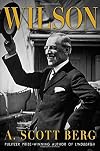
Last, to cosmetic issues. The cover photo is bad. Wilson's face is half in shadow and it is blurry. It looks as if it was a bad screen-grab from a 1919 newsreel. (And I suspect that is what it is.) The note system is horrid. I never thought anything could be worse than the system used in, say, Morris's Theodore Rex, but I was wrong. The system here is unwieldy, abbreviation laden, onerous, disorganized, and does not aid anyone in finding what sources Berg used. Sure, they could be decrypted, but what is wrong with proper endnotes? The chapter titles and epigraphs are, as mentioned above, just plain stupid. And blasphemous.
To sum up. I am disinclined to like Wilson, in fact, I dislike his politics intensely. By reading this book I have gained more respect for him as a professor and even as a private man, but I still, despite the attempt at hagiography, find him a blundering idealist on the foreign policy stage and a socialistic-statist on the domestic front. Wilson's policies, even more than the progressive TR or the quietly progressive WHT, set the US on the road to serfdom. And the original sins of progressivism, (a) thinking mankind is perfectible (instead of innately depraved) and (b) that intellect paired to government power can create a more perfect society, are fully demonstrated in Wilson's thoughts and deeds. And for that I will never like the man. The book? It is a fine read, a fine chronicle of the times, and a fine bio of Wilson, if tempered by the reader's outside knowledge. I worry that people not conversant in more history and the other side of the issues will lap up and believe the pap that Berg tries to pass off in his rose-colored-glasses portrayal of Woodrow Wilson.
I will have to buy John Milton Cooper's biography of Wilson to see if it is any better. show less
A very readable and enjoyable narrative account of Woodrow Wilson's life, though it is a bit hagiographic. I learned many new things about Wilson (this is the first long bio of him I've read) and found the insights into his character and decisions mostly spot on. But Berg, like most biographers, likes his subject, and his attempts to make him the greatest man ever fall flat.
First, as many reviewers have noted, the chapter titles and chapter epigraphs from the KJV Bible are show more off-putting. Wilson is a biblical figure? Take the chapter on Wilson's first days as president, titled "Baptism." The epigraph is Matthew 3:16: "And Jesus, when he was baptized, went up straightway out of the water: and, lo, the heavens were opened unto him, and he saw the Spirit of God descending like a dove, and lighting upon him." What? Is Berg equating Wilson to Jesus? (Read Paris, 1919, wherein it is revealed Wilson equated Wilson to Jesus.) The chapter on the non-ratification of the Treaty of Versailles is titled "Passion," the epigraph from Matthew 27:30-31: "And they spit upon him, and took the reed, and smote him on the head. And after that they had mocked him, they took the robe off from him, and put his own raiment on him, and led him away to crucify him." Really? Berg is equating honest, scrupulous, objections to the Treaty of Versailles and the League of Nations charter to the whipping, scourging, mocking, and crucifixion of Jesus! If you're religiously-inclined this is sacrilegious, if you're secularly-inclined, it just doesn't make sense.
Second, Berg takes Wilson's side on the Treaty of Versailles/League of Nations. It's good to give Wilson's side of the debate, but to then take that side of the debate is another thing altogether. Henry Cabot Lodge is portrayed as a snake, his reservations puerile, his attempt at compromise insincere. Warren G. Harding is presented as (his Left-inspired caricature) a loutish, stupid dandy. (Which he was not.) Republicans against the League are political, insular, provincial, ignorant. Wilson's League is bright, humane, intelligent. The efficacy of the League is never questioned (as if US participation in the UN has kept the world safe from war since 1945). The truth is that Britain and France walked all over an inept and idealistic Wilson in Paris, creating the punitive Treaty of Versailles he claimed to not want. And Wilson, for all of that, could have had his League of Nations if he had only been willing to compromise in minor ways. Berg can't rewrite that, and his advisors, his cabinet, his wife (at one point), and his political party urged him to adopt what were, in truth, quite reasonable reservations to the League. But Wilson was mule-headed, believing more in his own rhetoric and ivory-tower idealism than in logic and reality.
Third, Berg (who obviously likes his subject) tries to whitewash his main character flaw according to twenty-first-century standards: his virulent anti-black racism. Every instance race enters the picture, Berg tries to say that Wilson wasn't as bad as others and it was a product of the times. True, there was a lot of racism in his time and others more racist than he, but when is this never the case with anybody? In matter of fact, there were many politicians (mostly Republican) who believed in racial equality, who wanted to ensure blacks had civil rights, and were against segregation. Berg's attempt to blame Southerners in Wilson's cabinet for the instigation of segregation in the federal government is just silly. Wilson allowed it to happen, it had his imprimatur, he defended it, and he supported it. Berg barely mentions the rise in brutal lynchings during his tenure in office, and his general ignoring of the issue. Wilson decried lynchings, but did nothing to stop them, as his political party, the Democrats, blocked any attempt at redress or making them federal crimes. Let me give you a typical example of the Berg whitewash of Wilson's racism, from p. 245: "Such jokes ['darkey' jokes] remained part of Wilson's repertoire as well. They were never malicious, though the humor was based on the Negro being slow in body and mind." Did you catch that? Calling a black man stupid and lazy is NOT malicious. I guess because the paragon of progressivism said it. (And, it's okay, also p. 245, because Eugene V. Debs, an everybody-loving Socialist, told racist jokes too.) What tendentious crap! Mr. Berg, your hero was a racist. Deal with it, don't try to make it okay. Wilson and the progressive Democrats set race relations and the civil rights movement back by decades. They made it worse. Wilson was not a passive bystander, he was a supportive promoter of segregation and racism.
Last, to cosmetic issues. The cover photo is bad. Wilson's face is half in shadow and it is blurry. It looks as if it was a bad screen-grab from a 1919 newsreel. (And I suspect that is what it is.) The note system is horrid. I never thought anything could be worse than the system used in, say, Morris's Theodore Rex, but I was wrong. The system here is unwieldy, abbreviation laden, onerous, disorganized, and does not aid anyone in finding what sources Berg used. Sure, they could be decrypted, but what is wrong with proper endnotes? The chapter titles and epigraphs are, as mentioned above, just plain stupid. And blasphemous.
To sum up. I am disinclined to like Wilson, in fact, I dislike his politics intensely. By reading this book I have gained more respect for him as a professor and even as a private man, but I still, despite the attempt at hagiography, find him a blundering idealist on the foreign policy stage and a socialistic-statist on the domestic front. Wilson's policies, even more than the progressive TR or the quietly progressive WHT, set the US on the road to serfdom. And the original sins of progressivism, (a) thinking mankind is perfectible (instead of innately depraved) and (b) that intellect paired to government power can create a more perfect society, are fully demonstrated in Wilson's thoughts and deeds. And for that I will never like the man. The book? It is a fine read, a fine chronicle of the times, and a fine bio of Wilson, if tempered by the reader's outside knowledge. I worry that people not conversant in more history and the other side of the issues will lap up and believe the pap that Berg tries to pass off in his rose-colored-glasses portrayal of Woodrow Wilson.
I will have to buy John Milton Cooper's biography of Wilson to see if it is any better. show less

A. Scott Berg was already a well-known biographer when, after a long series of requests, he finally got an interview with Katharine Hepburn in 1983. Hepburn was 75 and Berg was 33. The idea was to interview Hepburn for a piece that would run in Esquire Magazine's 50th Anniversary issue. It was a rare occasion for the very private Hepburn to grant an interview in those days. But the two immediately hit it off and began a friendship that last until Hepburn's death in 2003. This book is a show more memoir of Berg's relationship with the iconic Hepburn in which he provides a picture of the star, gathered during his many dinners and weekends with her both in her New York City apartment and at her longtime family home in Connecticut. During many of these years, Berg was working on a biography of Samuel Goldwyn, and provided Berg background and anecdotes about Goldwyn himself and those early days of Hollywood. Hepburn also made possible the biography of Charles Lindberg for which Berg would go on to win a Pulitzer Prize by providing him a crucial introduction to Lindberg's widow, Anne Morrow Lindberg.
Hepburn also opened up to Berg about her own life, astonishingly long career and romantic relationships, including, of course, the great love of her life, Spencer Tracy. Berg also provides a picture of Hepburn herself: funny, opinionated, often imperious and sometimes more than a little bit of a bully. But it also the picture of a fiercely independent woman, an artist with the highest of standards when it came to acting and the productions she appeared in, whether in movies or in theater. The book alternates between Berg's accounts of his many conversations and experiences with Hepburn and passages that provide a more standard biography of her life. Because Hepburn was such an intriguing figure and Berg is such a fluid and entertaining writer with an enormous amount of affection for his subject, here, Kate Remembered was for me a rewarding reading experience. I would not call it an authoritative biography of Katharine Hepburn, but then neither does Berg. show less
Hepburn also opened up to Berg about her own life, astonishingly long career and romantic relationships, including, of course, the great love of her life, Spencer Tracy. Berg also provides a picture of Hepburn herself: funny, opinionated, often imperious and sometimes more than a little bit of a bully. But it also the picture of a fiercely independent woman, an artist with the highest of standards when it came to acting and the productions she appeared in, whether in movies or in theater. The book alternates between Berg's accounts of his many conversations and experiences with Hepburn and passages that provide a more standard biography of her life. Because Hepburn was such an intriguing figure and Berg is such a fluid and entertaining writer with an enormous amount of affection for his subject, here, Kate Remembered was for me a rewarding reading experience. I would not call it an authoritative biography of Katharine Hepburn, but then neither does Berg. show less
Lists
Awards


You May Also Like


Associated Authors
Statistics
- Works
- 10
- Also by
- 3
- Members
- 4,699
- Popularity
- #5,365
- Rating
- 4.0
- Reviews
- 87
- ISBNs
- 131
- Languages
- 8
- Favorited
- 4

