

Patrick McGilligan
Author of Alfred Hitchcock: A Life in Darkness and Light
About the Author
One of America's outstanding film biographers, Patrick McGilligan has edited the acclaimed Backstory series of screenwriter interviews and written distinguished biographies of motion picture figures including George Cukor, Fritz Lang, Alfred Hitchcock, and, most recently, Orson Welles. He lives in show more Milwaukee, Wisconsin. show less
Image credit: photo by: Larry D. Moore
Series
Works by Patrick McGilligan
Oscar Micheaux: The Great and Only: The Life of America's First Black Filmmaker (2007) 71 copies, 1 review
Backstory 1: Interviews with Screenwriters of Hollywood's Golden Age (1901) — Editor — 46 copies, 1 review
Backstory 3: Interviews with Screenwriters of the 60s (Backstory Series) (1997) — Editor — 29 copies
Associated Works
Tagged
Common Knowledge
- Birthdate
- 1951
- Gender
- male
- Relationships
- Daniell, Tina (spouse)
- Nationality
- USA
- Places of residence
- Milwaukee, Wisconsin, USA
- Associated Place (for map)
- Wisconsin, USA
Members
Reviews
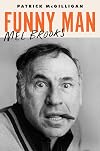
Someone said that celebrity bios always reveal the ugly side that famous people try so hard to keep hidden. Very true for this one, which gives myriad examples of the "mean Mel", and a lot fewer of the "nice Mel". No one, including Brooks himself, seems to understand why he's so angry all the time, and I wonder why, as the author points out, Brooks can't write a starring role for a woman to save his life. You'd think that being married to the sublime Anne Bancroft would have given him some show more inspiration. Mel treats everyone except Sid Caesar poorly, even Bancroft when she's directing her first and only film and he jumps in to yell "Cut!" and to try and fire her cameraman. But his early movies, and Spaceballs, are still forever dear to me, as is his wickedly vulgar Jewish sensibility. Too much of the 553 page narrative is spend on film financials; it's bloated and should have had a better editor. show less
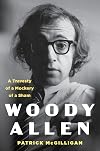
Marvellous and exhaustively-researched biography. As Allen is 90 this year and unlikely to make more films (despite what he continues to claim), this feels like a neat capstone for the director's astonishing career. Patrick McGilligan has given me many hours of pleasure over the years and this book continues that trend. It's wonderfully dense on the formation of this comic, from school to his early career struggles and years in television. The last handful of films, especially the last three show more (released post-cancellation) have thinner material, which is an annoyance. This reflects a reality, I suppose; McGilligan wasn't an "authorised" biographer, and much of the material here is synthesised from existing texts. There haven't been many if any books on the films themselves since the early 2010s, so this is a lacuna in the text for a future writer.
Naturally every review wants to talk about the Allen/Farrow malarkey, both in terms of the Soon-Yi situation and the more unsavoury allegations. McGilligan is scrupulously fair in presenting all sides and allegations. I saw a couple of professional reviews that decried his "obvious bias", yet it felt to me that the reviewer hadn't read the entire book - and indeed I suspect what those reviewers saw as bias was in fact "not reaching the same conclusion as me"! At this point, the reasonable doubt for Allen seems pretty bloody strong. Certainly, McGilligan plays his cards in the introduction, that he thinks that what has happened since 2013, and especially since 2017, is a witch-hunt. That colours his conclusions, undeniably, but he presents the breadth of the situation without fear or favour. Indeed, if there is an area where McGilligan is biased, it's in terms of Allen's later films - to the point where he makes it very clear when he dismisses reviewers he feels are wrong or have an axe to grind! Indeed, it becomes a bit repetitive in the later chapters to have him quote from negative or mixed reviews with a backhanded comment following. I'm sympathetic, and I certainly agree with Roger Ebert that - in the case of many albeit not all of the later films - had a young filmmaker brought one of them to, say, Sundance, the reaction would be very different. Both Allen's public reputation and the weight of his earlier masterpieces bears heavily on his later work. But since McGilligan doesn't actually present as a film scholar, i.e. he doesn't spend much time talking about cinematography and screenwriting as arts, per se, his dismissals of reviewers often tend to be ad hominem attacks or simply that: dismissals. It's underwhelming. Far better would have been to put the praise of the films in the voice of others.
Inevitably a few errors creep in here and there. David Mamet is mentioned as writing a play alongside Allen's when he would have been barely out of short trousers (it is correctly mentioned again decades later). Allen is wrongly credited as acting in James Ivory's A Soldier's Daughter Never Cries when it is in fact archive footage used on a television screen. And I'm still trying to figure out what McGilligan means by suggesting that Allen had a cameo on Mad About You. (There are a few other quirks, but that's a necessary evil with first editions of fat tomes spanning 90 years.)
As an 800-page gorilla with this much source-based material, I cheer the publishers for a dense index. Indexing is such a wonderful art that has been neglected by so many in recent years: an expense that publishers often don't value, but which I feel is cutting off the nose to spite the face. I quibble with McGilligan's chapter titles, which use the starting year for that section rather than an overview, even though the book is chronological (why have a chapter subtitled "2012", for instance, when the chapter covers 2012 through 2017?). I also grumble - just a tad - about the endnotes. Perhaps it was because of the book's length, but rather than detailed endnotes, we have paragraphs in the format of "first lines of quote or statement" come from "source". It means the reader has to spend time in this section to locate the right note, and if it's from a source previously used (and thus cited in abbreviated form) scrawl through everything that came before to find the source. I get it, but as this book will become a touchstone for future researchers, a little annoying.
For a director who gave us 50 incredible, and incredibly varied, films, this is a hugely useful - and more than once, surprising - tome that will remain of value to Allen lovers for decades to come. show less
Naturally every review wants to talk about the Allen/Farrow malarkey, both in terms of the Soon-Yi situation and the more unsavoury allegations. McGilligan is scrupulously fair in presenting all sides and allegations. I saw a couple of professional reviews that decried his "obvious bias", yet it felt to me that the reviewer hadn't read the entire book - and indeed I suspect what those reviewers saw as bias was in fact "not reaching the same conclusion as me"! At this point, the reasonable doubt for Allen seems pretty bloody strong. Certainly, McGilligan plays his cards in the introduction, that he thinks that what has happened since 2013, and especially since 2017, is a witch-hunt. That colours his conclusions, undeniably, but he presents the breadth of the situation without fear or favour. Indeed, if there is an area where McGilligan is biased, it's in terms of Allen's later films - to the point where he makes it very clear when he dismisses reviewers he feels are wrong or have an axe to grind! Indeed, it becomes a bit repetitive in the later chapters to have him quote from negative or mixed reviews with a backhanded comment following. I'm sympathetic, and I certainly agree with Roger Ebert that - in the case of many albeit not all of the later films - had a young filmmaker brought one of them to, say, Sundance, the reaction would be very different. Both Allen's public reputation and the weight of his earlier masterpieces bears heavily on his later work. But since McGilligan doesn't actually present as a film scholar, i.e. he doesn't spend much time talking about cinematography and screenwriting as arts, per se, his dismissals of reviewers often tend to be ad hominem attacks or simply that: dismissals. It's underwhelming. Far better would have been to put the praise of the films in the voice of others.
Inevitably a few errors creep in here and there. David Mamet is mentioned as writing a play alongside Allen's when he would have been barely out of short trousers (it is correctly mentioned again decades later). Allen is wrongly credited as acting in James Ivory's A Soldier's Daughter Never Cries when it is in fact archive footage used on a television screen. And I'm still trying to figure out what McGilligan means by suggesting that Allen had a cameo on Mad About You. (There are a few other quirks, but that's a necessary evil with first editions of fat tomes spanning 90 years.)
As an 800-page gorilla with this much source-based material, I cheer the publishers for a dense index. Indexing is such a wonderful art that has been neglected by so many in recent years: an expense that publishers often don't value, but which I feel is cutting off the nose to spite the face. I quibble with McGilligan's chapter titles, which use the starting year for that section rather than an overview, even though the book is chronological (why have a chapter subtitled "2012", for instance, when the chapter covers 2012 through 2017?). I also grumble - just a tad - about the endnotes. Perhaps it was because of the book's length, but rather than detailed endnotes, we have paragraphs in the format of "first lines of quote or statement" come from "source". It means the reader has to spend time in this section to locate the right note, and if it's from a source previously used (and thus cited in abbreviated form) scrawl through everything that came before to find the source. I get it, but as this book will become a touchstone for future researchers, a little annoying.
For a director who gave us 50 incredible, and incredibly varied, films, this is a hugely useful - and more than once, surprising - tome that will remain of value to Allen lovers for decades to come. show less
Oscar Micheaux: The Great and Only: The Life of America's First Black Filmmaker by Patrick McGilligan
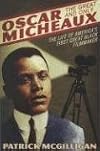
"Oscar Micheaux: The Great and Only: The Life of America's First Great Black Filmmaker," is a culminating work, the result of more than 35 years of scholarship intent on returning its subject to his rightful place in the history of American cinema. Micheaux (1884–1951) "deserves to be considered in the same breath as the sainted D. W. Griffith," argues Patrick McGilligan, who pays handsome tributes to the biographers and critics who have made his comprehensive biography possible.
But what show more made Micheaux great? Like Griffith, Micheaux's best work was state of the art, employ ing deft use of close-ups and mon tage, for example, but also taking on epic and controversial subjects Indeed, Griffith's heroic depiction of the Knights of the Ku Klux Klan and disparaging portrayal of blacks in "The Birth of a Nation" (1915) so enraged Micheaux that he decided to present a counter argument in films that would match his rival's high aesthetic standards.
To call Griffith a rival, however, is misleading. Although Micheaux wanted to compete, his films never reached more than 300 theaters whereas between 1919 and 1951 (during which Micheaux made something like 45 films), Griffith and other Hollywood filmmakers had access to between 16,000 and 20,000 movie screens. As an independent filmmaker Micheaux never had access to the kind of production funding that even low-budget Hollywood films could count on. Hollywood was almost exclusively white, employing black actors, to be sure, but usually in minor, demeaning roles.
Micheaux persevered, seeking the backing not only of black entrepreneurs but also of a few Jewish theater owners, who ran his "race pictures" in venues ranging from Harlem to the Southwest. That Micheaux had only one subject, really — the ramifications of being "colored" — also limited his audience, not only among whites but even among blacks who felt his focus on the color line impeded the progress of the race or was simply passé.
The director constantly fell afoul of censors, who mutilated his films, forcing him to delete, for example, references to miscegenation and scenes that castigated religion. Although Micheaux had a popular following, he was criticized in the black press for not providing his audience with positive role models. He fought back, sometimes showing his films in uncensored form, or even attaching censors' seals of approval from earlier films to his new releases.
Micheaux was his own man. He began his career as a homesteader in South Dakota, writing about his experience in self-published novels and in the Chicago Defender, a black newspaper, touting his success but also chastising blacks for not striking out on their own. As the only black homesteader in his part of South Dakota, Micheaux was at first a novelty tolerated by his white neighbors, and then a highly respected authority the whites came to for advice. He fell in love with a Swedish woman, sharing both an emotional and intellectual bond with her that he broke at painful cost to himself.
Deciding he must marry a black woman, he chose one in thrall to a pompous father, a corrupt preacher who eventually got hold of some of Micheaux's land, selling it for a pittance. Micheaux's disgust with his father-in-law fueled a distrust of established religion and black leadership that would make Micheaux a controversial figure in the black community and would lead to the production of one of his masterpieces, "Body and Soul," starring Paul Robeson.
The essential theme of Micheaux's fiction and films was how the black man could remain true to himself and his race while developing his full human potential. James Weldon Johnson's "The Autobiography of an Ex-Colored Man" (1912) had a profound impact on Micheaux, who used the phenomenon of lightskinned blacks passing as white in many of his films. Micheaux sympathetically portrayed the temptations of passing as a way to assimilate into the majority culture, but ultimately his films show that blacks cannot deny their roots.
Micheaux did not politicize the issue of passing so much as present it as a psychological and ethical issue. He thought his race could rise only through individuals taking responsibility for their own fates. He distrusted movements and organizations, especially the Communist Party, which exploited black disenchantment and provided no encouragement for individual endeavor.
Micheaux's films do not discount the injustices blacks have suffered, but as Mr. McGilligan demonstrates, what makes Micheaux "the great and only" is his unswerving devotion to an art that explores his own characters' failings as well as their triumphs. This pioneering filmmaker, unbowed by criticism, censorship, and controversy, has finally been honored by a biography that does justice to his provocative and indispensable work.
Micheaux & Robeson
Although Patrick Gilligan estimates that Oscar Micheaux made something like 45 films, only 15 survive, and most of those are in terrible condition. Unlike Hollywood filmmakers, who would have 30 or more prints of a film available for distribution, Micheaux could afford only four, and those copies were lost in the distribution cycle. Censors chopped up his work, and he did not have the resources to restore it. His second wife made no effort to preserve his films and even destroyed many of his papers.
Of the 15 extant films only a few are available on DVD, such as "Lying Lips" (1941), a murder mystery set in Harlem. It is an awkward potboiler. The acting is atrocious. Clearly Micheaux thought he could make a quick buck by inserting nonsensical but crowd pleasing musical numbers that have only a tangential relation to the plot. The DVD is of poor quality: Images are blurry and lines of dialogue are lost in this scratched and patched print.
"Body and Soul" (1925), on the other hand, is available in a stunning restoration from the George Eastman House. Paul Robeson is mesmerizing in his screen debut. He plays an ex-convict who has recast himself as the Reverend Isaiah T. Jenkins. Women adore him — especially Martha Jane, who is obsessed with the idea that her daughter Isabelle should marry Jenkins. Martha Jane tells her lady friends she is going to give all her savings to Jenkins when he marries Isabelle.
Robeson's portrayal of Jenkins's self-satisfied villainy is a tribute not only to his acting (without the aid of his superb voice), but also to Micheaux's script and direction. Jenkins is not sentimentalized as a lovable rascal or as a tormented sinner; he is an evil man who relishes his ruses. Micheaux's unforgiving and riveting portrait is intensified by Robeson's second role as Jenkins's twin, the meek Sylvester, who seeks to wrest Isabelle away from his nefarious brother.
But what truly elevates the film is Micheaux's portrayal of the mother, who is so besotted with Jenkins that she cannot bear to hear Isabelle's story. In a brilliantly conceived scene Jenkins rapes her, although only his huge shoes are shown as he advances toward his victim. Micheaux scholar Pearl Bowser, who supplies a commentary for the restoration of "Body and Soul," suggests that Martha Jane has sublimated her own sexual desire in offering Isabelle to Jenkins. Perhaps. Although Micheaux's point, it seems to me, is much larger: the blindness of the black community in failing to detect the hypocrisy and criminality of leaders who cloak themselves in the sanctity of the church. show less
But what show more made Micheaux great? Like Griffith, Micheaux's best work was state of the art, employ ing deft use of close-ups and mon tage, for example, but also taking on epic and controversial subjects Indeed, Griffith's heroic depiction of the Knights of the Ku Klux Klan and disparaging portrayal of blacks in "The Birth of a Nation" (1915) so enraged Micheaux that he decided to present a counter argument in films that would match his rival's high aesthetic standards.
To call Griffith a rival, however, is misleading. Although Micheaux wanted to compete, his films never reached more than 300 theaters whereas between 1919 and 1951 (during which Micheaux made something like 45 films), Griffith and other Hollywood filmmakers had access to between 16,000 and 20,000 movie screens. As an independent filmmaker Micheaux never had access to the kind of production funding that even low-budget Hollywood films could count on. Hollywood was almost exclusively white, employing black actors, to be sure, but usually in minor, demeaning roles.
Micheaux persevered, seeking the backing not only of black entrepreneurs but also of a few Jewish theater owners, who ran his "race pictures" in venues ranging from Harlem to the Southwest. That Micheaux had only one subject, really — the ramifications of being "colored" — also limited his audience, not only among whites but even among blacks who felt his focus on the color line impeded the progress of the race or was simply passé.
The director constantly fell afoul of censors, who mutilated his films, forcing him to delete, for example, references to miscegenation and scenes that castigated religion. Although Micheaux had a popular following, he was criticized in the black press for not providing his audience with positive role models. He fought back, sometimes showing his films in uncensored form, or even attaching censors' seals of approval from earlier films to his new releases.
Micheaux was his own man. He began his career as a homesteader in South Dakota, writing about his experience in self-published novels and in the Chicago Defender, a black newspaper, touting his success but also chastising blacks for not striking out on their own. As the only black homesteader in his part of South Dakota, Micheaux was at first a novelty tolerated by his white neighbors, and then a highly respected authority the whites came to for advice. He fell in love with a Swedish woman, sharing both an emotional and intellectual bond with her that he broke at painful cost to himself.
Deciding he must marry a black woman, he chose one in thrall to a pompous father, a corrupt preacher who eventually got hold of some of Micheaux's land, selling it for a pittance. Micheaux's disgust with his father-in-law fueled a distrust of established religion and black leadership that would make Micheaux a controversial figure in the black community and would lead to the production of one of his masterpieces, "Body and Soul," starring Paul Robeson.
The essential theme of Micheaux's fiction and films was how the black man could remain true to himself and his race while developing his full human potential. James Weldon Johnson's "The Autobiography of an Ex-Colored Man" (1912) had a profound impact on Micheaux, who used the phenomenon of lightskinned blacks passing as white in many of his films. Micheaux sympathetically portrayed the temptations of passing as a way to assimilate into the majority culture, but ultimately his films show that blacks cannot deny their roots.
Micheaux did not politicize the issue of passing so much as present it as a psychological and ethical issue. He thought his race could rise only through individuals taking responsibility for their own fates. He distrusted movements and organizations, especially the Communist Party, which exploited black disenchantment and provided no encouragement for individual endeavor.
Micheaux's films do not discount the injustices blacks have suffered, but as Mr. McGilligan demonstrates, what makes Micheaux "the great and only" is his unswerving devotion to an art that explores his own characters' failings as well as their triumphs. This pioneering filmmaker, unbowed by criticism, censorship, and controversy, has finally been honored by a biography that does justice to his provocative and indispensable work.
Micheaux & Robeson
Although Patrick Gilligan estimates that Oscar Micheaux made something like 45 films, only 15 survive, and most of those are in terrible condition. Unlike Hollywood filmmakers, who would have 30 or more prints of a film available for distribution, Micheaux could afford only four, and those copies were lost in the distribution cycle. Censors chopped up his work, and he did not have the resources to restore it. His second wife made no effort to preserve his films and even destroyed many of his papers.
Of the 15 extant films only a few are available on DVD, such as "Lying Lips" (1941), a murder mystery set in Harlem. It is an awkward potboiler. The acting is atrocious. Clearly Micheaux thought he could make a quick buck by inserting nonsensical but crowd pleasing musical numbers that have only a tangential relation to the plot. The DVD is of poor quality: Images are blurry and lines of dialogue are lost in this scratched and patched print.
"Body and Soul" (1925), on the other hand, is available in a stunning restoration from the George Eastman House. Paul Robeson is mesmerizing in his screen debut. He plays an ex-convict who has recast himself as the Reverend Isaiah T. Jenkins. Women adore him — especially Martha Jane, who is obsessed with the idea that her daughter Isabelle should marry Jenkins. Martha Jane tells her lady friends she is going to give all her savings to Jenkins when he marries Isabelle.
Robeson's portrayal of Jenkins's self-satisfied villainy is a tribute not only to his acting (without the aid of his superb voice), but also to Micheaux's script and direction. Jenkins is not sentimentalized as a lovable rascal or as a tormented sinner; he is an evil man who relishes his ruses. Micheaux's unforgiving and riveting portrait is intensified by Robeson's second role as Jenkins's twin, the meek Sylvester, who seeks to wrest Isabelle away from his nefarious brother.
But what truly elevates the film is Micheaux's portrayal of the mother, who is so besotted with Jenkins that she cannot bear to hear Isabelle's story. In a brilliantly conceived scene Jenkins rapes her, although only his huge shoes are shown as he advances toward his victim. Micheaux scholar Pearl Bowser, who supplies a commentary for the restoration of "Body and Soul," suggests that Martha Jane has sublimated her own sexual desire in offering Isabelle to Jenkins. Perhaps. Although Micheaux's point, it seems to me, is much larger: the blindness of the black community in failing to detect the hypocrisy and criminality of leaders who cloak themselves in the sanctity of the church. show less
Alfred Hitchcock: A Life in Darkness and Light – The Definitive Biography of Cinema's Master of Suspense and His Extraordinary Career by Patrick McGilligan
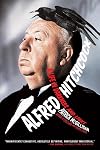
This is a must-read for any film buff or filmographer as it carefully goes through the man’s life and career, one movie at a time. It starts with his early silent film career Britain in the 1920’s and progresses to his last film in Hollywood in the 1970’s. The author is adept at explaining the cutting-edge processes that Hitchcock either created wholly himself or extrapolated upon, a lot of which are still widely used in film production today. While the book heavily features the show more production and players involved in the creation of his movies, the book also goes far to debunk a lot of the myths of Hitchcock himself; he emerges fully-fleshed (pun intended--he would like that!). show less
Lists
Awards


You May Also Like


Associated Authors
Statistics
- Works
- 28
- Also by
- 4
- Members
- 1,459
- Popularity
- #17,608
- Rating
- 3.8
- Reviews
- 14
- ISBNs
- 109
- Languages
- 3