
Peter Biskind
Author of Easy riders, raging bulls : how the sex-drugs-and-rock 'n' roll generation saved Hollywood
About the Author
Peter Biskind is the author of "The Godfather Companion" & "Easy Riders, Raging Bulls." A contributing editor at "Vanity Fair," he has written for "The New York Times," the "Los Angeles Times," "The Washington Post," & "Rolling Stone," among other publications. He lives in New York City. (Bowker show more Author Biography) show less
Series
Works by Peter Biskind
Easy riders, raging bulls : how the sex-drugs-and-rock 'n' roll generation saved Hollywood (1998) 1,568 copies, 28 reviews
Down and Dirty Pictures: Miramax, Sundance, and the Rise of Independent Film (2004) 661 copies, 2 reviews
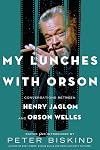
My Lunches with Orson: Conversations between Henry Jaglom and Orson Welles (2013) 237 copies, 18 reviews
Seeing Is Believing: How Hollywood Taught Us to Stop Worrying and Love the Fifties (1983) 165 copies, 3 reviews
The Sky Is Falling: How Vampires, Zombies, Androids, and Superheroes Made America Great for Extremism (2018) 72 copies, 3 reviews
The Godfather Companion: Everything You Ever Wanted to Know About All Three Godfather Films (1900) 71 copies, 1 review
Easy Riders, Raging Bulls [2003 film] 15 copies
Tagged
Common Knowledge
- Birthdate
- 1940-05-22
- Gender
- male
- Occupations
- journalist
magazine editor
film director - Organizations
- Premiere
American Film
Vanity Fair - Nationality
- USA
- Associated Place (for map)
- USA
Members
Reviews
I wouldn't call myself an Orson Welles devotee but I do admire his work and I find his life story fascinating, particularly as told by Simon Callow in the first volume of his biography, [Orson Welles: The Road to Xanadu]. There's something undeniably tragic about his trajectory - the boy genius who can do no wrong, who knocks it out of the park with his very first film and is never able to duplicate that initial success, despite flashes of brilliance that tantalize with huge helpings of "if show more only.". He ends his life with half a dozen projects in some suspended state of development, shilling crap wine on TV and regularly eating lunch at Ma Maison with his friend and fellow filmmaker Henry Jaglom. Recognizing that he had gained intimate access to one of the great creative talents of the 20th century, Jaglom had the foresight to record their lunchtime conversations over several years. This book is composed of transcriptions of those conversations and it is absolutely fascinating. Welles is brilliant, irascible, has an opinion about everything and everyone and is unsparing in both his praise and damnation of former colleagues, friends, wives and enemies. And Jaglom seems to know how to ask all the right questions to tease those opinions out of him.
I can't remember when I've enjoyed a book more. show less
I can't remember when I've enjoyed a book more. show less
 This review was written for LibraryThing Early Reviewers.
Fat and terribly rude. That line from Four Weddings and a Funeral might have been what I took away from this book had I not "grown up Welles." My memories of his films and voice and Carson guest appearances colored this strange series of interrupted interviews and asides with a melancholy for the sometimes sad genius that is presented here. He was an amazing director and actor with the somewhat undisiplined intellect of a poet and rogue thinker. All that is on display in this quirky volume show more that I read in one sitting and two martinis. show less
This review was written for LibraryThing Early Reviewers.In 1983-85, the last years of Orson Wells' life, Henry Jaglom regularly had lunch with Welles in Los Angeles. At Welles' suggestion, Jaglom taped these conversations, and this book collects the transcripts. It's by turns fun and depressing to listen to Welles. Fun because he has a million stories to tell, and is really good at telling them. On more than several occasions, I burst out laughing at the book. Depressing because it's at a time when Welles is somewhat delusional about the show more possibility of making more movies, and also he hide very well conversation about his weight and health problems. It feels like an honest record of his conversations and his insights into movies, actors, producers, the theatre, and the like. One wishes the book were footnoted -- Welles makes claims sometimes that seem to push the bounds of credulity, but on the other hand this is Orson Welles, and you can never tell. show less
During his final years Orson Welles was under-financed and under-appreciated; recognised as a legendary figure of the film world, he was unable to secure financing to make even a modest movie in the way he wanted. This collection of lunchtime conversations was recorded in the early 1980s, a time when Welles was fighting to begin a number of projects that never came to fruition. While Welles the filmmaker required financial backing to realise his vision, Welles the conversationalist was bound show more by no such restraints. His friend and occasional man-of-business Henry Jaglom was authorised to record their lunchtime table talk as long as Welles couldn't see the recorder. The resulting book, brought together by Peter Biskind, is for Welles fans only and presupposes a knowledge of his oeuvre that is best obtained from a more general book such as Jonathan Rosenbaum's 'This is Orson Welles' or Clinton Heylin's 'Despite the System'. Welles was a legendary talker, and his conversations with Jaglom show him at his Johnsonian best, an opinionated, deliberately provocative, gossippy polymath – but well-informed, self-revealing, wise and always supremely entertaining. Unlike the conversations taped by Peter Bogdanovich for 'This is Orson Welles', the Jaglom tapes offer a spontaneous Welles, not revised by the great man once transcribed. One by-product of this is that many cutting comments about his colleagues make it into print; it seems likely that Welles, who was always highly sensitive of criticism of himself by others in the film industry, would have softened, deleted or generalised some of the harsher remarks he makes to Jaglom about actors and filmmakers he has known. Over all, this book is a compulsive read, and sadly must stand in place of the final films Welles never got to make. show less
Lists
Awards


You May Also Like


Associated Authors
Statistics
- Works
- 14
- Members
- 3,075
- Popularity
- #8,305
- Rating
- 3.7
- Reviews
- 56
- ISBNs
- 91
- Languages
- 7
- Favorited
- 3

