
Kevin Brownlow
Author of The Parade's Gone By...
About the Author
Image credit: cinemamuseum.org.uk
Works by Kevin Brownlow
Behind the Mask of Innocence: Sex, Violence, Crime: Films of Social Conscience in the Silent Era (1990) 54 copies, 2 reviews
Associated Works
Silent Echoes: Discovering Early Hollywood Through the Films of Buster Keaton (1999) — Foreword, some editions — 53 copies, 1 review
Tagged
Common Knowledge
- Canonical name
- Brownlow, Kevin
- Legal name
- Brownlow, Robert Kevin
- Birthdate
- 1938-06-02
- Gender
- male
- Occupations
- film historian
filmmaker
author - Nationality
- UK
- Birthplace
- Crowborough, East Sussex, England, UK
- Map Location
- England, UK
Members
Reviews

Kevin Brownlow’s book had the intention of dispelling the myth that silent films were made during a period of innocence, lacking the deeper themes we see in films today. As he writes in the introduction, “The movies were born into the era of reform, which (roughly) opened with the inauguration of President Theodore Roosevelt in 1901 and closed with the entry of the United States into the First World War in 1917.” During this period there was a view that the ills of society could be show more brought up in film, with solutions proposed. “Progressive” at this time meant something very different, and had elements of moral uplift and control of content via censorship. Some of these moral crusaders went off the deep end, like Jane Addams, who was “convinced that for every child driven distraught, a hundred permanently injure their eyes watching the moving films, and hundreds more seriously model their conduct upon the standards set before them.” So it’s a fascinating period, both because of the nascent film industry, but also because of the things going on in America (and the world), most of which is still highly relevant today.
Brownlow goes through literally hundreds of films, whether lost or still extant, as well as provides historical context on all of the themes he touches on: censorship, matters of sex, drugs, prohibition, crime, political corruption, women’s suffrage, prisons, poverty, immigration, and industry. This book is really quite a tour de force, and in addition to learning a lot about silent films, I learned about America in the early part of the 20th century. He is a true lover of these films, writing “When filmmakers of this period treated social themes, they tended to lose concern for those qualities we would term cinematic. But there can be no doubt that the message was conveyed to the nickelodeon audiences, even if the impression was only fleeting. And a few of the films were beautiful to look at, as well as being a valuable record of their time.”
Some things I wanted to remember:
- Conflicting politics. For example, Lois Weber’s fascinating film Where Are My Children (1916), which, despite including the stench of eugenicist views, also celebrated the work of Margaret Sanger, who coined the term ‘birth control’ and who worked to educate the public at a time when it was against the law in New York to give information on contraception to anyone for any reason. Her literature and birth control clinics led directly to the Planned Parenthood of today. Weber would also make films like The People vs. John Doe (1916), which was a protest against capital punishment and the police using the “third degree” to force confessions out of suspects.
- Conflicting politics, part two. We get this ugly bile from prominent sociologist Edward A. Ross on immigration, who was a leading progressive of the period and all the way through the 1940’s; see if you don’t think it sounds like Trump: “Immigrants were dirty and drunken, illiterate and often mentally unbalanced; they fostered crime and bad morals; they were the ones who read the yellow press, who wrecked the educational system with parochial schools, who caused the proliferation of cities, who, by selling their votes for protection and favors, aided the grip of the bosses on city politics. They threatened to overwhelm ‘American blood.’”
- Juvenile courts. This was highlighted by the story of Judge Ben Lindsey, which was made into the film Saved by the Juvenile Court (1913), of which only four minutes survives. Following along in an idea developed by Julia Lathrop and Lucy Flower a decade earlier, Lindsey was one of the pioneers in creating a separate juvenile court for child offenders, writing with great mercy that “the criminal court for child-offenders is based on the doctrine of fear, degradation, and punishment. It was, and is, absurd. The Juvenile Court was founded on the principle of love. We assume that the child has committed, not a crime, but a mistake, and that he deserves correction, not punishment. Of course, there is a firmness and justice, for without these there would be danger in leniency. But there is no justice without love.” Brownlow then notes: “Lindsey’s idea of trying youthful offenders in a special court spread across the nation. But he enraged those to whom property was more important than money.” They proceeded to wage war on him, among other things bribing prostitutes to naming him as a customer, but her prevailed, causing 151 new laws to be passed, and delegations from many countries to come visit his methods.
- Child labor. Lindsey was also notable for having recognizing child labor as wrong, saying “Probably no other evil of modern industrialization had a more devastating effect upon the home and family than child labor,” though his efforts to curb it were less successful. Brownlow writes further, “The fact that child labor should still be an issue at the end of the Reform Era is an indication of the strength of the opposition. The industrialists had found an all-purpose answer to their critics; they describe the issue as ‘a Trojan horse concealing Bolshevists, Communists, Socialists, and all that traitorous and destructive brood,’ citing at the end Jane Addams in 1930. How telling is it that a hundred years later, not only are these same techniques being employed to attack anything that threatens big business, but that child labor is again on the rise.
- Prisons. Brownlow quotes Veronica and Paul Henry King’s 1923 text Problems of Modern American Crime: “The jails of the United States are unbelievably vile. They are almost without exception filthy beyond description, swarming with roaches and body vermin. They are giant crucibles of crime.” They were also heavily populated, and in the south, this was the period in which convicts were put to work on chain gangs. And when you compare that to the recent documentary The Alabama Solution (2025) from a century later, you realize that sadly not much has really changed, despite the efforts of reform groups. Raoul Walsh made a name for himself with his prison reform film The Honor System (1917), a film which was highly lauded, but which is unfortunately lost. I loved reading Brownlow’s detailed description of it and reactions to it, however.
- Drugs. “In 1900, if you wanted a stimulant or a painkiller, you simply went to your corner druggist and bought opium or its derivative, morphine; the cost was a few pennies.” This had carried over since the Civil War, what some called the “American problem,” making addicts of 1 in 400 citizens. The 1898 invention of heroin in Germany, which was introduced as a cough suppressant by Bayer & Company, believing it was nonaddictive, and used to “cure” morphine addiction. In 1909, 39 soft drinks, available to children, were laced with cocaine (it was in no way just limited to Coca-Cola, which apparently stopped the practice in 1903). Many films during the reform era highlighted this, though critics at the time recognized that despite their altruistic goals, they were also making money and in their view education the young about the existence of drugs. It did lead to a wave of legislation against narcotics and alcohol (the Harrison Narcotics Act of 1914, the Volstead Act of 1919), but that just led to America’s habit going on the black market. And Brownlow points out that 26 of America’s states had already adopted Prohibition before its nation-wide passage.
- Censorship. Notable was the terrible 1915 Supreme Court decision in Mutual Film Corporation v Industrial Commission of Ohio that the First Amendment did not apply to motion pictures (yet another thing SCOTUS got wrong in our history). Brownlow notes the supreme irony of censorship in Chicago focused on not showing the police in a negative light, or even showing firearms on the screen, when the reality of the city enduring a great deal of violence, and “police censorship regarded as one of the chief attributes of autocratic governments – like that of Imperial Russia.” Movies depicting extreme police brutality based on real-life cases, like The Third Degree (1913), would lead to the police department of Detroit coming up with a list of activities they did not want to see in film, and would censor them for, which started with “wrongs committed by agents of the law.”
- Censorship, part two. D.W. Griffith, obviously another conflicting presence, arguing hard for artistic freedom, that “the integrity of free speech had not been so seriously attacked since the sedition law of 1801. He argued for the constitutional right of every American to publish what he pleased – subject to his personal liability after publication.” Meanwhile, Will Hays taking office in Hollywood in December 1921 at $100,000 a year - $25,000 more than what the President was being paid - and a few months later banning Roscoe Arbuckle from the screen, and pushing for morality clauses in the contracts of actors.
- Corruption. Brownlow pulls no punches, e.g. this about prostitution: “Any treatment of this subject was inflammatory, for political bosses had property interests in the red-light districts; police chiefs and judges, not to mention the man on the beat, were on the take, the liquor interests were implicated through the saloons, and even big corporations and banks were involved,” citing Joseph Mayer’s book on vice from 1922. Another film, The Racket (1928) explores the link between gangsters, the police, and politicians, which Brownlow notes went back to colonial times.
- Corruption, part two. There were films that addressed the political corruption such as Tammany Hall in New York, which was “the most colorful example, but city halls across the nation were run by men intent on improving their financial standing at public expense.” And Brownlow quotes Lincoln Steffens, who wrote of big businessmen in his 1904 book The Shame of the Cities that: “I found him buying boodlers in St. Louis, defending grafters in Minneapolis, originating corruption in Pittsburgh, sharing with bosses in Philadelphia, deploring reform in Chicago, and beating good government in New York. He is a self-righteous fraud, this big business man. He is the chief source of corruption, and it were a boon if he would neglect politics.” I thought to myself, tell that to the Supreme Court of the modern age, who with their disastrous decision in Citizens United further increased this corrupting power. Hold Your Horses (1921) and The Reform Candidate (1911) “showed how the businessman had replaced the gangster as the source of finance for the political machine.” And Brownlow relates the history of William Sulzer who after becoming governor in New York, attempted to assert some independence from Tammany Hall, and was then given a political lynching based on trumped up charges.
- “White slave traffic.” This is generally believed to be an overly hyped phenomenon, used against foreigners and even those involved in consensual sex after the Mann Act was passed. It was interesting to read that a 1913 congressional study determined that thousands of young women who immigrated alone never reached their destinations in America, having been forcibly abducted. Of course, it affected women of all colors, but the fact that white women were involved was of paramount importance, and seized upon by journalists to sell papers and politicians to get votes.
- Women’s rights. The Pathe film A Day in the Life of a Suffragette (1908) revealed the terrible attitudes of the day which women had to fight. In it, after protesting and marching against a police patrol, women are subdued by a militia force, and the next morning, “are seen coming out of jail and meekly following their husbands on their way back to their domestic duties,” which was meant to be hilarious to the audience, including some women, such as Mrs. Grover Cleveland, who said “Sensible and responsible women do not want to vote. The relative positions to be assumed by men and women in the working out of our civilization were assigned long ago by a higher intelligence than ours.” Argh.
- Socialism. A common theme in films about labor struggles was that they’d resolve with a rich man’s repentance and his joining forces at the end with the oppressed poor man. As Brownlow puts it, “Populist films about poverty or capital versus labor refused to condemn the system but blamed the grafting politician or the selfish millowner. Once the villain was removed, the sun came out and the workers marched happily back to their machines.” Writers like Upton Sinclair were very disappointed with the film industry, with the exception perhaps of The Jungle (1914), which had been adapted faithfully (though now is sadly lost). As he put it to a friend, “And then I discovered the difference between a motion picture and a grand opera. In a grand opera the heroine dies in the last act. While in a motion picture she marries the hero amid a shower of spring blossoms, and lives happily ever after in the imagination of the feeble-minded audience.” Brownlow correctly points out the condescension in Sinclair’s words, as making up most of the “feeble-minded audience” were working-class people, a phenomenon amongst liberals which plagues them to the current day.
- Socialism, part two. There were very few truly socialist films even made, especially after a letter from David Niles, chief of the motion picture section of the U.S. Department of Labor, was circulated amongst the leaders of the film industry in November, 1918, just before the Red Scare was ushered in the following year. It advocated portraying members of the I.W.W. and Bolsheviks as villains, “while portraying the hero as a strong, virile American, a believer in American institutions and ideals.” Socialist projects were soon cancelled, and things like this would be written in magazines like Photo-Play Journal: “There is much freedom of thought that should be imprisoned,” remarkably not seeing how contrary this was to the first Amendment, all while professing to hold up “American institutions and ideals.” William E. Leuchtenberg would write, “Perhaps at no time in our history has there been such a wholesale violation of civil liberties.” Things would only relax a bit at the end of 1920, as the threat of a Communist takeover of Europe receded. In the meantime, retrograde pictures like Bolshevism on Trial (1919) emerged, written by Reverend Thomas Dixon (the same dingus who wrote the Clansman, the basis for The Birth of a Nation), which was “an attempt to make socialism seem ludicrous in theory and impossible in practice.”
- Reaction to the Russian Revolution. Initial films like The Cossack Whip (1916) were sympathetic to Russian Revolution, comparing it to the American Revolution, before the inevitable backlash and the Red Scare a few years later in 1919. As Brownlow quotes author Gilbert Seldes in this absolutely brilliant observation: “This October revolution, as opposed to the Kerensky one, was the first revolution in any country since 1776 which was not based on our revolutionary principles. Given slight differences, the French revolution, the 1848 movement, the upsetting of kingdoms on the Continent, even the February revolution meant democracy. They were following us. And bang, in October 1917 occurred a revolution which had the audacity, the goddamn crust, to say that the American revolution was not the last one…as far as anyone was aware at all of what was happening, the awareness brought home to them this fantastic fact; that for the first time in nearly 150 years – we were not the New World. The Russians had started a new system; what right did they have? We invented revolution, and they turned it against us. The reflection of this in our movies was preposterous beyond words.” Brownlow notes later that from March to October 1917 Social Democrat Kerensky was in power, with the financial support of the United States.
- The wealth gap. The railroad baron Jay Gould: “I can hire one half of the working class to kill the other half.” Meanwhile, the oil tycoon John D. Rockefeller reacting to the strike Colorado Fuel and Iron Company (a place he ran as a dictatorship, even censoring the movies his employees saw), by savagely attacking them with the militia (the Ludlow massacre of Easter, 1914). Among many union struggles that Brownlow mentions, he also points out the food riots in the cities when prices escalated after America had joined WWI, spurred on by speculators and profiteering by middlemen, shown in films like The Public Be Damned (1917). However, by the time the 1920’s rolled around, and despite the Brookings Institute estimating that the poor made up 60% of the country, poverty was shown less and less. The theater experience was one more of escape to symphony orchestras and scented air, designed to take people out of their mundane lives. It seems the rosy view that America would have of itself, as reflected in films, would really start here, and last for decades.
- Anti-immigration sentiment, west side: “In the 1890’s, the vast majority of immigrants were Italians, Slavs, and Russian Jews. The ‘native’ Americans and older immigrants regarded them as ‘educationally deficient, socially backward, and bizarre in appearance’ and disliked them on sight. Dislike combined with insecurity to produce fear, and racial theories were developed to strengthen the call for a firm restriction on immigration.” Horror stories about the Mafia and the Black Hand were stoked. It was very similar to what the Irish had gone through a half a century earlier (will we never learn?). A bill to require a literacy test was passed by Congress, but vetoed by President Cleveland, who said immigrants and their descendants “were now among our best citizens.” And interestingly enough, there were a few Swedish films made, like Emigranten (1910), meant to caution and discourage viewers from emigration to the awful conditions in the United States.
- Anti-immigration sentiment, east side: Chinese Exclusion Acts passed in 1882 and renewed several more times until the Deficiency Act in 1904 banned Chinese laborers permanently, despite them representing 1% of the entire immigrant population, and doing little to quell fear of “the yellow peril,” which was stoked in William Randolph Hearst’s newspapers. Bizarrely, the Japanese continued to be allowed to enter, though often were shunted off into agricultural jobs, and eventually with the Johnson-Reed Immigration Act of 1924, were also barred. Brownlow makes the point that this act spurred Japanese nationalism, and that historians like Leonard Mosely link it to the attack on Pearl Harbor 17 years later.
- Jews in Hollywood. Brownlow writes “A Jewish producer once explained the attraction of the picture business for members of his faith: because the commandment forbidding the making of graven images precluded them from practicing the sculptural or graphic arts, many found an outlet in music; but the theatre, and now films, provided an opportunity to manipulate an art that was not representational with the meaning of Mosaic law.” And also, “The motion picture business also attracted Jews because it was a new business, with no tradition of prejudice.” Then again, they certainly faced it in Hollywood, where most residents were Presbyterians. Brownlow finds a source from 1913 which describes Lewis J. Selznick (father of David) thusly: “A little fat, sawed off, hook-nosed Jew simp by the name of Selznick (you don’t pronounce it, you sneeze it.)”
- Notorious scandals, part one. The notoriety of 16-year-old Evelyn Nesbit being raped by Stanford White after being seduced in his mansion, with a room featuring a large red velvet swing hanging from the ceiling, and then 21 in 1906 when her husband Harry K. Thaw shot White after her learned about it. It was deemed the “crime of the century” and Thaw would get off, claiming “dementia Americana,” an invented form of temporary insanity, but it would spur many films on the subject.
- Scandals, part two, and what it revealed about prejudice. Consider the Leo Frank case of 1913, where the Jewish manager of a pencil factory was convicted of murdering a girl amidst antisemitic fervor, in what is now widely regarded to have been a miscarriage of justice. When he was ordered to be moved to a prison farm, an angry mob nearly hanged the governor. After Frank’s throat was cut and he was in the hospital, a group of 25 men lynched him. The Ku Klux Klan celebrated by burning a cross atop Atlanta’s Stone Mountain. The KKK were reinvigorated also by hateful antisemitism published in Henry Ford’s weekly newspaper that, among other things, produced the forged Protocols of the Elders of Zion and claimed the Jews were controlling the finances of the world, and caused WWI. Hitler was an admirer and not only had a large photo of Ford in his Munich headquarters, but also quoted from Ford’s articles at length in Mein Kampf. show less
Brownlow goes through literally hundreds of films, whether lost or still extant, as well as provides historical context on all of the themes he touches on: censorship, matters of sex, drugs, prohibition, crime, political corruption, women’s suffrage, prisons, poverty, immigration, and industry. This book is really quite a tour de force, and in addition to learning a lot about silent films, I learned about America in the early part of the 20th century. He is a true lover of these films, writing “When filmmakers of this period treated social themes, they tended to lose concern for those qualities we would term cinematic. But there can be no doubt that the message was conveyed to the nickelodeon audiences, even if the impression was only fleeting. And a few of the films were beautiful to look at, as well as being a valuable record of their time.”
Some things I wanted to remember:
- Conflicting politics. For example, Lois Weber’s fascinating film Where Are My Children (1916), which, despite including the stench of eugenicist views, also celebrated the work of Margaret Sanger, who coined the term ‘birth control’ and who worked to educate the public at a time when it was against the law in New York to give information on contraception to anyone for any reason. Her literature and birth control clinics led directly to the Planned Parenthood of today. Weber would also make films like The People vs. John Doe (1916), which was a protest against capital punishment and the police using the “third degree” to force confessions out of suspects.
- Conflicting politics, part two. We get this ugly bile from prominent sociologist Edward A. Ross on immigration, who was a leading progressive of the period and all the way through the 1940’s; see if you don’t think it sounds like Trump: “Immigrants were dirty and drunken, illiterate and often mentally unbalanced; they fostered crime and bad morals; they were the ones who read the yellow press, who wrecked the educational system with parochial schools, who caused the proliferation of cities, who, by selling their votes for protection and favors, aided the grip of the bosses on city politics. They threatened to overwhelm ‘American blood.’”
- Juvenile courts. This was highlighted by the story of Judge Ben Lindsey, which was made into the film Saved by the Juvenile Court (1913), of which only four minutes survives. Following along in an idea developed by Julia Lathrop and Lucy Flower a decade earlier, Lindsey was one of the pioneers in creating a separate juvenile court for child offenders, writing with great mercy that “the criminal court for child-offenders is based on the doctrine of fear, degradation, and punishment. It was, and is, absurd. The Juvenile Court was founded on the principle of love. We assume that the child has committed, not a crime, but a mistake, and that he deserves correction, not punishment. Of course, there is a firmness and justice, for without these there would be danger in leniency. But there is no justice without love.” Brownlow then notes: “Lindsey’s idea of trying youthful offenders in a special court spread across the nation. But he enraged those to whom property was more important than money.” They proceeded to wage war on him, among other things bribing prostitutes to naming him as a customer, but her prevailed, causing 151 new laws to be passed, and delegations from many countries to come visit his methods.
- Child labor. Lindsey was also notable for having recognizing child labor as wrong, saying “Probably no other evil of modern industrialization had a more devastating effect upon the home and family than child labor,” though his efforts to curb it were less successful. Brownlow writes further, “The fact that child labor should still be an issue at the end of the Reform Era is an indication of the strength of the opposition. The industrialists had found an all-purpose answer to their critics; they describe the issue as ‘a Trojan horse concealing Bolshevists, Communists, Socialists, and all that traitorous and destructive brood,’ citing at the end Jane Addams in 1930. How telling is it that a hundred years later, not only are these same techniques being employed to attack anything that threatens big business, but that child labor is again on the rise.
- Prisons. Brownlow quotes Veronica and Paul Henry King’s 1923 text Problems of Modern American Crime: “The jails of the United States are unbelievably vile. They are almost without exception filthy beyond description, swarming with roaches and body vermin. They are giant crucibles of crime.” They were also heavily populated, and in the south, this was the period in which convicts were put to work on chain gangs. And when you compare that to the recent documentary The Alabama Solution (2025) from a century later, you realize that sadly not much has really changed, despite the efforts of reform groups. Raoul Walsh made a name for himself with his prison reform film The Honor System (1917), a film which was highly lauded, but which is unfortunately lost. I loved reading Brownlow’s detailed description of it and reactions to it, however.
- Drugs. “In 1900, if you wanted a stimulant or a painkiller, you simply went to your corner druggist and bought opium or its derivative, morphine; the cost was a few pennies.” This had carried over since the Civil War, what some called the “American problem,” making addicts of 1 in 400 citizens. The 1898 invention of heroin in Germany, which was introduced as a cough suppressant by Bayer & Company, believing it was nonaddictive, and used to “cure” morphine addiction. In 1909, 39 soft drinks, available to children, were laced with cocaine (it was in no way just limited to Coca-Cola, which apparently stopped the practice in 1903). Many films during the reform era highlighted this, though critics at the time recognized that despite their altruistic goals, they were also making money and in their view education the young about the existence of drugs. It did lead to a wave of legislation against narcotics and alcohol (the Harrison Narcotics Act of 1914, the Volstead Act of 1919), but that just led to America’s habit going on the black market. And Brownlow points out that 26 of America’s states had already adopted Prohibition before its nation-wide passage.
- Censorship. Notable was the terrible 1915 Supreme Court decision in Mutual Film Corporation v Industrial Commission of Ohio that the First Amendment did not apply to motion pictures (yet another thing SCOTUS got wrong in our history). Brownlow notes the supreme irony of censorship in Chicago focused on not showing the police in a negative light, or even showing firearms on the screen, when the reality of the city enduring a great deal of violence, and “police censorship regarded as one of the chief attributes of autocratic governments – like that of Imperial Russia.” Movies depicting extreme police brutality based on real-life cases, like The Third Degree (1913), would lead to the police department of Detroit coming up with a list of activities they did not want to see in film, and would censor them for, which started with “wrongs committed by agents of the law.”
- Censorship, part two. D.W. Griffith, obviously another conflicting presence, arguing hard for artistic freedom, that “the integrity of free speech had not been so seriously attacked since the sedition law of 1801. He argued for the constitutional right of every American to publish what he pleased – subject to his personal liability after publication.” Meanwhile, Will Hays taking office in Hollywood in December 1921 at $100,000 a year - $25,000 more than what the President was being paid - and a few months later banning Roscoe Arbuckle from the screen, and pushing for morality clauses in the contracts of actors.
- Corruption. Brownlow pulls no punches, e.g. this about prostitution: “Any treatment of this subject was inflammatory, for political bosses had property interests in the red-light districts; police chiefs and judges, not to mention the man on the beat, were on the take, the liquor interests were implicated through the saloons, and even big corporations and banks were involved,” citing Joseph Mayer’s book on vice from 1922. Another film, The Racket (1928) explores the link between gangsters, the police, and politicians, which Brownlow notes went back to colonial times.
- Corruption, part two. There were films that addressed the political corruption such as Tammany Hall in New York, which was “the most colorful example, but city halls across the nation were run by men intent on improving their financial standing at public expense.” And Brownlow quotes Lincoln Steffens, who wrote of big businessmen in his 1904 book The Shame of the Cities that: “I found him buying boodlers in St. Louis, defending grafters in Minneapolis, originating corruption in Pittsburgh, sharing with bosses in Philadelphia, deploring reform in Chicago, and beating good government in New York. He is a self-righteous fraud, this big business man. He is the chief source of corruption, and it were a boon if he would neglect politics.” I thought to myself, tell that to the Supreme Court of the modern age, who with their disastrous decision in Citizens United further increased this corrupting power. Hold Your Horses (1921) and The Reform Candidate (1911) “showed how the businessman had replaced the gangster as the source of finance for the political machine.” And Brownlow relates the history of William Sulzer who after becoming governor in New York, attempted to assert some independence from Tammany Hall, and was then given a political lynching based on trumped up charges.
- “White slave traffic.” This is generally believed to be an overly hyped phenomenon, used against foreigners and even those involved in consensual sex after the Mann Act was passed. It was interesting to read that a 1913 congressional study determined that thousands of young women who immigrated alone never reached their destinations in America, having been forcibly abducted. Of course, it affected women of all colors, but the fact that white women were involved was of paramount importance, and seized upon by journalists to sell papers and politicians to get votes.
- Women’s rights. The Pathe film A Day in the Life of a Suffragette (1908) revealed the terrible attitudes of the day which women had to fight. In it, after protesting and marching against a police patrol, women are subdued by a militia force, and the next morning, “are seen coming out of jail and meekly following their husbands on their way back to their domestic duties,” which was meant to be hilarious to the audience, including some women, such as Mrs. Grover Cleveland, who said “Sensible and responsible women do not want to vote. The relative positions to be assumed by men and women in the working out of our civilization were assigned long ago by a higher intelligence than ours.” Argh.
- Socialism. A common theme in films about labor struggles was that they’d resolve with a rich man’s repentance and his joining forces at the end with the oppressed poor man. As Brownlow puts it, “Populist films about poverty or capital versus labor refused to condemn the system but blamed the grafting politician or the selfish millowner. Once the villain was removed, the sun came out and the workers marched happily back to their machines.” Writers like Upton Sinclair were very disappointed with the film industry, with the exception perhaps of The Jungle (1914), which had been adapted faithfully (though now is sadly lost). As he put it to a friend, “And then I discovered the difference between a motion picture and a grand opera. In a grand opera the heroine dies in the last act. While in a motion picture she marries the hero amid a shower of spring blossoms, and lives happily ever after in the imagination of the feeble-minded audience.” Brownlow correctly points out the condescension in Sinclair’s words, as making up most of the “feeble-minded audience” were working-class people, a phenomenon amongst liberals which plagues them to the current day.
- Socialism, part two. There were very few truly socialist films even made, especially after a letter from David Niles, chief of the motion picture section of the U.S. Department of Labor, was circulated amongst the leaders of the film industry in November, 1918, just before the Red Scare was ushered in the following year. It advocated portraying members of the I.W.W. and Bolsheviks as villains, “while portraying the hero as a strong, virile American, a believer in American institutions and ideals.” Socialist projects were soon cancelled, and things like this would be written in magazines like Photo-Play Journal: “There is much freedom of thought that should be imprisoned,” remarkably not seeing how contrary this was to the first Amendment, all while professing to hold up “American institutions and ideals.” William E. Leuchtenberg would write, “Perhaps at no time in our history has there been such a wholesale violation of civil liberties.” Things would only relax a bit at the end of 1920, as the threat of a Communist takeover of Europe receded. In the meantime, retrograde pictures like Bolshevism on Trial (1919) emerged, written by Reverend Thomas Dixon (the same dingus who wrote the Clansman, the basis for The Birth of a Nation), which was “an attempt to make socialism seem ludicrous in theory and impossible in practice.”
- Reaction to the Russian Revolution. Initial films like The Cossack Whip (1916) were sympathetic to Russian Revolution, comparing it to the American Revolution, before the inevitable backlash and the Red Scare a few years later in 1919. As Brownlow quotes author Gilbert Seldes in this absolutely brilliant observation: “This October revolution, as opposed to the Kerensky one, was the first revolution in any country since 1776 which was not based on our revolutionary principles. Given slight differences, the French revolution, the 1848 movement, the upsetting of kingdoms on the Continent, even the February revolution meant democracy. They were following us. And bang, in October 1917 occurred a revolution which had the audacity, the goddamn crust, to say that the American revolution was not the last one…as far as anyone was aware at all of what was happening, the awareness brought home to them this fantastic fact; that for the first time in nearly 150 years – we were not the New World. The Russians had started a new system; what right did they have? We invented revolution, and they turned it against us. The reflection of this in our movies was preposterous beyond words.” Brownlow notes later that from March to October 1917 Social Democrat Kerensky was in power, with the financial support of the United States.
- The wealth gap. The railroad baron Jay Gould: “I can hire one half of the working class to kill the other half.” Meanwhile, the oil tycoon John D. Rockefeller reacting to the strike Colorado Fuel and Iron Company (a place he ran as a dictatorship, even censoring the movies his employees saw), by savagely attacking them with the militia (the Ludlow massacre of Easter, 1914). Among many union struggles that Brownlow mentions, he also points out the food riots in the cities when prices escalated after America had joined WWI, spurred on by speculators and profiteering by middlemen, shown in films like The Public Be Damned (1917). However, by the time the 1920’s rolled around, and despite the Brookings Institute estimating that the poor made up 60% of the country, poverty was shown less and less. The theater experience was one more of escape to symphony orchestras and scented air, designed to take people out of their mundane lives. It seems the rosy view that America would have of itself, as reflected in films, would really start here, and last for decades.
- Anti-immigration sentiment, west side: “In the 1890’s, the vast majority of immigrants were Italians, Slavs, and Russian Jews. The ‘native’ Americans and older immigrants regarded them as ‘educationally deficient, socially backward, and bizarre in appearance’ and disliked them on sight. Dislike combined with insecurity to produce fear, and racial theories were developed to strengthen the call for a firm restriction on immigration.” Horror stories about the Mafia and the Black Hand were stoked. It was very similar to what the Irish had gone through a half a century earlier (will we never learn?). A bill to require a literacy test was passed by Congress, but vetoed by President Cleveland, who said immigrants and their descendants “were now among our best citizens.” And interestingly enough, there were a few Swedish films made, like Emigranten (1910), meant to caution and discourage viewers from emigration to the awful conditions in the United States.
- Anti-immigration sentiment, east side: Chinese Exclusion Acts passed in 1882 and renewed several more times until the Deficiency Act in 1904 banned Chinese laborers permanently, despite them representing 1% of the entire immigrant population, and doing little to quell fear of “the yellow peril,” which was stoked in William Randolph Hearst’s newspapers. Bizarrely, the Japanese continued to be allowed to enter, though often were shunted off into agricultural jobs, and eventually with the Johnson-Reed Immigration Act of 1924, were also barred. Brownlow makes the point that this act spurred Japanese nationalism, and that historians like Leonard Mosely link it to the attack on Pearl Harbor 17 years later.
- Jews in Hollywood. Brownlow writes “A Jewish producer once explained the attraction of the picture business for members of his faith: because the commandment forbidding the making of graven images precluded them from practicing the sculptural or graphic arts, many found an outlet in music; but the theatre, and now films, provided an opportunity to manipulate an art that was not representational with the meaning of Mosaic law.” And also, “The motion picture business also attracted Jews because it was a new business, with no tradition of prejudice.” Then again, they certainly faced it in Hollywood, where most residents were Presbyterians. Brownlow finds a source from 1913 which describes Lewis J. Selznick (father of David) thusly: “A little fat, sawed off, hook-nosed Jew simp by the name of Selznick (you don’t pronounce it, you sneeze it.)”
- Notorious scandals, part one. The notoriety of 16-year-old Evelyn Nesbit being raped by Stanford White after being seduced in his mansion, with a room featuring a large red velvet swing hanging from the ceiling, and then 21 in 1906 when her husband Harry K. Thaw shot White after her learned about it. It was deemed the “crime of the century” and Thaw would get off, claiming “dementia Americana,” an invented form of temporary insanity, but it would spur many films on the subject.
- Scandals, part two, and what it revealed about prejudice. Consider the Leo Frank case of 1913, where the Jewish manager of a pencil factory was convicted of murdering a girl amidst antisemitic fervor, in what is now widely regarded to have been a miscarriage of justice. When he was ordered to be moved to a prison farm, an angry mob nearly hanged the governor. After Frank’s throat was cut and he was in the hospital, a group of 25 men lynched him. The Ku Klux Klan celebrated by burning a cross atop Atlanta’s Stone Mountain. The KKK were reinvigorated also by hateful antisemitism published in Henry Ford’s weekly newspaper that, among other things, produced the forged Protocols of the Elders of Zion and claimed the Jews were controlling the finances of the world, and caused WWI. Hitler was an admirer and not only had a large photo of Ford in his Munich headquarters, but also quoted from Ford’s articles at length in Mein Kampf. show less
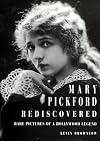
England's Kevin Brownlow brings to life America's Sweetheart, Mary Pickford, in this richly textured and insightful book featuring myriad of lush and rare photographs chosen by Pickford expert Robert Cushman. Mary Pickford's contribution to cinema is seen in a new light here. Brownlow subtly makes the case that she not only was the most influential woman in the history of cinema, but a visionary force for the film industry itself.
It is difficult in today's climate of instant access to show more information to understand just how popular Mary Pickford was in her day. She was embraced by the entire world, and reportedly, every twenty-four hours, 12 1/2 million people saw her onscreen. She perfected her craft in an era of film when very few people actually saw her natural acting style for the hard work and genius it was. George Cukor called her the first method actor.
Mary Pickford's career as an actress spanned decades. She did much for women with her strong business savvy and the roles she not only portrayed, but created. A very practical woman by all accounts, her films themselves reflected our better side as human beings and were often sentimental in tone. She didn't play weak characters as many of her contemporaries did. When people walked out of a theatre after seeing a Pickford film, they were often uplifted, feeling generous towards their fellowman.
Brownlow has done a wonderful job of bringing Mary Pickford to life as a three dimensional human being. With all the rare and beautiful photographs here to distract you it would have been easy to have an uninspiring text. But the introduction by Cushman and the lengthy and insightful comments by Brownlow, which include commentary on each Pickford film, makes this a mesmerizing journey into a life, both on-film and off.
There were many things about Mary the public knew, such as the famous Pickfair and her celebrated marriage to Douglas Fairbanks, as well as their friendship with Charlie Chaplin. They knew little, however, of a young girl who virtually had no childhood. Before her career finally took off she was poor in the extreme, sleeping in a chair so long it would take quite some time after owning a bed before she could sleep in any other position.
Who was the abusive alcoholic in Mary's life, and whom did she turn to for comfort? And at the height of her fame, what troubled her soul so much that she almost ended it all? Though these aspects of Mary's life are only touched upon and not dealt with in depth, it is admirable they are here at all, separating this from other coffee-table-style books.
The photographs are so stunningly beautiful (some never before seen) you may have trouble concentrating on the text. Of particular note: photographs on pages 110, 65, 17, 12, 27, 154, 121, and 66. They are beautiful, and not to be missed.
This lush and informative book is filled with affection for its subject, perhaps too much, but that is part of its charm. The sparse yet informative text is augmented by rare and breathtaking photographs. Definitely a must-own book for anyone who loves film, silent films especially. Its overall perspective of America's Sweetheart, Mary Pickford, while obviously biased, is nonetheless unmatched. show less
It is difficult in today's climate of instant access to show more information to understand just how popular Mary Pickford was in her day. She was embraced by the entire world, and reportedly, every twenty-four hours, 12 1/2 million people saw her onscreen. She perfected her craft in an era of film when very few people actually saw her natural acting style for the hard work and genius it was. George Cukor called her the first method actor.
Mary Pickford's career as an actress spanned decades. She did much for women with her strong business savvy and the roles she not only portrayed, but created. A very practical woman by all accounts, her films themselves reflected our better side as human beings and were often sentimental in tone. She didn't play weak characters as many of her contemporaries did. When people walked out of a theatre after seeing a Pickford film, they were often uplifted, feeling generous towards their fellowman.
Brownlow has done a wonderful job of bringing Mary Pickford to life as a three dimensional human being. With all the rare and beautiful photographs here to distract you it would have been easy to have an uninspiring text. But the introduction by Cushman and the lengthy and insightful comments by Brownlow, which include commentary on each Pickford film, makes this a mesmerizing journey into a life, both on-film and off.
There were many things about Mary the public knew, such as the famous Pickfair and her celebrated marriage to Douglas Fairbanks, as well as their friendship with Charlie Chaplin. They knew little, however, of a young girl who virtually had no childhood. Before her career finally took off she was poor in the extreme, sleeping in a chair so long it would take quite some time after owning a bed before she could sleep in any other position.
Who was the abusive alcoholic in Mary's life, and whom did she turn to for comfort? And at the height of her fame, what troubled her soul so much that she almost ended it all? Though these aspects of Mary's life are only touched upon and not dealt with in depth, it is admirable they are here at all, separating this from other coffee-table-style books.
The photographs are so stunningly beautiful (some never before seen) you may have trouble concentrating on the text. Of particular note: photographs on pages 110, 65, 17, 12, 27, 154, 121, and 66. They are beautiful, and not to be missed.
This lush and informative book is filled with affection for its subject, perhaps too much, but that is part of its charm. The sparse yet informative text is augmented by rare and breathtaking photographs. Definitely a must-own book for anyone who loves film, silent films especially. Its overall perspective of America's Sweetheart, Mary Pickford, while obviously biased, is nonetheless unmatched. show less
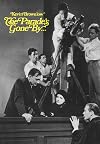
This book is for hardcore silent film fans. Which I am. It's very well-written and very extensive. Even though I've read a lot about the silent era, I hadn't heard of many of the people mentioned in this book. There are chapters on the stars (Gloria Swanson, Charlie Chaplin, Buster Keaton, and Harold Lloyd to name a few), the directors (D W Griffith, Josef Von Sternberg, etc.), and even the technicians and cameramen. There is a lot of information about camera technique, lighting, and stunts. show more It was fascinating to read about how filmmakers of this time pulled off some of the most amazing shots and created special effects before CGI made creative filmmaking obsolete. show less
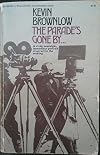
I knew this book would be a good resource since I've seen several other resources cite it, but I still cannot help but be impressed. This is a work of love and passion in chronicling the silent film era. Not only does it discuss the stars, but it goes into great detail about the technical aspects and how they evolved throughout the time period and how various people played vital roles in that process. There are photographs throughout. The hardcover book is a veritable tome--this is the kind show more of book you want to throw at a burglar--and while it is comprehensive, there are odd omissions. Women played a major role in the silent film industry--over half of scenario writers were women--and while Mary Pickford and Anita Loos are given appropriate nods, women like Clara Bow aren't present at all. I wonder at how the availability of interview subjects played a role in that aspect as well. One of the great things about this book is that Brownlow didn't simply rely on other books or issues of Photoplay. He interviewed (repeatedly, in some cases) many of the subjects as he assembled this book in the 1960s. I'm impressed that so much knowledge was preserved because of his work.
I was inspired to look on YouTube, and I was surprised to see Brownlow's work didn't end with the completion of this tome. He is one of the major figures of film preservation in the last 60 years. In particular, he seems to have devoted his life to the work of the French director Abel Gance (who he extensively examines in the last chapter of this book) and a very recent Blu-Ray re-mastered release of Napoleon is credited to him. I've said it before, I'll say it again: I'm impressed. show less
I was inspired to look on YouTube, and I was surprised to see Brownlow's work didn't end with the completion of this tome. He is one of the major figures of film preservation in the last 60 years. In particular, he seems to have devoted his life to the work of the French director Abel Gance (who he extensively examines in the last chapter of this book) and a very recent Blu-Ray re-mastered release of Napoleon is credited to him. I've said it before, I'll say it again: I'm impressed. show less
Lists
Awards


You May Also Like


Associated Authors
Statistics
- Works
- 32
- Also by
- 6
- Members
- 963
- Popularity
- #26,728
- Rating
- 4.2
- Reviews
- 17
- ISBNs
- 46
- Languages
- 2
- Favorited
- 5