
William K. Everson (1929–1996)
Author of American Silent Film
About the Author
Disambiguation Notice:
William K. Everson (1929-1996) was a film historian. Please do not combine with William Everson (1912-1994), the poet and small-press printer.
Series
Works by William K. Everson
The Hollywood Western: 90 Years of Cowboys and Indians, Train Robbers, Sheriffs and Gunslingers, and Assorted Heroes and Desperados (1992) 14 copies
D.W. Griffith — Author — 2 copies
American Bard: 2 1 copy
Associated Works
Tagged
Common Knowledge
- Legal name
- Everson Keith William (birth name)
- Other names
- Everson, William Keith
- Birthdate
- 1929-04-08
- Date of death
- 1996-04-14
- Gender
- male
- Occupations
- film historian
archivist
author
critic
film collector - Organizations
- British Army
- Cause of death
- prostate cancer
- Nationality
- UK
USA - Birthplace
- Yeovil, Somerset, England, UK
- Places of residence
- New York, New York, USA
- Place of death
- Manhattan, New York, USA
- Disambiguation notice
- William K. Everson (1929-1996) was a film historian. Please do not combine with William Everson (1912-1994), the poet and small-press printer.
- Associated Place (for map)
- New York, USA
Members
Reviews

Following an overview of Laurel and Hardy’s early years before becoming a comedy duo, the book covers every film and short the pair made together.
The analysis of each title is biased in that the author states his opinion as fact. Rather than use contrasting reviews for greater balance, he states what he considers to be good or bad, strong or weak, funny or not funny. I found this a bit annoying. He states as fact that ‘The Laurel & Hardy Murder Case’ is one of their weakest shorts and show more that ‘A Chump at Oxford’ is not one of their best features, whereas I rate both among their best. We all have our favourites and others we’re less fond of, but it bugs me when one person thinks his or her view is the correct view.
One other thing that annoyed me was numerous refences to other films, most of which I've not seen, so can't relate. For example:
‘It is almost like a very light-hearted equivalent of the famous Odessa Steps sequence in Eisenstein’s ‘Potemkin!’ – which is something I’ve famously never heard of.
I consider it arrogant for authors to make such comparisons. It's as if they assume because they’ve seen it, so has everyone else, and if not, you’re inferior.
The book has also not been professionally proofread. This is obvious because the most common error in literature (according to my experience) is the misuse of apostrophes, particularly when referring to decades, which is the case every time in this book. Decades are plural, so it’s not “the 1920’s” or “the 30’s” it’s “the 1920s” and “the ’30s”, etc.
Despite my issue with the author and the oversight regarding apostrophe abuse, the topic is so strong that I had to rate this book five stars. I consider Oliver Hardy to be the greatest comedian ever to grace the screen (big or small), and standing a cat’s whisker behind him in greatness is Stan Laurel. As the author of this book alludes, they were a double act with two funny men and no straight man. The characters they portrayed complemented each other perfectly.
So funny do I find Laurel & Hardy that I found myself laughing or at least smiling countless times when reading descriptions of the funny scenes or of specific moments from their films. This, along with a fine collection of photos, compelled me to give this book five stars. show less
The analysis of each title is biased in that the author states his opinion as fact. Rather than use contrasting reviews for greater balance, he states what he considers to be good or bad, strong or weak, funny or not funny. I found this a bit annoying. He states as fact that ‘The Laurel & Hardy Murder Case’ is one of their weakest shorts and show more that ‘A Chump at Oxford’ is not one of their best features, whereas I rate both among their best. We all have our favourites and others we’re less fond of, but it bugs me when one person thinks his or her view is the correct view.
One other thing that annoyed me was numerous refences to other films, most of which I've not seen, so can't relate. For example:
‘It is almost like a very light-hearted equivalent of the famous Odessa Steps sequence in Eisenstein’s ‘Potemkin!’ – which is something I’ve famously never heard of.
I consider it arrogant for authors to make such comparisons. It's as if they assume because they’ve seen it, so has everyone else, and if not, you’re inferior.
The book has also not been professionally proofread. This is obvious because the most common error in literature (according to my experience) is the misuse of apostrophes, particularly when referring to decades, which is the case every time in this book. Decades are plural, so it’s not “the 1920’s” or “the 30’s” it’s “the 1920s” and “the ’30s”, etc.
Despite my issue with the author and the oversight regarding apostrophe abuse, the topic is so strong that I had to rate this book five stars. I consider Oliver Hardy to be the greatest comedian ever to grace the screen (big or small), and standing a cat’s whisker behind him in greatness is Stan Laurel. As the author of this book alludes, they were a double act with two funny men and no straight man. The characters they portrayed complemented each other perfectly.
So funny do I find Laurel & Hardy that I found myself laughing or at least smiling countless times when reading descriptions of the funny scenes or of specific moments from their films. This, along with a fine collection of photos, compelled me to give this book five stars. show less
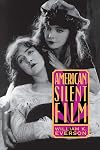
Few people knew more about American film history than William K. Everson. This survey of the art and industry of the silent film in the U.S. is an exquisite historical artifact itself. It brings that long-ago and (to some) obscure period in American art and entertainment fully to life and makes one ready and willing to watch those great works of a different time. I highly recommend this to anyone with an interest in film.

Everson is one of the best and most thoughtful of movie historians, and I recommend his books highly, especially this, the most comprehensive and accurate record of the boys' career. . . although he was writing from memory without the benefit of video or DVD or easy access to the films, and occasionally you will find a misremembered detail here and there.

Everson is one of the best and most thoughtful of movie historians, and I recommend his books highly. . . although he was writing from memory without the benefit of video or DVD or easy access to the films, and occasionally you will find a misremembered detail here and there.
Lists
You May Also Like


Associated Authors
Statistics
- Works
- 17
- Also by
- 1
- Members
- 799
- Popularity
- #31,914
- Rating
- 4.2
- Reviews
- 11
- ISBNs
- 43
- Languages
- 4