
Louise Brooks (1) (1906–1985)
Author of Lulu in Hollywood
For other authors named Louise Brooks, see the disambiguation page.
About the Author
Image credit: Courtesy of the NYPL Digital Gallery (image use requires permission from the New York Public Library)
Works by Louise Brooks
Associated Works
Tagged
Common Knowledge
- Legal name
- Brooks, Mary Louise (birth name)
- Other names
- Brooks, Lulu
- Birthdate
- 1906-11-14
- Date of death
- 1985-08-08
- Gender
- female
- Occupations
- dancer
actor
writer - Relationships
- Sutherland, A. Edward (married from 1926-07 to 1928-06-20)
Davis, Deering (married from 1933-10-10 to 1938-02) - Nationality
- USA
- Birthplace
- Cherryvale, Kansas, USA
- Places of residence
- Kansas, USA
New York, New York, USA
Rochester, New York, USA - Place of death
- Rochester, New York, USA
- Burial location
- Holy Sepulchre Cemetery, Rochester, New York, USA
- Associated Place (for map)
- New York, USA
Members
Reviews
Louise Brooks called herself “the best-read idiot in the world.” The only part of that that isn’t true is the “idiot” part. She was no idiot.
If you’re interested in this book, you probably know that Brooks was a film star, mainly in silent movies in the 1920s. Despite her years in Hollywood, her best and best known films were made in Germany with Director G.W. Pabst (Pandora’s Box, Diary of a Lost Girl) and France (Prix de Beauté).
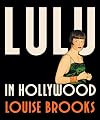
The book contains 8 essays written by Brooks, show more a short piece on her by Lotte Eisner, and a long introduction (40 pages) by Kenneth Tynan. There are also many pictures — movie stills, publicity photos, etc.
Brooks herself doesn’t give anything like a linear account of her life. The essays take particular events, friendships, and topics as organizing themes. Especially in her later years, after her acting career was long over (she left Hollywood for good in 1938), she wrote these essays on life, film, and the film industry.
The essays include ones on her background in Kansas, and her introduction to the movies and Hollywood, numerous friendships and working relationships, major figures in the movie industry of the time, and the industry itself. There are depictions of Charlie Chaplin, W.C. Fields, Humphrey Bogart, Greta Garbo, Marlene Dietrich, Marion Davies, Brooks’ longtime friend Pepi Lederer (Davies’ niece), William Randolph Hearst, and many more.
To the extent that there is a straightforward biography here, it’s the introduction by Tynan. Normally I’m not a fan of long introductions, but I was grateful for this one. It provides the context in which to read Brooks’ own thoughts about herself, her life, and the movies.
I think what makes Brooks likable, and she is very likable, is a kind of guileless guile. The quote about being the “best-read idiot in the world” is a good example — she’s messing with us in such a transparent, self-effacing way, we can’t help but walk right in where she wants us and smile along with the gag.
And it’s the same with her character, Lulu, in the first of her German movies. She’s the “bad girl” — a prostitute, an amoral figure that floats above the categories of victim, perpetrator, and observer. But it’s as if she doesn’t know why anyone would think anything wrong with being the “bad girl.” And when someone does, she’s disappointed and even a little confused.
What’s wrong with pleasure? What’s wrong with using the power you have, as little as it might be? She seems to walk around with permanent thought bubbles over her head asking questions like that.
She seemed very uncomplicated. She liked dancing, sex, drinking, and reading. And she liked those things a lot, on the same moral plane, without apology or guilt.
She does call herself an “idiot,” but she’s an idiot who quotes Goethe and Proust, who reads Schopenhauer on set while waiting between scenes, and whose insights on the movie industry cut through the glossy story to the reality of the years of the studio system.
She talks a great deal about the power of the studio and the studio executives. Her own struggles with the studio system undoubtedly limited her career. In the transition from the silent era to talkies, the studios used the uncertainty of actors’ and actresses’ speaking talents to hedge their salaries. Brooks declined the studio’s contract offer, turned on a dime to go to Germany to work with a director she’d never heard of, and made her landmark movies there.
Brooks, by my reading, retained power over herself at the cost of power over her situation. Maybe that’s the cost of authenticity. Even in her interview with Tynan toward the end of her life, no apologies, no regrets, no guilt, and maybe now that there’s no point to guileless guile, just guileless.
I think the theme of power in the lives of actresses in the twenties and thirties, and in the roles they played is fascinating. Brooks takes one path — maybe we can call it authenticity. Others had different paths — Mary Pickford, Gloria Swanson, Barbara Stanwyck, Norma Shearer, and many others — and all of them are interesting in their own ways. Partly because they had to navigate a world of power in which they had none by default. They picked their battles and strategies.
Maybe Brooks fought the good fight, and in some ways she lost, but she seems to have won what was most important to her.
Unlike some others of her time, she didn’t die young. She lived more of her life after Hollywood than before, long enough to be interviewed much later in life by Tynan when she lived in a one bedroom apartment in Rochester, New York. Her insights in that interview are as sharp, unpretentious, and transparently revealing as ever. show less
If you’re interested in this book, you probably know that Brooks was a film star, mainly in silent movies in the 1920s. Despite her years in Hollywood, her best and best known films were made in Germany with Director G.W. Pabst (Pandora’s Box, Diary of a Lost Girl) and France (Prix de Beauté).
The book contains 8 essays written by Brooks, show more a short piece on her by Lotte Eisner, and a long introduction (40 pages) by Kenneth Tynan. There are also many pictures — movie stills, publicity photos, etc.
Brooks herself doesn’t give anything like a linear account of her life. The essays take particular events, friendships, and topics as organizing themes. Especially in her later years, after her acting career was long over (she left Hollywood for good in 1938), she wrote these essays on life, film, and the film industry.
The essays include ones on her background in Kansas, and her introduction to the movies and Hollywood, numerous friendships and working relationships, major figures in the movie industry of the time, and the industry itself. There are depictions of Charlie Chaplin, W.C. Fields, Humphrey Bogart, Greta Garbo, Marlene Dietrich, Marion Davies, Brooks’ longtime friend Pepi Lederer (Davies’ niece), William Randolph Hearst, and many more.
To the extent that there is a straightforward biography here, it’s the introduction by Tynan. Normally I’m not a fan of long introductions, but I was grateful for this one. It provides the context in which to read Brooks’ own thoughts about herself, her life, and the movies.
I think what makes Brooks likable, and she is very likable, is a kind of guileless guile. The quote about being the “best-read idiot in the world” is a good example — she’s messing with us in such a transparent, self-effacing way, we can’t help but walk right in where she wants us and smile along with the gag.
And it’s the same with her character, Lulu, in the first of her German movies. She’s the “bad girl” — a prostitute, an amoral figure that floats above the categories of victim, perpetrator, and observer. But it’s as if she doesn’t know why anyone would think anything wrong with being the “bad girl.” And when someone does, she’s disappointed and even a little confused.
What’s wrong with pleasure? What’s wrong with using the power you have, as little as it might be? She seems to walk around with permanent thought bubbles over her head asking questions like that.
She seemed very uncomplicated. She liked dancing, sex, drinking, and reading. And she liked those things a lot, on the same moral plane, without apology or guilt.
She does call herself an “idiot,” but she’s an idiot who quotes Goethe and Proust, who reads Schopenhauer on set while waiting between scenes, and whose insights on the movie industry cut through the glossy story to the reality of the years of the studio system.
She talks a great deal about the power of the studio and the studio executives. Her own struggles with the studio system undoubtedly limited her career. In the transition from the silent era to talkies, the studios used the uncertainty of actors’ and actresses’ speaking talents to hedge their salaries. Brooks declined the studio’s contract offer, turned on a dime to go to Germany to work with a director she’d never heard of, and made her landmark movies there.
Brooks, by my reading, retained power over herself at the cost of power over her situation. Maybe that’s the cost of authenticity. Even in her interview with Tynan toward the end of her life, no apologies, no regrets, no guilt, and maybe now that there’s no point to guileless guile, just guileless.
I think the theme of power in the lives of actresses in the twenties and thirties, and in the roles they played is fascinating. Brooks takes one path — maybe we can call it authenticity. Others had different paths — Mary Pickford, Gloria Swanson, Barbara Stanwyck, Norma Shearer, and many others — and all of them are interesting in their own ways. Partly because they had to navigate a world of power in which they had none by default. They picked their battles and strategies.
Maybe Brooks fought the good fight, and in some ways she lost, but she seems to have won what was most important to her.
Unlike some others of her time, she didn’t die young. She lived more of her life after Hollywood than before, long enough to be interviewed much later in life by Tynan when she lived in a one bedroom apartment in Rochester, New York. Her insights in that interview are as sharp, unpretentious, and transparently revealing as ever. show less
Silent film star Louise Brooks is known mostly for her films with German director G.W. Pabst (‘Pandora’s Box’ and ‘Diary of a Lost Girl’), and for soon disappearing from movies, despite her iconic looks and talent. This is a collection of essays that she wrote for various publications in the 60’s and 70’s, along with an excellent introduction by Kenneth Tynan who visited her in 1978, which help us piece together the story of her life. As she was well-connected with people in show more the film industry, she also gives us interesting insights and anecdotes.
Despite her popularity and her routinely staying out ‘til the wee hours of the morning partying, Brooks was a bit of a loner, and private. After an introductory chapter on her early years, moving from Kansas to New York with a chaperone at the tender age of 15 to pursue dancing (where she is friends with the Bennett family), we get one on the filming of ‘Beggars of Life’ at age 22. There are then several chapters mostly focused on others (Marion Davies’ Niece, Humphrey Bogart, W.C. Fields, Lillian Gish and Greta Garbo), but we get glimpses of her life through her interactions and memories of them. The result is incomplete as autobiographies go, but fascinating nonetheless. And, if you have any interest in those actors, want to get a sense of the theater scene in New York or movie scene in Hollywood/Berlin, or want a behind the scenes look at some of Brooks’s bigger films – this is a book definitely worth reading. I also loved the many pictures it included.
Brooks points out several of the uglier aspects of the film industry, for example, how producers deliberately tried to lower popularity of stars like Gish in order to save money, through the films they gave her and controlling the movie press. Gossip was also difficult, especially with the double standard – when Brooks had one-night stands, it immediately spread, including one incident during the filing of ‘Beggars of Life,’ and another with Jack Pickford. She also points out several instances when ‘film history’ was fabricated or falsified. It’s interesting that she doesn’t mention this, but Tynan does – in 1930, when she went back to Hollywood to negotiate a contact with Columba, “Harry Cohn, the head of the studio, summoned her to his office for a series of meetings, at each of which he appeared naked from the waist up.” She rebuffed him, and her career immediately tanked, complete with him trying to humiliate her seven years later by giving her a lowly part in the corps de ballet for a film. Even with G.W. Pabst, whom she had a consensual affair with, had an “extraordinary collection of obscene stills”, because “in the twenties it was the custom for European actresses to send naked pictures of themselves to movie directors.” It’s sad to think of the decades and decades this behavior went on, routinely, and I’m sure Brooks is smiling somewhere over the #metoo movement.
In the chapter on Pepi Lederer, she relates finding out who it was that raped Pepi when she was dead-drunk, and that he “told me with smiling satisfaction” that “whenever he had the opportunity he escorted drunk women friends home and performed in the same manner.” Still worse, in the interviews with Tynan, Brooks reveals that at age 9 she was sexually molested by a 50 year old family friend, that it had a part in forming her attitude towards sexual pleasure (“there had to be an element of domination”), and that her own mother – her own mother! – blamed her, saying she must have led him on in some way, when she told her years later as an adult.
Despite being ‘black-balled’ as she puts it, I have to say, I don’t think Brooks helped her career any by refusing to participate in converting the silent film ‘The Canary Murder Case’ (1929) that she was in to a talkie, and turning down other offers, including the one for ‘The Public Enemy’ (1931) that Jean Harlow took. She was genuinely difficult to work with, prioritizing her life over work and not enamored with Hollywood, and in 1940 age 34, she would be gone for good. Just six years later, this woman who had regularly partied in Hearst Castle, had an affair with Charlie Chaplin, had been the lover of George Marshall (millionaire owner of the Redskins football team), and who had overcome her humble origins to become a sophisticated, worldly cosmopolitan, was working as a salesgirl at Sak’s Fifth Avenue. It’s not the tale of a victim, or even a tragedy; Brooks would live until 79 and have her silent films rediscovered along the way. It’s just a shame that she didn’t make more of them, and that she didn’t write about more of her life. She was well-read, nonconformist, intelligent, and empathetic, on top of the screen presence she had. We get a little window into a lost world in what we do have, though.
Just one quote, on achievement:
“Anyone who has achieved excellence in any form knows that it comes as a result of ceaseless concentration. Paying attention.” show less
Despite her popularity and her routinely staying out ‘til the wee hours of the morning partying, Brooks was a bit of a loner, and private. After an introductory chapter on her early years, moving from Kansas to New York with a chaperone at the tender age of 15 to pursue dancing (where she is friends with the Bennett family), we get one on the filming of ‘Beggars of Life’ at age 22. There are then several chapters mostly focused on others (Marion Davies’ Niece, Humphrey Bogart, W.C. Fields, Lillian Gish and Greta Garbo), but we get glimpses of her life through her interactions and memories of them. The result is incomplete as autobiographies go, but fascinating nonetheless. And, if you have any interest in those actors, want to get a sense of the theater scene in New York or movie scene in Hollywood/Berlin, or want a behind the scenes look at some of Brooks’s bigger films – this is a book definitely worth reading. I also loved the many pictures it included.
Brooks points out several of the uglier aspects of the film industry, for example, how producers deliberately tried to lower popularity of stars like Gish in order to save money, through the films they gave her and controlling the movie press. Gossip was also difficult, especially with the double standard – when Brooks had one-night stands, it immediately spread, including one incident during the filing of ‘Beggars of Life,’ and another with Jack Pickford. She also points out several instances when ‘film history’ was fabricated or falsified. It’s interesting that she doesn’t mention this, but Tynan does – in 1930, when she went back to Hollywood to negotiate a contact with Columba, “Harry Cohn, the head of the studio, summoned her to his office for a series of meetings, at each of which he appeared naked from the waist up.” She rebuffed him, and her career immediately tanked, complete with him trying to humiliate her seven years later by giving her a lowly part in the corps de ballet for a film. Even with G.W. Pabst, whom she had a consensual affair with, had an “extraordinary collection of obscene stills”, because “in the twenties it was the custom for European actresses to send naked pictures of themselves to movie directors.” It’s sad to think of the decades and decades this behavior went on, routinely, and I’m sure Brooks is smiling somewhere over the #metoo movement.
In the chapter on Pepi Lederer, she relates finding out who it was that raped Pepi when she was dead-drunk, and that he “told me with smiling satisfaction” that “whenever he had the opportunity he escorted drunk women friends home and performed in the same manner.” Still worse, in the interviews with Tynan, Brooks reveals that at age 9 she was sexually molested by a 50 year old family friend, that it had a part in forming her attitude towards sexual pleasure (“there had to be an element of domination”), and that her own mother – her own mother! – blamed her, saying she must have led him on in some way, when she told her years later as an adult.
Despite being ‘black-balled’ as she puts it, I have to say, I don’t think Brooks helped her career any by refusing to participate in converting the silent film ‘The Canary Murder Case’ (1929) that she was in to a talkie, and turning down other offers, including the one for ‘The Public Enemy’ (1931) that Jean Harlow took. She was genuinely difficult to work with, prioritizing her life over work and not enamored with Hollywood, and in 1940 age 34, she would be gone for good. Just six years later, this woman who had regularly partied in Hearst Castle, had an affair with Charlie Chaplin, had been the lover of George Marshall (millionaire owner of the Redskins football team), and who had overcome her humble origins to become a sophisticated, worldly cosmopolitan, was working as a salesgirl at Sak’s Fifth Avenue. It’s not the tale of a victim, or even a tragedy; Brooks would live until 79 and have her silent films rediscovered along the way. It’s just a shame that she didn’t make more of them, and that she didn’t write about more of her life. She was well-read, nonconformist, intelligent, and empathetic, on top of the screen presence she had. We get a little window into a lost world in what we do have, though.
Just one quote, on achievement:
“Anyone who has achieved excellence in any form knows that it comes as a result of ceaseless concentration. Paying attention.” show less
This book is as witty and literate as I had been led to believe. It's a unique view of Hollywood and pre-war American culture by a Proust-quoting actress who from 1923 to 1940 seemed to be everywhere the zeitgeist was percolating. Finally sickened with the whole business, she retreated to her books and solitude. What's not to love?

Louise Brooks, born in 1907, first wanted to be a dancer. When the bright lights of New York City sirened (my word) her away from Wichita, Kansas, she knew she could be a star. She had the looks, the talent and the brains to make it anywhere. She quickly became a darling of the silent film, jet setting between New York, Hollywood and Europe. Her biggest film, Pandora's Box, was the rise before the fall. All said, her career was a tumultuous one. As an outspoken, difficult actress, Lulu was show more sometimes fired from jobs as quickly as she had been hired for them. It was no secret she liked to use her sexuality to get her way. She was progressive in ways women wouldn't dare to be at that time. In Lulu in Hollywood, she used her ability to write to put together a series of autobiographical essays meant to settle the score. Her writing was brilliant. The photographs included in the book are gorgeous. There is no doubt Louise Brooks had a signature style and opinionated mind to match. show less
Lists
Film (1)
Awards

You May Also Like


Associated Authors
Statistics
- Works
- 10
- Also by
- 7
- Members
- 599
- Popularity
- #41,951
- Rating
- 4.0
- Reviews
- 9
- ISBNs
- 26
- Languages
- 5
