
Simon Callow
Author of Orson Welles: The Road to Xanadu
About the Author
Simon Callow, acclaimed biographer and celebrated author of Orson Welles, evokes the intellectual and artistic climate in which Wagner lived and takes us through his most iconic works, from his pivotal successes in The Flying Dutchman and Lohengrin, to the musical paradigm shift contained in show more Tristan and Isolde, to the apogee of his achievements in The Ring and Parsifal, which debuted at Bayreuth shortly before his death. Being Wagner brings to life this towering figure, creator of the most sublime and most controversial body of work ever known. Callow delivers a dazzling, swift, and accessible biography of the musical titan Richard Wagner and his profoundly problematic legacy-a fresh take for seasoned acolytes and the perfect introduction for new fans. show less
Image credit: Simon Callow
Works by Simon Callow
A Literary Christmas: An Anthology 3 copies
Shakespeare's Sonnets 3 copies
Arn: Knight Templa 2 copies
Crowley [Blu-ray] 1 copy
The Aeneid 1 copy
Associated Works
Gather ‘Round the Sound: Holiday Stories from Beloved Authors and Great Performers Across the Globe (2017) — Narrator — 126 copies, 10 reviews
Coffee with Oscar Wilde (Coffee with...Series) (2007) — Foreword, some editions — 88 copies, 3 reviews
Ismail Merchant's Indian Cuisine (1986) — Some friends comments, some editions — 48 copies, 1 review
Coloring Shakespeare: Over 30 Stunning Illustrations from Shakespeare's Most Famous Sonnets and Speeches (2016) — Foreword — 15 copies
Roman Mysteries: The Complete First Series [2007 TV series] — Actor — 5 copies
Noh and Kyogen Masks: Tradition and Modernity in the Art of Kitazawa Hideta (2024) — Foreword, some editions — 4 copies
The Scarlet Tunic [1998 film] 3 copies
The Man of Destiny [1981 TV movie] 2 copies
Roman Mysteries - The Complete Series [DVD] — Actor — 1 copy
Tagged
Common Knowledge
- Canonical name
- Callow, Simon
- Legal name
- Callow, Simon Philip Hugh
- Birthdate
- 1949-06-15
- Gender
- male
- Education
- Queen's University, Belfast, Northern Ireland, UK
Drama Centre London - Occupations
- actor
writer
theatre director - Awards and honors
- Screen Actors Guild Award (1999)
Commander of the Order of the British Empire - Short biography
- Answers.com says: Stout, jovial character actor Simon Callow has been enlivening the stage and screen for years, often in roles that highlight his versatility and capacity for a particular brand of good-natured, self-deprecating humor.
In addition, he has been successful both as a writer and as a director.
- Nationality
- UK
- Birthplace
- London, England, UK
- Places of residence
- London, England, UK
- Map Location
- England, UK
Members
Reviews
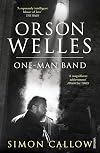
In One-Man Band, the third volume in his epic survey of Orson Welles’ life and work, Simon Callow again probes in comprehensive and penetrating detail into one of the most complex artists of the twentieth century, looking closely at the triumphs and failures of an ambitious one-man assault on one medium after another – theatre, radio, film, television, even, at one point, ballet – in each of which his radical and original approach opened up new directions and hitherto unglimpsed show more possibilities.
The book begins with Welles’ self-exile from America, and his realisation that he could only function happily as an independent film-maker, a one-man band; by 1964, he had filmed Othello, which took three years to complete, Mr Arkadin, the biggest conundrum in his output, and his masterpiece Chimes at Midnight, as well as Touch of Evil, his sole return to Hollywood and, like all too many of his films, wrested from his grasp and re-edited. Along the way he made inroads into the fledgling medium of television and a number of stage plays, including Moby-Dick, considered by theatre historians to be one of the seminal productions of the century. Meanwhile, his private life was as dramatic as his professional life.
The book shows what it was like to be around Welles, and, with a precision rarely attempted before, what it was like to be him, in which lies the answer to the old riddle: whatever happened to Orson Welles? show less
The book begins with Welles’ self-exile from America, and his realisation that he could only function happily as an independent film-maker, a one-man band; by 1964, he had filmed Othello, which took three years to complete, Mr Arkadin, the biggest conundrum in his output, and his masterpiece Chimes at Midnight, as well as Touch of Evil, his sole return to Hollywood and, like all too many of his films, wrested from his grasp and re-edited. Along the way he made inroads into the fledgling medium of television and a number of stage plays, including Moby-Dick, considered by theatre historians to be one of the seminal productions of the century. Meanwhile, his private life was as dramatic as his professional life.
The book shows what it was like to be around Welles, and, with a precision rarely attempted before, what it was like to be him, in which lies the answer to the old riddle: whatever happened to Orson Welles? show less
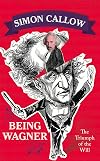
I read this as a buddy read with BrokenTune, and was woefully inadequate with the status updates, but thankfully, some sidebar chats with her during and after our read, have helped me clarify my thoughts about this fantastic book enough to write some of them down.
Richard Wagner was, arguably, one of the most influential composers and conductors in the history of classical music. He changed the face of opera from top to bottom; from the way the music was played, the notes were sung, the show more lighting, even the shape of the theatre itself. He made opera dramatic storytelling. I'm not even sure I can imagine what it was before he turned everything and everyone on their ear.
Richard Wagner was also an unmitigated ass. Not merely arrogant; not merely selfish; Wagner was self-involved, egotistical, short-sighted, fiscally irresponsible and anti-semitic. Additionally, he was described as short, stoop-shouldered and afflicted with an appalling skin condition; we're not talking run-of-the-mill eczema here - words like 'sores' and 'pustules' were used. I mention the physical challenges here because in spite of all of this - the horrible character flaws and the physical challenges - he was apparently charismatic as hell. The crap he got away with, the abuse people took only to come back for more, the sheer number of people who shelled out money to pay his debts and provide him with housing is mind-boggling. Not just in Germany, but in Switzerland, Italy and the UK. All this, and he was not a good person.
I could have probably overlooked the childish selfishness; I could chuckle over his inability to stay out of any riot he crossed paths with. I might argue (weakly), that the trail of broken relationships he left behind him his whole life were people who knowingly attached themselves to this horrible man. But the anti-semitism is a deal-breaker. HIs disparagement of Jews was grossly casual, brutal, unwarranted and irrational. Worse, it was not a phase he outgrew, but a mania that only became more brutal and irrational with age, even though he continued to work with Jewish conductors, musicians and composers until the end.
So Wagner was both artistically brilliant and a horrible human being. This fascinating dichotomy is made still more fascinating by Simon Callow's writing. He masterfully writes this condensed biography with the utmost objectivity, clarity, and just a dash of humor in unexpected places. I doubt very much I could have read any other book about Wagner without dnf'ing it simply because I wouldn't have been able to swallow Wagner's life, but Callow made it not only palatable, but compelling.
Wagner may have created some of the most powerful music ever written - at least some of the most unforgettable - but his music will forever be tainted for me now that I know the man behind it better. The real star that came out of this book, for me, is Callow; his writing ... well, take it as read that I'm gushing over it, because it's some of the best biographical writing I've ever read (not that I read a lot, mind you).
If you're interested in Wagner but don't want a long academic biography, you should absolutely investigate this book; it's fair, it's balanced; it's unbiased and it's excellently written. The 1/2 star I took off was more my shortcoming than his - my eyes glazed over during the descriptions of the operas' stories, because I'm not a fan of opera. Seriously, ignore that and just check out the book. show less
Richard Wagner was, arguably, one of the most influential composers and conductors in the history of classical music. He changed the face of opera from top to bottom; from the way the music was played, the notes were sung, the show more lighting, even the shape of the theatre itself. He made opera dramatic storytelling. I'm not even sure I can imagine what it was before he turned everything and everyone on their ear.
Richard Wagner was also an unmitigated ass. Not merely arrogant; not merely selfish; Wagner was self-involved, egotistical, short-sighted, fiscally irresponsible and anti-semitic. Additionally, he was described as short, stoop-shouldered and afflicted with an appalling skin condition; we're not talking run-of-the-mill eczema here - words like 'sores' and 'pustules' were used. I mention the physical challenges here because in spite of all of this - the horrible character flaws and the physical challenges - he was apparently charismatic as hell. The crap he got away with, the abuse people took only to come back for more, the sheer number of people who shelled out money to pay his debts and provide him with housing is mind-boggling. Not just in Germany, but in Switzerland, Italy and the UK. All this, and he was not a good person.
I could have probably overlooked the childish selfishness; I could chuckle over his inability to stay out of any riot he crossed paths with. I might argue (weakly), that the trail of broken relationships he left behind him his whole life were people who knowingly attached themselves to this horrible man. But the anti-semitism is a deal-breaker. HIs disparagement of Jews was grossly casual, brutal, unwarranted and irrational. Worse, it was not a phase he outgrew, but a mania that only became more brutal and irrational with age, even though he continued to work with Jewish conductors, musicians and composers until the end.
So Wagner was both artistically brilliant and a horrible human being. This fascinating dichotomy is made still more fascinating by Simon Callow's writing. He masterfully writes this condensed biography with the utmost objectivity, clarity, and just a dash of humor in unexpected places. I doubt very much I could have read any other book about Wagner without dnf'ing it simply because I wouldn't have been able to swallow Wagner's life, but Callow made it not only palatable, but compelling.
Wagner may have created some of the most powerful music ever written - at least some of the most unforgettable - but his music will forever be tainted for me now that I know the man behind it better. The real star that came out of this book, for me, is Callow; his writing ... well, take it as read that I'm gushing over it, because it's some of the best biographical writing I've ever read (not that I read a lot, mind you).
If you're interested in Wagner but don't want a long academic biography, you should absolutely investigate this book; it's fair, it's balanced; it's unbiased and it's excellently written. The 1/2 star I took off was more my shortcoming than his - my eyes glazed over during the descriptions of the operas' stories, because I'm not a fan of opera. Seriously, ignore that and just check out the book. show less
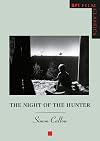
Simon Callow's entry into the BFI Classics canon is a distillation of what might otherwise be a somewhat typical pop history examination of a classic film. Instead, at just over 75 pages, it doesn't wear out its welcome, but its charms will be better appreciated by a novice student of film than one steeped in the modern culture of DVD supplements, critical websites, and (of course) more academic texts. Some of Callow's observations have been simply outstripped since he made them 17 years show more ago; James Agee's screenplay for the film has been found, for instance, putting paid to one or two popular myths the book repeats. Callow's slightly grandiose writing also has a habit of presenting anecdotes, including possibly exaggerated ones, as if they're fact; it's fun to read, and it lends the whole book a slightly "shaggy dog story" quality of which Charles Laughton would probably have approved, but it keeps the whole thing from feeling essential. Callow's text also lacks the more focused technical analysis of the better BFI books; this is an actor and biographer talking about a work of art, and some readers (myself included) want something just a little bit more specialized from this monograph series.
Having said all of that, it's a very readable little volume, with some fine observations on Laughton's inspirations, as well as a very laudable section that quotes the original novel extensively to show the close adaptation of both content and tone. I just wish we could have foregone the "making of the movie"-esque narrative and taken a closer look at the other formal elements of the film. show less
Having said all of that, it's a very readable little volume, with some fine observations on Laughton's inspirations, as well as a very laudable section that quotes the original novel extensively to show the close adaptation of both content and tone. I just wish we could have foregone the "making of the movie"-esque narrative and taken a closer look at the other formal elements of the film. show less
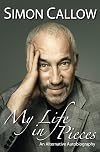
Simon Callow’s “Alternative Autobiography” My Life in Pieces was one of the most exciting books I’ve read in a long time. Hearing stories from behind the curtain about the 1960s–1970s London theater scene was intriguing and delightful. Callow was lucky to get a job at theaters long before his acting career, which gave him both insight and inspiration into the real world of acting. The book is rich with anecdotes encountering theater royalty, and many younger actors who later became show more household names. The story grows in interest as he moves from observer to dramatic artist, sharing his fascinating experiences as he rises in his own brilliant acting career.
Callow intersperses his narrative with relevant pieces he had written in the past, which fit nicely into the autobiographical storyline. These interspersed biographical pieces were usually about other people (reviews of others’ works, tributes, even obituaries). They were fun in themselves, but they also helped show the progression of Callow’s intellectual life. They could constitute their own “Collected Works” and in fact seemed reminiscent of the late great Lytton Strachey’s “Biographical Essays” from the 1920s (published in 1969). It would be a perfect kind of vehicle for Callow’s biographical essays as well.
John Gielgud is at the center of some of the most memorable anecdotes of Callow’s encounters with the theater’s brightest lights. Callow has written very perceptive analyses and heartfelt reminiscences of Gielgud, as well as some very entertaining anecdotes. I pick those out because they were my favorites. But all of Callow’s essays-within-an-autobiography had that flavor: perceptive and heartfelt. Callow is both sharp observer and compassionate colleague to his subjects. Within the autobiography, they comprise a wonderful book-within-a-book.
Still, first and foremost, there is the autobiography proper. Callow tells a wonderful story that mingles heartache and joy through his own life growing up, gradually becoming an artist. His childhood between London and Rhodesia was partly painful, partly ideal training ground for a future actor, though it may not have felt like it at the time. Callow shined in challenging circumstances, seizing every opportunity to perform and to entertain others. He was honing his craft from toddlerhood. And in the fullness of time, the result became genius.
Callow is, by the most stringent definition of the term, an artist. The common theme throughout his life is art, especially the art of acting. Having seen his amazing one-man shows playing Charles Dickens, and playing Charles Dickens playing Dickensian characters, and having seen Callow in films and TV shows over the years, it made reading his autobiography all the more exciting and rewarding. Callow’s brilliant and sublime talents obviously come from painful, determined dedication and discipline, as well as the true gift that sets great artists apart. Callow is one of those great artists.
Now, having read My Life in Pieces, and having read Callow’s full-length biography of Charles Dickens, I see that his talent equally spills into the literary arts.
If you love the world of theater and acting, or you love a great story, or you just love great writing, I wholeheartedly recommend Simon Callow’s “Alternative Autobiography” My Life in Pieces. show less
Callow intersperses his narrative with relevant pieces he had written in the past, which fit nicely into the autobiographical storyline. These interspersed biographical pieces were usually about other people (reviews of others’ works, tributes, even obituaries). They were fun in themselves, but they also helped show the progression of Callow’s intellectual life. They could constitute their own “Collected Works” and in fact seemed reminiscent of the late great Lytton Strachey’s “Biographical Essays” from the 1920s (published in 1969). It would be a perfect kind of vehicle for Callow’s biographical essays as well.
John Gielgud is at the center of some of the most memorable anecdotes of Callow’s encounters with the theater’s brightest lights. Callow has written very perceptive analyses and heartfelt reminiscences of Gielgud, as well as some very entertaining anecdotes. I pick those out because they were my favorites. But all of Callow’s essays-within-an-autobiography had that flavor: perceptive and heartfelt. Callow is both sharp observer and compassionate colleague to his subjects. Within the autobiography, they comprise a wonderful book-within-a-book.
Still, first and foremost, there is the autobiography proper. Callow tells a wonderful story that mingles heartache and joy through his own life growing up, gradually becoming an artist. His childhood between London and Rhodesia was partly painful, partly ideal training ground for a future actor, though it may not have felt like it at the time. Callow shined in challenging circumstances, seizing every opportunity to perform and to entertain others. He was honing his craft from toddlerhood. And in the fullness of time, the result became genius.
Callow is, by the most stringent definition of the term, an artist. The common theme throughout his life is art, especially the art of acting. Having seen his amazing one-man shows playing Charles Dickens, and playing Charles Dickens playing Dickensian characters, and having seen Callow in films and TV shows over the years, it made reading his autobiography all the more exciting and rewarding. Callow’s brilliant and sublime talents obviously come from painful, determined dedication and discipline, as well as the true gift that sets great artists apart. Callow is one of those great artists.
Now, having read My Life in Pieces, and having read Callow’s full-length biography of Charles Dickens, I see that his talent equally spills into the literary arts.
If you love the world of theater and acting, or you love a great story, or you just love great writing, I wholeheartedly recommend Simon Callow’s “Alternative Autobiography” My Life in Pieces. show less
Lists
Awards


You May Also Like


Associated Authors
Statistics
- Works
- 38
- Also by
- 69
- Members
- 1,745
- Popularity
- #14,740
- Rating
- 4.0
- Reviews
- 27
- ISBNs
- 106
- Languages
- 1
