
Barbara Leaming
Author of Marilyn Monroe
About the Author
Barbara Leaming is the author of numerous biographies including Churchill Defiant, Katharine Hepburn, and Jacqueline Bouvier Kennedy Onassis: The Untold Story. Her articles have appeared in several publications including New York Times Magazine, Vanity Fair, and the Times of London. (Bowker Author show more Biography) show less
Image credit: Barbara Leaming, on June 4, 2006
Works by Barbara Leaming
Kick Kennedy: The Charmed Life and Tragic Death of the Favorite Kennedy Daughter (2016) 146 copies, 9 reviews
Jack Kennedy 1 copy
Associated Works
The Book That Changed My Life: 71 Remarkable Writers Celebrate the Books That Matter Most to Them (2006) — Contributor — 411 copies, 18 reviews
Tagged
Common Knowledge
- Birthdate
- 1943
- Gender
- female
- Occupations
- professor
- Organizations
- Hunter College
- Nationality
- USA
- Birthplace
- Philadelphia, Pennsylvania, USA
- Places of residence
- Connecticut, USA
- Associated Place (for map)
- USA
Members
Reviews

“If this was happiness, imagine what the rest of her life had been.” — Orson Welles
Barbara Leaming has written a biography both subtle and revealing, underpinning the more intimate affairs in Rita’s life with psychological understanding, displaying a tender sensitivity for her subject. Rita, a lovely woman/child whose formative years sadly shaped and haunted her journey through life, and Orson Welles, the L’enfant Terrible who was the love of her life, come alive as human beings in show more this biography. Welles was painfully honest with Leaming about his own flaws and shortcomings, and the terrible circumstance of Rita’s childhood years that, in the end, all but doomed any lasting happiness for the couple, and Rita herself. Because this bio has been out for over thirty years at this juncture, I won’t mark any of this review as a spoiler, but those not already familiar with the more heartbreaking aspects of Rita Hayworth’s story might want to stop reading here.
Leaming’s almost clinical approach to telling Rita’s story lays bare an unpleasant facet of family life that is all too often avoided by the public. Welles is to be commended for bringing it out into the open because he obviously did so out of tender affection for Rita that he still carried in his heart. Hardly the model husband — and not pretending he was — you can almost feel his frustration at his own shortcomings, and with Rita’s. Yes, more than any other human being, he knew why this truly sweet girl was so wrapped up in men, why she only felt secure when they loved her intimately, and grew restless and uncertain whenever they were not — quite literally — making love or at least making overtures of affection leading to intimacy. But knowing, and being able to handle all Rita’s damage were two markedly different things. Once Welles finally accepted it was never going to work, they remained tethered much too long, Welles' unfaithfulness only confirming Rita’s pathology.
Rita’s father, Eduardo Cansino, was a dancer and showman who believed the world revolved around him. His wife was an enabler of his belief, which certainly played a part in what happened to the shy Margarita, who only came alive during acts or dances, otherwise remaining quiet and withdrawn. A girl whose loveliness was beyond her tender years, at 12 her father needed a new dance partner, and since pretty Margarita appeared older than she was when dolled up in fine dance costumes, she filled that role with great success; no one realized just how young Margarita was, so never guessed just how inappropriate the dance choreography was. On the road, away from her mother and siblings, Eduardo began using Margarita to fill another role that would shape her in sad and heartbreaking ways for the rest of her life.
Eddie Judson, Aly Khan, Harry Cohn, David Niven, Dick Haymes and of course, Orson Welles are all here, floating through Rita’s life as she clings to one branch along the shore after another for sexual reassurance, conflating love with intimacy as this truly sweet-natured girl tried to stay above the waterline and not drown.
Other than the lovely Gail Russell, I can think of no other female less suited to Hollywood and stardom than Rita Hayworth. On some level, you get the impression that Rita either knew, or sensed this about herself. Perhaps she might have found happiness had she met a pump jockey or a carpenter or a car salesman who adored her, and spent all his time thanking Heaven for meeting her. But because the only outlet for expression Rita had ever known was before an audience — even if just in front of a camera — she was doomed; there were no pump jockeys or carpenters in that crowd, only singer/actors who were mean, abusive drunks, habitually philandering princes, crass and vengeful studio heads, and one genius who despite his many failings, actually loved her — to the best of his capacity.
Parts of this biography seem almost repetitive, because Rita was repetitive; making the same mistakes over and over so often that the reader just gets irritated with her…but then we remember who she really was, and why she was this way, and a sense of sadness enters our heart. To those readers who claim this isn’t a three dimensional portrait of Rita Hayworth, focussing too much on the psychological underpinnings, I would say it is those very underpinnings that make this biography so different and, in the end, poignantly sad. In the end, with her mind prematurely adrift from Alzheimers, it was a world long ago and far away that Rita often went. Perhaps the best part of the woman/child we knew as a sex goddess, a wartime pinup girl, and a film noir icon named Gilda, remained in the past long before the dementia, but that was the one thing the camera could never show… show less
Barbara Leaming has written a biography both subtle and revealing, underpinning the more intimate affairs in Rita’s life with psychological understanding, displaying a tender sensitivity for her subject. Rita, a lovely woman/child whose formative years sadly shaped and haunted her journey through life, and Orson Welles, the L’enfant Terrible who was the love of her life, come alive as human beings in show more this biography. Welles was painfully honest with Leaming about his own flaws and shortcomings, and the terrible circumstance of Rita’s childhood years that, in the end, all but doomed any lasting happiness for the couple, and Rita herself. Because this bio has been out for over thirty years at this juncture, I won’t mark any of this review as a spoiler, but those not already familiar with the more heartbreaking aspects of Rita Hayworth’s story might want to stop reading here.
Leaming’s almost clinical approach to telling Rita’s story lays bare an unpleasant facet of family life that is all too often avoided by the public. Welles is to be commended for bringing it out into the open because he obviously did so out of tender affection for Rita that he still carried in his heart. Hardly the model husband — and not pretending he was — you can almost feel his frustration at his own shortcomings, and with Rita’s. Yes, more than any other human being, he knew why this truly sweet girl was so wrapped up in men, why she only felt secure when they loved her intimately, and grew restless and uncertain whenever they were not — quite literally — making love or at least making overtures of affection leading to intimacy. But knowing, and being able to handle all Rita’s damage were two markedly different things. Once Welles finally accepted it was never going to work, they remained tethered much too long, Welles' unfaithfulness only confirming Rita’s pathology.
Rita’s father, Eduardo Cansino, was a dancer and showman who believed the world revolved around him. His wife was an enabler of his belief, which certainly played a part in what happened to the shy Margarita, who only came alive during acts or dances, otherwise remaining quiet and withdrawn. A girl whose loveliness was beyond her tender years, at 12 her father needed a new dance partner, and since pretty Margarita appeared older than she was when dolled up in fine dance costumes, she filled that role with great success; no one realized just how young Margarita was, so never guessed just how inappropriate the dance choreography was. On the road, away from her mother and siblings, Eduardo began using Margarita to fill another role that would shape her in sad and heartbreaking ways for the rest of her life.
Eddie Judson, Aly Khan, Harry Cohn, David Niven, Dick Haymes and of course, Orson Welles are all here, floating through Rita’s life as she clings to one branch along the shore after another for sexual reassurance, conflating love with intimacy as this truly sweet-natured girl tried to stay above the waterline and not drown.
Other than the lovely Gail Russell, I can think of no other female less suited to Hollywood and stardom than Rita Hayworth. On some level, you get the impression that Rita either knew, or sensed this about herself. Perhaps she might have found happiness had she met a pump jockey or a carpenter or a car salesman who adored her, and spent all his time thanking Heaven for meeting her. But because the only outlet for expression Rita had ever known was before an audience — even if just in front of a camera — she was doomed; there were no pump jockeys or carpenters in that crowd, only singer/actors who were mean, abusive drunks, habitually philandering princes, crass and vengeful studio heads, and one genius who despite his many failings, actually loved her — to the best of his capacity.
Parts of this biography seem almost repetitive, because Rita was repetitive; making the same mistakes over and over so often that the reader just gets irritated with her…but then we remember who she really was, and why she was this way, and a sense of sadness enters our heart. To those readers who claim this isn’t a three dimensional portrait of Rita Hayworth, focussing too much on the psychological underpinnings, I would say it is those very underpinnings that make this biography so different and, in the end, poignantly sad. In the end, with her mind prematurely adrift from Alzheimers, it was a world long ago and far away that Rita often went. Perhaps the best part of the woman/child we knew as a sex goddess, a wartime pinup girl, and a film noir icon named Gilda, remained in the past long before the dementia, but that was the one thing the camera could never show… show less
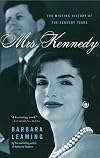
This incredibly depressing account of the Kennedy presidency, concentrating on Jackie Kennedy, utterly reveals the couple’s publicly-perceived “Camelot” to be as mythical as the original.
Author Barbara Leaming routinely swaps her researcher’s hat for an armchair analyst’s notepad, painting a portrait of two profoundly dysfunctional people whose marriage was in many ways an utter sham, yet was based on an almost pathological need for one another, but on extremely unusual terms. show more Jack Kennedy is shown as a man without a moral center – a serial adulterer, overwhelmed early in his presidency by the Bay of Pigs disaster, and so crippled by decades-old charges of cowardice against his father that he was unable to develop a foreign policy of his own. Jackie doesn’t fare much better, as Leaming draws a sympathetic but devastating portrait of a young woman whose self-confidence was gutted by a mother who convinced her that she was physically ungainly and essentially unlovable.
The book traces Jackie’s path through the early days of Kennedy’s presidency, when she was determined to remain out of the political spotlight and concentrate on creating the perfect private and public stage at The White House, and shows her coming into her own as a partner in Kennedy’s foreign influence and a constant emotional support when he was under attack by political rivals. Yet through it all, Jackie was aware of – and in many ways, complicit in – her husband’s constant infidelities. They certainly lived as husband and wife – she underwent five pregnancies, three of which ended in heartbreak – but he seemed constitutionally incapable of (or uninterested in) monogamy. These casual couplings – with few exceptions, one can hardly dignify them as “affairs” – were constant, and an open secret not only among the couple’s circle of friends, but throughout the White House staff and press corps.
One can only ask, time and time again, why Jackie would put up with this kind of behavior – why she didn’t end the marriage, or at least why she would choose to arrange her schedule so as to provide Kennedy with party times unencumbered by the presence of spouse and children in the vicinity. Leaming’s repeated assurances that the couple had a deep and unique (if not particularly sexually satisfying) love, tends to wear thin around the edges.
No study of the Kennedy presidency, of course, can avoid its abrupt and traumatic end. Leaming’s minute-by-minute description of the assassination, replete with minute and graphic details, is utterly devastating to read. And even though Jackie takes front and center stage from this point onward, her genuine devotion to her husband, and her single-minded determination to create a safe environment for their children is constantly the foundation for the subsequent life choices she makes.
A brief epilogue carries Jackie through her brief flirtation with an ambassadorial career, with her support of Bobby Kennedy’s doomed presidential campaign, and into her controversial marriage to Aristotle Onassis.
Students of mid-20th-century history will find much to consider within these pages. Readers for whom Jack Kennedy was “their” first president may be shattered at the depth of the deception that went on out of the public eye. And anyone who struggles to understand the complexities of our most intimate relationships will come away with more questions than answers. show less
Author Barbara Leaming routinely swaps her researcher’s hat for an armchair analyst’s notepad, painting a portrait of two profoundly dysfunctional people whose marriage was in many ways an utter sham, yet was based on an almost pathological need for one another, but on extremely unusual terms. show more Jack Kennedy is shown as a man without a moral center – a serial adulterer, overwhelmed early in his presidency by the Bay of Pigs disaster, and so crippled by decades-old charges of cowardice against his father that he was unable to develop a foreign policy of his own. Jackie doesn’t fare much better, as Leaming draws a sympathetic but devastating portrait of a young woman whose self-confidence was gutted by a mother who convinced her that she was physically ungainly and essentially unlovable.
The book traces Jackie’s path through the early days of Kennedy’s presidency, when she was determined to remain out of the political spotlight and concentrate on creating the perfect private and public stage at The White House, and shows her coming into her own as a partner in Kennedy’s foreign influence and a constant emotional support when he was under attack by political rivals. Yet through it all, Jackie was aware of – and in many ways, complicit in – her husband’s constant infidelities. They certainly lived as husband and wife – she underwent five pregnancies, three of which ended in heartbreak – but he seemed constitutionally incapable of (or uninterested in) monogamy. These casual couplings – with few exceptions, one can hardly dignify them as “affairs” – were constant, and an open secret not only among the couple’s circle of friends, but throughout the White House staff and press corps.
One can only ask, time and time again, why Jackie would put up with this kind of behavior – why she didn’t end the marriage, or at least why she would choose to arrange her schedule so as to provide Kennedy with party times unencumbered by the presence of spouse and children in the vicinity. Leaming’s repeated assurances that the couple had a deep and unique (if not particularly sexually satisfying) love, tends to wear thin around the edges.
No study of the Kennedy presidency, of course, can avoid its abrupt and traumatic end. Leaming’s minute-by-minute description of the assassination, replete with minute and graphic details, is utterly devastating to read. And even though Jackie takes front and center stage from this point onward, her genuine devotion to her husband, and her single-minded determination to create a safe environment for their children is constantly the foundation for the subsequent life choices she makes.
A brief epilogue carries Jackie through her brief flirtation with an ambassadorial career, with her support of Bobby Kennedy’s doomed presidential campaign, and into her controversial marriage to Aristotle Onassis.
Students of mid-20th-century history will find much to consider within these pages. Readers for whom Jack Kennedy was “their” first president may be shattered at the depth of the deception that went on out of the public eye. And anyone who struggles to understand the complexities of our most intimate relationships will come away with more questions than answers. show less
Barbara Leaming's biography of actress Rita Hayworth is well written, but utterly depressing.
Thrust into show business at 12 as her father's dancing partner, the young Margarita Cansino was placed in the role of family wage-earner, denied schooling, and dragged through various border-town dives in erotically-charged performances which eventually drew the attention of Hollywood.
Hayworth (the name was changed when she began acting) allegedly confessed years later to husband Orson Welles that show more her father sexually abused her during this period. Certainly the family history which can be confirmed, and Hayworth's own lifelong pattern of attracting partners (and husbands) who exploited and controlled her, are all textbook examples of adult behavior by a childhood sexual abuse survivor.
At any rate, the story then becomes a familiar, if dreary, one -- groomed for stardom, tagged "The Love Goddess" after an iconic cheesecake photo became wildly popular with WWII era GIs, Hayworth embarked on a series of disastrous affairs and marriages, most of which resulted with the man in her life taking control of her career, squandering her money, and -- frequently -- abusing her physically.
Ultimately, she was stricken with what is now known as Early-Onset Alzheimers, and died at 68 after decades of heartbreaking and often public decline. show less
Thrust into show business at 12 as her father's dancing partner, the young Margarita Cansino was placed in the role of family wage-earner, denied schooling, and dragged through various border-town dives in erotically-charged performances which eventually drew the attention of Hollywood.
Hayworth (the name was changed when she began acting) allegedly confessed years later to husband Orson Welles that show more her father sexually abused her during this period. Certainly the family history which can be confirmed, and Hayworth's own lifelong pattern of attracting partners (and husbands) who exploited and controlled her, are all textbook examples of adult behavior by a childhood sexual abuse survivor.
At any rate, the story then becomes a familiar, if dreary, one -- groomed for stardom, tagged "The Love Goddess" after an iconic cheesecake photo became wildly popular with WWII era GIs, Hayworth embarked on a series of disastrous affairs and marriages, most of which resulted with the man in her life taking control of her career, squandering her money, and -- frequently -- abusing her physically.
Ultimately, she was stricken with what is now known as Early-Onset Alzheimers, and died at 68 after decades of heartbreaking and often public decline. show less
This is a very detailed insight into the marriage of Jackie and Jack Kennedy. There were quite a lot of references to Jack's near constant cheating, including trysts in their bed when she was away from home. Secret service personnel were privy to the many indiscretions. If his usual bevy of beauties were not available, staff members would fill in. The media could have covered these details, but at the time the role of a journalist was very different from that of today.
With the exception of show more one long-term relationship outside of the marriage, all women were simply there for his needs. When Jackie learned that Jack was emotionally bonded to his particular woman, she made sure this person was not included in state dinners, or not to be anywhere near Jack.
Jackie was emotionally damaged by her mother who told quite often told her how ugly she was. Her big feet, her wide forehead, her wide hips -- all were noted and were focused upon by her mother. Jackie's father was a good looking man who also was a serial cheater. He liked alcohol almost as much as women. Jackie's mother divorced her father and quickly married another man who was quite wealthy.
Her nasty childhood left her with the ability to look the other way when Jack quickly went to the pool for a group of women to provide his fun. She was greatly hurt and damaged by his actions, still she stayed with him because she deeply loved him.
The author also noted many errors that Jack made during his presidency. Primarily the way in which he handled the Cuban invasion when all went awray. Hiding the fact that he sent military personnel to the shores of Cuba, all too soon, they were surrounded by Cuban military, and in fact Castro sent military who killed American soldiers, and destroyed both ships and airplanes. In order to cover his wrong decision, he allowed good men to be slaughtered.
Kennedy's error was that he acted out of a mission to prove he could right his father's wrongs when his father held an important position in England. Appearing to take the side of the Nazi's, his father warned about involvement in sending
personnel into Germany and Poland. Jack wanted to be unlike his father. The problem with Jack's mission is that he covered it up, and in fact lied, and then at the time of need, he did not send help for the men who were cornered by Cuban soldiers. Going into Cuba was a mission doomed to fail, and Kennedy knew this going into it.
In many actions, not limited to his blatant cheating on his wife, he did not seem to have a moral compass.
The book also goes into great detail of his assassination, including the fact that 1/2 of Jack's face was blown away. The details are very graphic and disturbing.
After reading this book, which is very different from others, I was very disturbed by President Kennedy and his lack of a moral compass. show less
With the exception of show more one long-term relationship outside of the marriage, all women were simply there for his needs. When Jackie learned that Jack was emotionally bonded to his particular woman, she made sure this person was not included in state dinners, or not to be anywhere near Jack.
Jackie was emotionally damaged by her mother who told quite often told her how ugly she was. Her big feet, her wide forehead, her wide hips -- all were noted and were focused upon by her mother. Jackie's father was a good looking man who also was a serial cheater. He liked alcohol almost as much as women. Jackie's mother divorced her father and quickly married another man who was quite wealthy.
Her nasty childhood left her with the ability to look the other way when Jack quickly went to the pool for a group of women to provide his fun. She was greatly hurt and damaged by his actions, still she stayed with him because she deeply loved him.
The author also noted many errors that Jack made during his presidency. Primarily the way in which he handled the Cuban invasion when all went awray. Hiding the fact that he sent military personnel to the shores of Cuba, all too soon, they were surrounded by Cuban military, and in fact Castro sent military who killed American soldiers, and destroyed both ships and airplanes. In order to cover his wrong decision, he allowed good men to be slaughtered.
Kennedy's error was that he acted out of a mission to prove he could right his father's wrongs when his father held an important position in England. Appearing to take the side of the Nazi's, his father warned about involvement in sending
personnel into Germany and Poland. Jack wanted to be unlike his father. The problem with Jack's mission is that he covered it up, and in fact lied, and then at the time of need, he did not send help for the men who were cornered by Cuban soldiers. Going into Cuba was a mission doomed to fail, and Kennedy knew this going into it.
In many actions, not limited to his blatant cheating on his wife, he did not seem to have a moral compass.
The book also goes into great detail of his assassination, including the fact that 1/2 of Jack's face was blown away. The details are very graphic and disturbing.
After reading this book, which is very different from others, I was very disturbed by President Kennedy and his lack of a moral compass. show less
Awards

You May Also Like


Associated Authors
Statistics
- Works
- 17
- Also by
- 4
- Members
- 1,778
- Popularity
- #14,480
- Rating
- 3.7
- Reviews
- 39
- ISBNs
- 118
- Languages
- 8
