

Danny Peary
Author of Cult Movies: The Classics, the Sleepers, the Weird, and the Wonderful
About the Author
Disambiguation Notice:
The contributor of the short story to the fantasy compilation is the same Danny Peary as the film critic and sportswriter, as per the "about the writers" in the book.
Series
Works by Danny Peary
Cult Movies: The Classics, the Sleepers, the Weird, and the Wonderful (1981) — Author — 253 copies, 4 reviews
Cult Movies 2: Fifty More of the Classics, the Sleepers, the Weird, and the Wonderful (1983) — Author — 145 copies, 4 reviews
We Played the Game: 65 Players Remember Baseball's Greatest Era, 1947-1964 (1994) — Editor — 81 copies
Close-Ups: Intimate Profiles of Movie Stars by Their Co-Stars, Directors, Screenwriters, and Friends (1978) 53 copies
Cult Sci-Fi Movies: Discover the 10 Best Intergalactic, Astonishing, Far-Out, and Epic Cinema Classics (2014) 26 copies, 1 review
Cult Horror Movies: Discover the 33 Best Scary, Suspenseful, Gory, and Monstrous Cinema Classics (Cult Movies) (2014) 13 copies
Jackie Robinson in Quotes: The Remarkable Life of Baseball's Most Significant Player (2016) 13 copies
Cult Midnight Movies: Discover the 37 Best Weird, Sleazy, Sexy, and Crazy Good Cinema Classics (2014) 12 copies
Great Golf: 150 Years of Essential Instruction from the Best Players, Teachers, and Writers of All Time (2005) 11 copies
Cult Crime Movies: Discover the 35 Best Dark, Dangerous, Thrilling, and Noir Cinema Classics (Cult Movies) (2014) 8 copies, 1 review
Close-Ups The Movie StarBook 1 copy
Associated Works
Tagged
Common Knowledge
- Birthdate
- 1949-08-08
- Gender
- male
- Education
- University of Wisconsin-Madison (BA|History)
University of Southern California (MA|Cinema) - Occupations
- film critic
sports writer - Relationships
- Peary, Gerald (brother)
- Nationality
- USA
- Birthplace
- Philippi, West Virginia, USA
- Places of residence
- West Virginia, USA
South Carolina, USA
New Jersey, USA
New York, New York, USA - Disambiguation notice
- The contributor of the short story to the fantasy compilation is the same Danny Peary as the film critic and sportswriter, as per the "about the writers" in the book.
- Associated Place (for map)
- USA
Members
Reviews
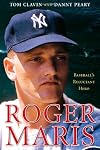
As someone who sat in the bleachers at old Yankee Stadium in the early 1960s, I heard and saw the abuse "fans" heaped on Roger Maris. This biography of Maris not only describes the abuse Maris endured but analyzes its causes. I would have loved this book for its descriptions of baseball as it was in the 1960s, the players I idolized in those days, and the dramatic story of Maris and Mantle's race to break Babe Ruth's single season record. What I love most about the book is the three show more dimensional portrait of Maris and the time and attention paid to his life after the Yankees, and after baseball. Spoiler: It turns out Maris is a hero. show less
"Roger Maris: Baseball's Reluctant Hero" is the complete Roger Maris biography. And, because Maris was a private person who shared very few personal details with writers of the day, the book holds surprises even for those who witnessed the pressure-packed 1961 season and believe they already know the Roger Maris story. Few, for instance, are likely to know that Maris was not born in North Dakota as he claimed or that "Maris" is not the original spelling of his surname - or about the show more dysfunctional family dynamic that caused the spelling to be changed.
The biography, however, rightfully focuses on the way New York sportswriters and broadcasters conspired to ruin a good man's reputation and to make him miserable during what could have been the best year of his life. Old-school writers, in particular, hated to see Babe Ruth's home run record fall and, if it had to be broken at all, the last thing they wanted to see was someone like Roger Maris do the breaking. Because they did not consider Roger Maris to be a "true Yankee," this unethical group of writers trashed his reputation on a daily basis. They portrayed him as surly and unappreciative, a man who refused to play through his injuries the way Mantle played through his own. They even covered for Mantle's drinking problems and resulting lack of hustle while attacking Maris for not going full out even when ordered to play at a slower pace (to protect an injury) by his manager. And it worked - fans in every American League city hated Maris and never failed to boo or jeer him, even in his home ballpark.
That was bad enough. But just as bad was the unethical way Commissioner Ford Frick decided to protect the home run record of Babe Ruth, a friend of his, by hanging the infamous "asterisk" on Maris, insisting that Ruth was still the single season champion for a 154-game schedule and that Maris was only the champion for a less impressive 162-game schedule (even though Ruth had three more overall at-bats than Maris). But it gets still worse because, later in his Yankee career, the full extent of a hand injury was kept from Maris by the Yankee front office and his manager, Ralph Houk, a decision that all but ensured he would never fully regain the grip in that hand or be able to pull a ball like he did when it was healthy. This is the same front office that failed to protect Maris from the rabid press in 1961 or even to promote his continuing chase to catch Ruth after the 154th game of the season, the same people who would send him off to St. Louis without ever recognizing what a great Yankee player he actually had been.
Understandably, Roger Maris hated the Yankee organization and Yankee fans by the time he was traded to St. Louis in an underhanded deal that turned out to be the biggest blessing of his career. That he would be able to reconcile with the Yankee organization, thanks to the efforts of George Steinbrenner, and that he would learn to love baseball again because of his experiences with the St. Louis Cardinals, is the best part of the Roger Maris story. When he died at age 51, still in the prime of life, baseball lost one of its all time greats, a man that, in my opinion, deserves to be in the Baseball Hall of Fame despite the successful efforts of a group of despicable writers to keep him out of it.
"Roger Maris: Baseball's Reluctant Hero" is not just a book for baseball fans because Roger Maris is a true American hero, a man whose story will be an inspiration to anyone who reads this revealing biography.
Rated at: 4.5 show less
The biography, however, rightfully focuses on the way New York sportswriters and broadcasters conspired to ruin a good man's reputation and to make him miserable during what could have been the best year of his life. Old-school writers, in particular, hated to see Babe Ruth's home run record fall and, if it had to be broken at all, the last thing they wanted to see was someone like Roger Maris do the breaking. Because they did not consider Roger Maris to be a "true Yankee," this unethical group of writers trashed his reputation on a daily basis. They portrayed him as surly and unappreciative, a man who refused to play through his injuries the way Mantle played through his own. They even covered for Mantle's drinking problems and resulting lack of hustle while attacking Maris for not going full out even when ordered to play at a slower pace (to protect an injury) by his manager. And it worked - fans in every American League city hated Maris and never failed to boo or jeer him, even in his home ballpark.
That was bad enough. But just as bad was the unethical way Commissioner Ford Frick decided to protect the home run record of Babe Ruth, a friend of his, by hanging the infamous "asterisk" on Maris, insisting that Ruth was still the single season champion for a 154-game schedule and that Maris was only the champion for a less impressive 162-game schedule (even though Ruth had three more overall at-bats than Maris). But it gets still worse because, later in his Yankee career, the full extent of a hand injury was kept from Maris by the Yankee front office and his manager, Ralph Houk, a decision that all but ensured he would never fully regain the grip in that hand or be able to pull a ball like he did when it was healthy. This is the same front office that failed to protect Maris from the rabid press in 1961 or even to promote his continuing chase to catch Ruth after the 154th game of the season, the same people who would send him off to St. Louis without ever recognizing what a great Yankee player he actually had been.
Understandably, Roger Maris hated the Yankee organization and Yankee fans by the time he was traded to St. Louis in an underhanded deal that turned out to be the biggest blessing of his career. That he would be able to reconcile with the Yankee organization, thanks to the efforts of George Steinbrenner, and that he would learn to love baseball again because of his experiences with the St. Louis Cardinals, is the best part of the Roger Maris story. When he died at age 51, still in the prime of life, baseball lost one of its all time greats, a man that, in my opinion, deserves to be in the Baseball Hall of Fame despite the successful efforts of a group of despicable writers to keep him out of it.
"Roger Maris: Baseball's Reluctant Hero" is not just a book for baseball fans because Roger Maris is a true American hero, a man whose story will be an inspiration to anyone who reads this revealing biography.
Rated at: 4.5 show less

"The first Academy Awards were given out in 1929. In my view, they got it wrong then, and with few exceptions they have gotten it wrong ever since. Although it was declared that awards would be bestowed based on merit only, that does not always seem to have been the case."
Have you ever felt that an Oscar went to the wrong person or that an undeserving movie won Best Picture? If so, this is the book for you. Danny Peary takes the history of the Academy Awards from 1927-1991 and offers his show more take on Best Picture, Actor and Actress. He includes vintage photos as well as indepth descriptions of the movies plot and characters. Not only does he justify his choices, he also goes into detail about the history of the Academy Awards and why they made the choices they did. The truth behind some awards is far stranger than you might imagine.
The thing I love best about this book is the amount of detail Peary puts into each year. He obviously knows movies, even going so far as to offring runners-up to his choice of winner. He sees things the average moviegoer wouldn't, analyzes scenes and character, digs up the riches they're hiding and puts them on display for us. Take this excerpt about his choice for Best Actor 1946, Jimmy Stewart from "It's a Wonderful Life":
"Restless because he can't leave Bedford Falls, he does everything to expend energy, especially moving his hands and arms when talking. It's delightful when he finds Mary (Donna Reed) waiting at the house on their wedding night, amid a romantic setting, and is so stunned that he can't move his arms and must remain speechless. But at other times his arms swing wildly and he talks up a storm, makes speeches, argues with Potter, yells, screams, paces back and forth in front of Mary's house, runs through the streets, races up and down his stairwell, dances a wild Charleston with Mary, fights, jumps, dives into water, and on and on."
The drawbacks are few and far between. Peary's book only runs until 1991, almost twenty years of movies are begging for his opinion. As well, this book is currently out of print so good luck getting your hands on a copy if your local library doesn't have it. show less
Have you ever felt that an Oscar went to the wrong person or that an undeserving movie won Best Picture? If so, this is the book for you. Danny Peary takes the history of the Academy Awards from 1927-1991 and offers his show more take on Best Picture, Actor and Actress. He includes vintage photos as well as indepth descriptions of the movies plot and characters. Not only does he justify his choices, he also goes into detail about the history of the Academy Awards and why they made the choices they did. The truth behind some awards is far stranger than you might imagine.
The thing I love best about this book is the amount of detail Peary puts into each year. He obviously knows movies, even going so far as to offring runners-up to his choice of winner. He sees things the average moviegoer wouldn't, analyzes scenes and character, digs up the riches they're hiding and puts them on display for us. Take this excerpt about his choice for Best Actor 1946, Jimmy Stewart from "It's a Wonderful Life":
"Restless because he can't leave Bedford Falls, he does everything to expend energy, especially moving his hands and arms when talking. It's delightful when he finds Mary (Donna Reed) waiting at the house on their wedding night, amid a romantic setting, and is so stunned that he can't move his arms and must remain speechless. But at other times his arms swing wildly and he talks up a storm, makes speeches, argues with Potter, yells, screams, paces back and forth in front of Mary's house, runs through the streets, races up and down his stairwell, dances a wild Charleston with Mary, fights, jumps, dives into water, and on and on."
The drawbacks are few and far between. Peary's book only runs until 1991, almost twenty years of movies are begging for his opinion. As well, this book is currently out of print so good luck getting your hands on a copy if your local library doesn't have it. show less

Danny Peary's Cult Movies (as well as its two following volumes) is one of the books that helped my expand my teenage love of film beyond horror movies. while I was already aware of some of the films in this volume as a child beforehand - Rock and Roll High School, The Rocky Horror Picture Show, Harold and Maude, Duck Soup - others I wouldn't have normally been exposed to were introduced to me for the first time, and piqued my curiosity about them and other films withing those genres. Films show more like El Topo and Shock Corridor weren't bound to show up on HBO or Showtime in the 90s. If it weren't for Cult Movies, it would have probably been another decade or so before I was even aware of films like The Long Goodbye and Two-Lane Blacktop.
Peary's selection of what he classifies as 'cult movies' covers a wide range of films, from cultural mainstays like Casablanca and The Wizard of Oz, to art house favorites like La Cage aux Folles and Andy Warhol's Bad, to more obscure films outside of the mainstream like Petulia and Where's Poppa. This is probably one of the few film guides you will read that devotes equal time and attention to both Stanley Kubrick's 2001: A Space Odyssey and John Waters' Pink Flamingos. Whether the films are known for their excellence (Citizen Kane) or their lack thereof (Beyond the Valley of the Dolls), Peary examines not just the films themselves, but the making of them, and the attention they've garnered, good or bad.
Spoiler Alert: Peary's essays on the films in this book are preceded by detailed synopses that basically reveal the entire film, including plot-twists and endings, and the majority of his essays are written under the presumption that the reader has already seen the film. Cult Movies is a great book for exposing you to new cinematic treasures, but tread lightly if you aren't a fan of knowing the story before you see it. show less
Peary's selection of what he classifies as 'cult movies' covers a wide range of films, from cultural mainstays like Casablanca and The Wizard of Oz, to art house favorites like La Cage aux Folles and Andy Warhol's Bad, to more obscure films outside of the mainstream like Petulia and Where's Poppa. This is probably one of the few film guides you will read that devotes equal time and attention to both Stanley Kubrick's 2001: A Space Odyssey and John Waters' Pink Flamingos. Whether the films are known for their excellence (Citizen Kane) or their lack thereof (Beyond the Valley of the Dolls), Peary examines not just the films themselves, but the making of them, and the attention they've garnered, good or bad.
Spoiler Alert: Peary's essays on the films in this book are preceded by detailed synopses that basically reveal the entire film, including plot-twists and endings, and the majority of his essays are written under the presumption that the reader has already seen the film. Cult Movies is a great book for exposing you to new cinematic treasures, but tread lightly if you aren't a fan of knowing the story before you see it. show less
Lists
Shaking a Leg (1)
You May Also Like


Associated Authors
Statistics
- Works
- 26
- Also by
- 4
- Members
- 1,276
- Popularity
- #20,105
- Rating
- 3.6
- Reviews
- 22
- ISBNs
- 53
- Favorited
- 3