

Jonathan Coe
Author of What a Carve Up!
About the Author
Jonathan Coe is one of Britain's finest contemporary writers
Series
Works by Jonathan Coe
Jonathan Coe Collection 3 Books Set (Middle England, The Closed Circle, The Rotters' Club) (2020) 1 copy
Lessons in Harmony 1 copy
The Unfortunates 1 copy
UYKU EVİ 1 copy
Associated Works
Over X-jes, de zandloper en de herenbobbel. Een handleiding tot de kunsten voor Maarten Asscher (1998) — Contributor — 1 copy
Tagged
Common Knowledge
- Canonical name
- Coe, Jonathan
- Birthdate
- 1961-08-19
- Gender
- male
- Education
- King Edward's School, Birmingham, England, UK
University of Warwick (MA | 1984 | Ph.D | 1986)
University of Cambridge (BA | 1983 | Trinity College) - Occupations
- novelist
- Organizations
- University of Warwick
- Awards and honors
- Prix du Meilleur Livre Étranger (1995)
Prix Médicis Étranger (1998)
Bollinger Everyman Wodehouse Prize (2001)
Ordre des Arts et des Lettres (Chevalier, 2004)
Premio Arcebispo Juan de San Clemente (2004)
Samuel Johnson Prize (2005) (show all 9)
Royal Society of Literature (Fellow, 2012)
European Book Prize (2019)
Bauer-Ca' Foscari award (2019) - Agent
- Peake Associates (former)
Felicity Bryan Associates Literary Agency (current) - Relationships
- McKeown, Janine (wife)
- Nationality
- UK
- Birthplace
- Birmingham, England, UK
- Places of residence
- Bromsgrove, Worcestershire, England, UK
London, England, UK - Map Location
- England, UK
Members
Reviews
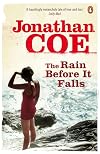
Jonathan Coe is perhaps best known for his satirical, angry and very funny state-of-the-nation novels about England; The Rain Before It Falls is something rather different. It’s a short novel which spans over sixty years, from the Second World War to the early noughties, and three generations of a family. A novel about the relationship between mothers and daughters, and the damage we pass onto each other down the generations. A story of family secrets, abuse, hidden lives, the need for show more love and the denial of love; and one which reveals its own secrets stealthily, almost in the manner of a murder mystery.
Septuagenarian Rosamond is found dead in her armchair, apparently of a heart attack, surrounded by photograph albums, four C90 cassettes, an old cassette recorder, and with a microphone still in her hand. She has no children and her longtime partner Ruth has died some years earlier. She has appointed her niece Gill as executor and left her with instructions to give the tapes, and twenty accompanying photographs, to a young blind woman called Imogen (to whom she has also left part of her estate) whom Gill has met only once, many years before at a party at Rosamond’s house when Imogen was a child. Unable to locate Imogen, Gill eventually listens to the tapes herself with her two daughters. The family revelations that emerge from them revolve around Rosamond and her cousin Beatrix and daughter Thea; and, of course, the mysterious Imogen.
Characteristically, Coe combines formal invention with easy readability, a gripping narrative and a strong emotional centre. Most of the book consists of Rosamond’s tape recorded descriptions of the twenty photographs taken at various stages of her life and from these an entire history emerges. Rosamond is an engaging and likeable narrator. Her personality emerges as caring and thoughtful, mixed with an irrepressible urge to tell the truth and an admirable lack of sentimentality. The narrative that unfolds from her memories stimulated by the photographs says much about the way the camera always lies, concealing rather than capturing reality, and conversely how human memory can remain true to events over the decades.
This is a novel which speaks powerfully, in a nicely understated way, about the experience of a lesbian in mid-twentieth century Britain. Rosamond is independent, unapologetic and open about herself, and she eventually has a successful career and fulfilling relationship with Ruth. There’s Rosamond, smiling in all the family photos; in the larger picture of the family, however, there is a sense in which her life is conveniently tucked away at the margins. The tragic irony of this story about dysfunctional and loveless families is that she is the most maternal character but, due to the legally sanctioned prejudices of the time, unable to have her own family or adopt children. When the book was written Britain was in the midst of heated debates about gay adoption and the reader gradually becomes aware of a political sub-text.
Jonathan Coe has long been one of my favourite contemporary novelists and this is one of his best novels. He has always struck me as a sort of literary magician and perhaps never more so than here. He creates a whole world, and an immensely moving narrative, from an elderly woman sitting alone in her living room describing old photographs into a tape recorder. He writes unflinchingly about the hurt we inflict on each other but with a rounded, mature and ultimately almost forgiving tone. The Rain Before It Falls is elegiac, upsetting and haunting. A book built out of memories which, I know, will continue to resonate in my own memory for a long time. show less
Septuagenarian Rosamond is found dead in her armchair, apparently of a heart attack, surrounded by photograph albums, four C90 cassettes, an old cassette recorder, and with a microphone still in her hand. She has no children and her longtime partner Ruth has died some years earlier. She has appointed her niece Gill as executor and left her with instructions to give the tapes, and twenty accompanying photographs, to a young blind woman called Imogen (to whom she has also left part of her estate) whom Gill has met only once, many years before at a party at Rosamond’s house when Imogen was a child. Unable to locate Imogen, Gill eventually listens to the tapes herself with her two daughters. The family revelations that emerge from them revolve around Rosamond and her cousin Beatrix and daughter Thea; and, of course, the mysterious Imogen.
Characteristically, Coe combines formal invention with easy readability, a gripping narrative and a strong emotional centre. Most of the book consists of Rosamond’s tape recorded descriptions of the twenty photographs taken at various stages of her life and from these an entire history emerges. Rosamond is an engaging and likeable narrator. Her personality emerges as caring and thoughtful, mixed with an irrepressible urge to tell the truth and an admirable lack of sentimentality. The narrative that unfolds from her memories stimulated by the photographs says much about the way the camera always lies, concealing rather than capturing reality, and conversely how human memory can remain true to events over the decades.
This is a novel which speaks powerfully, in a nicely understated way, about the experience of a lesbian in mid-twentieth century Britain. Rosamond is independent, unapologetic and open about herself, and she eventually has a successful career and fulfilling relationship with Ruth. There’s Rosamond, smiling in all the family photos; in the larger picture of the family, however, there is a sense in which her life is conveniently tucked away at the margins. The tragic irony of this story about dysfunctional and loveless families is that she is the most maternal character but, due to the legally sanctioned prejudices of the time, unable to have her own family or adopt children. When the book was written Britain was in the midst of heated debates about gay adoption and the reader gradually becomes aware of a political sub-text.
Jonathan Coe has long been one of my favourite contemporary novelists and this is one of his best novels. He has always struck me as a sort of literary magician and perhaps never more so than here. He creates a whole world, and an immensely moving narrative, from an elderly woman sitting alone in her living room describing old photographs into a tape recorder. He writes unflinchingly about the hurt we inflict on each other but with a rounded, mature and ultimately almost forgiving tone. The Rain Before It Falls is elegiac, upsetting and haunting. A book built out of memories which, I know, will continue to resonate in my own memory for a long time. show less

Maria finds life something of a trial. Other people are a puzzle to her, and the happiness and purpose she is supposed to find in education, work and love constantly elude her. Things happen, mostly bad, but they don’t appear to have any rhyme or reason to them.
She’s a character in a novel where the narrator seems to be all too well aware that he is not giving his readers what they feel entitled to, but despite this we are charmed and intrigued by his eccentric powers of observation and show more Maria’s odd personality in this short, early Coe novel. And by the unheralded introduction of Prokofiev’s violin sonata in F in the final chapter (Maria has previously been said to disapprove of anything later than Bach, but never mind…). show less
She’s a character in a novel where the narrator seems to be all too well aware that he is not giving his readers what they feel entitled to, but despite this we are charmed and intrigued by his eccentric powers of observation and show more Maria’s odd personality in this short, early Coe novel. And by the unheralded introduction of Prokofiev’s violin sonata in F in the final chapter (Maria has previously been said to disapprove of anything later than Bach, but never mind…). show less
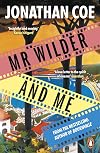
This delight of a novel imaginatively recreates and captures the making of Billy Wilder’s penultimate film in 1977. The experience is recalled by Calista Frangopoulu, who at the time was around 20 years old, with no idea of a future career. On holiday in America, through a friend, she meets Billy Wilder who is planning his latest film “Fedora”. The fortuitous encounter, leads to her being offered the role of translator when filming starts in her native Greece. Coe’s lightness of show more touch, mirrors the best work of Wilder’s films and his portrayal of Wilder’s return and ambivalent feelings about Europe and especially Germans after his pre-war exile from the Nazis, strikes a note of truth. Into this, are woven, Calista’s growing maturity and the gradual realisation of how she may develop her life. Together, these add up to a wholly absorbing and entertaining story. show less
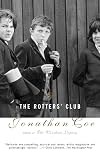
Ok it’s official, Jonathan Coe’s books are drugs. But let’s take a step back here. First of all, this was probably the work of Coe that touched me the most and in many different ways. I laughed, gasped, frowned and cried all throughout the story. It reminded me so much of high school, when we were all different, yet stayed the same in the sense that the future wasn’t written for any of us, so anything could happen and in the meantime you could freeze whatever moment you wanted to, show more just like Benjamin with his green coaster, because at that time every fleeting moment can be someway eternal.
I loved every book of Coe so far, thus I was a little biased before reading The Rotter’s Club synopsis, but while reading it I was atually taken a little aback because the story seemed a bit ordinary, just the story about a bunch of people and – god forgive me – maybe I wouldn’t have read it if I didn’t know the author from previous readings, because as I was saying from the synopsis the story seemed a little ordinary but I knew perfectly well that Coe doesn’t do ordinary, so in the end I was all the more intrigued. And my feeling was right because once I started reading the book I couldn’t put it down. The many different and fascinating stories are all skillfully and wonderfully tangled together, but the plot always stays consistent in its integrality nonetheless. That’s actually what I liked the most about the book, the fact that the writing was absolutely engaging, so that I wanted both to savor every page and get to the end of it when curiosity took the better of me.
I loved the going back and forth from one story to another, I loved the sense of humor – Coe style, the kind that you never see coming – and I loved that the last pages were like poetry at its finest, when words scream at you with all their clarity and intensity and remind you that they have the power to cut right into you like nothing else in the world, and seriously life is too short to miss books like this one, the ones that not only make you feel something but that make you live through them. Coe in general is an author you absolutely don't want to miss. Every time I finish one of his books, I fall a little more in love with his writing, with his style and stories to the point that I can’t look away from his words until there are no more (or until my eyes are burning that is). Now I can’t wait to read “The Closed Circle” because I want to stay with these people longer, I’m absolutely not ready to leave them so I’m really glad there’s a sequel.
Five shining stars, which in this case represent not only the rating, but – like Lois’ diary – also my mood while reading this precious book. show less
I loved every book of Coe so far, thus I was a little biased before reading The Rotter’s Club synopsis, but while reading it I was atually taken a little aback because the story seemed a bit ordinary, just the story about a bunch of people and – god forgive me – maybe I wouldn’t have read it if I didn’t know the author from previous readings, because as I was saying from the synopsis the story seemed a little ordinary but I knew perfectly well that Coe doesn’t do ordinary, so in the end I was all the more intrigued. And my feeling was right because once I started reading the book I couldn’t put it down. The many different and fascinating stories are all skillfully and wonderfully tangled together, but the plot always stays consistent in its integrality nonetheless. That’s actually what I liked the most about the book, the fact that the writing was absolutely engaging, so that I wanted both to savor every page and get to the end of it when curiosity took the better of me.
I loved the going back and forth from one story to another, I loved the sense of humor – Coe style, the kind that you never see coming – and I loved that the last pages were like poetry at its finest, when words scream at you with all their clarity and intensity and remind you that they have the power to cut right into you like nothing else in the world, and seriously life is too short to miss books like this one, the ones that not only make you feel something but that make you live through them. Coe in general is an author you absolutely don't want to miss. Every time I finish one of his books, I fall a little more in love with his writing, with his style and stories to the point that I can’t look away from his words until there are no more (or until my eyes are burning that is). Now I can’t wait to read “The Closed Circle” because I want to stay with these people longer, I’m absolutely not ready to leave them so I’m really glad there’s a sequel.
Five shining stars, which in this case represent not only the rating, but – like Lois’ diary – also my mood while reading this precious book. show less
Lists
to get (1)
Read This Next (1)
2015 UpROOTed (1)
A Novel Cure (1)
Sleeplessness (1)
1970s Narratives (1)
Take Four Books (1)
Best Biographies (1)
My TBR (1)
Which house? (1)
Awards


You May Also Like


Associated Authors
Statistics
- Works
- 40
- Also by
- 7
- Members
- 13,735
- Popularity
- #1,688
- Rating
- 3.8
- Reviews
- 421
- ISBNs
- 504
- Languages
- 18
- Favorited
- 75


