
Daniel Pennac
Author of The Rights of the Reader
About the Author
Series
Works by Daniel Pennac
Gaffobobo, le serpent électrique - Sélection du Comité des mamans Hiver 2002 (3-6 ans) (2001) 3 copies
Il paradiso degli orchi-La fata carabina-La prosivendola-Signor Malaussène-Ultime notizie dalla famiglia-La passione secondo Thérèse (2017) 2 copies
VIRADOR 2 copies
Una lezione d'ignoranza 1 copy
Tesekkur Ederim 1 copy
Kamo, l' idea del secolo 1 copy
Abbiare stanca 1 copy
Mi hermano 2018 1 copy
O olho do lobo 1 copy
Mano la Fee Carabine 1 copy
KAMÔ E A IDÉIA DO SÉCULO. 1 copy
[From the cover of the box : Stylographe : Dessins de Daniel Pennac 25 cartes postales Tome 2] 1 copy
Il paradiso degli oceani 1 copy
Saga la fée carabine en 3 tomes : 1 La fée carabine - 2 a Au bonheur des ogres - 3 La petite marchande de prose (2004) 1 copy
Gardiens et passeurs 1 copy
Excelentíssimas crianças 1 copy
Associated Works
Tagged
Common Knowledge
- Legal name
- Pennacchioni, Daniel
- Other names
- Nacray, J. B. (pseudonym)
- Birthdate
- 1944-12-01
- Gender
- male
- Education
- Université de Nice (Maîtrise, Lettres)
- Occupations
- teacher
writer - Organizations
- Collège d'Hulst, Paris (Professeur, Français)
Collège à Nice (Professeur, Français)
Collège Saint-Paul, Soissons (Professeur, Français, 1969) - Awards and honors
- Grinzane Cavour Prize (2002)
Honorary Degree (University of Bologna) (pedagogy) - Nationality
- France
- Birthplace
- Casablanca, Morocco
- Places of residence
- Casablanca, Morocco
Djibouti
Ethiopia
Algeria
French Equatorial Africa
Indochina (show all 8)
Nice, Alpes-Maritimes, France
La Colle-sur-Loup, France - Map Location
- France
Members
Reviews
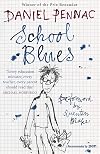
loved this book. It's about the kids who don't do so well at school - Pennac describes himself as a dunce (cancre) during his own school days, but under the encouragement of great teachers he did well and ended up as a teacher himself, so he's seen both (all three?) sides of the story.
The book mixes memoir (of his schooling and teaching days) with a sort of manifesto for what teaching ought to provide, and the sympathy and support which should be given to those who don't find studying too show more easy, who don't "enjoy the blessed facility of being able to slip into a different skin whenever necessary, to shift from restless teenager to attentive student, from spurned sweetheart to focused scientist, from sporting hero to swot, from elsewhere to here, from past to present, from maths to literature".
While making a compelling case, Pennac knows that it's not easy - he recounts occasions when he too failed to reach out or to be patient or generous. He mocks his own pretensions and becomes, for me, an even more sympathetic character. All this, incidentally, is beautifully written and translated. I'll be giving School Blues to all of my friends who work in education. show less
The book mixes memoir (of his schooling and teaching days) with a sort of manifesto for what teaching ought to provide, and the sympathy and support which should be given to those who don't find studying too show more easy, who don't "enjoy the blessed facility of being able to slip into a different skin whenever necessary, to shift from restless teenager to attentive student, from spurned sweetheart to focused scientist, from sporting hero to swot, from elsewhere to here, from past to present, from maths to literature".
While making a compelling case, Pennac knows that it's not easy - he recounts occasions when he too failed to reach out or to be patient or generous. He mocks his own pretensions and becomes, for me, an even more sympathetic character. All this, incidentally, is beautifully written and translated. I'll be giving School Blues to all of my friends who work in education. show less

Comme un roman is a short book — an extended essay, really — about the pleasure of reading and the risk we run of losing that pleasure as adolescents in the hands of the school system. As a parent, a teacher, a writer and a former adolescent, Pennac is able to put himself in turn into all the different roles involved in the epic struggle between the teenager and Madame Bovary (which refuses to advance beyond page 48, whilst the book-report is due to be handed in tomorrow morning), and as show more a novelist he can't resist dramatising those scenes for us, so it's fun to read, but there's a real message there as well.
Pennac insists that what kills the desire to read for pleasure is not parental apathy or video games, television or the Walkman, but the way school turns reading into a task that is scored and evaluated, with production quotas and the expectation that we should be able to make the correct sort of intelligent comments about what we have read, and the corresponding fear of being labelled ignorant or lazy if we don't accomplish the task in the right way. He describes his strategy — borrowed from the actor/poet Georges Perros — for overcoming that hurdle by reading aloud ("gratuitously and unconditionally") to his teenage students to reintroduce them to the idea that books contain stories written to entertain the reader. He waits until they have been bitten by the bug and started to read again on their own account before moving on to the books he's supposed to be teaching. And the book concludes with his charter of "basic rights of the reader", which starts, significantly, with the right not to read. show less
Pennac insists that what kills the desire to read for pleasure is not parental apathy or video games, television or the Walkman, but the way school turns reading into a task that is scored and evaluated, with production quotas and the expectation that we should be able to make the correct sort of intelligent comments about what we have read, and the corresponding fear of being labelled ignorant or lazy if we don't accomplish the task in the right way. He describes his strategy — borrowed from the actor/poet Georges Perros — for overcoming that hurdle by reading aloud ("gratuitously and unconditionally") to his teenage students to reintroduce them to the idea that books contain stories written to entertain the reader. He waits until they have been bitten by the bug and started to read again on their own account before moving on to the books he's supposed to be teaching. And the book concludes with his charter of "basic rights of the reader", which starts, significantly, with the right not to read. show less
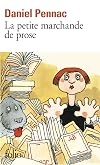
It's easy to read, funny, crazy and of the kind you can't drop till you finish. It's nevertheless intelligent and quite full of references. What I consider to constitute a perfect holiday book: light without making you dumb.
For the private joke: the main character is repeatedly a scapegoat for the police, besides being a professional one...
For the private joke: the main character is repeatedly a scapegoat for the police, besides being a professional one...

La fée carabine is the second book in the Malaussène saga - Benjamin finds himself mixed up in another criminal investigation, and more than likely to be wrongly accused, with a serial-killer cutting the throats of old ladies in Belleville. Meanwhile, Benjamin's girlfriend the investigative reporter Julia is on the trail of a gang of drug-dealers who specialise in supplying elderly addicts. And it's not at all clear whose side the police are on...
Pennac avoids the trap of repeating all the show more jokes from the first book by putting a lot less weight on Benjamin's family and his job as a professional scapegoat, although both are still there, of course, and still very funny. A lot of the story focusses on a couple of new characters, Inspector Pastor, a pullover-knitting policeman of almost Adamsbergish vagueness, and his cunning - but possibly schizophrenic - old colleague, Inspector Van Thian (alias the widow Ho). And there's also a new Malaussène sibling, a baby named - with good reason - after a First World War battle...
Lots of sharp comments about modern French society, a strong message about our common need for humanity, tolerance, love and storytelling, and plenty of jokes. Very enjoyable, but you shouldn't come looking for a technically perfect detective story - for that, Pennac would have to overcome his fondness for taking us by surprise by breaking the rules at inappropriate moments. show less
Pennac avoids the trap of repeating all the show more jokes from the first book by putting a lot less weight on Benjamin's family and his job as a professional scapegoat, although both are still there, of course, and still very funny. A lot of the story focusses on a couple of new characters, Inspector Pastor, a pullover-knitting policeman of almost Adamsbergish vagueness, and his cunning - but possibly schizophrenic - old colleague, Inspector Van Thian (alias the widow Ho). And there's also a new Malaussène sibling, a baby named - with good reason - after a First World War battle...
Lots of sharp comments about modern French society, a strong message about our common need for humanity, tolerance, love and storytelling, and plenty of jokes. Very enjoyable, but you shouldn't come looking for a technically perfect detective story - for that, Pennac would have to overcome his fondness for taking us by surprise by breaking the rules at inappropriate moments. show less
Lists
Awards


You May Also Like


Associated Authors
Statistics
- Works
- 95
- Also by
- 3
- Members
- 13,210
- Popularity
- #1,768
- Rating
- 3.7
- Reviews
- 249
- ISBNs
- 612
- Languages
- 26
- Favorited
- 32


