
Amélie Nothomb
Author of Fear and Trembling
About the Author
Disambiguation Notice:
(nor) The first date of birth and birthplace are originated from the official site; the second ones are confirmed by the family genealogies published in État présent de la noblesse belge" 1979, 1995 et 2010.
(fre) Just one birth date on academic and offical text : 1966-07-09
Works by Amélie Nothomb
Tant mieux 3 copies
Les champignons de Paris 3 copies
Tant mieux 3 copies
Tant mieux 2 copies
Fiche de lecture Métaphysique des tubes de Amélie Nothomb (Analyse littéraire de référence et résumé complet) (French Edition) (2018) 2 copies
Soif 1 copy
Stupeur et tremblements 1 copy
Le Fait du prince 1 copy
Des te beter (Dutch Edition) 1 copy
Преступление. Ртуть 1 copy
Una forma di vita 1 copy
Uimire și cutremur 1 copy
Биография голода = Biographie de la faim ; Любовный саботаж = Le Sabotage amoureux : романы (2006) 1 copy
Premier sang 1 copy
Jurnalul Rândunicii 1 copy
Combustibilii 1 copy
Discours de réception d'Amélie Nothomb à l'Académie royale de Belgique accueillie par Jacques... (2016) 1 copy
Лексикон на лични имиња 1 copy
Козметика на непријателот 1 copy
Sững sờ và Run rẩy 1 copy
Associated Works
Tagged
Common Knowledge
- Canonical name
- Nothomb, Amélie
- Legal name
- Nothomb, Fabienne Claire
- Other names
- Fabienne-Claire Nothomb, Baroness (2015)
- Birthdate
- 1966-07-09
- Gender
- female
- Education
- Université Libre de Bruxelles
- Occupations
- writer
- Awards and honors
- Prix Jacques-Chardonne (1993)
Grand Prix du roman de l'Académie française (1999)
Grand prix Jean Giono (2008)
Belgium Royal Academy of French language and literature (2015)
Commander, Order of the Crown (Belgium) (2015)
Prix Renaudot (2021) - Relationships
- Nothomb, Patrick (father)
Nothomb, Juliette (sister) - Nationality
- Belgium
- Birthplace
- Etterbeek, Belgium
- Places of residence
- Brussels, Belgium
Paris, Île-de-France, France - Map Location
- Belgium
Members
Discussions
Man tells the girl he enslaved that she is ugly and no mirrors allowed in Name that Book (January 2017)
Reviews

Clever first novel — more like a play, really, the whole thing done in dialogue and set in a single room. Splendidly intense and claustrophobic: it's a book that you're in a hurry to finish just to get out into the open air again, and it will leave you with a delightfully unpleasant taste in your mouth. But I'm not altogether sure that it does very much more than that.
As in l'Attentat, Nothomb takes a splendidly repulsive character as the central figure of the story, and uses him to show more explore many of her favourite themes: alimentary processes; the relation between narrative and life; gender politics. Prétextat Tach is one of the best character names I've come across in some time: it's almost worth reading the book just for this. show less
As in l'Attentat, Nothomb takes a splendidly repulsive character as the central figure of the story, and uses him to show more explore many of her favourite themes: alimentary processes; the relation between narrative and life; gender politics. Prétextat Tach is one of the best character names I've come across in some time: it's almost worth reading the book just for this. show less
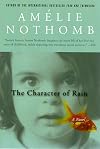
What is it like to be treated like a god? According to this novel the Japanese treat newborn children like gods until about their third year of life. The newborn in this story is certainly more precocious than I would expect most of these babies, but in spite of her extraordinary intelligence, or perhaps because of it, she is careful in how and to whom she demonstrates her true nature.
With that brief introduction I must say that this short novel is very different from almost anything I have show more ever read. The story is primarily told in the first person, but that person being a newborn there are necessarily exceptions to this narrative mode. For example, early on the following occurs:
"The cradle became too small. The tube was transplanted to a crib, the same one used previously by its older brother and sister.
“Maybe moving the Plant will wake it up,” said the mother, sighing.
It didn't.
From the beginning of the universe, God had slept in the same room as its parents. This didn't pose problems for them, of course. They could forget it was even there."
The perspective of this very young girl is one of the most interesting aspects of the story. Everything is new for her thus her reactions are different than her parents or the reader. She takes delight in her senses , but is preternaturally judicious in the use of them. For a long time she did not speak and when she did decide to speak she chose her words very carefully. She started by naming things, in a very philosophic way sort of like a miniature Plato. Or Heraclitus, whom the narrator quotes using his famous observation that "nothing endures but change" early in the story when the little god appeared to be exceptionally unchanging. That being only her outward appearance she, when the narrative shifts to her point of view we realize that she is taking in everything that is happening around her and is truly changing on the inside. She was seeing and in doing so making choices.
Eventually she begins to speak and makes a great discovery:
"Careful examination of what other people said led me to the conclusion that speaking was as much a creative as a destructive act. I decided I would need to be careful about what to do with this discovery."
Thus her life progresses slowly, but carefully, and this occurs under the tutelage of two nannies. They are exact opposites of each other nullifying each other out in a sense, at least they would be doing so except the little god had her say and she preferred the nice nanny, Nishio-san, who thought she was beautiful and treated her like a god, to the unlikable nanny, Kashima-san, who refused her, denied her, and did not adore the little god; all this in spite of a "charm" offensive that with few exceptions had no effect.
The story is odd in its perspective, but gradually a rationale of a sort begins to emerge. I would call that rationale discovery; the child's discovery of the world around her and both her delight and dislike of the experience and consequences of that discovery. Her experiences are fascinating, like the experience of a rain storm:
"Sometimes I left the shelter of the roof and lay on top of the victim to participate in the onslaught. I chose the most exciting moment, the final pounding downpour, the moment in the bout when the clouds delivered a punishing, relentless hail of blows, in a booming fracas of exploding bones."
"THE RAIN SOMETIMES WON, and when it did it was called a flood."
This short novel only chronicles the first three years of the child's life, enough time for her to decide to become Japanese, to discover people and nature, and ultimately to make a choice about whether she would continue to live and grow. As for that last choice you will have to read the book yourself to find out her answer. show less
With that brief introduction I must say that this short novel is very different from almost anything I have show more ever read. The story is primarily told in the first person, but that person being a newborn there are necessarily exceptions to this narrative mode. For example, early on the following occurs:
"The cradle became too small. The tube was transplanted to a crib, the same one used previously by its older brother and sister.
“Maybe moving the Plant will wake it up,” said the mother, sighing.
It didn't.
From the beginning of the universe, God had slept in the same room as its parents. This didn't pose problems for them, of course. They could forget it was even there."
The perspective of this very young girl is one of the most interesting aspects of the story. Everything is new for her thus her reactions are different than her parents or the reader. She takes delight in her senses , but is preternaturally judicious in the use of them. For a long time she did not speak and when she did decide to speak she chose her words very carefully. She started by naming things, in a very philosophic way sort of like a miniature Plato. Or Heraclitus, whom the narrator quotes using his famous observation that "nothing endures but change" early in the story when the little god appeared to be exceptionally unchanging. That being only her outward appearance she, when the narrative shifts to her point of view we realize that she is taking in everything that is happening around her and is truly changing on the inside. She was seeing and in doing so making choices.
Eventually she begins to speak and makes a great discovery:
"Careful examination of what other people said led me to the conclusion that speaking was as much a creative as a destructive act. I decided I would need to be careful about what to do with this discovery."
Thus her life progresses slowly, but carefully, and this occurs under the tutelage of two nannies. They are exact opposites of each other nullifying each other out in a sense, at least they would be doing so except the little god had her say and she preferred the nice nanny, Nishio-san, who thought she was beautiful and treated her like a god, to the unlikable nanny, Kashima-san, who refused her, denied her, and did not adore the little god; all this in spite of a "charm" offensive that with few exceptions had no effect.
The story is odd in its perspective, but gradually a rationale of a sort begins to emerge. I would call that rationale discovery; the child's discovery of the world around her and both her delight and dislike of the experience and consequences of that discovery. Her experiences are fascinating, like the experience of a rain storm:
"Sometimes I left the shelter of the roof and lay on top of the victim to participate in the onslaught. I chose the most exciting moment, the final pounding downpour, the moment in the bout when the clouds delivered a punishing, relentless hail of blows, in a booming fracas of exploding bones."
"THE RAIN SOMETIMES WON, and when it did it was called a flood."
This short novel only chronicles the first three years of the child's life, enough time for her to decide to become Japanese, to discover people and nature, and ultimately to make a choice about whether she would continue to live and grow. As for that last choice you will have to read the book yourself to find out her answer. show less

In The Stranger Next Door by Amélie Nothomb, childhood sweethearts, Emile and Juliette Hazel, married for 43 years, decide to abandon city life for an idyllic retirement in the country. They have a burning need for solitude, to become true free spirits liberated from "what men have made of life." And so, in true fairy tale fashion, they buy a cottage in the woods, a house covered in blue wisteria set near a river, and get ready to begin their golden years in peace and tranquility.
But then show more comes a knock at the door.
Soon their Garden-of-Eden getaway is interrupted by a visit from their neighbor, Palamedes Bernardin. At first, Emile and Juliette are delighted. Mr. Bernardin is a retired cardiologist (how convenient to have a doctor living so close!). Better yet, he isn't a nosy chatterbox, as they feared. But the man's behavior quickly takes a turn: first just odd and then boorishly weird. The Hazels are baffled though still amused after this first fairly innocuous visit. He stays exactly two hours and leaves without ceremony. Emile and Juliette laugh it off—easy cruelties: their neighbor is large and portly, and has the personality of a sack of boulders. But as Mr. Bernardin visits the next day, and the day after that, in succession, when it looks like the visits will never cease, a low-grade paranoia and anxiety begins to settle on them.
By the middle act, we meet Mr. Bernardin's wife, Bernadette. In an effort to fill the void of a conversation, Emile blurts out an absurd dinner invitation. He is morbidly curious. He wants to know who would marry such a man. When they meet Bernadette, Emile and Juliette are shocked. Nothomb's descriptions of Bernadette are grotesque: "a protuberance," a "cyst" who shakes hands with a "tentacle," has a mouth "like that of an octopus" and speaks in indecipherable grunts. She repulses the couple but also elicits their pity and sympathy. Juliette eventually makes it a personal crusade to 'save' Bernadette from what she sees as Mr. Bernardin's cruelties and oppressions.
The book darkens in tone with every turn of the page, like a stain that deepens on white carpet. The Hazels' sense of social obligation prevents them from saying what they mean. Soon their need to understand their neighbor, to understand why he acts the way he does, to ascribe some logical motive to his actions—gets turned inward. The inscrutable Mr. Bernardin becomes a psychological foil to Emile's own buried anxieties and fears. In fact, it reminded me of a psychiatrist and patient relationship, albeit inverted and corrupted. Emile is enraged by the intrusions, which evolve slowly in the book from being a nuisance to daily tortures. He can't sleep at night. He starts to babble and drone, just to fill the silences. He becomes so obsessed with the visits he is helpless to prevent them. "I hadn't realized that I was a coward," Emile muses. With wicked glee, Nothomb inserts small pinpricks into her characters. Nothing you can see or feel at first, but eventually it does serious damage.
The Stranger Next Door is a dark, absurdist comedy with existential edges that only novelists writing in French seem capable of pulling off. It is also a novel about change and transformation: in this case, Emile's mental descent (or ascent, if you're really cynical...). Nothomb captures this idea well when Emile starts musing about good and evil as different states of matter:
"Good is far less convincing than evil, but it's because their chemical structures are different. Like gold, good is never found in a pure state in nature: it therefore doesn't seem impressive. It has the unfortunate tendency not to act; it prefers, passively, to be seen. Evil on the other hand, is like a gas: it's not easy to see but it can be detected by its odor. It's most often stagnant, disbursed in a suffocating sheet; initially this aspect seems inoffensive, but then suddenly you see it at work and you realize the ground it has won, the tasks it has accomplished. And by then it's all over; gas cannot be expelled."
How are gases different from other states of matter? Well, gases expand; they are elastic and can be compressed; and they have weight. The Stranger Next Door is one part laughing gas, two parts gas chamber. It's a novel about a man's downward spiral to self-destruction. One criticism I have, though, is that you can guess the ending of the book fairly easily, but I suppose mystery isn't the point. * SPOILER AHEAD: By the end of the book, Emile's moral center is completely destroyed. In a kind of pathological reversal, Emile is driven to murder, a murder that he sees as an act of mercy.* Before that fateful visit, Emile thought his life was perfect. Then this impenetrable, impassive presence makes him reflect and think otherwise. It becomes a kind of violation from which he never recovers. These are just one of the many dark 'truths' that Nothcomb explores in this short but explosive book. show less
But then show more comes a knock at the door.
Soon their Garden-of-Eden getaway is interrupted by a visit from their neighbor, Palamedes Bernardin. At first, Emile and Juliette are delighted. Mr. Bernardin is a retired cardiologist (how convenient to have a doctor living so close!). Better yet, he isn't a nosy chatterbox, as they feared. But the man's behavior quickly takes a turn: first just odd and then boorishly weird. The Hazels are baffled though still amused after this first fairly innocuous visit. He stays exactly two hours and leaves without ceremony. Emile and Juliette laugh it off—easy cruelties: their neighbor is large and portly, and has the personality of a sack of boulders. But as Mr. Bernardin visits the next day, and the day after that, in succession, when it looks like the visits will never cease, a low-grade paranoia and anxiety begins to settle on them.
By the middle act, we meet Mr. Bernardin's wife, Bernadette. In an effort to fill the void of a conversation, Emile blurts out an absurd dinner invitation. He is morbidly curious. He wants to know who would marry such a man. When they meet Bernadette, Emile and Juliette are shocked. Nothomb's descriptions of Bernadette are grotesque: "a protuberance," a "cyst" who shakes hands with a "tentacle," has a mouth "like that of an octopus" and speaks in indecipherable grunts. She repulses the couple but also elicits their pity and sympathy. Juliette eventually makes it a personal crusade to 'save' Bernadette from what she sees as Mr. Bernardin's cruelties and oppressions.
The book darkens in tone with every turn of the page, like a stain that deepens on white carpet. The Hazels' sense of social obligation prevents them from saying what they mean. Soon their need to understand their neighbor, to understand why he acts the way he does, to ascribe some logical motive to his actions—gets turned inward. The inscrutable Mr. Bernardin becomes a psychological foil to Emile's own buried anxieties and fears. In fact, it reminded me of a psychiatrist and patient relationship, albeit inverted and corrupted. Emile is enraged by the intrusions, which evolve slowly in the book from being a nuisance to daily tortures. He can't sleep at night. He starts to babble and drone, just to fill the silences. He becomes so obsessed with the visits he is helpless to prevent them. "I hadn't realized that I was a coward," Emile muses. With wicked glee, Nothomb inserts small pinpricks into her characters. Nothing you can see or feel at first, but eventually it does serious damage.
The Stranger Next Door is a dark, absurdist comedy with existential edges that only novelists writing in French seem capable of pulling off. It is also a novel about change and transformation: in this case, Emile's mental descent (or ascent, if you're really cynical...). Nothomb captures this idea well when Emile starts musing about good and evil as different states of matter:
"Good is far less convincing than evil, but it's because their chemical structures are different. Like gold, good is never found in a pure state in nature: it therefore doesn't seem impressive. It has the unfortunate tendency not to act; it prefers, passively, to be seen. Evil on the other hand, is like a gas: it's not easy to see but it can be detected by its odor. It's most often stagnant, disbursed in a suffocating sheet; initially this aspect seems inoffensive, but then suddenly you see it at work and you realize the ground it has won, the tasks it has accomplished. And by then it's all over; gas cannot be expelled."
How are gases different from other states of matter? Well, gases expand; they are elastic and can be compressed; and they have weight. The Stranger Next Door is one part laughing gas, two parts gas chamber. It's a novel about a man's downward spiral to self-destruction. One criticism I have, though, is that you can guess the ending of the book fairly easily, but I suppose mystery isn't the point. * SPOILER AHEAD: By the end of the book, Emile's moral center is completely destroyed. In a kind of pathological reversal, Emile is driven to murder, a murder that he sees as an act of mercy.* Before that fateful visit, Emile thought his life was perfect. Then this impenetrable, impassive presence makes him reflect and think otherwise. It becomes a kind of violation from which he never recovers. These are just one of the many dark 'truths' that Nothcomb explores in this short but explosive book. show less

"All it takes is to have done something once—but done it deeply—in order to do it again continually, throughout your entire life" —Prétextat Tach
In this witty and satirical book, a reclusive, Nobel prize-winning writer is given a short time to live (he is dying of cartilage cancer). He decides to allow just five reporters in to interview him. Five are chosen, 4 men and 1 woman, and the story chronicles each reporter's interview with the much lauded writer.
Our world renowned writer, show more Prétextat Tach, is revealed to be an obnoxious and disgusting man, a racist and misogynist (to name just a few things). Reporter after reporter uncover this and make all kinds of excuses for it. I admit that I began to lose interest right around when it was the third reporter's turn and I skimmed through some pages until the fifth reporter, the woman, headed upstairs to his apartment. Her interview is tough and pointed and here the dialog is quick and snappy, and in some places laugh out loud funny. She sees through Prétaxtet and calls his bluff both on specific issues, but also generally, uncovering the truth about the man—the hygiene* and the assassin (his unfinished masterpiece is entitled, "The Hygiene of the Assassin")—before the man breathes his last (I don't want to give too much away).
This is Nothomb's first book, written in 1992 when she was in her mid-20s. It is smoothly translated here by Alison Anderson. I think this the satire has much to say about celebrity, literary or otherwise, but also about the art of writing. show less
In this witty and satirical book, a reclusive, Nobel prize-winning writer is given a short time to live (he is dying of cartilage cancer). He decides to allow just five reporters in to interview him. Five are chosen, 4 men and 1 woman, and the story chronicles each reporter's interview with the much lauded writer.
Our world renowned writer, show more Prétextat Tach, is revealed to be an obnoxious and disgusting man, a racist and misogynist (to name just a few things). Reporter after reporter uncover this and make all kinds of excuses for it. I admit that I began to lose interest right around when it was the third reporter's turn and I skimmed through some pages until the fifth reporter, the woman, headed upstairs to his apartment. Her interview is tough and pointed and here the dialog is quick and snappy, and in some places laugh out loud funny. She sees through Prétaxtet and calls his bluff both on specific issues, but also generally, uncovering the truth about the man—the hygiene* and the assassin (his unfinished masterpiece is entitled, "The Hygiene of the Assassin")—before the man breathes his last (I don't want to give too much away).
This is Nothomb's first book, written in 1992 when she was in her mid-20s. It is smoothly translated here by Alison Anderson. I think this the satire has much to say about celebrity, literary or otherwise, but also about the art of writing. show less
Lists
Awards


You May Also Like


Associated Authors
Statistics
- Works
- 84
- Also by
- 1
- Members
- 16,092
- Popularity
- #1,412
- Rating
- 3.5
- Reviews
- 489
- ISBNs
- 676
- Languages
- 31
- Favorited
- 77

