

David Foenkinos
Author of Delicacy
About the Author
Works by David Foenkinos
Associated Works
La bibliothèque des écrivains: Le livre qui a changé leur vie (2021) — Contributor — 4 copies, 1 review
Tagged
Common Knowledge
- Birthdate
- 1974-10-28
- Gender
- male
- Occupations
- novelist
film director
screenwriter - Nationality
- France
- Birthplace
- Paris, Île-de-France, France
- Associated Place (for map)
- Île-de-France, France
Members
Reviews
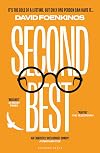
Rating: 4* of five
The Publisher Says: A witty, moving international bestseller about a 10-year boy whose life is shaped forever when he loses out on the role of Harry Potter.
It's 1999. Martin Hill is 10 years old, crazy about football and has a minor crush on a girl named Betty. Then he makes it to the final 2 in the casting for Harry Potter and the Sorcerer’s Stone.
In the end, the other boy is picked for the role of a lifetime. A devastated Martin tries to move on with his life. But how show more can he escape his failure, especially when it's the most famous film series in the world? As Martin grows up, he finds every aspect of his life is invaded with a sense of failure and missed opportunity, and he struggles under the weight of the life he isn’t living.
This bittersweet comedy is full of surprising truths and touching moments, as its unforgettable character discovers that sometimes, the lives we wish we’d led might not be all they’re cracked up to be.
An international publishing sensation, Second Best has been adapted for stage and won the hearts of hundreds of thousands of readers.
I RECEIVED A DRC FROM THE PUBLISHER VIA EDELWEISS+. THANK YOU.
My Review: Published in 2022 in its original French and brought out this week by Pushkin Press after their acqusition of Gallic Books, this is a wonderful meditation on the idea of "almost" as it defines us. Our Western culture valorizes "winning," defined as gaining an objective, fulfilling a need to see ourselves in those who exceed or transcend averageness, mediocrity; this is invidious. By definition, there are more who do not "succeed" or "excel" than those who do; the bar moves ever farther from the mass in the middle, and we are subtextually told we're not as good as, as deserving as, as successful as the few that excel.
Capitalism 101 there...create scarcity from abundance, then keep the abundance away from the maximum number of people.
Being on the outside of the circle, then being uprooted from the normalcy of his life before tragedy of s familial sort scars him further, Martin is a kid who's asked to bear social burdens way above his paygrade. Similar circumstances have crushed adults (famously Pete Best, though the comparison is unfair and inexact) into tailspins more intense than Martin's. Adolescence is hard enough...putting this on top...well, it's no wonder Martin begins to fanatically and fearfully avoid the cultural juggernaut that was Pottermania.
Not terribly successful, that. With the expected consequences.
Watching a talented, not exceptional, adolescent fall into psychosis was uncomfortable to read. Martin imagines...carefully note verb choice...people are laughing at him, judging him, thinking of him as second best, because this epic piece of bad luck befell him. This is, to an adult, clearly imaginary; also clearly missing that most painful of adolescent lacks: Perspective. Watching Martin stumble and bumble his way through what could have been a very good career indeed turned into a prison of self-doubt and fantasy...well...it's rough for me as a reader to soldier on, resonating as I do to his terrible, ongoing struggle. Reading the rumination, by definition repetitive, of someone caught in their mind's cruelest trap...what might have been...is, no matter how brief (only 200-ish pages), quite an ask for entertainment.
Author Foenkinos was inspired to write this story by an interview with the film in question's casting director who recounted the process of anointing Daniel Radcliffe as Potter in contrast to another boy who didn't have some quality Radcliffe did. I do not know if that other child was ever named in any other venue. I certainly hope not. Bad enough to lose out; worse to be known as the loser. The story moves at a slow pace because rumination is not susceptible to the plot drivers that keep us flipping pages. It is an interior novel, this, one that says "here we are in this head and here we stay" which isn't quite the same thing as a récit, but really closely related. In both there is a relentless inward gaze. It gets wearing.
That this would make a very interesting French film is undeniable; it's purported to have been adapted to the stage, though I can't find any official source that mentions this. I can barely imagine how Foenkinos is getting away with mentioning Potter at all without The Lawyers℠ being all over him like vultures on a gut-cart for not paying Warner Bros. a cut. (Maybe he is; I kinda doubt it.)
What I found troubling is the way this examination of fame culture was presented in its downside was pointed but never pointed out. I'm not sanguine about the readers attracted to the story getting a sense of resolution from the ending. It's why I'm only offering four stars for a five-star idea. show less
The Publisher Says: A witty, moving international bestseller about a 10-year boy whose life is shaped forever when he loses out on the role of Harry Potter.
It's 1999. Martin Hill is 10 years old, crazy about football and has a minor crush on a girl named Betty. Then he makes it to the final 2 in the casting for Harry Potter and the Sorcerer’s Stone.
In the end, the other boy is picked for the role of a lifetime. A devastated Martin tries to move on with his life. But how show more can he escape his failure, especially when it's the most famous film series in the world? As Martin grows up, he finds every aspect of his life is invaded with a sense of failure and missed opportunity, and he struggles under the weight of the life he isn’t living.
This bittersweet comedy is full of surprising truths and touching moments, as its unforgettable character discovers that sometimes, the lives we wish we’d led might not be all they’re cracked up to be.
An international publishing sensation, Second Best has been adapted for stage and won the hearts of hundreds of thousands of readers.
I RECEIVED A DRC FROM THE PUBLISHER VIA EDELWEISS+. THANK YOU.
My Review: Published in 2022 in its original French and brought out this week by Pushkin Press after their acqusition of Gallic Books, this is a wonderful meditation on the idea of "almost" as it defines us. Our Western culture valorizes "winning," defined as gaining an objective, fulfilling a need to see ourselves in those who exceed or transcend averageness, mediocrity; this is invidious. By definition, there are more who do not "succeed" or "excel" than those who do; the bar moves ever farther from the mass in the middle, and we are subtextually told we're not as good as, as deserving as, as successful as the few that excel.
Capitalism 101 there...create scarcity from abundance, then keep the abundance away from the maximum number of people.
Being on the outside of the circle, then being uprooted from the normalcy of his life before tragedy of s familial sort scars him further, Martin is a kid who's asked to bear social burdens way above his paygrade. Similar circumstances have crushed adults (famously Pete Best, though the comparison is unfair and inexact) into tailspins more intense than Martin's. Adolescence is hard enough...putting this on top...well, it's no wonder Martin begins to fanatically and fearfully avoid the cultural juggernaut that was Pottermania.
Not terribly successful, that. With the expected consequences.
Watching a talented, not exceptional, adolescent fall into psychosis was uncomfortable to read. Martin imagines...carefully note verb choice...people are laughing at him, judging him, thinking of him as second best, because this epic piece of bad luck befell him. This is, to an adult, clearly imaginary; also clearly missing that most painful of adolescent lacks: Perspective. Watching Martin stumble and bumble his way through what could have been a very good career indeed turned into a prison of self-doubt and fantasy...well...it's rough for me as a reader to soldier on, resonating as I do to his terrible, ongoing struggle. Reading the rumination, by definition repetitive, of someone caught in their mind's cruelest trap...what might have been...is, no matter how brief (only 200-ish pages), quite an ask for entertainment.
Author Foenkinos was inspired to write this story by an interview with the film in question's casting director who recounted the process of anointing Daniel Radcliffe as Potter in contrast to another boy who didn't have some quality Radcliffe did. I do not know if that other child was ever named in any other venue. I certainly hope not. Bad enough to lose out; worse to be known as the loser. The story moves at a slow pace because rumination is not susceptible to the plot drivers that keep us flipping pages. It is an interior novel, this, one that says "here we are in this head and here we stay" which isn't quite the same thing as a récit, but really closely related. In both there is a relentless inward gaze. It gets wearing.
That this would make a very interesting French film is undeniable; it's purported to have been adapted to the stage, though I can't find any official source that mentions this. I can barely imagine how Foenkinos is getting away with mentioning Potter at all without The Lawyers℠ being all over him like vultures on a gut-cart for not paying Warner Bros. a cut. (Maybe he is; I kinda doubt it.)
What I found troubling is the way this examination of fame culture was presented in its downside was pointed but never pointed out. I'm not sanguine about the readers attracted to the story getting a sense of resolution from the ending. It's why I'm only offering four stars for a five-star idea. show less
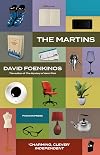
Rating: 4.5* of five
The Publisher Says: ‘Go out into the street and the first person you see will be the subject of your next book.’
This is the challenge a struggling Parisian writer sets himself, imagining his next heroine might be the mysterious young woman who often stands smoking near his apartment...instead it’s octogenarian Madeleine. She’s happy to become the subject of his book—but first she needs to put away her shopping.
Is it really true, the writer wonders, that every show more life is the stuff of novels, or is his story doomed to be hopelessly banal? As he gets to know Madeleine and her family, he’ll be privy to their secrets: lost loves, marital problems and workplace worries. And he’ll soon realise he is not the impartial bystander he intended to be, but a catalyst for major changes in the lives of his characters.
Told with Foenkinos’s characteristic irony and self-deprecating humour, yet filled with warmth, The Martins is a compelling tale of the family next door which raises questions about what it means to be ‘ordinary’, and about the blurred lines between truth and fiction.
I RECEIVED A DRC FROM THE PUBLISHER VIA EDELWEISS+. THANK YOU.
My Review: I don't think most Anglophone readers are aware that "Martin" is the most common surname in France. In the US, the equivalent title would be "The Johnsons," our commonest surname. The joke being established, let's look at these bog-standard, government-issue, salt of the earth just folks. (I could probably pack a few more epithets onto that sentence, but I'll resist.)
Does everyone have a novel in them? As a former literary agent who read endless forests of murdered trees invested in the attempted proof of this nostrum, I'd say, "sorta...kinda...it depends...".
In attempting to prove this is a truth not merely a truism, an author sets himself the challenge in the first paragraph of the synopsis. He tricks himself into believing today will be the day he gets to talk to the alluring woman who smokes in front of the travel agency on her breaks.
"Ha ha ha," says Melpomene, reaching past her laurel wreath for the Mask of Tragedy. Following his self-imposed rule, he must interview an old woman pushing her shopping home. As any seasoned reader knows, here comes the punchline: Mme Madeline Tricot ("Mrs. Cotton") was once in the fashion industry in a small position thus has stories about Lagerfeld et alii being horrible to each other and everyone else.
Score! Or...is it? See, Mme Tricot is sliding into dementia. Her daughter, whom he meets immediately upon going home with Mme Tricot,is naturally very protective of her mother. Thus we're launched into an exploration of modernity, celebrity "culture," and the absurdities of aging...why extend the lives of the old relentlessly and pointlessly if all you're going to do with them is ignore and/or belittle them?...through the lens of The Martins, France's any/every/body family.
Why I enjoyed the read was that Author Foenkinos commits to the bit. He keeps our narrator saying he's reporting alone while, in fact, he's embroiled with the Martins. As a nod to his disingenuous self deletion while in fact performing self insertion, Foenkinos peppers the text with authorial footnotes explaining, justifying, in short intellectualizing, our narrator's many choices. Foenkinos treats us to the narrator's rocky relationships with the people he's trying to make into The Martins, his characters; we read the narrator's account of being termed a con man and an emotional vampire, accusations he, reluctantly, acknowledges carry some truth in their hurtful rejection.
Changing from novel, to non-fiction, to memoir, to metafiction in turns, The Martins is a charming and entertaining exploration of the overlooked, the unconsidered, the devalued, as full and satisfying subjects for our attention. It thus shines a searchlight on the tendency of modern storytelling to ignore simpleness in favor of simplicity. Making their own lives easier by inventing Big!Important!Amazing! people whose lives and doings have only the depth of a narrative purpose, Foenkinos implicitly accuses himself and other authors of avoiding the incredible richness with its immense labor of La Comédie humaine, to cite an ancient example. We're ever less likely to get to know, really know, the people around us, even our own family members as this novel quite clearly demonstrates.
It lends this entertaining read a special poignance, and makes the only slightly veiled warning to our distracted selves sting a good bit more. Multilayered meditation on storytelling, stories, the tragedy and comedy of ordinariness, and the need to attend the moment you're in: A very twenty-first century kind of a read. One I recommend to almost everyone except those in the throes of divorce or breakup, or the recently bereaved. show less
The Publisher Says: ‘Go out into the street and the first person you see will be the subject of your next book.’
This is the challenge a struggling Parisian writer sets himself, imagining his next heroine might be the mysterious young woman who often stands smoking near his apartment...instead it’s octogenarian Madeleine. She’s happy to become the subject of his book—but first she needs to put away her shopping.
Is it really true, the writer wonders, that every show more life is the stuff of novels, or is his story doomed to be hopelessly banal? As he gets to know Madeleine and her family, he’ll be privy to their secrets: lost loves, marital problems and workplace worries. And he’ll soon realise he is not the impartial bystander he intended to be, but a catalyst for major changes in the lives of his characters.
Told with Foenkinos’s characteristic irony and self-deprecating humour, yet filled with warmth, The Martins is a compelling tale of the family next door which raises questions about what it means to be ‘ordinary’, and about the blurred lines between truth and fiction.
I RECEIVED A DRC FROM THE PUBLISHER VIA EDELWEISS+. THANK YOU.
My Review: I don't think most Anglophone readers are aware that "Martin" is the most common surname in France. In the US, the equivalent title would be "The Johnsons," our commonest surname. The joke being established, let's look at these bog-standard, government-issue, salt of the earth just folks. (I could probably pack a few more epithets onto that sentence, but I'll resist.)
Does everyone have a novel in them? As a former literary agent who read endless forests of murdered trees invested in the attempted proof of this nostrum, I'd say, "sorta...kinda...it depends...".
In attempting to prove this is a truth not merely a truism, an author sets himself the challenge in the first paragraph of the synopsis. He tricks himself into believing today will be the day he gets to talk to the alluring woman who smokes in front of the travel agency on her breaks.
"Ha ha ha," says Melpomene, reaching past her laurel wreath for the Mask of Tragedy. Following his self-imposed rule, he must interview an old woman pushing her shopping home. As any seasoned reader knows, here comes the punchline: Mme Madeline Tricot ("Mrs. Cotton") was once in the fashion industry in a small position thus has stories about Lagerfeld et alii being horrible to each other and everyone else.
Score! Or...is it? See, Mme Tricot is sliding into dementia. Her daughter, whom he meets immediately upon going home with Mme Tricot,is naturally very protective of her mother. Thus we're launched into an exploration of modernity, celebrity "culture," and the absurdities of aging...why extend the lives of the old relentlessly and pointlessly if all you're going to do with them is ignore and/or belittle them?...through the lens of The Martins, France's any/every/body family.
Why I enjoyed the read was that Author Foenkinos commits to the bit. He keeps our narrator saying he's reporting alone while, in fact, he's embroiled with the Martins. As a nod to his disingenuous self deletion while in fact performing self insertion, Foenkinos peppers the text with authorial footnotes explaining, justifying, in short intellectualizing, our narrator's many choices. Foenkinos treats us to the narrator's rocky relationships with the people he's trying to make into The Martins, his characters; we read the narrator's account of being termed a con man and an emotional vampire, accusations he, reluctantly, acknowledges carry some truth in their hurtful rejection.
Changing from novel, to non-fiction, to memoir, to metafiction in turns, The Martins is a charming and entertaining exploration of the overlooked, the unconsidered, the devalued, as full and satisfying subjects for our attention. It thus shines a searchlight on the tendency of modern storytelling to ignore simpleness in favor of simplicity. Making their own lives easier by inventing Big!Important!Amazing! people whose lives and doings have only the depth of a narrative purpose, Foenkinos implicitly accuses himself and other authors of avoiding the incredible richness with its immense labor of La Comédie humaine, to cite an ancient example. We're ever less likely to get to know, really know, the people around us, even our own family members as this novel quite clearly demonstrates.
It lends this entertaining read a special poignance, and makes the only slightly veiled warning to our distracted selves sting a good bit more. Multilayered meditation on storytelling, stories, the tragedy and comedy of ordinariness, and the need to attend the moment you're in: A very twenty-first century kind of a read. One I recommend to almost everyone except those in the throes of divorce or breakup, or the recently bereaved. show less
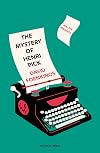
Real Rating: 4.25* of five
The Publisher Says: The delightful first title in a new collaboration with Channel 4's Walter Presents: a fast-paced comic mystery enriched by a deep love of books
In the small town of Crozon in Brittany, a library houses manuscripts that were rejected for publication: the faded dreams of aspiring writers. Visiting while on holiday, young editor Delphine Despero is thrilled to discover a novel so powerful that she feels compelled to bring it back to Paris to publish show more it. The book is a sensation, prompting fevered interest in the identity of its author—apparently one Henri Pick, a now-deceased pizza chef from Crozon. Sceptics cry that the whole thing is a hoax: how could this man have written such a masterpiece? An obstinate journalist, Jean-Michel Rouche, heads to Brittany to investigate.
By turns farcical and moving, The Mystery of Henri Pick is a fast-paced comic mystery enriched by a deep love of books—and of the authors who write them.
I RECEIVED A DRC FROM THE PUBLISHER VIA EDELWEISS+. THANK YOU.
My Review: I'm guessin' a majority of y'all don't know about Walter Presents (link above). It's presented on Prime Video in the US, which means it's hidden from most people most of the time. Hard to create a breakout hit in the media landscape we have; harder still to do it with subtitles.
Damn shame, that. I haven't seen the film of this story...ain't paying for Prime Video when they shove ads at me (now it's the US streamer as of 2025)...but as a very French story that isn't overtly snobby or très precieuse in its roots and branches, I'd like to see it have success commensurate with its quality.
Plus it's set in Brittany, one of the more anti-Parisian-hegemony parts of France. Imagine Oregon versus California, or upstate New York versus NYC. That kind of underdog struggle ethos suffuses this entire story.
It's really a fascinating story about books that only exist as created by their authors...much in the spirit of The Brautigan Library, follow the link for their introduction and mission statement...and housed in a special collection located as far from the cultural hegemon that is Publishing in France. That alone would've made my ears prick up. Author Foenkinos has a couple books coming out at the end of October 2025 which I've written happy reviews for; this book has, I'm sad to say, languished unread and unreviewed because Reasons. Not good ones, but Reasons.
Fixing it now has been a real pleasure. Author Foenkinos via translator Sam Taylor has built a good take-down machine, skewering our need to see behind the scenes and dig up the dirt on every single damn thing in the world...no sense of "happy to have {thing}" survives the compulsion to find out what's wrong with it. When nothing's wrong with it, something wrong with that. Being pathologically in the know is not entirely new but has hit the gas hard this decade. As our journalist character Jean-Michel Rouche exemplifies, we want the stones turned and the tea spilled, and we want it NOW.
Using all of literary culture as his sources, Author Foenkinos has probably made a lot of us more aware than ever that the world of publishing, the world of literature, and the world of us readers who lap it all up aren't the same, but are all chock-a-block with the best, the most fun, the most amusing stories, and they're all served up on demand...what a glorious time to be alive! That is the light side to the darker one enumerated above. One necessitates the other at this moment in technological societal development.
The knowing nudges and the sly side-eye moments are all well thought out. I appreciated The author's explicit acknowledgment of midcentury monadnock Brautigan, whose work has maybe not aged that well; thinking of In Watermelon Sugar in particular. Nothing ages faster than Utopia...though it would've been nicer than the world we got. (Nineteen sixty-four, the one in that book, never felt as far away as it does now.) Reminders of the very French attitude of affection and respect for literature in A Novel Bookstore by Laurence Cossé abounded for me. It's the same playfully exaggerated attitude of piss-taking that unites them.
Plot developments aren't going to surprise anyone. You're reading this story to savor the soufflé not fill up on the steak. Everyone, Delphine the editor, Frédéric the novelist manqué, Jean-Michel mentioned above...all raise their piece of the froth high for you to delight in. It's light on suspense and filled with thousands of bubbles effervescing from the sense of fun underlying the project.
You know your own humor best; read a sample; if it doesn't hit, don't commit. It hit me just right, and right when I could use it most. show less
The Publisher Says: The delightful first title in a new collaboration with Channel 4's Walter Presents: a fast-paced comic mystery enriched by a deep love of books
In the small town of Crozon in Brittany, a library houses manuscripts that were rejected for publication: the faded dreams of aspiring writers. Visiting while on holiday, young editor Delphine Despero is thrilled to discover a novel so powerful that she feels compelled to bring it back to Paris to publish show more it. The book is a sensation, prompting fevered interest in the identity of its author—apparently one Henri Pick, a now-deceased pizza chef from Crozon. Sceptics cry that the whole thing is a hoax: how could this man have written such a masterpiece? An obstinate journalist, Jean-Michel Rouche, heads to Brittany to investigate.
By turns farcical and moving, The Mystery of Henri Pick is a fast-paced comic mystery enriched by a deep love of books—and of the authors who write them.
I RECEIVED A DRC FROM THE PUBLISHER VIA EDELWEISS+. THANK YOU.
My Review: I'm guessin' a majority of y'all don't know about Walter Presents (link above). It's presented on Prime Video in the US, which means it's hidden from most people most of the time. Hard to create a breakout hit in the media landscape we have; harder still to do it with subtitles.
Damn shame, that. I haven't seen the film of this story...ain't paying for Prime Video when they shove ads at me (now it's the US streamer as of 2025)...but as a very French story that isn't overtly snobby or très precieuse in its roots and branches, I'd like to see it have success commensurate with its quality.
Plus it's set in Brittany, one of the more anti-Parisian-hegemony parts of France. Imagine Oregon versus California, or upstate New York versus NYC. That kind of underdog struggle ethos suffuses this entire story.
It's really a fascinating story about books that only exist as created by their authors...much in the spirit of The Brautigan Library, follow the link for their introduction and mission statement...and housed in a special collection located as far from the cultural hegemon that is Publishing in France. That alone would've made my ears prick up. Author Foenkinos has a couple books coming out at the end of October 2025 which I've written happy reviews for; this book has, I'm sad to say, languished unread and unreviewed because Reasons. Not good ones, but Reasons.
Fixing it now has been a real pleasure. Author Foenkinos via translator Sam Taylor has built a good take-down machine, skewering our need to see behind the scenes and dig up the dirt on every single damn thing in the world...no sense of "happy to have {thing}" survives the compulsion to find out what's wrong with it. When nothing's wrong with it, something wrong with that. Being pathologically in the know is not entirely new but has hit the gas hard this decade. As our journalist character Jean-Michel Rouche exemplifies, we want the stones turned and the tea spilled, and we want it NOW.
Using all of literary culture as his sources, Author Foenkinos has probably made a lot of us more aware than ever that the world of publishing, the world of literature, and the world of us readers who lap it all up aren't the same, but are all chock-a-block with the best, the most fun, the most amusing stories, and they're all served up on demand...what a glorious time to be alive! That is the light side to the darker one enumerated above. One necessitates the other at this moment in technological societal development.
The knowing nudges and the sly side-eye moments are all well thought out. I appreciated The author's explicit acknowledgment of midcentury monadnock Brautigan, whose work has maybe not aged that well; thinking of In Watermelon Sugar in particular. Nothing ages faster than Utopia...though it would've been nicer than the world we got. (Nineteen sixty-four, the one in that book, never felt as far away as it does now.) Reminders of the very French attitude of affection and respect for literature in A Novel Bookstore by Laurence Cossé abounded for me. It's the same playfully exaggerated attitude of piss-taking that unites them.
Plot developments aren't going to surprise anyone. You're reading this story to savor the soufflé not fill up on the steak. Everyone, Delphine the editor, Frédéric the novelist manqué, Jean-Michel mentioned above...all raise their piece of the froth high for you to delight in. It's light on suspense and filled with thousands of bubbles effervescing from the sense of fun underlying the project.
You know your own humor best; read a sample; if it doesn't hit, don't commit. It hit me just right, and right when I could use it most. show less
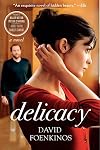
French novelist and screenwriter Foenkinos tells the story of Natalie and Markus, two young coworkers traversing the uneasy terrain between love and friendship.
Natalie's life abruptly halts when her husband of seven years dies. With barely enough energy to continue on, Natalie returns to work but allows her friendships to lapse and her love life to disintegrate into nothingness. Enter Markus, a self-effacing Swede, who stumbles into her office at precisely the right moment. Taken over by show more the need to feel feminine, Natalie gives into a sudden and impulsive act that sends both her and Markus down a muddled path toward love. As with all stories of would-be-lovers, a number of obstacles are thrown in their way. Natalie and Markus must contend with their lovesick boss, Charles, and a whole horde of nosy coworkers who can't seem to understand Natalie's interest in the geeky Markus. The reader, unfortunately, will have to contend with the opposite problem as they are left to wonder what is so magnificent about Natalie. The fault lies with Foenkinos’s decision to present Natalie as a feminine ideal rather than a fully fleshed out character. He tells the reader of Natalie’s love of reading, fascination with Pez dispensers, and educational background. None of these facts, however, make her personality any more decipherable as Foenkinos focuses more on her beauty than her character. Foenkinos's stylistic prose can also be faulted for this lack of character depth. This is unfortunate since his prose is also his greatest strength. The narrative style of Delicacy can best be described as ethereal ¾ concerned far more with style than substance. The reader sorts through pages and pages of aesthetically appealing prose without finding any true emotional connection with the characters. Hearts are broken and love restored, but the reader has difficulty caring. Foenkinos may believe that pretty words are an acceptable substitute for characters and story, but the reader may not be convinced.
Delicacy is a meringue of a novel, and those wishing for meatier fiction should look elsewhere. show less
Natalie's life abruptly halts when her husband of seven years dies. With barely enough energy to continue on, Natalie returns to work but allows her friendships to lapse and her love life to disintegrate into nothingness. Enter Markus, a self-effacing Swede, who stumbles into her office at precisely the right moment. Taken over by show more the need to feel feminine, Natalie gives into a sudden and impulsive act that sends both her and Markus down a muddled path toward love. As with all stories of would-be-lovers, a number of obstacles are thrown in their way. Natalie and Markus must contend with their lovesick boss, Charles, and a whole horde of nosy coworkers who can't seem to understand Natalie's interest in the geeky Markus. The reader, unfortunately, will have to contend with the opposite problem as they are left to wonder what is so magnificent about Natalie. The fault lies with Foenkinos’s decision to present Natalie as a feminine ideal rather than a fully fleshed out character. He tells the reader of Natalie’s love of reading, fascination with Pez dispensers, and educational background. None of these facts, however, make her personality any more decipherable as Foenkinos focuses more on her beauty than her character. Foenkinos's stylistic prose can also be faulted for this lack of character depth. This is unfortunate since his prose is also his greatest strength. The narrative style of Delicacy can best be described as ethereal ¾ concerned far more with style than substance. The reader sorts through pages and pages of aesthetically appealing prose without finding any true emotional connection with the characters. Hearts are broken and love restored, but the reader has difficulty caring. Foenkinos may believe that pretty words are an acceptable substitute for characters and story, but the reader may not be convinced.
Delicacy is a meringue of a novel, and those wishing for meatier fiction should look elsewhere. show less
Lists
Awards


You May Also Like


Associated Authors
Statistics
- Works
- 32
- Also by
- 1
- Members
- 2,903
- Popularity
- #8,823
- Rating
- 3.5
- Reviews
- 167
- ISBNs
- 315
- Languages
- 23
- Favorited
- 3


