

Jean-Christophe Rufin
Author of The Abyssinian
About the Author
Jean-Christophe Rufin, a physician, is a former vice president of Doctors Without Borders, which won the Nobel Peace Prize in 1999. He lives in France. (Bowker Author Biography)
Series
Works by Jean-Christophe Rufin
Sphères 3 - Les pèlerins 1 copy
Associated Works
Tagged
Common Knowledge
- Canonical name
- Rufin, Jean-Christophe
- Legal name
- Rufin, Jean-Christophe
- Birthdate
- 1952-06-28
- Gender
- male
- Education
- Lycée Janson-de-Sailly, Paris, France
Lycée Claude-Bernard, Paris, France
Faculté de médecine de La Pitié-Salpêtrière
Institut d'études politiques, Paris, France - Occupations
- ambassador (France ∙ to Senegal)
physician - Organizations
- Académie française (2008)
Action Against Hunger (President)
Médecins Sans Frontières (one of founders) - Relationships
- Léotard, François (Ministre)
Kouchner, Bernard
Malhuret, Claude
De Villepin, Dominique (Ami)
Aubry, Martine
Tesson, Sylvain - Short biography
- Jean-Christophe Rufin est un romancier, haut-fonctionnaire et médecin français.
Acteur engagé de la cause humanitaire et des relations Nord-Sud, il voyage beaucoup et écrit des essais consacrés au Tiers-Monde et aux relations Nord-Sud, ainsi que les romans qui lui valent la notoriété.
Il est né à Bourges en 1952. Fils unique, il est élevé par ses grands-parents, car son père est parti et sa mère travaille à Paris. Son grand-père, médecin et résistant, a été déporté deux ans à Buchenwald. En 1977, après des études de médecine, il part comme coopérant en Tunisie et mène sa première mission humanitaire en Erythrée, ou il rencontre Azeb, qui deviendra sa deuxième femme.
Diplômé de l'Institut d'études politiques, il devient, en 1986, conseillé du secrétaire d'Etat aux droits de l'homme et publie son premier livre, Le Piège humanitaire, un essai sur les enjeux politiques de l'action humanitaire.
De 1991 à 1993, il est vice-président de Médecins sans Frontières (MSF).
En 1993, il entre au ministère de la Défense comme conseiller spécialisé dans la réflexion stratégique sur les relations Nord-Sud. Il quitte ce poste en 1995 et devient administrateur de la Croix-Rouge française.
En 1997, a 45 ans, il publie son premier roman, L'Abyssin, l'histoire d'une ambassade dépêchée par la cour du Négus d'Ethiopie auprès de Louis XIV. Goncourt du premier roman et prix Méditerrannée, ce livre se vend à plus de 300 000 exemplaires et est traduit en 19 langues.
En 1999, Les Causes perdues, inspiré de sa misson humanitaire en Ethiopie, remporte le prix Interallié. En 2001, il reçoit le plus prestigieux des prix littéraires français, le Goncourt, pour son roman Rouge Brésil, un voyage de l'autre côté de l'Atlantique au temps des premières colonies françaises.
En 2003, il se lance avec bonheur dans le roman d'anticipation, Globalia, qui raconte les aventure de Baïkal, jeune rebelle qui quitte les "territoires sécurisés" pour pénétrer dans la "non-zone"... Un "1984" revisité dénonçant le monde de conformiste, obsédé par sa sécurité, dans lequel nous vivons.
Jean-Christophe Rufin Poursuit sa carrière d'écrivain tout en étant maître de conférences à l'Institut d'Etudes Politiques de Paris et président d'Action contre la faim (ACF). Il prend la suite de Jean Malaurie en tant que directeur de la Collection Terre Humaine (Plon) en 2015 - Nationality
- France
- Birthplace
- Bourges, Cher, Centre-Val de Loire, France
- Places of residence
- Paris, France
Tunisia
Eritrea
Senegal - Map Location
- France
- Associated Place (for map)
- Bourges, Cher, Centre-Val de Loire, France
Members
Reviews
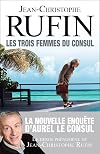
This is the second book in a series featuring amateur detective Aurel Timescu. Aurel of the consulate works in the french diplomatic service and because of his unwillingness to follow procedures or to do much diplomatic work, finds himself posted to various countries that are now ex-colonies of France and are now considered the backwaters of the service. Aurel comes originally from Rumania where he honed his survival skills under the Ceausescu's communist regime. In Le Suspendu de Conakry show more the first book in the series Jean Christophe Rufin presented his readers with a highly original character, who involved himself in an interesting detective story. This first book was set in Guinée, but now Aurel finds himself In Mozambique, however this second novel seems to be a bit of a re-run of the first.
It was the character of Aurel and the unlikely setting of the French diplomatic service in Africa that interested me in the first book, but Rufin seems to be using such a similar template to the first novel that I found this second adventure a little boring. There is no character development and Aurel does the same things and investigates in the same way as he did in the first novel. Maputo the capital of Mozambique could have easily been the town of Conakry in Guinée of the first novel. The story is held together well enough, but I had guessed the connections and conclusions well before the end.
If I had picked this book up without having read the first novel then it might have been a more entertaining read. I will probably read the next book in the series with the hope of a little more variety and more of a sense of Africa. 3 stars. show less
It was the character of Aurel and the unlikely setting of the French diplomatic service in Africa that interested me in the first book, but Rufin seems to be using such a similar template to the first novel that I found this second adventure a little boring. There is no character development and Aurel does the same things and investigates in the same way as he did in the first novel. Maputo the capital of Mozambique could have easily been the town of Conakry in Guinée of the first novel. The story is held together well enough, but I had guessed the connections and conclusions well before the end.
If I had picked this book up without having read the first novel then it might have been a more entertaining read. I will probably read the next book in the series with the hope of a little more variety and more of a sense of Africa. 3 stars. show less
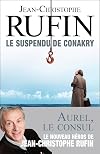
I enjoyed reading Jean-Christophe Rufin's Immortelle Randonée recently and found another of his books in the library. Le suspendu de Conakry is the first in the series: Les énigmes d'Aurel le Consul which are detective stories featuring a french naturalised Romanian man who works in the diplomatic service in Africa. This first book finds him in Conakry a coastal city which is the capital of Guinea working in the french consulate which has an uneasy relationship with the government of show more Guinea which used to be a french colony. Aurel is a misfit and although second in command has problems with the chief of the bureau and to compensate he amuses himself by being an amateur detective.
One morning the port officials of Conakry wake up to find a dead man suspended from the mast of his yacht. He is french and Aurel takes it on himself to launch his own investigation, not believing the local police version of events: that is was a robbery, carried out by local criminals. Aurel uses his connections in the consulate, playing his cards close to his chest, so as not to fall foul of his boss, the local police chief and the customs officials. He is helped by the dead man's sister who appreciates the unconventional work of Aurel and flies out to Conakry to assist.
Jean-Christophe Ruffin is a doctor and worked as a french diplomat in Africa and so has plenty of experience of life in a foreign consulate. His story is full of the internal strife of the workings of the diplomatic service along with the colourful life of the Africans who live and work inside and outside its doors. The plot works well enough, but the success of these types of books is the setting of the story and this one held my attention throughout. Aurel Timescue is a great character and I look forward to following more of his adventures. Jean-Christophe Ruffin writes clearly and well, wrapping up his story with ease. 4 stars. show less
One morning the port officials of Conakry wake up to find a dead man suspended from the mast of his yacht. He is french and Aurel takes it on himself to launch his own investigation, not believing the local police version of events: that is was a robbery, carried out by local criminals. Aurel uses his connections in the consulate, playing his cards close to his chest, so as not to fall foul of his boss, the local police chief and the customs officials. He is helped by the dead man's sister who appreciates the unconventional work of Aurel and flies out to Conakry to assist.
Jean-Christophe Ruffin is a doctor and worked as a french diplomat in Africa and so has plenty of experience of life in a foreign consulate. His story is full of the internal strife of the workings of the diplomatic service along with the colourful life of the Africans who live and work inside and outside its doors. The plot works well enough, but the success of these types of books is the setting of the story and this one held my attention throughout. Aurel Timescue is a great character and I look forward to following more of his adventures. Jean-Christophe Ruffin writes clearly and well, wrapping up his story with ease. 4 stars. show less
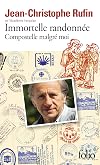
Jean-Christophe Rufin is a french doctor writer and diplomat; he won the prix Goncourt with Rouge Brasil in 2001. Immortelle Randonée was published in 2013 and relates the authors experience of completing a sizeable section of the route de Compestelle which is arguably the most famous of the long distance walking/pilgrimage routes. Known as the Camino or the Way of St Jacques it is now a network of routes stretching through France, Portugal and Spain that culminate in the shrine of the show more apostle St Jacques in the cathedral at Santiago de Compostela in Galicia northwest Spain. It was one of the most important Christian pilgrimages during the Middle Ages on which a plenary indulgence could be earned. Hundreds of Thousands (300,000 in 2017) set off from a variety of starting points across Europe to complete the walk. Jean-Christophe Rufin started his walk from Hendaye on the French/Spanish border which usually entails 38-40 days walking, doing an average of 23 kilometres per day.
This was of interest for me because my house is very close to one of the major routes through France and my daily walk covers about a kilometre of the route. I often see people (les Jacquets) on the path which opens out onto a tremendous view of the Pyrenees, which they have to cross and usually pass the time of day with them, saying something like "its not too far to the mountains". The Cahors Vallee du Lot tourist agencie's promotional leaflet describes the "adventure of the Camino" in glowing terms:
A transformation in the way you perceive the wonderful world around you. A transformation in the relationships you have with your loved ones, but also with complete strangers. On the way, you will see the masks fall to make way for authentic, sincere and deep exchanges. A transformation of yourself, and of the knowledge you have of it. As you walk, the answers to the questions that haunt your thoughts will appear discreetly on their own, until they become crystal clear.
Jean-Christophe Rufin's book touches on these thoughts and feelings, but also describes the reality of a long and arduous walk through a landscape that can be picturesque, but is often more like a typical urban sprawl.
He chose to walk alone and because of his insomnia; the result of being a light sleeper he chose to camp out whenever he could: the refuge halls and dormitories along the route are a nightmare for him and he avoids them whenever possible. After laying the groundwork and telling of his information gathering in Paris he takes a train down to Hendaye in South West France and sets off with all his belongings in his rucksack. He is an experienced alpinist, however he soon found that walking for 4-6 hours everyday takes its toll on the body and the first week of walking; which is described in some detail is nearly enough to make him give up. He meets other 'jacquets' along the way, but rarely gets involved in deep and meaningful conversations, he is not intent on interviewing other walkers in order to gather material for his book. He says he did not keep a diary and only decided to write up his experiences, on reflection, after completing his journey.
He writes about his journey in a chronological order and so the reader can feel his excitement and his tiredness as he nears his goal. There are two main routes from Hendaye to Santiago de Compestela and Rufin chose the Camino del Norte, which is less walked than the more popular Camino Frances. He does make a few detours to take in churches, chapels and monasteries along the way and attends mass when the opportunity arises, but he seems to tire of the religious experience. He devotes a chapter to describing his spiritual feelings as he is walking, often extremely tired, unwashed and outside of his ordinary daily life. He says it is more akin to a Buddhist's view of the world. He feels like a pilgrim:
"it delivers one from from the torments of thoughts and desires. It removes the vanity of the mind and all sufferance of the body. It erases the rigid envelope which surrounds the things and separates them from our consciousness. It puts one in resonance with nature. Like all initiation it penetrates the mind by the body and it is difficult of sharing this with those who have not experienced it."
He say that of course not everybody feels like this, as this is only particular to him "In leaving for St Jacques I was looking for nothing and I found it."
He has something to say about the tourists who travel by coach or cars and the crowds that gather for the final stages of the walk. It has become commercialised, but then again perhaps it always was, but one can still easily gain that true experience of a pilgrimage.
I was thoroughly entranced by Jean-Christophe's book, which would certainly serve well anybody thinking of taking on the Camino. It has some useful information, but more importantly Rufin takes the armchair reader with him, on a fabulous journey 4.5 stars. show less
This was of interest for me because my house is very close to one of the major routes through France and my daily walk covers about a kilometre of the route. I often see people (les Jacquets) on the path which opens out onto a tremendous view of the Pyrenees, which they have to cross and usually pass the time of day with them, saying something like "its not too far to the mountains". The Cahors Vallee du Lot tourist agencie's promotional leaflet describes the "adventure of the Camino" in glowing terms:
A transformation in the way you perceive the wonderful world around you. A transformation in the relationships you have with your loved ones, but also with complete strangers. On the way, you will see the masks fall to make way for authentic, sincere and deep exchanges. A transformation of yourself, and of the knowledge you have of it. As you walk, the answers to the questions that haunt your thoughts will appear discreetly on their own, until they become crystal clear.
Jean-Christophe Rufin's book touches on these thoughts and feelings, but also describes the reality of a long and arduous walk through a landscape that can be picturesque, but is often more like a typical urban sprawl.
He chose to walk alone and because of his insomnia; the result of being a light sleeper he chose to camp out whenever he could: the refuge halls and dormitories along the route are a nightmare for him and he avoids them whenever possible. After laying the groundwork and telling of his information gathering in Paris he takes a train down to Hendaye in South West France and sets off with all his belongings in his rucksack. He is an experienced alpinist, however he soon found that walking for 4-6 hours everyday takes its toll on the body and the first week of walking; which is described in some detail is nearly enough to make him give up. He meets other 'jacquets' along the way, but rarely gets involved in deep and meaningful conversations, he is not intent on interviewing other walkers in order to gather material for his book. He says he did not keep a diary and only decided to write up his experiences, on reflection, after completing his journey.
He writes about his journey in a chronological order and so the reader can feel his excitement and his tiredness as he nears his goal. There are two main routes from Hendaye to Santiago de Compestela and Rufin chose the Camino del Norte, which is less walked than the more popular Camino Frances. He does make a few detours to take in churches, chapels and monasteries along the way and attends mass when the opportunity arises, but he seems to tire of the religious experience. He devotes a chapter to describing his spiritual feelings as he is walking, often extremely tired, unwashed and outside of his ordinary daily life. He says it is more akin to a Buddhist's view of the world. He feels like a pilgrim:
"it delivers one from from the torments of thoughts and desires. It removes the vanity of the mind and all sufferance of the body. It erases the rigid envelope which surrounds the things and separates them from our consciousness. It puts one in resonance with nature. Like all initiation it penetrates the mind by the body and it is difficult of sharing this with those who have not experienced it."
He say that of course not everybody feels like this, as this is only particular to him "In leaving for St Jacques I was looking for nothing and I found it."
He has something to say about the tourists who travel by coach or cars and the crowds that gather for the final stages of the walk. It has become commercialised, but then again perhaps it always was, but one can still easily gain that true experience of a pilgrimage.
I was thoroughly entranced by Jean-Christophe's book, which would certainly serve well anybody thinking of taking on the Camino. It has some useful information, but more importantly Rufin takes the armchair reader with him, on a fabulous journey 4.5 stars. show less
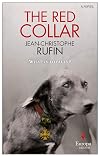
This short work is a cleverly written novel about the meaning of and multiple facets of loyalty. It takes place post World War I in rural France. We first meet a jailor, his prisoner, Morlac, and an investigating officer, Lantier. The jailor is annoyed and fatigued because Morlac’s dog has been barking night and day outside of the jail. The reader knows that Morlac has received a high honor for bravery, but the reason for his current incarceration is mysterious.
Lantier visits Morlac daily show more to interrogate him in addition to quizzing the locals about him. He learns that Morlac’s dog was with him during his time fighting abroad, and that he has a love interest named Valentine who has a son, likely Morlac’s. The more he learns, the more he tries to entice Morlac to admit guilt under extenuating circumstances so Morlac can be released with a light sentence. Morlac, however, refuses.
As the story progresses, we find that Valentine is from a revolutionary family that aids deserters of the war. As Lantier speaks with her, we learn that Morlac underwent a transformation during his time in the war, moving from thinking simply about his forced efforts to fight to thoughts of doubt and revolution. We also learn Morlac has refused to visit Valentine since returning home and that Morlac’s imprisonment has something to do with his dog.
Lantier finally puts all of the pieces together after his many conversations with Morlac, Valentine, and other locals. What unfolds is a story about loyalty and different perspectives of what being loyal is depending on where one stands and what information one has.
Rufin packs a great deal of story in such a small volume. This was extremely well-written, and I enjoyed it thoroughly. I love that he built anticipation by divulging fragments of the story through various characters over time. show less
Lantier visits Morlac daily show more to interrogate him in addition to quizzing the locals about him. He learns that Morlac’s dog was with him during his time fighting abroad, and that he has a love interest named Valentine who has a son, likely Morlac’s. The more he learns, the more he tries to entice Morlac to admit guilt under extenuating circumstances so Morlac can be released with a light sentence. Morlac, however, refuses.
As the story progresses, we find that Valentine is from a revolutionary family that aids deserters of the war. As Lantier speaks with her, we learn that Morlac underwent a transformation during his time in the war, moving from thinking simply about his forced efforts to fight to thoughts of doubt and revolution. We also learn Morlac has refused to visit Valentine since returning home and that Morlac’s imprisonment has something to do with his dog.
Lantier finally puts all of the pieces together after his many conversations with Morlac, Valentine, and other locals. What unfolds is a story about loyalty and different perspectives of what being loyal is depending on where one stands and what information one has.
Rufin packs a great deal of story in such a small volume. This was extremely well-written, and I enjoyed it thoroughly. I love that he built anticipation by divulging fragments of the story through various characters over time. show less
Lists
Awards


You May Also Like


Associated Authors
Statistics
- Works
- 39
- Also by
- 3
- Members
- 3,003
- Popularity
- #8,497
- Rating
- 3.5
- Reviews
- 108
- ISBNs
- 278
- Languages
- 22
- Favorited
- 1

