
Robert Merle (1908–2004)
Author of Malevil
About the Author
Image credit: Robert Merle, 1982
Series
Works by Robert Merle
[unidentified works] 7 copies
Week-end à Zuydcoote, roman 1 copy
Védett férfiak 1 copy
Na scéně 1 copy
Két nap az élet regény 1 copy
Cái chết là nghề của tôi 1 copy
Malevil - Una diagnosi controversa - Un uomo, una donna e un bambino - Un serpente a Central Park 1 copy
Sala : romāns 1 copy
Добре охранявани мъже 1 copy
Den siste week-end 1 copy
Мальвиль 1 copy
Ein vernnuftbegabtes Tier 1 copy
Associated Works
Episodes of the Cuban Revolutionary War, 1956-58 (1963) — Translator, some editions; Preface, some editions — 96 copies
Reader's Digest Condensed Books 1974 v05: The Other Room / The Dogs of War / All Things Bright and Beautiful / Malevil / A Daughter of Zion (1974) — Contributor — 23 copies
Reader's Digest Condensed Books: The Island / Wolfpack / Joy in the Morning / The Spy Who Came in From the Cold (1965) 4 copies
Livros Condensados: A Chave de Rebeca | O Safari de Mrs. Pollifax | Um Dia Feliz | Malevil (1982) — Contributor — 2 copies
Sélection du Livre 1979: Fortune de France ; Lovey ; Le safari de Madame Pollifax ; Bel Ria (1979) 1 copy
Tagged
Common Knowledge
- Legal name
- Merle, Robert Jean Georges
- Birthdate
- 1908-08-28
- Date of death
- 2004-03-27
- Gender
- male
- Education
- Sorbonne University
Louis Le-Grand, Paris - Occupations
- novelist
English teacher
historical novelist
memoirist
essayist
scholar (show all 7)
translator - Organizations
- French Army (WWII)
- Awards and honors
- Officier des Palmes académiques
Croix du combattant
Grand prix Jean-Giono (Pour l'ensemble de son œuvre , 2003)
Prix Sola-Cabiati (Pour l'ensemble de son œuvre, 2003)
Campbell Award, Etats-Unis
Goncourt Prize (1949) - Relationships
- Merle, Pierre (son)
Sartre, Jean-Paul (coworker)
Merle, Olivier (son) - Short biography
- Robert Merle was born in Tébessa, Algeria, then a French colony. After his father, an interpreter, was killed in World War I, his mother moved with him to Paris. There he attended lycée and the Sorbonne, where he earned a doctorate in English literature with a dissertation on Oscar Wilde. He passed the agrégation (civil service exam for teachers) and taught English literature at lycées in Bordeaux, Marseille, and Paris, where he became a friend of Jean-Paul Sartre. In 1939, at the start of World War II, he was conscripted in the French army and worked as an interpreter during the evacuation of British Expeditionary Force at Dunkirk. He was captured by the Germans and sent to a POW camp at Dortmund. In 1943, he was repatriated to France. He later used his experiences at Dunkirk in his first novel Week-end à Zuydcoote (Weekend at Zuydcoote, 1949), which was a major success and won the Prix Goncourt. It was adapted into a 1964 film called Weekend at Dunkirk. He went on to write numerous other acclaimed novels including La Mort est mon Métier (Death Is My Trade, 1953), Maleville (1972), and Un Animal doué de raison (A Sentient Animal, 1967), adapted into the 1973 film The Day of the Dolphin. He also wrote a play, Flamineo (1950), based on John Webster's The White Devil; a biography Oscar Wilde (1948); and translations of English works including Gulliver's Travels by Jonathan Swift. His series of 13 historical novels known collectively as Fortune de France (1977–2003), set during the religious civil wars of the 16th and 17th centuries, used many of the French speech rhythms and idioms of the period and is considered his masterpiece. The series, which he began at about age 70, made him a household name in France, and led to his being called "the Alexandre Dumas of the 20th century." He married three times, and had six children.
- Cause of death
- heart attack
- Nationality
- France
- Birthplace
- Tébessa, Constantine, French Algeria
- Places of residence
- Tébessa, Constantine, French Algeria
Grosrouvre, Yvelines, France
Paris, Île-de-France, France - Place of death
- Grosrouvre, Yvelines, France
- Burial location
- Cimetière d'Aiguillon, Aiguillon, Departement du Lot-et-Garonne, Aquitaine, France
- Map Location
- Algeria
Members
Discussions
Group Read, September 2018: The Day of the Dolphin in 1001 Books to read before you die (September 2018)
SF Post Apoc. Small Groups Fight with Bows in Name that Book (July 2013)
Reviews
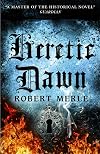
This is the third in a classic series of 13 French historical novels about the lives of a family of minor Huguenot nobles, the de Sioracs, in 16th and 17th century France, written by Robert Merle over a period of 26 years. This novel focuses on the run up to and the actual events of the infamous massacre of St Bartholomew's Eve in August 1572 when the weak French king Charles IX, led on by his mother Catherine de Medici, massacred thousands of Huguenot men, women and children, an act praised show more by the then Pope. Pierre de Siorac and his companions, finding themselves in Paris to seek a pardon for killing a local rival to his family who had been causing them trouble, fall in with the (historical) leading Huguenot Admiral Coligny, and after he is attacked and later murdered, must flee Paris to escape the murderous rage of a populace whipped into a killing frenzy by the Queen Mother and the Catholic leader Guise. Some very shocking scenes, mixed in with more humorous passages with Pierre's amorous entanglements with a large range of women from all walks of life he comes across. Pierre is a humanist, holding Huguenot religious views, but viewing with sadness the fratricidal war between his co-religionists and the Catholic majority. This is a great series, and I really hope the novels beyond the fourth one are translated into English. show less
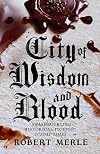
This is the second in a series of 13 historical novels about the lives of a family of minor Huguenot nobles, the de Sioracs, in 16th and 17th century France. The series was written by French author Robert Merle over a period of 26 years, though I understand that only the first four books in the series have thus far been translated into English. The action picks up where the first book ended, with young Pierre de Siorac and his half brother Samson setting out on their journey of life, with show more Pierre enrolling as a medical student in Montpellier. While this is very well written, I thought this mostly lacked the narrative drive of the first novel, and had throughout much of it a more comic feel, with Pierre getting into a series of sexual entanglements with almost every lady he meets, and into scrapes such as disinterring a body from the graveyard to provide an extra corpse for dissection in anatomy lessons, while at the same time engaging in sexual relations with a self-proclaimed witch in the selfsame graveyard. All this said, the threat of bitter and bloody civil war between Catholic and Huguenot is never far away, with Pierre disgusted by the reprisals of his fellow Huguenots when they take power in Nimes, butchering Catholic priests, monks and ordinary citizens ("What kind of a new world is this, that begins with the massacre of people who, when all is said and done, have the same God that we do but worship Him in a different way?”). He pleads for toleration in the face of extremists on both sides of the religious divide: "how can we possibly argue for the freedom of conscience for ourselves, which the papists have denied us, if we refuse it to those who have ideas that differ from ours?” Parts of this novel also felt like a brain dump of information on medicinal herbs, or early modern age ideas of medicine and anatomy - interesting but distracted sometimes from the narrative. These criticisms apart, this was still a very rich and well written novel and I will certainly be reading the following novels. show less
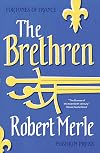
This magnificent historical novel was the first of a 13 volume series about the lives of Huguenots in 16th and 17th century France, written by French author Robert Merle between 1977 and 2003, though only the first three in the series have thus far been translated into English. I thought this was wonderfully written, full of colourful incident and characters, set against the backdrop of the growing religious tensions between Catholics and Huguenots, and centred around the lives of a show more fictional Huguenot family, the Sioracs. National events are covered, but the family's lives and experiences and those of their companions and servants, an eclectic, interesting and amusing group of people remain at the heart of the story. The brethren of the title are Jean de Siorac and his lifelong friend and companion in arms Jean de Sauveterre. The narrator of the story is Jean de Siorac's younger son by his wife Isabelle, Pierre de Siorac. Following the ups and downs of growing up, facing religious persecution and the vicissitudes of plagues and poor harvests, at the end of the novel, following a sad and moving death of a child companion, Pierre and his half brother Samson, nearing adulthood, set out on their journey of life. I will certainly read following books in this series, the sweeping scope and historical grandeur of which led to the author being described as the 20th century Alexandre Dumas. show less

Well, that was a short one. 36 pages in, and I'm out. Why?
The writing.
Let me tell you about the writing...
First, for the initial 4 1/2 pages, the author does not use quotation marks whatsoever, then, about halfway down the fifth page, for no reason, he starts. He then uses them reasonably consistently for 20-ish pages, then drops and then uses them again. So...yeah, it's gonna be like that.
The second is the habit of writing a paragraph full of useless, stream-of-conscious thoughts that not show more only don't add anything to the plot, but they actually detract from the pacing.
And then there's the run-on sentences.
I'll just give you the first two sentences that open chapter two...that should give you enough to go on...
The room was hygienically empty, not a magazine, not a scrap of paper, just three armchairs, a small table with an ashtray, and on the painted walls three engravings of full-rigged ships in foul weather, C looked at the ships wearily, he felt a twinge in the vicinity of his stomach, the pain was not sharp but constant, it did not seem to come from the inside of the organs but from their walls, it was more like a painful contraction of the muscles, it radiated downward to the abdomen and upward under the ribs, at times it reached the vertebrae, C felt that if he could just lie down, flex his legs, and relax his muscles his painful organs would return to normal but this was not true, the pain never went away, actually it wasn't a real pain, more of a pressure, vague, diffuse, insistent, unbearable, he could forget it for over an hour at a time if his attention was concentrated, but it returned with disturbing regularity, even at night he could not sleep, everything was breaking down, his nerves were shot, he tired more easily, recovery was slower, C sank into a chair and closed his eyes.
As he did so the blond head of Johnnie rolled against his arm, there was a brief spasm, his lips sucked the air with a convulsive shudder, there was a sudden slackening of the legs and it was all over, they were lying in a rice paddy surrounded by a cloud of mauve mosquitoes, bullets, and mortar fire, behind me a GI said, "He's had it," we had to wait for night so the helicopters could land, the orderly in the copter removed the dog tags from the dead, his eyes met mine, he looked sad and bitter, he shuffled the dog tags in the palm of his hand and said, "They don't take up much space: a dozen Americans."
There's so much wrong with those two sentences. They skip around various topics. They switch point of view. And they're deplorable to read.
Now, having said all that, this book was originally published in 1967 in French language, and then translated and released in English two years later.
I picked this book up, because I read it when I was roughly 13 or so, so, ballpark, around 1975 or so. I remember enjoying enough that I picked up the only other Robert Merle book I ever found, Malevil, and I remember enjoying that one too.
Here we are, not quite fifty years later, and I can only think, damn, I was a lot more patient with crap writing back then.
Anyway, I couldn't bear the thought of wading through another 282 pages of this dreck, no matter if there is a good story buried in there somewhere.
And, because it's a DNF, no rating. show less
The writing.
Let me tell you about the writing...
First, for the initial 4 1/2 pages, the author does not use quotation marks whatsoever, then, about halfway down the fifth page, for no reason, he starts. He then uses them reasonably consistently for 20-ish pages, then drops and then uses them again. So...yeah, it's gonna be like that.
The second is the habit of writing a paragraph full of useless, stream-of-conscious thoughts that not show more only don't add anything to the plot, but they actually detract from the pacing.
And then there's the run-on sentences.
I'll just give you the first two sentences that open chapter two...that should give you enough to go on...
The room was hygienically empty, not a magazine, not a scrap of paper, just three armchairs, a small table with an ashtray, and on the painted walls three engravings of full-rigged ships in foul weather, C looked at the ships wearily, he felt a twinge in the vicinity of his stomach, the pain was not sharp but constant, it did not seem to come from the inside of the organs but from their walls, it was more like a painful contraction of the muscles, it radiated downward to the abdomen and upward under the ribs, at times it reached the vertebrae, C felt that if he could just lie down, flex his legs, and relax his muscles his painful organs would return to normal but this was not true, the pain never went away, actually it wasn't a real pain, more of a pressure, vague, diffuse, insistent, unbearable, he could forget it for over an hour at a time if his attention was concentrated, but it returned with disturbing regularity, even at night he could not sleep, everything was breaking down, his nerves were shot, he tired more easily, recovery was slower, C sank into a chair and closed his eyes.
As he did so the blond head of Johnnie rolled against his arm, there was a brief spasm, his lips sucked the air with a convulsive shudder, there was a sudden slackening of the legs and it was all over, they were lying in a rice paddy surrounded by a cloud of mauve mosquitoes, bullets, and mortar fire, behind me a GI said, "He's had it," we had to wait for night so the helicopters could land, the orderly in the copter removed the dog tags from the dead, his eyes met mine, he looked sad and bitter, he shuffled the dog tags in the palm of his hand and said, "They don't take up much space: a dozen Americans."
There's so much wrong with those two sentences. They skip around various topics. They switch point of view. And they're deplorable to read.
Now, having said all that, this book was originally published in 1967 in French language, and then translated and released in English two years later.
I picked this book up, because I read it when I was roughly 13 or so, so, ballpark, around 1975 or so. I remember enjoying enough that I picked up the only other Robert Merle book I ever found, Malevil, and I remember enjoying that one too.
Here we are, not quite fifty years later, and I can only think, damn, I was a lot more patient with crap writing back then.
Anyway, I couldn't bear the thought of wading through another 282 pages of this dreck, no matter if there is a good story buried in there somewhere.
And, because it's a DNF, no rating. show less
Lists
Holocaust (1)
Awards


You May Also Like


Associated Authors
Statistics
- Works
- 61
- Also by
- 16
- Members
- 4,611
- Popularity
- #5,458
- Rating
- 4.0
- Reviews
- 70
- ISBNs
- 429
- Languages
- 10
- Favorited
- 11


