
Jean-François Parot (1946–2018)
Author of The Châtelet Apprentice
About the Author
Image credit: Jean-François Parot - Author of the Adventures of NICOLAS LE FLOCH - Credit Bookine.net
Series
Works by Jean-François Parot
Associated Works
Tagged
Common Knowledge
- Birthdate
- 1946-06-27
- Date of death
- 2018-05-23
- Gender
- male
- Education
- (BA) (history)
(MA) (history)
(postgraduate studies) (anthropology) - Occupations
- diplomat
novelist
Ambassador to Guinea-Bissau
deputy director of personnel in the Ministry of Foreign Affairs
deputy director of the Directorate of Military Cooperation and Defence
historical novelist - Organizations
- Literary Academy of Brittany and the Pays de Loire (2010)
- Awards and honors
- Chevalier de la Légion d'honneur (2005)
Officier de l'ordre des Arts et des Lettres (2010) - Nationality
- France
- Birthplace
- Paris, France
- Places of residence
- Saint Louis, Senegal
Kinshasa, Zaire
Ho Chi Minh City, Vietnam
Athens, Greece
Doha, Qatar
Khartoum, Sudan (show all 13)
Djibouti
Ouagadougou, Burkina Faso
Sofia, Bulgaria
Tunis, Tunisia
Nantes, Brittany, France
Guinea-Bisseau
Missilac, Pays de Loire, France - Place of death
- Missillac, Pays de Loire, France
Members
Reviews
Commissaire Le Floch und das Geheimnis der Weißmäntel: Roman (Commissaire Le Floch-Serie, Band 1) by Jean-Francois Parot
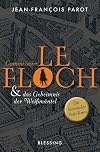
In 1759, Canon Le Floch sends his ward, the foundling Nicolas, from Brittany in France to the capital, Paris. The young man is to enter the service of Prefect Gabriel de Sortine, who has just been appointed to at least curb the omnipresent corruption in the ranks of the police. De Sortine assigns Le Floch to Commissioner Guillaume Lardin, an experienced criminal investigator who proves to be a good mentor to the newcomer over the next two years.
De Sortine is also a cog in the wheel of show more contemporary diplomacy, which relies heavily on spies and traitors. Since 1756, Europe has been embroiled in the Seven Years' War, which is also being fought in the overseas colonies. Those with access to secret political information can make a lot of money from it.
In the spring of 1761, Inspector Lardin disappears without a trace. He has either got too close to some corrupt colleagues or fallen victim to his out-of-control gambling addiction; Lardin was also married to a woman who had several lovers. De Sortine assigns the case to Le Floch, who feels overwhelmed at first, but quickly proves his talent as a detective.
The trail leads not only to the underworld of Paris, but also to the circles of the high nobility, even to the royal court. A complicated criminal case threatens to become a matter of state that could destroy the fragile political balance. Le Floch has a heavy burden on his shoulders, which is not made any lighter when several assassination attempts prove that the young policeman is on the right track.
Crime fiction and history: when done right, this combination brings fresh blood to both genres. Jean-François Parot is undoubtedly one of those who understand their craft, which is only simple in principle: a good story must be told well, with entertainment at the forefront.
Parot avoids trying to reinvent the wheel. This first Le Floch volume follows familiar and proven models: a young, intelligent but inexperienced, even naive man arrives in the big city, which the author describes as a centre and a maelstrom. Then as now, Paris was the heart of France. It was the seat of an extremely centralised government, where scientists and artists came together and created a cultural level that remained unmatched in the rest of France.
While the Age of Enlightenment brought about a veritable leap forward in science, technology and culture, the justice system lagged far behind. Investigations continued to be conducted as in the Middle Ages. Torture was a matter of course. An execution could degenerate into a bizarre bloodbath; at one point, Parot has the executioner of Paris recount the gruesome end of a failed regicide.
In contrast, genuine criminal investigation remains a requirement that is rarely fulfilled. Although murder victims are examined and their bodies opened, what good does this do when medicine, among other things, is convinced that patients must first be bled? Most police officers replace the search for and interpretation of evidence with ‘life experience’ and prejudice. The ‘guilty’ party is considered caught if he or she cannot defend themselves against the allegations made. show less
De Sortine is also a cog in the wheel of show more contemporary diplomacy, which relies heavily on spies and traitors. Since 1756, Europe has been embroiled in the Seven Years' War, which is also being fought in the overseas colonies. Those with access to secret political information can make a lot of money from it.
In the spring of 1761, Inspector Lardin disappears without a trace. He has either got too close to some corrupt colleagues or fallen victim to his out-of-control gambling addiction; Lardin was also married to a woman who had several lovers. De Sortine assigns the case to Le Floch, who feels overwhelmed at first, but quickly proves his talent as a detective.
The trail leads not only to the underworld of Paris, but also to the circles of the high nobility, even to the royal court. A complicated criminal case threatens to become a matter of state that could destroy the fragile political balance. Le Floch has a heavy burden on his shoulders, which is not made any lighter when several assassination attempts prove that the young policeman is on the right track.
Crime fiction and history: when done right, this combination brings fresh blood to both genres. Jean-François Parot is undoubtedly one of those who understand their craft, which is only simple in principle: a good story must be told well, with entertainment at the forefront.
Parot avoids trying to reinvent the wheel. This first Le Floch volume follows familiar and proven models: a young, intelligent but inexperienced, even naive man arrives in the big city, which the author describes as a centre and a maelstrom. Then as now, Paris was the heart of France. It was the seat of an extremely centralised government, where scientists and artists came together and created a cultural level that remained unmatched in the rest of France.
While the Age of Enlightenment brought about a veritable leap forward in science, technology and culture, the justice system lagged far behind. Investigations continued to be conducted as in the Middle Ages. Torture was a matter of course. An execution could degenerate into a bizarre bloodbath; at one point, Parot has the executioner of Paris recount the gruesome end of a failed regicide.
In contrast, genuine criminal investigation remains a requirement that is rarely fulfilled. Although murder victims are examined and their bodies opened, what good does this do when medicine, among other things, is convinced that patients must first be bled? Most police officers replace the search for and interpretation of evidence with ‘life experience’ and prejudice. The ‘guilty’ party is considered caught if he or she cannot defend themselves against the allegations made. show less
The Nicolas Le Floch affair: The Nicolas Le Floch Investigations (A Nicolas Le Floch Investigation) by Jean-Francois Parot
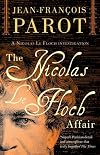
Successful, lauded by those around him and trusted by the King, Nicolas le Floch is at the height of his powers. Commissioner of police in Paris, he has solved many crimes and made friends and enemies. However when Le Floch's mistress is found dead suspicion is placed on him as anonymous tips and witness statements seem to implicate him. Le Floch's powerful allies trust him and he is sent to London on a secret mission for the King. On his return he continues to investigate and realises that show more the plot hinges around different factions vying for power as the King sickens and dies.
This is the fourth novel in the series and the power of Parot's writing is not diminished. Here the plot weaves the personal and the political in a tight knot whilst developing characters even further. The intrigues around the death of a monarch are skilfully drawn and Parot's invention of time and place is superb. show less
This is the fourth novel in the series and the power of Parot's writing is not diminished. Here the plot weaves the personal and the political in a tight knot whilst developing characters even further. The intrigues around the death of a monarch are skilfully drawn and Parot's invention of time and place is superb. show less
The Man with the Lead Stomach: A Nicholas Le Floch Investigation (Nicolas Le Floch 2) (Nicolas Le Floch Investigation) by Jean-Francois Parot

The second Nicolas Le Floch novel, set in Paris during Louis XV's reign. Nicolas, now Police Commissioner at the Chatelet prison, is called to investigate the staged suicide of a nobleman's son, but of course the truth is far more complicated and dangerous than that. The young Vicomte de Ruissec, who was 'made to swallow molten lead, which burnt up his insides, made his head shrink and destroyed his entrails' (and I quote directly from chapter four, because this description in all its show more ancien-CSI detail, is what finally grabbed my attention!), was actually caught up in two separate but equally dangerous conspiracies, and only Nicolas is skilful and determined enough to unravel the facts.
My personal rule with detective series is that the sleuth must always be interesting or attractive enough to carry the story if the mystery falls short, but with Parot's eighteenth century crime novels, Paris is the main protagonist. I love his descriptions of life in the capital city, and the splendour of Versailles, because his sense of history as a living, breathing personality is so vividly drawn, from crowded bridges over the Seine, its waters polluted by blood and offal from butchers' shops and used to dispose of bodies, to the dangers of the streets, where noblemen's whips strike out indiscriminately and people run the risk of being trampled to death or mown down. Parot also populates this colourful background with figures from the past, from Madame de Pompadour (a favourite of mine), to the real life Lieutenant General of Police, Antoine de Sartine. Fascinating and informative!
Nicolas himself is still too much of an everyman detective to really stand out for me - he's young, of noble birth but bourgeois upbringing, observant but impulsive, proud and hot-headed, respected or protected by his elders, and of course, attractive to the ladies. He does make mistakes, but never really makes a wrong move. Nicolas reminds me of Archie Goodwin in Rex Stout's Nero Wolfe mysteries - he's even surrounded by gourmands, who love to describe the perfect way to cook lamb giblets or eels!
Already in love with Paris, Commissionaire Le Floch is also growing on me, but I shall keep buying Parot's books for the unique time-travelogue experience he has perfected! show less
My personal rule with detective series is that the sleuth must always be interesting or attractive enough to carry the story if the mystery falls short, but with Parot's eighteenth century crime novels, Paris is the main protagonist. I love his descriptions of life in the capital city, and the splendour of Versailles, because his sense of history as a living, breathing personality is so vividly drawn, from crowded bridges over the Seine, its waters polluted by blood and offal from butchers' shops and used to dispose of bodies, to the dangers of the streets, where noblemen's whips strike out indiscriminately and people run the risk of being trampled to death or mown down. Parot also populates this colourful background with figures from the past, from Madame de Pompadour (a favourite of mine), to the real life Lieutenant General of Police, Antoine de Sartine. Fascinating and informative!
Nicolas himself is still too much of an everyman detective to really stand out for me - he's young, of noble birth but bourgeois upbringing, observant but impulsive, proud and hot-headed, respected or protected by his elders, and of course, attractive to the ladies. He does make mistakes, but never really makes a wrong move. Nicolas reminds me of Archie Goodwin in Rex Stout's Nero Wolfe mysteries - he's even surrounded by gourmands, who love to describe the perfect way to cook lamb giblets or eels!
Already in love with Paris, Commissionaire Le Floch is also growing on me, but I shall keep buying Parot's books for the unique time-travelogue experience he has perfected! show less
The Châtelet Apprentice: Nicolas Le Floch Investigation #1 (A Nicolas Le Floch Investigation) by Jean-Francois Parot
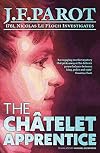
I enjoyed this most for its historical fiction aspect. This is a mystery set in late 1700s Paris, and the detailed way it describes the city, its people, and environs is absolutely fabulous. As a mystery, though... the culprit was easy to guess early on, and it exasperated me with its reliance on stale tropes. The male characters are well developed; the few women are saints or whores. The only black man falls into tragic circumstances.
If only it had managed to be more original in every way! show more The book felt like promise unrealized. I am not encouraged to read onward. show less
If only it had managed to be more original in every way! show more The book felt like promise unrealized. I am not encouraged to read onward. show less
Lists
Awards


You May Also Like


Associated Authors
Statistics
- Works
- 25
- Also by
- 1
- Members
- 1,478
- Popularity
- #17,380
- Rating
- 3.7
- Reviews
- 54
- ISBNs
- 104
- Languages
- 6