
Françoise Chandernagor
Author of The King's Way
About the Author
Series
Works by Françoise Chandernagor
L'or des rivières 1 copy
Tagged
Common Knowledge
- Canonical name
- Chandernagor, Françoise
- Legal name
- Chandernagor, Françoise
- Birthdate
- 1945-06-19
- Gender
- female
- Education
- major de l'E.N.A.
Institut d'études politiques de Paris - Occupations
- historical novelist
Civil servant
diplomat
playwright - Organizations
- Académie Goncourt
Prix Jean Giono (member) - Awards and honors
- Ordre national du Mérite
Légion d'Honneur (2007) - Relationships
- Jurgensen, Philippe (husband)
- Short biography
- Françoise Chandernagor is a daughter of André Chandernagor, a French politician and government minister. She received a diploma from the Institute of Political Studies of Paris and a master's degree in public law. She was admitted at age 21 to the National School of Administration (ENA), finishing two years later at the top of her class, the first woman to reach such a position. In 1969, she became a French civil servant and joined the Council of State, where she held various legal posts, most notably as Attorney-General. She also held positions in the French Foreign Service, both in cultural and economic affairs. She served in leadership positions in several charities, including as the vice president of the France Foundation until 1988 and as the vice president of the Aguesseau Foundation. In 1993, she left government to devote herself full time to writing. Her books have been translated into 15 languages and two have been adapted for television. She married Philippe Jurgensen and has three children. Françoise Chandernagor divides her time between Paris and France's Massif Central region.
- Nationality
- France
- Birthplace
- Palaiseau, Essonne, France
- Places of residence
- Paris, France
- Associated Place (for map)
- France
Members
Reviews
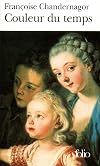
Françoise Chandernagor is a member of the Académie Goncourt (it says so on the cover of her novel) a French literary organisation based in Paris. It was originally set up in 1900 as a challenge to the more conservative Académie Française. It is responsible for the annual award of the prix Goncourt. It would seem to be an elite group of French language writers and according to Wiki:
The ten members of the academy are usually called les Dix (the Ten). They meet the first Tuesday of each show more month, except in summer. Since 1914, they have convened in an oval room, the salon Goncourt, on the second floor of the Restaurant Drouant,[2] place Gaillon, in the heart of Paris. The cutlery which they use while dining there constitutes the main physical continuity of the academy. Each new member receives the fork and knife of the member whom he (or she) is replacing, and the member's name is engraved on the knife and the fork.
In her short novel: Couleur du Temps, Chandernagor has chosen to depict the world of a French painter/artist in the 18th century. She has imagined an artist and set him down in the real milieu of the time. Baptiste V..... specialises in portraiture which goes against the subject matter of the top artists of the time. In accordance with the hierarchy of subject matter as laid down by the Royal Academy; history painting was at the top of the list with portraiture some way below. Baptiste V.... however becomes the leading artist in his genre and is appointed artist to King Louis 15th. He is a man who knows his own worth; from humble beginnings he has worked hard in artists studios to achieve the right to start his own company of artists. We meet him first of all at the end of his life when he has again passed out of fashion, but has one painting on show at the annual exhibition of the Royal Academy. It is a portrait of his own family group, a painting that he has worked on ever since his marriage adding his children to the picture as they came along. Chandernagor uses the picture to describe the life of the artist; a life full of family tragedies.
The clever use of the family portrait is the signpost that leads the reader through the novel. We are told of Babtiste V...s early struggles, his marriage to a younger woman who brings with her a dowry that allows him to strike out on his own and set up his studio. He is a man dedicated to his work a supreme technician who knows how to please the people who commission his work. He rails against the history painters whose search for the sublime is something beyond Baptiste's comprehension. The strength of the novel is the depiction of an artists studio in 18th century Paris. The huge studio room where the artist's workforce share their space with Baptiste's family. His wife Sophie who pays the clavecin in one part of the room, the three easels set up in another part, the mentally challenged daughter sitting in one corner facing the wall and his other children and pets also sharing the space. Baptiste wants his son to follow in his footsteps, but Jean-Nicholas has not the talent and struggles with his tuition. The tragedy is that Baptiste outlives his family and regrets the fact that his work for the king took him away from the family group, he also becomes bitter when his own paintings lose their popularity with his patrons, he is not reduced to poverty, but is left a fairly lonely figure.
Chandernagor tells a good story with a central motif and creates the atmosphere of the life and times of a successful artists. Some readers might see this as too much of an intellectual exercise; for example there are the tragedies in Baptiste's life, but they happen with little drama. It is in the end a biography of an imaginary character, cleverly done, but rather strait-laced. I enjoyed the reading experience and so 3.5 stars. show less
The ten members of the academy are usually called les Dix (the Ten). They meet the first Tuesday of each show more month, except in summer. Since 1914, they have convened in an oval room, the salon Goncourt, on the second floor of the Restaurant Drouant,[2] place Gaillon, in the heart of Paris. The cutlery which they use while dining there constitutes the main physical continuity of the academy. Each new member receives the fork and knife of the member whom he (or she) is replacing, and the member's name is engraved on the knife and the fork.
In her short novel: Couleur du Temps, Chandernagor has chosen to depict the world of a French painter/artist in the 18th century. She has imagined an artist and set him down in the real milieu of the time. Baptiste V..... specialises in portraiture which goes against the subject matter of the top artists of the time. In accordance with the hierarchy of subject matter as laid down by the Royal Academy; history painting was at the top of the list with portraiture some way below. Baptiste V.... however becomes the leading artist in his genre and is appointed artist to King Louis 15th. He is a man who knows his own worth; from humble beginnings he has worked hard in artists studios to achieve the right to start his own company of artists. We meet him first of all at the end of his life when he has again passed out of fashion, but has one painting on show at the annual exhibition of the Royal Academy. It is a portrait of his own family group, a painting that he has worked on ever since his marriage adding his children to the picture as they came along. Chandernagor uses the picture to describe the life of the artist; a life full of family tragedies.
The clever use of the family portrait is the signpost that leads the reader through the novel. We are told of Babtiste V...s early struggles, his marriage to a younger woman who brings with her a dowry that allows him to strike out on his own and set up his studio. He is a man dedicated to his work a supreme technician who knows how to please the people who commission his work. He rails against the history painters whose search for the sublime is something beyond Baptiste's comprehension. The strength of the novel is the depiction of an artists studio in 18th century Paris. The huge studio room where the artist's workforce share their space with Baptiste's family. His wife Sophie who pays the clavecin in one part of the room, the three easels set up in another part, the mentally challenged daughter sitting in one corner facing the wall and his other children and pets also sharing the space. Baptiste wants his son to follow in his footsteps, but Jean-Nicholas has not the talent and struggles with his tuition. The tragedy is that Baptiste outlives his family and regrets the fact that his work for the king took him away from the family group, he also becomes bitter when his own paintings lose their popularity with his patrons, he is not reduced to poverty, but is left a fairly lonely figure.
Chandernagor tells a good story with a central motif and creates the atmosphere of the life and times of a successful artists. Some readers might see this as too much of an intellectual exercise; for example there are the tragedies in Baptiste's life, but they happen with little drama. It is in the end a biography of an imaginary character, cleverly done, but rather strait-laced. I enjoyed the reading experience and so 3.5 stars. show less
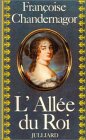
Excellent 'creative nonfiction' story of the life of Françoise d'Aubigné, Marquise de Maintenon, unacknowledged wife of Louis XIV. Written in 1st-person, the colorful novel is inspired by more than four thousand letters written by Mme. Maintenon. Excellent and often fascinating introduction to the period and life in the French Court under the "Sun King" at Versailles.
L'Allee du Roi SOUVENIRS DE FRANCOISE D'AUBIGNE' MARQUISE DE MAINTENON EPOUSE DU ROI DE FRANCE. by Françoise Chandernagor
Really fascinating insight into the court of Louis XIV.

Awards


You May Also Like


Associated Authors
Statistics
- Works
- 19
- Members
- 659
- Popularity
- #38,282
- Rating
- 3.8
- Reviews
- 12
- ISBNs
- 87
- Languages
- 9
- Favorited
- 1
