
René Barjavel (1911–1985)
Author of The Ice People
About the Author
Image credit: René Barjavel pris en mai 1970
Works by René Barjavel
Destrucción 3 copies
L' Enchanteur 1 copy
A mimóza bosszúja 1 copy
El gran secreto 1 copy
El príncipe herido 1 copy
Associated Works
Tagged
Common Knowledge
- Canonical name
- Barjavel, René
- Legal name
- Barjavel, René Gustave Henri
- Birthdate
- 1911-01-24
- Date of death
- 1985-11-24
- Gender
- male
- Education
- Collège de Cusset, Allier (Baccalauréat)
Collège de Nyons, Drôme - Occupations
- screenwriter
journalist
science fiction writer
critic - Organizations
- Edition Denoël (Chef de la fabrication puis directeur ∙ ∙ 1945)
Le Document, Revue (Secrétaire de rédaction ∙ 1935)
Le Progrès de l'Allier, Journal (Journaliste, 1929) - Nationality
- France
- Birthplace
- Nyons, Drôme, France
- Place of death
- Paris, Seine, France
- Burial location
- Tarendol cemetery, Provence, France
- Map Location
- France
- Associated Place (for map)
- France
Members
Discussions
Science fiction discovery of an ancient civalization of humans in Name that Book (October 2014)
Reviews

I'm not a betting man but I will stake a fiver that Réne Barjavel had read Albert Robida's 'Le Vingtièm Siècle' more than once before he wrote this. In many ways Ravage is a kind of antithesis of Robida's book. Both deal with a giant sprawling future Paris; Robida's set in the then future 1955, Barjavel's a near 100 years later in 2052. Both cities' residents are heavily dependant on electricity in their everyday lives. Robida was writing at a time when the application of electricity in show more technology was new and opened up new exciting vistas of optimistic technological inventiveness. One of the sequels was even called 'Le Vingtième siècle: La vie électrique'. Barjavel writing 60 years later was a little more restrained but still filled his future Paris with high speed monorails, superstrong plasticlike materials, food factories where single wheat seeds are subjected to rays and heat which force it to germinate grow and get cropped within hours, and, most extravagantly weirdly, giant glass-sided freezers in every home where people store their dead relatives posed as they would be in life. The difference though is Robida relishes his brave, exciting world of tomorrow and has great fun playing with his toys. Barjavel just sets it up to tear it down again and get his characters (and thus humanity) back on the 'right' path of patriarchal, bronze-age, polygamous family values.
Part One: The New Times - The book opens with our hero arriving in Paris ready to take his place in an art school as soon as he is accepted, which, since he has the highest grades ever seen by anyone ever, should be no problem. His main motivation in coming to the city though is to be near his childhood sweetheart, love of his life, Blanche, who left home for Paris the year before. Unbeknownst to him Blanche (the object of his unwavering devotion in a way that would have her slapping restraining orders on him these days) has other ideas. She has been offered the chance by a big impresario to become a star! (The plot here is pure three-cornered Hollywood melodrama as it is obvious that the big impresario's having full, unfettered, lusty access to Blanche's luscious bod is part of the deal.) She visits our hero in his dingy artist's flat where he is angrily trying to work out how he got turned down by the art school (his powerful rival had pulled strings to take him off the board). She takes one look at his grotty surroundings and rushes off to a life of wealth, luxury, stardom - and unfettered access.
The night of her big debut on live TV all the lights go out. Everywhere. Electricity just stops. Everything electrical fails instantaneously. TV, lights, cars, planes, trains - the lot. As most clothing in the year 2052 is held in place with magnetic clasps people's clothes suddenly fall off and they find themselves naked (though how magnetic underwear would work is a good unexplored question). Planes are the real problem as in the electric world of 2052 planes are giant, VTOL, lemon-shaped objects with gimbled seating lifted by giant electrically powered propellers, none of them have wings. When the electricity stops, they just drop out of the sky like huge dead weights and flatten buildings. The author doesn't spend any time trying to explain how or why electricity just stops. It just does.
Part Two: The Fall of the Cities. Things go to hell in a handcart very quickly. There are scenes of riots and confusion. A few chapters are spent getting our hero and his girlfriend and rival together - most of them spent going up and down a pitch black stairwell in the rival's housing block / TV studio. The Blanche has developed a sudden onset, undefined illness which means the hero and his rival have to carry her down the 90 plus storey building staircase. Outside they accost a gardener who happens to have a horse and cart. They try to buy it. He won't sell and violence follows with the rival dying by accident, and the gardener dying when our hero murders him in cold blood. (This guy has issues and goes on to kill a lot more people through the book without, seemingly, having the slightest twinge of conscience.)
Francois finds a doctor for the Blanche who, it turns out, is suffering from a mysteriously new unknown disease which only affects virgin women (!) thus reassuring our hero that no unfettered access had taken place without our author having to get into any details. Blanche recovers from this plot convenient, virgo intacta confirming illness within a few pages and realises she is really in love with Francois. Slowly our hero puts a group together while Paris REALLY does go to hell. For example: people have noticed their now unfrozen relatives are starting whiff a bit and take to throwing them out of the windows into the street.
A discarded cigarette starts a fire which spreads rapidly - the city is without water because all the electric pumpage is out of service and the Seine is full of thawing dead bodies. Half of Paris burns down as, from the other side of the river, people watch and gather at the Eiffel Tower to hold a mass pray-in. The fire reaches a munitions depot under the ancient Trocadero which explodes, and the gathered faithful die by the thousands as great chunks of concrete rain down on them squishing them flat as they cry "Save us! Save us!".
After a few chapters of looting, murdering a rival gang of looters, and generally getting their shit together, our hero and his band set out, he to return to his home in the south, everyone else because he is obviously the hero of the book and any direction away from Paris is as good as any other. So off they set out into the country, the women pushing their handmade carts and doing all the hard schlepping, the men tooled up for a fight ready to defend them and their carefully hoarded supplies of water, dried horse meat etc.
Before things go really wrong (as they will before the end of the book) the party camps for the night at a deserted electrotherapy mental asylum. Most mental illnesses in 2052 are cured by sessions in a (non-lethal) electric chair. Searching the abandoned building they find the staff had been experimenting with the newly discovered 'Oslo Ray'. This ray had been a major leap forward in physical therapies (early experiments included plucking a live chicken, irradiating it, and watching as its feathers grew back in a matter of days). According to abandoned notes found by the doctor five incurable mythomaniacs had been experimented on. The first, who was convinced he (sic) was Joan of Arc, died from spontaneous combustion, another, a puny weakling who was convinced he was Hercules, became suddenly muscular, burst out of his cell, and was cut down by the police as he was working his way, dorm by dorm, deflowering the pupils of a girl's boarding school. (Much to the chagrin of the experimenters who would have liked to have seen how far he would have managed to get.) The experiment was stopped before last two patients, who thought they were Jesus and Death respectively, showed any manifestations. In the cellar of the building the refugees from Paris find two locked cells. Forcing open the first they find the body of a dead man lying on the floor. He is marked with the stigmata. And is very dead. As they watch he comes back to life; the cell is flooded with divine light and the walls of the cell fade to infinity as he walks out past them. Things return to normal. The doctor is impatient to see what is in the next cell and, despite his companions' protestations, he breaks the door down - and instantly drops dead on the spot as an all pervading cold fills their bones. They slam the door, grab the doctor's body, and, in a moment of 'this is just so crazy it might just work', run out into the garden where they find the resurrected Jesus character giving off a beneficent light surrounded by birds and animals. They lay the body of the doctor before him and kneel. They and ask him to do a Lazarus on their friend. The Jesus character raises a hand in benediction - and disintegrates into a putrid, decomposing mass. Ah well, it was worth a try.
I'm not a Catholic - or even a Christian - so I may be missing stuff but this, and the Eiffel Tower sequence, makes me think this book might not have gone down well with the church at the time. Though, given it was written during the early days of WW2 (it is copyright dated 1943), may well be evidence for the author's possible war-induced loss of, or crisis of, faith - if he had one to start with and this isn't just an outright attack on religion - either way it is a very, very weird sequence.
The journey south continues and is a long brutal affair. There is a drought. Wildfires force them to take to a hastily improvised raft on a river - (after our hero has off-handedly executed the guard who fell asleep and didn't warn them about the encroaching fire in time). Their hastily constructed raft goes over a precipice into a previously not there chasm across the river's route. Whatever caused the electricity stopping cataclysm had made a real mess of France (and its weather). They struggle ever southward through the ashy wasteland left by the forest fires. They are attacked by millions of bats - which turn out to be a collective hallucination which leaves two of the party dead in a murder suicide escape. And on they plod...
Eventually the five remaining stragglers get back to the hero's home farm where he is greeted by his mother.
The last part: Patriarchy. In a series of short, timelapse-like chapters that span decades, Francois slowly becomes the de factor ruler of most of the south of France. The new society he builds is polygamous, and agrarian, with towns strictly limited in size. Whatever stopped electricity from working has made iron brittle and unworkable. Bronze age tech is the order of the day. One day, at a festival where people have gathered to lay gifts at the feet of their centenarian leader, there is terror and consternation as a noisy, cumbersome, six wheeled, bronze steam engine grinds into the town square. Francois is enraged. The inventor who has spent ten years working in secret is baffled. Surely this machine can do nothing but good and save people from having to work?! Francois launches into a speech about how the great cataclysm had come about just because men had done all they could to avoid doing work and hurls a rock at the man hitting him in the face. The inventor strikes back with a metal bar and staves Francois' head in. The inventor is killed. The machine is destroyed. And everyone grieves their fallen leader.
The end.
Not exactly a happy read, but given the times it was written in that is hardly surprising.
Barjavel is considered one of the fathers of modern French SF and Ravage was translated into English as 'Ashes Ashes' by Damon Knight. show less
Part One: The New Times - The book opens with our hero arriving in Paris ready to take his place in an art school as soon as he is accepted, which, since he has the highest grades ever seen by anyone ever, should be no problem. His main motivation in coming to the city though is to be near his childhood sweetheart, love of his life, Blanche, who left home for Paris the year before. Unbeknownst to him Blanche (the object of his unwavering devotion in a way that would have her slapping restraining orders on him these days) has other ideas. She has been offered the chance by a big impresario to become a star! (The plot here is pure three-cornered Hollywood melodrama as it is obvious that the big impresario's having full, unfettered, lusty access to Blanche's luscious bod is part of the deal.) She visits our hero in his dingy artist's flat where he is angrily trying to work out how he got turned down by the art school (his powerful rival had pulled strings to take him off the board). She takes one look at his grotty surroundings and rushes off to a life of wealth, luxury, stardom - and unfettered access.
The night of her big debut on live TV all the lights go out. Everywhere. Electricity just stops. Everything electrical fails instantaneously. TV, lights, cars, planes, trains - the lot. As most clothing in the year 2052 is held in place with magnetic clasps people's clothes suddenly fall off and they find themselves naked (though how magnetic underwear would work is a good unexplored question). Planes are the real problem as in the electric world of 2052 planes are giant, VTOL, lemon-shaped objects with gimbled seating lifted by giant electrically powered propellers, none of them have wings. When the electricity stops, they just drop out of the sky like huge dead weights and flatten buildings. The author doesn't spend any time trying to explain how or why electricity just stops. It just does.
Part Two: The Fall of the Cities. Things go to hell in a handcart very quickly. There are scenes of riots and confusion. A few chapters are spent getting our hero and his girlfriend and rival together - most of them spent going up and down a pitch black stairwell in the rival's housing block / TV studio. The Blanche has developed a sudden onset, undefined illness which means the hero and his rival have to carry her down the 90 plus storey building staircase. Outside they accost a gardener who happens to have a horse and cart. They try to buy it. He won't sell and violence follows with the rival dying by accident, and the gardener dying when our hero murders him in cold blood. (This guy has issues and goes on to kill a lot more people through the book without, seemingly, having the slightest twinge of conscience.)
Francois finds a doctor for the Blanche who, it turns out, is suffering from a mysteriously new unknown disease which only affects virgin women (!) thus reassuring our hero that no unfettered access had taken place without our author having to get into any details. Blanche recovers from this plot convenient, virgo intacta confirming illness within a few pages and realises she is really in love with Francois. Slowly our hero puts a group together while Paris REALLY does go to hell. For example: people have noticed their now unfrozen relatives are starting whiff a bit and take to throwing them out of the windows into the street.
A discarded cigarette starts a fire which spreads rapidly - the city is without water because all the electric pumpage is out of service and the Seine is full of thawing dead bodies. Half of Paris burns down as, from the other side of the river, people watch and gather at the Eiffel Tower to hold a mass pray-in. The fire reaches a munitions depot under the ancient Trocadero which explodes, and the gathered faithful die by the thousands as great chunks of concrete rain down on them squishing them flat as they cry "Save us! Save us!".
After a few chapters of looting, murdering a rival gang of looters, and generally getting their shit together, our hero and his band set out, he to return to his home in the south, everyone else because he is obviously the hero of the book and any direction away from Paris is as good as any other. So off they set out into the country, the women pushing their handmade carts and doing all the hard schlepping, the men tooled up for a fight ready to defend them and their carefully hoarded supplies of water, dried horse meat etc.
Before things go really wrong (as they will before the end of the book) the party camps for the night at a deserted electrotherapy mental asylum. Most mental illnesses in 2052 are cured by sessions in a (non-lethal) electric chair. Searching the abandoned building they find the staff had been experimenting with the newly discovered 'Oslo Ray'. This ray had been a major leap forward in physical therapies (early experiments included plucking a live chicken, irradiating it, and watching as its feathers grew back in a matter of days). According to abandoned notes found by the doctor five incurable mythomaniacs had been experimented on. The first, who was convinced he (sic) was Joan of Arc, died from spontaneous combustion, another, a puny weakling who was convinced he was Hercules, became suddenly muscular, burst out of his cell, and was cut down by the police as he was working his way, dorm by dorm, deflowering the pupils of a girl's boarding school. (Much to the chagrin of the experimenters who would have liked to have seen how far he would have managed to get.) The experiment was stopped before last two patients, who thought they were Jesus and Death respectively, showed any manifestations. In the cellar of the building the refugees from Paris find two locked cells. Forcing open the first they find the body of a dead man lying on the floor. He is marked with the stigmata. And is very dead. As they watch he comes back to life; the cell is flooded with divine light and the walls of the cell fade to infinity as he walks out past them. Things return to normal. The doctor is impatient to see what is in the next cell and, despite his companions' protestations, he breaks the door down - and instantly drops dead on the spot as an all pervading cold fills their bones. They slam the door, grab the doctor's body, and, in a moment of 'this is just so crazy it might just work', run out into the garden where they find the resurrected Jesus character giving off a beneficent light surrounded by birds and animals. They lay the body of the doctor before him and kneel. They and ask him to do a Lazarus on their friend. The Jesus character raises a hand in benediction - and disintegrates into a putrid, decomposing mass. Ah well, it was worth a try.
I'm not a Catholic - or even a Christian - so I may be missing stuff but this, and the Eiffel Tower sequence, makes me think this book might not have gone down well with the church at the time. Though, given it was written during the early days of WW2 (it is copyright dated 1943), may well be evidence for the author's possible war-induced loss of, or crisis of, faith - if he had one to start with and this isn't just an outright attack on religion - either way it is a very, very weird sequence.
The journey south continues and is a long brutal affair. There is a drought. Wildfires force them to take to a hastily improvised raft on a river - (after our hero has off-handedly executed the guard who fell asleep and didn't warn them about the encroaching fire in time). Their hastily constructed raft goes over a precipice into a previously not there chasm across the river's route. Whatever caused the electricity stopping cataclysm had made a real mess of France (and its weather). They struggle ever southward through the ashy wasteland left by the forest fires. They are attacked by millions of bats - which turn out to be a collective hallucination which leaves two of the party dead in a murder suicide escape. And on they plod...
Eventually the five remaining stragglers get back to the hero's home farm where he is greeted by his mother.
The last part: Patriarchy. In a series of short, timelapse-like chapters that span decades, Francois slowly becomes the de factor ruler of most of the south of France. The new society he builds is polygamous, and agrarian, with towns strictly limited in size. Whatever stopped electricity from working has made iron brittle and unworkable. Bronze age tech is the order of the day. One day, at a festival where people have gathered to lay gifts at the feet of their centenarian leader, there is terror and consternation as a noisy, cumbersome, six wheeled, bronze steam engine grinds into the town square. Francois is enraged. The inventor who has spent ten years working in secret is baffled. Surely this machine can do nothing but good and save people from having to work?! Francois launches into a speech about how the great cataclysm had come about just because men had done all they could to avoid doing work and hurls a rock at the man hitting him in the face. The inventor strikes back with a metal bar and staves Francois' head in. The inventor is killed. The machine is destroyed. And everyone grieves their fallen leader.
The end.
Not exactly a happy read, but given the times it was written in that is hardly surprising.
Barjavel is considered one of the fathers of modern French SF and Ravage was translated into English as 'Ashes Ashes' by Damon Knight. show less

Simon is part of an international team of scientists on an expedition to fully map out Antarctica. While there, they discover a massive, underground cavern over 900,000 years old. Buried within the cavern is a golden egg that contains two bodies, suspended at absolute zero. Who are they? How did they there? Can we revive them? Should we?
What starts out as a giant, techno-mystery turns into a seat-of-your pants chase-thriller with a decidedly French (read: tragic) sensibility. In this case, show more Love not only gets thwarted by Politics, but Love, in its turn, trumps Science. The only redemption to be found is in the last two paragraphs where Barjavel allows a modicum of hope that future generations can overcome the idiocy of the current one.
All that aside, there are some interesting things here - for me - notably the transnational network of computers that were put to use translating the language of the Ice People. The idea that our current civilization is just a hollow recreation of a kind of Atlantean prior civilization is interesting - especially one that was so far into the past that - to copy from Robert Jordan - history became myth which became legend which eventually was completely forgotten. Usually with an Atlantean story, the glorious civilization was shattered by some unavoidable natural disaster. Not in the French version. In the French, our cold war and our failings are also the failing of our predecessors - and so it was essentially global thermonuclear war that shattered the Earth and ended the Ice People's civilization. show less
What starts out as a giant, techno-mystery turns into a seat-of-your pants chase-thriller with a decidedly French (read: tragic) sensibility. In this case, show more Love not only gets thwarted by Politics, but Love, in its turn, trumps Science. The only redemption to be found is in the last two paragraphs where Barjavel allows a modicum of hope that future generations can overcome the idiocy of the current one.
All that aside, there are some interesting things here - for me - notably the transnational network of computers that were put to use translating the language of the Ice People. The idea that our current civilization is just a hollow recreation of a kind of Atlantean prior civilization is interesting - especially one that was so far into the past that - to copy from Robert Jordan - history became myth which became legend which eventually was completely forgotten. Usually with an Atlantean story, the glorious civilization was shattered by some unavoidable natural disaster. Not in the French version. In the French, our cold war and our failings are also the failing of our predecessors - and so it was essentially global thermonuclear war that shattered the Earth and ended the Ice People's civilization. show less
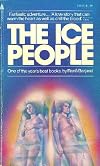
An odd mix of 1930's story telling with 1960's sexual freedom. I've never been fond of SF stories that assume an entire planet's population speaks and acts as one not very intelligent or nuanced agent. That style was dominant in more "cosmic" SF from the 1930's on. It seems particularly silly here because the framing story is just the opposite. The world of the near future is a mix of many political entities, often both competing and partnering at the same time. But Earth 900,000 years ago, show more of the two ice people uncovered at the South Pole, is just two diametrically opposed entities: the Gondawa's who live in what may be an idyllic steady state, and then Enisorians who overpopulate and expand without restraint. Feh. Much of the middle of the book is the tale of two star-crossed lovers from that period, and how the woman came to be found under the ice 900,000 years later with her companion. Meanwhile, in the present, various agencies, usually unnamed, worked to steal the secrets of the past.
The book is not unreadable. There are long passages of action, atypical for this kind of story. Whether Gondawa is really a Utopia, and the two lovers really admirable, is up for debate, though that debate never appears in the book.
But SF writing has evolved. Recommended only as a curiosity. show less
The book is not unreadable. There are long passages of action, atypical for this kind of story. Whether Gondawa is really a Utopia, and the two lovers really admirable, is up for debate, though that debate never appears in the book.
But SF writing has evolved. Recommended only as a curiosity. show less
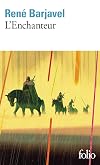
Este livro foi uma interpretação refrescante das lendas arturianas que gostei muito. É bastante diferente dos livros que li escritos por nativos de inglês, e de algum modo parece-me ser mais fiel aos originais medievais. A sensibilidade da idade média está bastante presente no livro, o tipo de mistério, da magia (que hoje em dia é retratada de um modo muito diferente), de religiosidade, de interpretação do mundo, a barreira entre o mundo civilizado e o mundo não domesticado (a show more floresta) onde os cavaleiros da távola redonda nunca sabem o que podem encontrar. A única coisa que me fez pena foi o modo como o Rei Artur foi retratado no final do livro. De resto, a obra de René Barjavel é verdadeiramente especial, e uma dos meus livros arturianos preferidos. show less
Lists
Awards


You May Also Like


Associated Authors
Statistics
- Works
- 46
- Also by
- 2
- Members
- 3,515
- Popularity
- #7,226
- Rating
- 3.7
- Reviews
- 74
- ISBNs
- 153
- Languages
- 7
- Favorited
- 12

