
Pierre Bordage (1955–2025)
Author of Les guerriers du silence
About the Author
Image credit: Esby
Series
Works by Pierre Bordage
Associated Works
Tagged
Common Knowledge
- Legal name
- Bordage, Pierre
- Birthdate
- 1955-01-19
- Date of death
- 2025-12-26
- Gender
- male
- Education
- Nantes Université
- Occupations
- science fiction writer
salesman
sports journalist
screenwriter - Nationality
- France
- Birthplace
- La Réorthe, Vendée, France
- Places of residence
- Nantes, France
Boussay, France - Associated Place (for map)
- France
Members
Reviews

Pierre Bordage and religion aren't exactly the best couple, as in several of his books he tackles the malicious ways of (organised) religion. So too in 'Les Dames Blanches'. Its English title is a little more clear on this: 'The Isaac Directive', referring to Isaac from the Bible. The original title refers to the white egg-shaped balls that suddenly appear in France and not much later all around the world.
What are they? Who are they? Who's behind this "invasion"? Are these "white ladies" show more benevolent or malevolent? Communication is futile, as there is none from their part. Their sole objective: catch all children of 3-4 years old.
It starts with a young boy being attracted by one of the eggs and his mother not able to stop him. As the child disappears without leaving any trace, the press is on it, and little by little, though later at a fast rate, the fire spreads, as more cases of disappeared children pop up. Parents and especially mothers are in despair, with one journalist, who at some point also loses her son, after having travelled a bit to interview people who've previously lost theirs, quits her job at a local magazine.
Mankind has been waging war since the dawn of time, but once a common "enemy" appears, nations around the world can put their differences aside to combat said enemy together, exchanging tactics and potential solutions. However, when mankind is threatened, it uses weapons and in modern society this involves anything from bullets to the biggest nuclear bombs ever made. Collateral damage? Well, it's a risk we have to take for the salvation of mankind.
When bullets, rockets, bombs don't work - or do very little damage to the eggs -, yet destroy the Earth to extents never seen before, a new plan of attack is devised: If these eggs like children so much, and mankind has no way of stopping this "kidnapping" - no matter how much the children have been locked-up to prevent anyone from going inside or outside the house -, why not send children with bomb belts and try to destroy the eggs from the inside? The success rate is minimal, but it convinces the various governments to proceed with this tactic. It even creates a law that obliges couples to make more children in order to add to the army of kamikazes ("pédokazes" in the book). Failing to do so or trying to hide the children or escape your civic duty would result in severe punishment/imprisonment. Rest assured that the police is alert and supervising all suspicious activity, as some of the central characters will experience.
There would be various special forces, like Team Ares, whose members would have (nick?)names based on Greek, mythological figures: Jason, Ajax, Perseus, Theseus, Minos, Hector, ... Jason named his daughter Hestia. Another team would be called Arthur, with members having related names.
While nations may unite to eradicate the common enemy - if an enemy these eggs are -, on a microscopic level, people act differently. They are curious about the eggs, but police holds them off. They start to construct their own theories, religious or other, and conflicts of beliefs arise: people believing these eggs are demonic vs people thinking there might be more to it than meets the eye, i.o.w. maybe these eggs are trying to convey a message to mankind. As the saying goes: Homo homini lupus, man is wolf to man.
As the eggs' power also interferes with the magnetic fields and electricity, many appliances have ceased to work and entire economies suddenly have come to a halt. A bit like in Andreas Eschbach's recommended novel 'Ausgebrannt' (my review). This has consequences on interpersonal levels and relationships.
Some couples would break up, in other families not every child would be given the same amount of care and love as would normally be the case, ... In short, disasters not only geographically/geologically, but also on a human(itarian) level: children and parents having a different view on the matter (not to say, disagreeing heavily), children leaving their parents for not being as loved as the kidnapped younger brother/sister, ... And adults, especially men, and in a few cases women, behaving in a misogynistic way, with the women not always capable of resisting, as circumstances drained them emotionally. But not every man would be like that, fortunately.
However, it would be those that try to do good (to others, even if that meant breaking the law) that would be most controlled and punished. However, you don't need invading "aliens" or anything similar to have such situations, which can happen anywhere, any place, anytime. Even small disagreements (about anything, even the most trivial things) can cause serious ruptures.
In the end, the eggs would leave Earth after a stay of about 50 years - hence the various generations in this story - with a positive message for foremost the parents whose children had been "kidnapped", but also for those whose children were used as bombs.
'Les Dames Blanches' is a, in my humble opinion, recommended page-turner of a book in which Pierre Bordage once again conveys a message with a spiritual basis about life, about being human, about sharing this one planet we live on - our only one -, despite our differences. One global event (in this case something considered "malicious" despite an absence of evidence) can bring us together, yet at the same part create more discord.
----------
Previously read:
* Chroniques des ombres (my review)
* Hier je vous donnerai de mes nouvelles (my review)
* Le Jour où la guerre s'arrêta (my review)
* Entretiens avec Pierre Bordage (my review)
* Contes des sages d'autres mondes et d'autres temps (my review)
* Contes des sages pas sages (my review)
* Dernières nouvelles de la Terre... (my review)
Still on my TBR-pile:
* La Trilogie des Guerriers du silence
* Les Portes d'Occident + Les Aigles d'Orient (Wang duology)
* Le Livre des prophéties
* La Fraternité du Panca - Intégrale
* Les Fables de l'Humpur
* Les Derniers Hommes
* Abzalon + Orchéron
* Qui vient du bruit + Le Dragon aux plumes de sang (Griots Celestes duology)
* Nouvelle Vie™ show less
What are they? Who are they? Who's behind this "invasion"? Are these "white ladies" show more benevolent or malevolent? Communication is futile, as there is none from their part. Their sole objective: catch all children of 3-4 years old.
It starts with a young boy being attracted by one of the eggs and his mother not able to stop him. As the child disappears without leaving any trace, the press is on it, and little by little, though later at a fast rate, the fire spreads, as more cases of disappeared children pop up. Parents and especially mothers are in despair, with one journalist, who at some point also loses her son, after having travelled a bit to interview people who've previously lost theirs, quits her job at a local magazine.
Mankind has been waging war since the dawn of time, but once a common "enemy" appears, nations around the world can put their differences aside to combat said enemy together, exchanging tactics and potential solutions. However, when mankind is threatened, it uses weapons and in modern society this involves anything from bullets to the biggest nuclear bombs ever made. Collateral damage? Well, it's a risk we have to take for the salvation of mankind.
When bullets, rockets, bombs don't work - or do very little damage to the eggs -, yet destroy the Earth to extents never seen before, a new plan of attack is devised: If these eggs like children so much, and mankind has no way of stopping this "kidnapping" - no matter how much the children have been locked-up to prevent anyone from going inside or outside the house -, why not send children with bomb belts and try to destroy the eggs from the inside? The success rate is minimal, but it convinces the various governments to proceed with this tactic. It even creates a law that obliges couples to make more children in order to add to the army of kamikazes ("pédokazes" in the book). Failing to do so or trying to hide the children or escape your civic duty would result in severe punishment/imprisonment. Rest assured that the police is alert and supervising all suspicious activity, as some of the central characters will experience.
There would be various special forces, like Team Ares, whose members would have (nick?)names based on Greek, mythological figures: Jason, Ajax, Perseus, Theseus, Minos, Hector, ... Jason named his daughter Hestia. Another team would be called Arthur, with members having related names.
While nations may unite to eradicate the common enemy - if an enemy these eggs are -, on a microscopic level, people act differently. They are curious about the eggs, but police holds them off. They start to construct their own theories, religious or other, and conflicts of beliefs arise: people believing these eggs are demonic vs people thinking there might be more to it than meets the eye, i.o.w. maybe these eggs are trying to convey a message to mankind. As the saying goes: Homo homini lupus, man is wolf to man.
As the eggs' power also interferes with the magnetic fields and electricity, many appliances have ceased to work and entire economies suddenly have come to a halt. A bit like in Andreas Eschbach's recommended novel 'Ausgebrannt' (my review). This has consequences on interpersonal levels and relationships.
Some couples would break up, in other families not every child would be given the same amount of care and love as would normally be the case, ... In short, disasters not only geographically/geologically, but also on a human(itarian) level: children and parents having a different view on the matter (not to say, disagreeing heavily), children leaving their parents for not being as loved as the kidnapped younger brother/sister, ... And adults, especially men, and in a few cases women, behaving in a misogynistic way, with the women not always capable of resisting, as circumstances drained them emotionally. But not every man would be like that, fortunately.
However, it would be those that try to do good (to others, even if that meant breaking the law) that would be most controlled and punished. However, you don't need invading "aliens" or anything similar to have such situations, which can happen anywhere, any place, anytime. Even small disagreements (about anything, even the most trivial things) can cause serious ruptures.
In the end, the eggs would leave Earth after a stay of about 50 years - hence the various generations in this story - with a positive message for foremost the parents whose children had been "kidnapped", but also for those whose children were used as bombs.
'Les Dames Blanches' is a, in my humble opinion, recommended page-turner of a book in which Pierre Bordage once again conveys a message with a spiritual basis about life, about being human, about sharing this one planet we live on - our only one -, despite our differences. One global event (in this case something considered "malicious" despite an absence of evidence) can bring us together, yet at the same part create more discord.
----------
Previously read:
* Chroniques des ombres (my review)
* Hier je vous donnerai de mes nouvelles (my review)
* Le Jour où la guerre s'arrêta (my review)
* Entretiens avec Pierre Bordage (my review)
* Contes des sages d'autres mondes et d'autres temps (my review)
* Contes des sages pas sages (my review)
* Dernières nouvelles de la Terre... (my review)
Still on my TBR-pile:
* La Trilogie des Guerriers du silence
* Les Portes d'Occident + Les Aigles d'Orient (Wang duology)
* Le Livre des prophéties
* La Fraternité du Panca - Intégrale
* Les Fables de l'Humpur
* Les Derniers Hommes
* Abzalon + Orchéron
* Qui vient du bruit + Le Dragon aux plumes de sang (Griots Celestes duology)
* Nouvelle Vie™ show less

I could have written this in Dutch and/or French, but after having read 862 pages, I'm not really in the mood for a bilingual review. :P
So, my first Bordage! The man has been around for many years, has tens of books on his CV, and is known as one of the (!) French SF-authors. When I chose this book, I was completely unfamiliar with his repertoire, but the blurb seemed very interesting, so... Having the chance to meet the man at Les Imaginales in Épinal made it even more worthwhile, show more certainly after having heard and seem him talk about his other works (in the context of the conferences and debates).
As is written on Wikipedia: "Les ouvrages de Pierre Bordage ont une orientation humaniste, axée sur la découverte de la spiritualité, la lutte contre le fanatisme, ou encore le détournement du pouvoir politico-religieux au profit de quelques-uns." Roughly translated: Bordage's works have a humanistic orientation, focused on the discovery of spirituality, the fight against fanaticism, or even the corruption of political-religious powers that favour a few.
In any case, about Chroniques des Ombres (The Shadows' Chronicles): It's thick. 862 divided over 36 chapters, each of those divided into two parts: one taking place in the Cités Unifiées, the other in the Pays horcite (outside of the cities). Of course, this book also counts a large number of characters, so you have to keep your mind to it. But the central cast can be counted on both of your hands, especially later on in the book.
As you can read in the blurb, there's a nuclear war going on at the end of the 21st century. But that war is used to install a new kind of humanity. A large part of the earth is closed off via a lid. The core is NyLoPa (short for New York, London, Paris), which rules the western world. You can also read about the mayors fighting battles over who can or should have the most power. There are other such Cités Unifiées, like BarPer, ShaBej, and more.
The people inside the CU's are thus protected from the particles and other dangerous consequences from the war, like genetic modifications, diseases, etc. However, they do all have a biochip inside their brains. These were implanted with the excuse of more security and lifting mankind to a new level: mental access to a large database and network. The Internet on a very large scale, always available. No need to think anymore, just consult the database. But this chip was just the next step in controlling the people more.
Those outside of the CU's were considered dangerous to the new society and were to be eradicated through any means necessary. For that purpose, drones and a special kind of soldiers were created. Then again, even inside the CU's, people were dying in large numbers. The Fouineurs (inspectors with more possibilities and privileges than the regular police force) were tasked to seek the culprit, the ones who were behind the mass killings, which continued at a steady rate. These Fouineurs also had a biochip, but a different one, to be able to properly do their work. Through that chip they could consult various databases, scan environments, make estimations by asking mental questions, ...
One character, Ghanesh, a new fouineur, was given a new kind of biochip. He was also used as a test-case. But all didn't go well, as the chip got so grown into his brain, it formed a symbiosis that was more advantageous for him than for his superiors, or even the Ombres (the ones behind the mass killings and the desire for a New World Order, so to speak). The chip could take over when he was in danger. As a result, he could fight his way out of a situation as if someone took over his body and mind. But using this biochip had an impact on the fouineurs' lives: they were reduced by at least 15 years.
The biochip also acted as means of contact between those in power and the fouineurs. It also meant that everyone with a chip was known, was being supervised, tracked and more. Big Brother to a whole new level. Which is why this story reminded me of a mixture of '1984' (George Orwell), 'Brave New World' (Aldous Huxley), the Wool-trilogy (Hugh Howey), and similar/related works.
Bordage is known for focusing on the characters and this is (also) the case here. Of course there's the background, the basis about creating a new world, using certain means to achieve the goals, but this isn't your typical hard Sci-Fi novel, not at all. The characters, their doings, their behaviour, their interactions, their thoughts, their feelings, ... that's what's key in this story. Of course, all's well that ends well, otherwise it wouldn't be a good story, would it? ;-) It's dystopian, but one that does make you think about today's world, about being human, and related issues.
You can clearly read not only how dangerous it is to have an elite control the world and fooling the people (and those people blindly obeying), but also how humanity could easily go from civilized to animal in no time, especially once modern society is no more or you no longer have access to the privileges and comforts of today's world. One would have to relearn to hunt, find ways to clothe yourself, to build a shelter, to survive. There c/would be clans and tribes again, too. There would be slavery. Or in short: we c/would be thrown many centuries back in time. But above all, how our current society is evolving towards more Big Brother situations: camera's in the streets, dash-cams in the car, privacy issues on the Internet, ...
You could also interpret this story as: we are humans, we have feelings, emotions, ... these things can't be replaced by artificial intelligence (despite the efforts of the Ombres to use AI to do just that). Are we going to let this kind of evolution take place, take away our "self", our dignity?
'Chroniques des Ombres' is thick (862 pages for this edition), your French has to be a very decent level to better understand and imagine what's going on, even if Bordage tried to keep it readable. In addition, he applied a more accessible form of French, to make it more lively, more realistic. So some sentences or dialogues aren't following the grammatical rules 100%. I don't mind, because I asked him about it. Had I not known, then I would have minded, yes.
In any case, this was one profound reading experience and an interesting entrance into the world of Pierre Bordage. I will certainly read more of his books, in due time.
-------------------------------
A few examples of the (many) philosophical quotes that appear at the beginning of each chapter:
"La biopuce est le premier signe d'appartenance à la Cité Unifiée; elle est aussi et surtout le collier qui nous transforme en chiens, et nous devons apprendre à nous en délier si nous voulons regagner la liberté qu'elle nous a confiscée, nous devons apprendre à redevenir errants et faméliques."
"Notre Cité, corrompue jusqu'à la moelle, s'effondrera comme les autres cités avant elles, comme les anciennes nations orgueilleuses qui défièrent les cieux et en furent très durement punies."
"Derrière le sourire se cache parfois une lame empoisonnée, derrière la lame se tient l'intention, derrière l'intention se tapit le félon."
"Nous nous prétendons civilisés. Mais laissez aux citadins la possibilité de libérer leus instincts, et vous verrez à quelle vitesse craque le vernis de la civilisation. En réalité, nous n'avons jamais réussi à dompter l'animal en nous. Je dirais même que plus on essaie de rétrécir sa cage, et plus l'animal devient féroce." show less
So, my first Bordage! The man has been around for many years, has tens of books on his CV, and is known as one of the (!) French SF-authors. When I chose this book, I was completely unfamiliar with his repertoire, but the blurb seemed very interesting, so... Having the chance to meet the man at Les Imaginales in Épinal made it even more worthwhile, show more certainly after having heard and seem him talk about his other works (in the context of the conferences and debates).
As is written on Wikipedia: "Les ouvrages de Pierre Bordage ont une orientation humaniste, axée sur la découverte de la spiritualité, la lutte contre le fanatisme, ou encore le détournement du pouvoir politico-religieux au profit de quelques-uns." Roughly translated: Bordage's works have a humanistic orientation, focused on the discovery of spirituality, the fight against fanaticism, or even the corruption of political-religious powers that favour a few.
In any case, about Chroniques des Ombres (The Shadows' Chronicles): It's thick. 862 divided over 36 chapters, each of those divided into two parts: one taking place in the Cités Unifiées, the other in the Pays horcite (outside of the cities). Of course, this book also counts a large number of characters, so you have to keep your mind to it. But the central cast can be counted on both of your hands, especially later on in the book.
As you can read in the blurb, there's a nuclear war going on at the end of the 21st century. But that war is used to install a new kind of humanity. A large part of the earth is closed off via a lid. The core is NyLoPa (short for New York, London, Paris), which rules the western world. You can also read about the mayors fighting battles over who can or should have the most power. There are other such Cités Unifiées, like BarPer, ShaBej, and more.
The people inside the CU's are thus protected from the particles and other dangerous consequences from the war, like genetic modifications, diseases, etc. However, they do all have a biochip inside their brains. These were implanted with the excuse of more security and lifting mankind to a new level: mental access to a large database and network. The Internet on a very large scale, always available. No need to think anymore, just consult the database. But this chip was just the next step in controlling the people more.
Those outside of the CU's were considered dangerous to the new society and were to be eradicated through any means necessary. For that purpose, drones and a special kind of soldiers were created. Then again, even inside the CU's, people were dying in large numbers. The Fouineurs (inspectors with more possibilities and privileges than the regular police force) were tasked to seek the culprit, the ones who were behind the mass killings, which continued at a steady rate. These Fouineurs also had a biochip, but a different one, to be able to properly do their work. Through that chip they could consult various databases, scan environments, make estimations by asking mental questions, ...
One character, Ghanesh, a new fouineur, was given a new kind of biochip. He was also used as a test-case. But all didn't go well, as the chip got so grown into his brain, it formed a symbiosis that was more advantageous for him than for his superiors, or even the Ombres (the ones behind the mass killings and the desire for a New World Order, so to speak). The chip could take over when he was in danger. As a result, he could fight his way out of a situation as if someone took over his body and mind. But using this biochip had an impact on the fouineurs' lives: they were reduced by at least 15 years.
The biochip also acted as means of contact between those in power and the fouineurs. It also meant that everyone with a chip was known, was being supervised, tracked and more. Big Brother to a whole new level. Which is why this story reminded me of a mixture of '1984' (George Orwell), 'Brave New World' (Aldous Huxley), the Wool-trilogy (Hugh Howey), and similar/related works.
Bordage is known for focusing on the characters and this is (also) the case here. Of course there's the background, the basis about creating a new world, using certain means to achieve the goals, but this isn't your typical hard Sci-Fi novel, not at all. The characters, their doings, their behaviour, their interactions, their thoughts, their feelings, ... that's what's key in this story. Of course, all's well that ends well, otherwise it wouldn't be a good story, would it? ;-) It's dystopian, but one that does make you think about today's world, about being human, and related issues.
You can clearly read not only how dangerous it is to have an elite control the world and fooling the people (and those people blindly obeying), but also how humanity could easily go from civilized to animal in no time, especially once modern society is no more or you no longer have access to the privileges and comforts of today's world. One would have to relearn to hunt, find ways to clothe yourself, to build a shelter, to survive. There c/would be clans and tribes again, too. There would be slavery. Or in short: we c/would be thrown many centuries back in time. But above all, how our current society is evolving towards more Big Brother situations: camera's in the streets, dash-cams in the car, privacy issues on the Internet, ...
You could also interpret this story as: we are humans, we have feelings, emotions, ... these things can't be replaced by artificial intelligence (despite the efforts of the Ombres to use AI to do just that). Are we going to let this kind of evolution take place, take away our "self", our dignity?
'Chroniques des Ombres' is thick (862 pages for this edition), your French has to be a very decent level to better understand and imagine what's going on, even if Bordage tried to keep it readable. In addition, he applied a more accessible form of French, to make it more lively, more realistic. So some sentences or dialogues aren't following the grammatical rules 100%. I don't mind, because I asked him about it. Had I not known, then I would have minded, yes.
In any case, this was one profound reading experience and an interesting entrance into the world of Pierre Bordage. I will certainly read more of his books, in due time.
-------------------------------
A few examples of the (many) philosophical quotes that appear at the beginning of each chapter:
"La biopuce est le premier signe d'appartenance à la Cité Unifiée; elle est aussi et surtout le collier qui nous transforme en chiens, et nous devons apprendre à nous en délier si nous voulons regagner la liberté qu'elle nous a confiscée, nous devons apprendre à redevenir errants et faméliques."
"Notre Cité, corrompue jusqu'à la moelle, s'effondrera comme les autres cités avant elles, comme les anciennes nations orgueilleuses qui défièrent les cieux et en furent très durement punies."
"Derrière le sourire se cache parfois une lame empoisonnée, derrière la lame se tient l'intention, derrière l'intention se tapit le félon."
"Nous nous prétendons civilisés. Mais laissez aux citadins la possibilité de libérer leus instincts, et vous verrez à quelle vitesse craque le vernis de la civilisation. En réalité, nous n'avons jamais réussi à dompter l'animal en nous. Je dirais même que plus on essaie de rétrécir sa cage, et plus l'animal devient féroce." show less
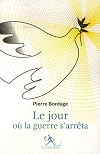
As it says in the blurb (rough translation): "A spiritual tale that's both universal and touching, whose limpidity and simplicity will transform the reader.
A child without memory. The contemporary Little Prince lost on Earth, is amazed by and suffers from seeing all the violence, conflicts, sufferings and injustices, for the victims as well as for the executioners. The child decides therefore to make the weapons hold their peace."
I read 'The Little Prince' about 2 decades ago, hardly show more remember anything from the story, but do know that I didn't like it at the time. Perhaps I should re-read it in the (near?) future, as so much has changed since then.
Already from reading the first pages, Pierre Bordage manages to grab you by the throat, or better said, catch and keep your attention. He encounters all sorts of situations in which man suffers: homeless people; cops and criminals; soldiers from opposite sides fighting each other, because they were ordered to do so, without really knowing the people they're fighting against; women getting stoned for committing adultery, and so on and so forth.
The lad travels all around the world (or almost) to find himself, to remember who he was and why was put on Earth. He can read the people's souls, sees their desires, their troubles, and confronts them with his talent. Time and again, people get scared, wonder who he is, where's he's from, ... and never believe him when he tells them he doesn't know it himself and is seeking someone who does know. He manages to interrupt the war by communicating with matter, the weapons in this case. Bordage doesn't specify which war (not that it matters, I guess), but it certainly involves the UN, as they are in an urgent meeting about the temporary cease-fire and how it happened to suddenly, while other devices continue to function. None of them seems to be happy with this outcome, while on the battlefield some soldiers of opposing sides do come together to exchange thoughts and feelings. At least, until the cease-fire ends and the war carries on and everyone is raging again.
Also, in each situation our Little Prince encounters, it's clear that a war doesn't have to be of the kind we know on a military level. It can be anything: domestic violence, angry disagreements with (friends/family/colleagues/...), etc.
No one seems to be able to help him, despite each being specialized in a different domains: psychoanalysis, medicine, spirituality, politics, ... At the same time, Bordage criticizes all these people, as they think they're the kings of their castles, of their professional domains, while they don't look any further and are afraid to admit defeat when they don't know the answer to the problems/the cases they're faced with. So they exert their dominance to make the patient, subordinate (woman or child) obey (and/or pay). Especially in the kid's case, he's faced with adults who say he's too young and not smart enough to meddle with politics, to know about the world of adults, and that he should go back home and behave like any child. But when he expresses his desire to help find solutions to world problems or even confronts adults with their contradictory statements (e.g. smoking is bad for kids, but that also makes it bad for adults, doesn't it? There never comes an intelligent answer from those adults; and so it often is in other cases, too), it's clear that adults don't want any interference from children, none at all, not in the story, not in today's world, despite children perhaps seeing clearer, or being able to bring some common sense to the table.
Another critique I could add from the story: we're not as free as we think we are (now that 1984 and 'Brave New World' have been a reality for some time). Or are we? See all the religions, all the faith and trust we put in other people (business leaders, political leaders, religious leaders, ...), and how their doings and leavings can cause damage to others, others we don't know, but are learned to hate (or not care for/about) for whatever reason.
Bordage also, rightly so, criticizes the way society is built around money: people are afraid of losing their jobs in times of crisis or otherwise. Or more specifically, a source of income. I can understand that, as I too am reluctant to take risks or new steps because of this issue. And here he voices something I've been thinking for several years: not everyone is having a job that he/she loves, but because it pays well, they carry on with it. See also the video with [a:Alan W. Watts|1501668|Alan W. Watts|https://images.gr-assets.com/authors/1427892345p2/1501668.jpg]'s speech: see here and the one in which people were asked to voice their desires in such a case: here.
A long story short: easily readable, page-turner, very much recommended! Definitely one of Bordage's best stories. The blurb (see above) is right.
Two remarks, though:
1) Why is the child male and not female? Is is because we live in a man's world? Does it reflect the author's view on male vs female? Is it because the Little Prince was a boy, too, and that story served as source of inspiration?
2) The misery the lad encounters involves male dominance. Females are always in a subordinate position (being tormented, having to obey the village's chief or an employer, etc.). Why no examples of the opposite, men being oppressed by women? Men are nowadays (and probably before as well) also victims of domestic or other violence caused by women. But it's still a taboo, despite our modern times. show less
A child without memory. The contemporary Little Prince lost on Earth, is amazed by and suffers from seeing all the violence, conflicts, sufferings and injustices, for the victims as well as for the executioners. The child decides therefore to make the weapons hold their peace."
I read 'The Little Prince' about 2 decades ago, hardly show more remember anything from the story, but do know that I didn't like it at the time. Perhaps I should re-read it in the (near?) future, as so much has changed since then.
Already from reading the first pages, Pierre Bordage manages to grab you by the throat, or better said, catch and keep your attention. He encounters all sorts of situations in which man suffers: homeless people; cops and criminals; soldiers from opposite sides fighting each other, because they were ordered to do so, without really knowing the people they're fighting against; women getting stoned for committing adultery, and so on and so forth.
The lad travels all around the world (or almost) to find himself, to remember who he was and why was put on Earth. He can read the people's souls, sees their desires, their troubles, and confronts them with his talent. Time and again, people get scared, wonder who he is, where's he's from, ... and never believe him when he tells them he doesn't know it himself and is seeking someone who does know. He manages to interrupt the war by communicating with matter, the weapons in this case. Bordage doesn't specify which war (not that it matters, I guess), but it certainly involves the UN, as they are in an urgent meeting about the temporary cease-fire and how it happened to suddenly, while other devices continue to function. None of them seems to be happy with this outcome, while on the battlefield some soldiers of opposing sides do come together to exchange thoughts and feelings. At least, until the cease-fire ends and the war carries on and everyone is raging again.
Also, in each situation our Little Prince encounters, it's clear that a war doesn't have to be of the kind we know on a military level. It can be anything: domestic violence, angry disagreements with (friends/family/colleagues/...), etc.
Another critique I could add from the story: we're not as free as we think we are (now that 1984 and 'Brave New World' have been a reality for some time). Or are we? See all the religions, all the faith and trust we put in other people (business leaders, political leaders, religious leaders, ...), and how their doings and leavings can cause damage to others, others we don't know, but are learned to hate (or not care for/about) for whatever reason.
Bordage also, rightly so, criticizes the way society is built around money: people are afraid of losing their jobs in times of crisis or otherwise. Or more specifically, a source of income. I can understand that, as I too am reluctant to take risks or new steps because of this issue. And here he voices something I've been thinking for several years: not everyone is having a job that he/she loves, but because it pays well, they carry on with it. See also the video with [a:Alan W. Watts|1501668|Alan W. Watts|https://images.gr-assets.com/authors/1427892345p2/1501668.jpg]'s speech: see here and the one in which people were asked to voice their desires in such a case: here.
A long story short: easily readable, page-turner, very much recommended! Definitely one of Bordage's best stories. The blurb (see above) is right.
Two remarks, though:
1) Why is the child male and not female? Is is because we live in a man's world? Does it reflect the author's view on male vs female? Is it because the Little Prince was a boy, too, and that story served as source of inspiration?
2) The misery the lad encounters involves male dominance. Females are always in a subordinate position (being tormented, having to obey the village's chief or an employer, etc.). Why no examples of the opposite, men being oppressed by women? Men are nowadays (and probably before as well) also victims of domestic or other violence caused by women. But it's still a taboo, despite our modern times. show less

I loved the action and story in this book! There was never a page where I could possibly guess what would happen next! And the way the technology is build in and used in the alternative world and tradition is dealt with gave me something to think about. Several times I just had to stop reading because it was just too close to reality.
I really also enjoyed to see how Bordage plays with royalist history and heritage when building this alternative world. He truly know it well and I feel I show more connect to the story on a totally different level when I get one of his many references. Everything from the names he uses to the language of each character, it is really neat.
That said, don't read this for the sake of history, read it for the action as the premise of the book is a bit weak. Let's face it; Louis-Philippe wasn't as bad as this. He did make the law which states that all communes have to provide at least one school... If you want to blame someone, blame the Legitimists. The Orléanists weren't as bad as this.
Overall a very good book! I'm looking forwards to nr. 2 in the series! show less
I really also enjoyed to see how Bordage plays with royalist history and heritage when building this alternative world. He truly know it well and I feel I show more connect to the story on a totally different level when I get one of his many references. Everything from the names he uses to the language of each character, it is really neat.
That said, don't read this for the sake of history, read it for the action as the premise of the book is a bit weak. Let's face it; Louis-Philippe wasn't as bad as this. He did make the law which states that all communes have to provide at least one school... If you want to blame someone, blame the Legitimists. The Orléanists weren't as bad as this.
Overall a very good book! I'm looking forwards to nr. 2 in the series! show less
Lists
Awards


You May Also Like


Associated Authors
Statistics
- Works
- 95
- Also by
- 1
- Members
- 1,998
- Popularity
- #12,889
- Rating
- 3.7
- Reviews
- 50
- ISBNs
- 195
- Languages
- 4
- Favorited
- 16
