
Alessandro Baricco
Author of Silk
About the Author
Series
Works by Alessandro Baricco
Next: Piccolo Libro Sulla Globalizzazione E Sul Mondo Che Verra (Universale Economica) (Italian Edition) (2002) 149 copies, 1 review
L'anima di Hegel e le mucche del Wisconsin. Una riflessione su musica colta e modernità (1992) 95 copies, 3 reviews
Lo que estábamos buscando: De la pandemia como criatura mítica (Nuevos Cuadernos Anagrama) (Spanish Edition) (2021) 14 copies
Book 9788807035647 3 copies
La sindrome Boodman 2 copies
Esta historia 2 copies
Quel che resta del mondo : venticinque testimonianze sugli inganni dell'ambientalismo (1999) 2 copies
Lụa 1 copy
Đại dương biển 1 copy
Histórias Inesquecíveis 2 As melhores histórias da literatura universal contadas aos mais novos 1 copy
2003 1 copy
Castelli di sabbia 1 copy
OCEÀ 1 copy
Davila Roa 1 copy
I Corpi 1 copy
İpek 1 copy
Izvesno poimanje sveta 1 copy
Lungo petalo di mare 1 copy
Soie: Edition illustrée 1 copy
Seda 1 copy
ZOTI GUAJN 1 copy
Homer, Ilíada 1 copy
TRI HERË NË AGIM 1 copy
City 1999 1 copy
Una certa idea del mondo 1 copy
حرير 1 copy
NOVECENTO UN MONOLOG 1 copy
Замоци на гневот 1 copy
America 3 (in Barnum) 1 copy
America 2 (in Barnum) 1 copy
America 1 (in Barnum) 1 copy
Pugni e rap (in Barnum) 1 copy
Camerieri (in Barnum) 1 copy
Il caso C. (in Barnum) 1 copy
Carmina burana (in Barnum) 1 copy
Sanremo, Italia (in Barnum) 1 copy
Dopo Berlinguer (in Barnum) 1 copy
Toro solitario (in Barnum 2) 1 copy
Complessità 2 (in Barnum 2) 1 copy
Milano-Sanremo (in Barnum) 1 copy
Complessità 1 (in Barnum 2) 1 copy
Ebla (in Barnum 2) 1 copy
Bocce (in Barnum 2) 1 copy
Bis (in Barnum) 1 copy
Grand Opéra 1 copy
Grand Louvre (in Barnum) 1 copy
Schema libero 1 copy
Oh happy day (in Barnum) 1 copy
Tangeri (in Il nuovo Barnum) 1 copy
Mumbai (in Il nuovo Barnum) 1 copy
Hanoi (in Il nuovo Barnum) 1 copy
Boca (in Il nuovo Barnum) 1 copy
Buchmesse 1 (in Barnum 2) 1 copy
Edimburgo 1 (in Barnum 2) 1 copy
Tokyo 2 (in Barnum 2) 1 copy
Tokyo 1 (in Barnum 2) 1 copy
La Bohème (in Barnum 2) 1 copy
Edimburgo 3 (in Barnum 2) 1 copy
Edimburgo 2 (in Barnum 2) 1 copy
Scala immobile (in Barnum 2) 1 copy
Buchmesse 2 (in Barnum 2) 1 copy
CITY 1 copy
Tagged
Common Knowledge
- Canonical name
- Baricco, Alessandro
- Other names
- Baricco, Allessandro
- Birthdate
- 1958-01-25
- Gender
- male
- Occupations
- novelist
music critic
creative writing teacher - Organizations
- Scuola Holden
La Repubblica
La Stampa - Awards and honors
- Prix médicis étranger (1995)
Premio Viareggio (1993) - Relationships
- Vattimo, Gianni (Directeur de thèse)
Campaner, Gloria (Epouse) - Nationality
- Italy
- Birthplace
- Turin, Italy
- Places of residence
- Rome, Italy
- Map Location
- Italy
Members
Discussions
Le Salon reads the Iliad in Le Salon Littéraire du Peuple pour le Peuple (April 2020)
Reviews
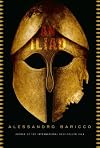
I read this in preparation of a thorough reading of the Iliad itself (in three different translations). That has now been done. And I must say, Baricco has made a very commendable attempt to retell the Iliad in a shorter form (about a fifth of its original length). Because let's be honest: reading the original Iliad, even in translation, is quite a chore. There are the many, constantly changing names and descriptions of characters and places, the stumbling references to mythical stories that show more Homer assumed the reader/listener knew, the alternation of intense battle scenes and drawn-out dialogues, the archaic verse form, and so on. For a contemporary reader, this is certainly not self-evident. So it's very good that Baricco has lightened this work: he opted for a prose narrative, significantly reduced the numerous name and mythological references, and also limited the numerous divine interventions, which makes it all a bit more concise. His most important intervention is that he presents the text from ever-changing perspectives, including the perspectives of "minor" characters. This doesn't work perfectly (the storyline requires him to occasionally switch between third- and first-person narration), but it certainly adds dynamism to the story.
Of course, his interventions aren't entirely innocent; they do have consequences. Baricco not only retold the text more wittily, he also clearly attempted to bring the Iliad up to date. I almost wrote that he created a "woke" version of the Iliad, but I prefer not to use that term, since it has since been co-opted by a camp I'd rather not be associated with. But there is something to it, and that becomes especially clear when you read his afterword.
For example, Baricco claims that the entire Iliad has a strikingly feminine side, which is particularly evident in the many dialogue scenes. And it's true: the Greek and Trojan heroes spend almost as much time talking as fighting, which is truly striking. According to Baricco, they do this to slow down the war, to postpone the fighting as much as possible, and this supposedly testifies to a genuine desire for peace, which he associates with a "feminine side." I disagree with him on that last point: after my thorough reading of the Iliad, I can only conclude that the heroes do indeed swear by the fight, do everything they can to make it as intense and horrible as possible and last as long as possible. Where Baricco is mistaken is that the many "rhetoric scenes" are primarily a literary device by the poet Homer (or whoever hides behind that name) to make his story as suspenseful as possible, to postpone the narration of the action so that the subsequent violent outburst is all the greater. I won't deny that there are feminine aspects present in the Iliad (despite the limited number of female voices and some clearly misogynistic passages), but Homer certainly was no pacifist.
Incidentally, Baricco himself provides proof of the invalidity of his assertion. For in his afterword, he also discusses the aestheticization of war in the Iliad. And indeed, the battle scenes and even the general image of the various combatants seem so heightened and intense that this suggests a case of sublimation. Baricco is right that, for Homer, war clearly is the arena in which man acquires almost divine allure, transcends himself, "excels," as we would say today. But I would be careful with this aestheticization. I don't get the impression that the poet glorifies, encourages, or presents war as a model to emulate. For, at every opportunity, he points out how his heroes, in the violence of war, indulge in hubris and arrogance, and in their deadly frenzy violate the (divine) order of the universe, for which they all, without exception, pay the price.
One last point, briefly, where I disagree with Baricco: his conclusion that Homer actually calls on his readers to achieve the same form of excellence as the heroes through peaceful means. That message is commendable in itself, but that's really not what I read in the Iliad. I have the impression that Baricco is taking his wish for granted here.
Well, well, this review has become so long! And I've barely delved into the epic itself. That's promising. show less
Of course, his interventions aren't entirely innocent; they do have consequences. Baricco not only retold the text more wittily, he also clearly attempted to bring the Iliad up to date. I almost wrote that he created a "woke" version of the Iliad, but I prefer not to use that term, since it has since been co-opted by a camp I'd rather not be associated with. But there is something to it, and that becomes especially clear when you read his afterword.
For example, Baricco claims that the entire Iliad has a strikingly feminine side, which is particularly evident in the many dialogue scenes. And it's true: the Greek and Trojan heroes spend almost as much time talking as fighting, which is truly striking. According to Baricco, they do this to slow down the war, to postpone the fighting as much as possible, and this supposedly testifies to a genuine desire for peace, which he associates with a "feminine side." I disagree with him on that last point: after my thorough reading of the Iliad, I can only conclude that the heroes do indeed swear by the fight, do everything they can to make it as intense and horrible as possible and last as long as possible. Where Baricco is mistaken is that the many "rhetoric scenes" are primarily a literary device by the poet Homer (or whoever hides behind that name) to make his story as suspenseful as possible, to postpone the narration of the action so that the subsequent violent outburst is all the greater. I won't deny that there are feminine aspects present in the Iliad (despite the limited number of female voices and some clearly misogynistic passages), but Homer certainly was no pacifist.
Incidentally, Baricco himself provides proof of the invalidity of his assertion. For in his afterword, he also discusses the aestheticization of war in the Iliad. And indeed, the battle scenes and even the general image of the various combatants seem so heightened and intense that this suggests a case of sublimation. Baricco is right that, for Homer, war clearly is the arena in which man acquires almost divine allure, transcends himself, "excels," as we would say today. But I would be careful with this aestheticization. I don't get the impression that the poet glorifies, encourages, or presents war as a model to emulate. For, at every opportunity, he points out how his heroes, in the violence of war, indulge in hubris and arrogance, and in their deadly frenzy violate the (divine) order of the universe, for which they all, without exception, pay the price.
One last point, briefly, where I disagree with Baricco: his conclusion that Homer actually calls on his readers to achieve the same form of excellence as the heroes through peaceful means. That message is commendable in itself, but that's really not what I read in the Iliad. I have the impression that Baricco is taking his wish for granted here.
Well, well, this review has become so long! And I've barely delved into the epic itself. That's promising. show less
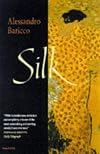
Herve Joncour is a mid 19th century French silkworm merchant, who is asked to travel to Japan to bring back silkworm eggs so that his town can still flourish in producing silk products after many nearer sources of the eggs become infected. There he meets a concubine of the local feudal chief and becomes infatuated with her, and the feeling is very much mutual, even though she can't speak French and is obviously tied to the powerful chief. Over the coming years, his life revolves around these show more three month trips to Japan, because of this woman, even when Japan slips into civil war and he puts his life in danger for doing so.
In the meantime he has a loving wife back at home, but in Franch he becomes distant and depressed, particularly when it seems there is no chance of ever meeting this woman again. But was she really the love of his life, or is there someone else closer to home he should be focusing on.
This very slight novel is nevertheless packed with plot and hidden meaning. It is told in a very sparse style, almost like a fable, with whole passages almost hypnotically, lyrically repeated. Thoughts are almost always hidden, and instead we only have actions to work on, and infer the hidden thoughts for ourselves.
There is an air of perfection to this work, with almost every word obviously carefully chosen, just like a great poem, and you end up feeling that every single word has significance. It appears at first sight to be a standard tragic romance, but the twists at the end demolish this, and then the pragmatic attitude of the protagonist at the very end lends a naturalistic air to it. But at the same time there are surrealistic elements, with the local head of business entirely abandoning all his possessions because of the result of a rather bizarre billiards game.
This is a novel to savour, to read over and over, to be moved by, and ultimately to dwell over for many days after you've put it down. show less
In the meantime he has a loving wife back at home, but in Franch he becomes distant and depressed, particularly when it seems there is no chance of ever meeting this woman again. But was she really the love of his life, or is there someone else closer to home he should be focusing on.
This very slight novel is nevertheless packed with plot and hidden meaning. It is told in a very sparse style, almost like a fable, with whole passages almost hypnotically, lyrically repeated. Thoughts are almost always hidden, and instead we only have actions to work on, and infer the hidden thoughts for ourselves.
There is an air of perfection to this work, with almost every word obviously carefully chosen, just like a great poem, and you end up feeling that every single word has significance. It appears at first sight to be a standard tragic romance, but the twists at the end demolish this, and then the pragmatic attitude of the protagonist at the very end lends a naturalistic air to it. But at the same time there are surrealistic elements, with the local head of business entirely abandoning all his possessions because of the result of a rather bizarre billiards game.
This is a novel to savour, to read over and over, to be moved by, and ultimately to dwell over for many days after you've put it down. show less
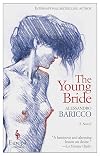
...In every detail, what I had done in those hours—and heard, and said, and seen—was teaching me that it's bodies that dictate life: the rest is a result. I couldn't believe it, at that moment, because, like every young person, I expected something more complex, or sophisticated. But now I don't know any story, mine or anyone else's, that did not begin in the animal movement of a body—an inclination, a wound, an obliqueness, at times a brilliant move, often obscene instincts that came show more from far away. It's all written there already. The thoughts come afterward, and are always a belated map, to which, out of convention and weariness, we attribute some precision...
After her eighteenth birthday, The Young Bride returns to Italy to be married. Her fiancé, The Son, to whom she has been engaged for three years, is in England allegedly on business. She moves in with her fiancé's family—The Father, The Mother, The Daughter, and The Uncle—to await his return. While there, she is divested of her innocence and groomed in the lessons of sexual desire and pleasure.
Interwoven with this sensual and insidious plot is another, that of "the author" who is writing this book. Flipping abruptly between the third and first person, the text becomes a meta-text describing the process of writing and how intimately the author relates to and is present in his work.
I found this novel challenging at first. The main characters are not named, there are no chapter breaks, paragraphs can sometimes run for pages, and the switch in narrative voice was confusing at times. But about halfway through, the "author" clarifies his intent in switching from third to first point of view, and I went back and reread several passages, which started to make sense.
For example, I should have reported to the old friend how, writing about the young Bride, I more or less abruptly change the narrative voice, for reasons that at the moment seem to me exquisitely technical, or at most blandly aesthetic, with the obvious result of complicating the life of the reader; that in itself is negligible, yet it has an irritating effect of virtuosity that at first I even tried to fight, before surrendering to the evidence that I simply couldn't hear those sentences unless they slipped out that way, as if the solid basis of a clear and distinct narrative voice were something I no longer believed in, or that had become impossible for me to appreciate. A fiction for which I'd lost the necessary innocence.
From there I became intrigued and enjoyed the novel much more. So not an easy text, but one which I found interesting in the end. show less
After her eighteenth birthday, The Young Bride returns to Italy to be married. Her fiancé, The Son, to whom she has been engaged for three years, is in England allegedly on business. She moves in with her fiancé's family—The Father, The Mother, The Daughter, and The Uncle—to await his return. While there, she is divested of her innocence and groomed in the lessons of sexual desire and pleasure.
Interwoven with this sensual and insidious plot is another, that of "the author" who is writing this book. Flipping abruptly between the third and first person, the text becomes a meta-text describing the process of writing and how intimately the author relates to and is present in his work.
I found this novel challenging at first. The main characters are not named, there are no chapter breaks, paragraphs can sometimes run for pages, and the switch in narrative voice was confusing at times. But about halfway through, the "author" clarifies his intent in switching from third to first point of view, and I went back and reread several passages, which started to make sense.
For example, I should have reported to the old friend how, writing about the young Bride, I more or less abruptly change the narrative voice, for reasons that at the moment seem to me exquisitely technical, or at most blandly aesthetic, with the obvious result of complicating the life of the reader; that in itself is negligible, yet it has an irritating effect of virtuosity that at first I even tried to fight, before surrendering to the evidence that I simply couldn't hear those sentences unless they slipped out that way, as if the solid basis of a clear and distinct narrative voice were something I no longer believed in, or that had become impossible for me to appreciate. A fiction for which I'd lost the necessary innocence.
From there I became intrigued and enjoyed the novel much more. So not an easy text, but one which I found interesting in the end. show less

I must start this book review with a confession; I’ve never read any classical works. It’s shameful, I know. I’ve devoured plenty of historical fiction about ancient Greece and Rome and some biographies of famous men, but never read any writers from those times. Terrible. I admit it. There’s no excuse, but there are reasons. First; I hate poetry. Second; I’m suffering from a delusion that the ancients won’t be readable. Third; translations make me wary.
So, why did I start with a show more translation of a translation with writing 180 degrees from the original that also left out huge chunks of the story? Because it was there. I bought it in 2006 and had never read it. It’s been languishing on my shelf that long and now I’m glad I read it. It’s made me want to find a more closely translated version to read, too.
The thing that attracted me to An Iliad (an important distinction to The Iliad) was that it wasn’t in poetic verse. It’s in prose. Woo hoo! No rhyming. No awkward (to my ear) cadences that obscure meaning. Straightforward prose. Real sentences. No rhymes.
I didn’t know when I bought it that it left out the gods though and I’m not sure how I feel about that. My first reaction is that if Homer put them in there, who has the right to take them out. That’s certainly a much bigger liberty than changing from verse to prose or from omniscient 3rd person to first person (which was also done). Seemingly unforgivable, but my modern sensibility appreciates it. I’m an atheist and would no more worship Zeus than I would Allah and so the mythical nature of the gods’ intervention would only serve to distance me from the actual story. With the gods stripped out it seems much more a factual tale than myth. With recent archaeological discoveries it seems the war between the Trojans and Greeks was probably true anyway and putting gods in to make things happen would detract from that realism. Whenever humans take full responsibility for their actions and decisions it has more bite, more heft. It matters. Gods running around moving us like pieces on a chessboard just makes me roll my eyes.
What’s left is a story of man’s most base nature. And I do mean man literally. The men in this novel are appallingly self-centered, narcissistic and weak. The whole species of them. To despise and fear women so completely as to render them property reduced to sexual organs only shows me how weak in mind and character they were. Probably still are if they had their way. As a modern female I can help but see this as an overarching theme even if an unintended one. I can’t believe the whole of Western literature is founded on who gets to put his dick into whom. And even more importantly; who doesn’t.
That aside this is a story of war, but one told from the inside. No battle tactics or troop formations. No general’s machinations and planning. No bird’s eye view. Here is close combat told with a personalization that was startling. Not just men were killed, but how they were killed; specifically. And who was killed; by name. And who did the killing; also by name. So many Greek names as to be dizzying. After a while it almost became like a dance, which I suppose was the point. To make us find beauty in war. It’s there, although you have to really force the metaphor to find it.
I’m no classical scholar, so a lot of high-falutin’ stuff probably eluded me, but I did enjoy reading this in a strange, voyeuristic way. I did it to get a better understanding of Achilles, Hector and Odysseus; names so often referred to in the rest of literature as to be almost without meaning. Over and over they’re used to prop up or illustrate one point after another; some clashing ideas together and creating that confusion. I will probably go on to read other classical works like The Odyssey and The Aeneid; both tales of heroes after the war, but I don’t think I’ll stop reading the companion modern fiction though. show less
So, why did I start with a show more translation of a translation with writing 180 degrees from the original that also left out huge chunks of the story? Because it was there. I bought it in 2006 and had never read it. It’s been languishing on my shelf that long and now I’m glad I read it. It’s made me want to find a more closely translated version to read, too.
The thing that attracted me to An Iliad (an important distinction to The Iliad) was that it wasn’t in poetic verse. It’s in prose. Woo hoo! No rhyming. No awkward (to my ear) cadences that obscure meaning. Straightforward prose. Real sentences. No rhymes.
I didn’t know when I bought it that it left out the gods though and I’m not sure how I feel about that. My first reaction is that if Homer put them in there, who has the right to take them out. That’s certainly a much bigger liberty than changing from verse to prose or from omniscient 3rd person to first person (which was also done). Seemingly unforgivable, but my modern sensibility appreciates it. I’m an atheist and would no more worship Zeus than I would Allah and so the mythical nature of the gods’ intervention would only serve to distance me from the actual story. With the gods stripped out it seems much more a factual tale than myth. With recent archaeological discoveries it seems the war between the Trojans and Greeks was probably true anyway and putting gods in to make things happen would detract from that realism. Whenever humans take full responsibility for their actions and decisions it has more bite, more heft. It matters. Gods running around moving us like pieces on a chessboard just makes me roll my eyes.
What’s left is a story of man’s most base nature. And I do mean man literally. The men in this novel are appallingly self-centered, narcissistic and weak. The whole species of them. To despise and fear women so completely as to render them property reduced to sexual organs only shows me how weak in mind and character they were. Probably still are if they had their way. As a modern female I can help but see this as an overarching theme even if an unintended one. I can’t believe the whole of Western literature is founded on who gets to put his dick into whom. And even more importantly; who doesn’t.
That aside this is a story of war, but one told from the inside. No battle tactics or troop formations. No general’s machinations and planning. No bird’s eye view. Here is close combat told with a personalization that was startling. Not just men were killed, but how they were killed; specifically. And who was killed; by name. And who did the killing; also by name. So many Greek names as to be dizzying. After a while it almost became like a dance, which I suppose was the point. To make us find beauty in war. It’s there, although you have to really force the metaphor to find it.
I’m no classical scholar, so a lot of high-falutin’ stuff probably eluded me, but I did enjoy reading this in a strange, voyeuristic way. I did it to get a better understanding of Achilles, Hector and Odysseus; names so often referred to in the rest of literature as to be almost without meaning. Over and over they’re used to prop up or illustrate one point after another; some clashing ideas together and creating that confusion. I will probably go on to read other classical works like The Odyssey and The Aeneid; both tales of heroes after the war, but I don’t think I’ll stop reading the companion modern fiction though. show less
Lists
Italian Literature (12)
Summer Books (1)
The Trojan War (1)
A Novel Cure (1)
Short and Sweet (1)
Favourite Books (1)
Asia (1)
Awards


You May Also Like


Associated Authors
Statistics
- Works
- 354
- Members
- 14,623
- Popularity
- #1,573
- Rating
- 3.7
- Reviews
- 415
- ISBNs
- 739
- Languages
- 38
- Favorited
- 41


