
Antonio Tabucchi (1943–2012)
Author of Pereira Maintains
About the Author
Antonio Tabucchi was born in Pisa, Italy on September 24, 1943. He studied literature and philosophy at the city's university. He was a writer and academic. He was professor of Portuguese literature at the University of Siena and the Italian Cultural Institute in Lisbon. His works include Piazza show more d'Italia, Piccoli Equivoci Senza Importanza (Little Misunderstandings of No Importance), Requiem, uma Alucinaçaõ (Requiem: A Hallucination), Tristano Muore (Tristan Is Dying), and Racconti con Figure. Many of his works were adapted into films including Sostiene Pereira (Pereira Maintains) and Notturno Indiano (Indian Nocturne). In addition to his fictional writing, he translated works by Fernando Pessoa and other Portuguese writers into Italian. He received numerous literary prizes including the Chevalier des Arts et des Lettres in France. In 1993, he was one of the founder members of the International Parliament of Writers and contributed articles to its journal, Autodafé. He died of cancer on March 25, 2012 at the age of 68. (Bowker Author Biography) show less
Image credit: Antonio Tabucchi, Milan, Italy, 14th July 2011
Works by Antonio Tabucchi
Gli ultimi tre giorni di Fernando Pessoa: Un delirio (La memoria) (Italian Edition) (1994) 123 copies, 2 reviews
L'Oca Al Passo - Notizie Dal Buio Che Stiamo Attraversando (Italian Edition) (2006) 42 copies, 2 reviews
Vanishing Point: The Woman of Porto Pim ; The Flying Creatures of Fra Angelico (1986) 11 copies, 1 review
Conversaciones Con Antonio Tabucchi (Monografica Arte y Arqueologia) (Spanish Edition) (1995) 6 copies
La parola interdetta. Poeti surrealisti portoghesi — Editor — 3 copies
Manifesto para uma Escola (Quase) Perfeita Um guia para o sucesso dos nossos filhos! (Portuguese Edition) (2021) 3 copies
Romans II : Piazza d'Italia - Pereira prétend - La Tête perdue de Damasceno Monteiro (1998) 2 copies
Gli zingari e il Rinascimento Nuova edizione con l'inedito Diciannove di agosto e altri scritti (2019) 2 copies
La Tentation de Saint-Antoine : Un peintre Jérôme Bosch, un écrivain Antonio Tabucchi (1989) 2 copies
Sostiene Pereira 2 copies
חוט האופק : רקוויאם 2 copies
Pessoana Mínima Livro 1 1 copy
Volatili del Beato angelico 1 copy
Putovanja i druga putovanja 1 copy
Η,ΓΑΣΤΡΙΤΙΔΑ, ΤΟΥ,ΠΛΑΤΩΝΑ 1 copy
Buchettino 1 copy
Elogio della letteratura 1 copy
Tabucchi Antonio 1 copy
Associated Works
The Art of the Story: An International Anthology of Contemporary Short Stories (1999) — Contributor — 394 copies, 5 reviews
Fotspår : noveller ur Sveriges radio P1:s serie Författarskap på fötter (2003) — Contributor — 5 copies
Las guerras de este mundo : sociedad, poder y ficción en la obra de Mario Vargas Llosa (2008) — Contributor — 4 copies
Tagged
Common Knowledge
- Birthdate
- 1943-09-24
- Date of death
- 2012-03-25
- Gender
- male
- Education
- Scuola Normale di Pisa
- Occupations
- professor
novelist - Awards and honors
- Austrian State Prize for European Literature (1998)
Scanno Prize ( [1994])
Man Booker International Prize Finalist (2005 ∙ 2009)
Prix médicis étranger (1987) - Nationality
- Italy
- Birthplace
- Pisa, Italy
- Places of residence
- Vecchiano, Italy
Pisa, Italy
Lisbon, Portugal - Place of death
- Lisbon, Portugal
- Burial location
- Cemitério dos Prazeres, Lisbon, Portugal
- Map Location
- Italy
- Associated Place (for map)
- Italy
Members
Reviews
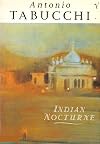
Leaving Your Atma on the Plane
I wonder if Tabucchi realised that characters like myself would emerge out of the reading of his books. Characters who keep reading his books, going over them, the way his characters go over their own lives, seeking that which is as elusive as Xavier who the narrator is trying to find in Indian Nocturne.
If you wonder what a journey like this was like back in the author’s time of the 1970s or 1980s find a really old copy of India, a Travel Survival Kit by show more Lonely Planet, a book that also makes an appearance in another story of Tabucchi’s The Trains that Go to Madras , and the guide book plays the same character in both – it gives some useful advice – but not what we might expect – if it’s just a travel guide, it tells us not to have any expectations, which is good advice in a number of life circumstances.
For the most part of this novella we are guided to consider who Xavier is. But we should be wondering who the narrator is. He after all is taking the journey. He reaches dead ends wherever he goes, but saying that is not a spoiler, as the dead ends are the point. Or one of them.
From the opening scene, the taxi ride to the hotel, we encounter the narrator in European mode, experiencing the place through the European mind - the taxi driver provokes an altercation with his narrator customer over the place he wanted to go. The driver it seems was thinking that this European gentleman won’t like such a bad place as the Cage District. The narrator has his own reasons. So, of course reading a book by Tabucchi called Indian Nocturne is exactly like being taken on a taxi ride to a destination we did not ask for.
“I’d seen it (the Cage District) in the photographs of a famous photographer and thought I was prepared for human misery, but photographs enclose the visible in a rectangle.”
As do books.
Tabucchi has done something interesting here, he has engaged us in the Indian traveller’s first encounter story – the Indian taxi driver is always trying to take the fresh traveller somewhere other than where they want to go – I have a similar story. And the other stock experience for the first time Indian traveller is the confrontation with human misery on a vast scale. These are as much expectations as the Taj Mahal, the ghats of Varanasi or the erotic sculptures on the Khajuraho temples. Nothing is as it seems inside the rectangle of a book either. One narrative frames another and so on. The opening pages maker reference to places visited in the book – Khajuraho features as the name of a hotel in Bombay – advertisers place names on signage as pointers to their premises, but Tabucchi offers them in a similar way - as the promise we have of our destination – India is always framed for us, seducing us with our own impressions.
The other stock in trade of the European travelling in India is the journey of discovery. Naturally, this is the one Tabucchi plays with the most, though if I go on there may be a spoiler there. Herman Hesse, the Beatles, friends of mine looking for ashrams and gurus, drugs and experiences. Like Hesse, our narrator has an interest in Theosophy, if only to look for his friend, Xavier, who was in communication with the Madras Theosophical Society. Somehow India is always framed as spirit, what we can know is as elusive.
The European visitor-narrator always brings their own journey of discovery references. Perhaps the traveller is lucky if this framework offers them the opportunity to confront themselves, and if they are not confronted with themselves most of all, there is the suggestion that they are not really there. This is confirmed late in the story when our traveller narrator meets a grotesque fortune teller in the middle of the night at a bus exchange - as likely an event in India as a voyage of discovery since stoppages happen with their own logic and never when we expect them. There, the monstrously deformed sibling carried by his brother on his back performs a kind of oracle function but here he cannot actually tell the mans’ fortune:
“He said it is not a question of rupees… you are not there, he cannot tell you where you are.”
For the student of Indian religion, the narrator has no atma (the self, or the soul).
Perhaps that’s how we all travel through India, without a kind of soul, just our bodies our suitcases that carry us around all our lives - as the man on his way to Varanasi to die says early on, we won’t see each other in this form next time. show less
I wonder if Tabucchi realised that characters like myself would emerge out of the reading of his books. Characters who keep reading his books, going over them, the way his characters go over their own lives, seeking that which is as elusive as Xavier who the narrator is trying to find in Indian Nocturne.
If you wonder what a journey like this was like back in the author’s time of the 1970s or 1980s find a really old copy of India, a Travel Survival Kit by show more Lonely Planet, a book that also makes an appearance in another story of Tabucchi’s The Trains that Go to Madras , and the guide book plays the same character in both – it gives some useful advice – but not what we might expect – if it’s just a travel guide, it tells us not to have any expectations, which is good advice in a number of life circumstances.
For the most part of this novella we are guided to consider who Xavier is. But we should be wondering who the narrator is. He after all is taking the journey. He reaches dead ends wherever he goes, but saying that is not a spoiler, as the dead ends are the point. Or one of them.
From the opening scene, the taxi ride to the hotel, we encounter the narrator in European mode, experiencing the place through the European mind - the taxi driver provokes an altercation with his narrator customer over the place he wanted to go. The driver it seems was thinking that this European gentleman won’t like such a bad place as the Cage District. The narrator has his own reasons. So, of course reading a book by Tabucchi called Indian Nocturne is exactly like being taken on a taxi ride to a destination we did not ask for.
“I’d seen it (the Cage District) in the photographs of a famous photographer and thought I was prepared for human misery, but photographs enclose the visible in a rectangle.”
As do books.
Tabucchi has done something interesting here, he has engaged us in the Indian traveller’s first encounter story – the Indian taxi driver is always trying to take the fresh traveller somewhere other than where they want to go – I have a similar story. And the other stock experience for the first time Indian traveller is the confrontation with human misery on a vast scale. These are as much expectations as the Taj Mahal, the ghats of Varanasi or the erotic sculptures on the Khajuraho temples. Nothing is as it seems inside the rectangle of a book either. One narrative frames another and so on. The opening pages maker reference to places visited in the book – Khajuraho features as the name of a hotel in Bombay – advertisers place names on signage as pointers to their premises, but Tabucchi offers them in a similar way - as the promise we have of our destination – India is always framed for us, seducing us with our own impressions.
The other stock in trade of the European travelling in India is the journey of discovery. Naturally, this is the one Tabucchi plays with the most, though if I go on there may be a spoiler there. Herman Hesse, the Beatles, friends of mine looking for ashrams and gurus, drugs and experiences. Like Hesse, our narrator has an interest in Theosophy, if only to look for his friend, Xavier, who was in communication with the Madras Theosophical Society. Somehow India is always framed as spirit, what we can know is as elusive.
The European visitor-narrator always brings their own journey of discovery references. Perhaps the traveller is lucky if this framework offers them the opportunity to confront themselves, and if they are not confronted with themselves most of all, there is the suggestion that they are not really there. This is confirmed late in the story when our traveller narrator meets a grotesque fortune teller in the middle of the night at a bus exchange - as likely an event in India as a voyage of discovery since stoppages happen with their own logic and never when we expect them. There, the monstrously deformed sibling carried by his brother on his back performs a kind of oracle function but here he cannot actually tell the mans’ fortune:
“He said it is not a question of rupees… you are not there, he cannot tell you where you are.”
For the student of Indian religion, the narrator has no atma (the self, or the soul).
Perhaps that’s how we all travel through India, without a kind of soul, just our bodies our suitcases that carry us around all our lives - as the man on his way to Varanasi to die says early on, we won’t see each other in this form next time. show less

Tabucchi declares that Pereira is a middle-age journalist working as the editor of the "culture" section of a Portuguese newspaper in 1938. As such, he mostly just translates 19th century French literature and runs it as serials along with the occasional obituary of some writer who's died. Tabucchi doesn't declare this in so many words, but it's obvious that Pereira is not really in touch with anything that might be happening right now - he's too busy drinking lemonade in the shade from the show more hot Lisbon sun and grieving for his dead wife to notice things like the Spanish civil war that's drawing to a close, the approaching world war, or the fact that his own country has turned into a fascist dictatorship... until he hires a young man to help him write the obits, and he starts delivering pieces on lots of controversial 20th-century writers - Lorca, Mayakovsky, etc - that Pereira declares he cannot print. Why? Well, because... um, not because he's scared of censorship or anything, surely Portugal is a free country, right? No, it's just...
...because there's power in literature in times of oppression, as he discovers when he starts re-reading his old Frenchmen in the light of what the young people he meets tell him of Spain, and of Europe. And the question is just how neutral it's possible to remain. Yes, it's a slightly clichéd story - a man forced to re-examine his every value in the light of something bigger - but it's excellently told, reminding me of Söderberg's Doctor Glas in the way it's introspective yet very easy to relate to.
Pereira Declares is short and deceptively lazy; it packs a punch. This is the second Tabucchi I've read, and while it tackles some similar subjects to his recent Tristano Dies, it does so much more accessibly and vitally. This reader declares that he liked this a lot. show less
...because there's power in literature in times of oppression, as he discovers when he starts re-reading his old Frenchmen in the light of what the young people he meets tell him of Spain, and of Europe. And the question is just how neutral it's possible to remain. Yes, it's a slightly clichéd story - a man forced to re-examine his every value in the light of something bigger - but it's excellently told, reminding me of Söderberg's Doctor Glas in the way it's introspective yet very easy to relate to.
Pereira Declares is short and deceptively lazy; it packs a punch. This is the second Tabucchi I've read, and while it tackles some similar subjects to his recent Tristano Dies, it does so much more accessibly and vitally. This reader declares that he liked this a lot. show less

Sostiene Pereira è l'elegia dell'uomo mite che si trova ad affrontare i cambiamenti della Storia. Può un uomo qualunque, malinconico e solitario, a tratti apolitico e disinteressato alla cosa pubblica, trovare se stesso e affermare la propria indipendenza nei confronti di una dittatura subdola come quella salazariana?
Parafrasando l'autore, sostiene Pereira che sì, si può, di fronte ai cambiamenti della Storia che non possono essere taciuti. Soprattutto se la propria confederazione delle show more anime, spinta da nuove conoscenze, si trova ad essere dominata da un nuovo io, forse quello vero.
Il romanzo di Tabucchi è uno di quei rari casi di letteratura che ti prende dolcemente, pagina dopo pagina e che diventa ogni nuovo capitolo sempre più un'esigenza.
Il malinconico Pereira è un personaggio straordinario perché in egli facilmente è possibile identificarsi: non un eroe, ma un uomo con una coscienza civile che gradualmente apre gli occhi di fronte alla realtà in divenire. Non è facile credere che chiunque al suo posto ne sarebbe in grado. Infatti, sinceramente ne dubito. E per questo, per la sua qualità di archetipo della possibilità, Pereira assume una rilevanza ancora maggiore, soprattutto in nuovi tempi subdoli e perniciosi come i nostri.
Lo stile dell'autore è squisitamente sublime: un italiano scorrevole, denso e puntuale. Un flusso di testo ininterrotto in cui i dialoghi, le descrizioni e le riflessioni sono un corpo unico. Molti nostri sedicenti scrittori avrebbero molto da imparare da Tabucchi. show less
Parafrasando l'autore, sostiene Pereira che sì, si può, di fronte ai cambiamenti della Storia che non possono essere taciuti. Soprattutto se la propria confederazione delle show more anime, spinta da nuove conoscenze, si trova ad essere dominata da un nuovo io, forse quello vero.
Il romanzo di Tabucchi è uno di quei rari casi di letteratura che ti prende dolcemente, pagina dopo pagina e che diventa ogni nuovo capitolo sempre più un'esigenza.
Il malinconico Pereira è un personaggio straordinario perché in egli facilmente è possibile identificarsi: non un eroe, ma un uomo con una coscienza civile che gradualmente apre gli occhi di fronte alla realtà in divenire. Non è facile credere che chiunque al suo posto ne sarebbe in grado. Infatti, sinceramente ne dubito. E per questo, per la sua qualità di archetipo della possibilità, Pereira assume una rilevanza ancora maggiore, soprattutto in nuovi tempi subdoli e perniciosi come i nostri.
Lo stile dell'autore è squisitamente sublime: un italiano scorrevole, denso e puntuale. Un flusso di testo ininterrotto in cui i dialoghi, le descrizioni e le riflessioni sono un corpo unico. Molti nostri sedicenti scrittori avrebbero molto da imparare da Tabucchi. show less
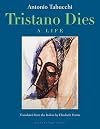
4.5 stars
Antonio Tabucchi's Tristano Dies, beautifully translated from the Italian by Elizabeth Harris, is a dizzying stream-of-consciousness monologue by Tristano, who, as the title indicates, is dying from gangrene of his leg. Considered a hero for having single-handedly taken out an encampment of Germans during the World War II invasion of Greece, Tristano tells the "true" story to an audience of one, a writer who had previously written a complimentary novel based on Tristano's life. The show more truth, however, is not so easy to grasp; not only is Tristano taking large doses of painkillers (perhaps rendering him a less-than-reliable narrator), but he also moves back and forth through time with little or no warning, and all of the key characters he mentions have multiple names (his American lover is referred to variously as Marilyn, Guagliona, and Rosamunde, and she occasionally refers to Tristano as Clark, apparently because he resembles Clark Gable). Tristano himself brilliantly sums up the dilemma at the heart of his tale:
"But instead, the world's composed of acts, actions ... concrete things that then are gone, because, writer, an action takes place, it occurs ... and occurs only in that one precise moment, then disappears, is no longer there; it was. For an action to remain, it needs words, which continue to make it be, they bear witness. ... All that remains of what we are and what we were are the words we've said, the words you're writing down now, writer, and not what I did in that given place and that given time."
What power words have!
Tabucchi, through Tristano, returns to this theme - the unreliability of history as recorded by human words - again and again:
"[H]e didn't understand that we make history, that we build it with our own two hands, it's our own invention, and we could build another, if we just wanted to, if we just convinced ourselves that history, her story, is this or that, if we only had the strength to tell her, you're nothing, madam history, don't be so arrogant, you're just my hypothesis, and if you don't mind, madam, I'm going to invent you now as I see fit.
. . .
You came here to gather up a life. But you know what you're gathering? Words. No - more like air, my friend - words are sounds composed of air. Air. You're gathering air."
My only complaint, and a somewhat embarrassing one at that, is that the translator did not include translations of the many French phrases used by Tristano. It is a sad fact that most Americans are not multilingual, and even those of us who can muddle along with schoolhouse Italian and Spanish are defeated by French and German. I hope that, in the future, Archipelago Books will include such miscellaneous translations at least in endnotes. Although, come to think of it, Archipelago may have done this deliberately, hoping to draw English-speaking readers to discover such fabulous works as Tristano Dies in their native tongues.
I received a free copy of Tristano Dies through NetGalley in exchange for an honest review. show less
Antonio Tabucchi's Tristano Dies, beautifully translated from the Italian by Elizabeth Harris, is a dizzying stream-of-consciousness monologue by Tristano, who, as the title indicates, is dying from gangrene of his leg. Considered a hero for having single-handedly taken out an encampment of Germans during the World War II invasion of Greece, Tristano tells the "true" story to an audience of one, a writer who had previously written a complimentary novel based on Tristano's life. The show more truth, however, is not so easy to grasp; not only is Tristano taking large doses of painkillers (perhaps rendering him a less-than-reliable narrator), but he also moves back and forth through time with little or no warning, and all of the key characters he mentions have multiple names (his American lover is referred to variously as Marilyn, Guagliona, and Rosamunde, and she occasionally refers to Tristano as Clark, apparently because he resembles Clark Gable). Tristano himself brilliantly sums up the dilemma at the heart of his tale:
"But instead, the world's composed of acts, actions ... concrete things that then are gone, because, writer, an action takes place, it occurs ... and occurs only in that one precise moment, then disappears, is no longer there; it was. For an action to remain, it needs words, which continue to make it be, they bear witness. ... All that remains of what we are and what we were are the words we've said, the words you're writing down now, writer, and not what I did in that given place and that given time."
What power words have!
Tabucchi, through Tristano, returns to this theme - the unreliability of history as recorded by human words - again and again:
"[H]e didn't understand that we make history, that we build it with our own two hands, it's our own invention, and we could build another, if we just wanted to, if we just convinced ourselves that history, her story, is this or that, if we only had the strength to tell her, you're nothing, madam history, don't be so arrogant, you're just my hypothesis, and if you don't mind, madam, I'm going to invent you now as I see fit.
. . .
You came here to gather up a life. But you know what you're gathering? Words. No - more like air, my friend - words are sounds composed of air. Air. You're gathering air."
My only complaint, and a somewhat embarrassing one at that, is that the translator did not include translations of the many French phrases used by Tristano. It is a sad fact that most Americans are not multilingual, and even those of us who can muddle along with schoolhouse Italian and Spanish are defeated by French and German. I hope that, in the future, Archipelago Books will include such miscellaneous translations at least in endnotes. Although, come to think of it, Archipelago may have done this deliberately, hoping to draw English-speaking readers to discover such fabulous works as Tristano Dies in their native tongues.
I received a free copy of Tristano Dies through NetGalley in exchange for an honest review. show less
Lists
Awards


You May Also Like


Associated Authors
Statistics
- Works
- 203
- Also by
- 15
- Members
- 7,800
- Popularity
- #3,123
- Rating
- 3.8
- Reviews
- 214
- ISBNs
- 568
- Languages
- 31
- Favorited
- 14

