
Natalia Ginzburg (1916–1991)
Author of Family Lexicon
About the Author
Works by Natalia Ginzburg
Antón Chéjov: Vida a través de las letras (Cuadernos del Acantilado) (Spanish Edition) (1990) 42 copies, 3 reviews
Natalia 4 copies
See oli nii ; Ambur : [jutustused] 3 copies
Foi Assim 2 copies
Il silenzio del mare 2 copies
Paese di mare e altre commedie 2 copies
Familenlexikon 1 copy
Akşam Sesleri 1 copy
Ovako je to bilo 1 copy
My Husband 1 copy
La strada che va in città 1 copy
Natalia Ginzburg - Tot el teatre II (1968-1991) (Pandora) (Catalan and Italian Edition) (2019) 1 copy
Hver svunden dag 1 copy
Je t'écris pour te dire 1 copy
La parrucca. Monologo 1 copy
Arditamente timida 1 copy
Associated Works
The Art of the Tale: An International Anthology of Short Stories (1986) — Contributor — 381 copies, 3 reviews
Wise Women: Over Two Thousand Years of Spiritual Writing by Women (1996) — Contributor — 228 copies, 1 review
The Smiles of Rome: A Literary Companion for Readers and Travelers (2005) — Contributor — 68 copies, 2 reviews
A Very Italian Christmas: The Greatest Italian Holiday Stories of All Time (Very Christmas, 3) (2018) — Contributor — 21 copies
Tagged
Common Knowledge
- Canonical name
- Ginzburg, Natalia
- Legal name
- Levi, Natalia (born)
- Other names
- Tornimparte, Alessandra (pseudonym)
Levi, Natalia (birth name) - Birthdate
- 1916-07-14
- Date of death
- 1991-10-07
- Gender
- female
- Education
- University of Turin
- Occupations
- short story writer
essayist
dramatist
novelist
autobiographer
translator - Organizations
- Italian Communist Party
Italian Parliament (member of parliament)
Einaudi Publishing - Relationships
- Ginzburg, Carlo (son)
Ginzburg, Leone (husband)
Levi, Giuseppe (father)
Tanzi, Eugenio (uncle)
Tanzi, Silvio (uncle)
Baldini, Gabriele (2nd husband) (show all 7)
Modigliani, Jeanne (sister-in-law) - Short biography
- Natalia Ginzburg, née Levi, was born in Palermo, Sicily, to a family of scholars and intellectuals. Her father was pioneering biologist and professor Giuseppe Levi. She published her first novella at age 17, and in her 20s, she was the first person to translate Proust's novel Du côté de chez Swann (Swann's Way) into Italian. In 1938, she married Leone Ginzburg, an editor, political activist, and teacher, with whom she had three children. As Jews and anti-fascists, they were punished by Mussolini's government with internal exile in a remote area of Abruzzi. After the Allied invasion, they secretly went to Rome to continue working for the Italian resistance, but Leone was captured, tortured, and executed by the Nazis in 1944. Natalia's first novel La strada che va in città (The Road to the City) was published in 1942 under a pseudonym, but subsequently she used the name Natalia Ginzburg (sometimes misspelled Ginzberg). Moving back to Rome at the end of the war, she worked as an editor for the publisher Einaudi for many years while writing her novels, plays, essays, and short stories, including Tutti I nostri ieri (1952), Valentino (1957), Piccole virtù (1962), Caro Michele (1973), and La Famiglia Manzoni (1983). In 1950, she remarried to Gabriele Baldini, a professor of English literature at the University of Trieste, with whom she had two more children. She won the Strega Prize in 1963 for Lessico Famigliare (Family Sayings), a semi-autobiographical work about her family's anti-fascist life. Always politically involved, Natalia was elected to the Italian Parliament as an independent left-wing deputy in 1983 and again in 1987.
- Nationality
- Italy
- Birthplace
- Palermo, Italy
- Places of residence
- Turin, Italy
Abruzzo, Italy - Place of death
- Rome, Italy
- Associated Place (for map)
- Italy
Members
Reviews

He had asked me to give him something hot in a thermos bottle to take with him on his trip, I went into the kitchen, made some tea, put milk and sugar in it, screwed the top on tight, and went back into his study. It was then that he showed me the sketch, and I took the revolver out of his desk drawer and shot him between the eyes. But for a long time already I had know that sooner or later I should do something of the sort.
This happens on the first page. The question isn't who but why and show more this novella carefully details the relationship between a naive young teacher, living in a boarding house and longing for a better life, and a reserved man in love with a married woman. First published in 1947, this novella is also a clear look at the choices available to women at that time. show less
This happens on the first page. The question isn't who but why and show more this novella carefully details the relationship between a naive young teacher, living in a boarding house and longing for a better life, and a reserved man in love with a married woman. First published in 1947, this novella is also a clear look at the choices available to women at that time. show less
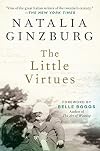
A collection of essays by Italian author Natalia Ginzburg focused primarily on her life in Italy during and after World War II, her vocation as a writer, and her reflections on human behavior and relationship. The title of the book comes from her essay by the same name, which discusses the importance of teaching children "big virtues" such as courage, generosity, and love.
Ginzburg's prose feels personal yet distant, and there is a lyrical cadence to many of her pieces that belies her poetic show more soul. Her descriptions of the people and places in wartime and post-war Europe manage to communicate the despair and weariness of a survivor, yet are still tinged with hope and affection. These are essays that will both move you and remain with you. show less
Ginzburg's prose feels personal yet distant, and there is a lyrical cadence to many of her pieces that belies her poetic show more soul. Her descriptions of the people and places in wartime and post-war Europe manage to communicate the despair and weariness of a survivor, yet are still tinged with hope and affection. These are essays that will both move you and remain with you. show less
Elsa's mother is worried that at 29 Elsa isn't married, but she doesn't stop talking long enough to listen to anything Elsa says. The mother is comically self-absorbed, a gossip and a hypochondriac, and leavens this sad novella with humour. The young people are haunted by WWII and decades of Fascism and seem trapped in their little village, surrounded by the people they've known since childhood. Village life revolves around the wealthy DiFrancisci family, which owns the textile mill.
Nearly show more everyone, including most of the members of the DiFrancisci family, is a Socialist. They disdain the Fascist thugs but are at risk, and people are killed. But Ginzburg doesn't dwell. Her tone is factual, detached and unemotional, but the unembellished details accumulate to show the devastating impact of Fascism and WWII on the lives of a generation of Italians. show less
Nearly show more everyone, including most of the members of the DiFrancisci family, is a Socialist. They disdain the Fascist thugs but are at risk, and people are killed. But Ginzburg doesn't dwell. Her tone is factual, detached and unemotional, but the unembellished details accumulate to show the devastating impact of Fascism and WWII on the lives of a generation of Italians. show less
🇮🇹 Italian village recovering from fascism
👨👩👧👦 Family dynamics
😢 Mother is Mrs. Bennet w/ less scheming
✍🏼 Ginzburg's straightforward style
😭 "Why has everything been ruined?"
It is no secret that I love Natalia Ginzburg. One of my favorite authors that I have #WITMonth to thank for, and who I have tried to read 1-2 books a year from ever since.
Like Tove Jansson, she has a deceptively simple style. He sentences are straightforward and unadorned. Yet while show more Jansson's writing manages to feel warm even when she is writing about icebergs, Ginzburg's feels more stark, as if she is presenting just the facts of these little families, even as you suspect that as well as she understands them, she must love them, too.
Ostensibly about one woman, living with her parents and aunt in a small village in Italy after WWII, in attempting to explain her relationships with her neighbors, the book zooms out and tells the story of the whole village, but especially Balotta's family, who own the factory. There is very little about the war itself, mostly describing how people were before the war, briefly mentioning what they did during the war, and then picking up again after. But even as the book treats the war as a terrible pause on normal life, it is clear that it haunts everything that happens after. A refrain repeated by multiple characters with slightly different wording is "Why has everything been ruined?"
No one in this book means to do harm, even as they of course hurt each other day after day. Even Purillo, a member of the Fascist party, when he hears the party is coming for Balotta, who has raised him, smuggles Balotta and his wife out of the village and has to spend the war in hiding. When two characters are talking about happiness, one says, "It is the same with the evil we do; it seems nothing, just seems foolishness, cold water, while we are doing it. Otherwise people would not do it; they would be more careful."
I wondered if a book about fascist Italy was the best choice for this week of suspense before the election, but I think it was just right. show less
👨👩👧👦 Family dynamics
😢 Mother is Mrs. Bennet w/ less scheming
✍🏼 Ginzburg's straightforward style
😭 "Why has everything been ruined?"
It is no secret that I love Natalia Ginzburg. One of my favorite authors that I have #WITMonth to thank for, and who I have tried to read 1-2 books a year from ever since.
Like Tove Jansson, she has a deceptively simple style. He sentences are straightforward and unadorned. Yet while show more Jansson's writing manages to feel warm even when she is writing about icebergs, Ginzburg's feels more stark, as if she is presenting just the facts of these little families, even as you suspect that as well as she understands them, she must love them, too.
Ostensibly about one woman, living with her parents and aunt in a small village in Italy after WWII, in attempting to explain her relationships with her neighbors, the book zooms out and tells the story of the whole village, but especially Balotta's family, who own the factory. There is very little about the war itself, mostly describing how people were before the war, briefly mentioning what they did during the war, and then picking up again after. But even as the book treats the war as a terrible pause on normal life, it is clear that it haunts everything that happens after. A refrain repeated by multiple characters with slightly different wording is "Why has everything been ruined?"
No one in this book means to do harm, even as they of course hurt each other day after day. Even Purillo, a member of the Fascist party, when he hears the party is coming for Balotta, who has raised him, smuggles Balotta and his wife out of the village and has to spend the war in hiding. When two characters are talking about happiness, one says, "It is the same with the evil we do; it seems nothing, just seems foolishness, cold water, while we are doing it. Otherwise people would not do it; they would be more careful."
I wondered if a book about fascist Italy was the best choice for this week of suspense before the election, but I think it was just right. show less
Lists
Female Author (1)
Awards


You May Also Like


Associated Authors
Statistics
- Works
- 85
- Also by
- 26
- Members
- 5,864
- Popularity
- #4,207
- Rating
- 3.9
- Reviews
- 138
- ISBNs
- 470
- Languages
- 19
- Favorited
- 16