

Giorgio Bassani (1916–2000)
Author of The Garden of the Finzi-Continis
About the Author
The main theme of Giorgio Bassani's novels and short stories, which have earned him wide acclaim outside Italy, has been the advent of anti-Semitism in the provincial Italian city of Ferrara during World War II. Earlier he had a successful career as an editor with a major publishing house, being show more credited with helping to bring to public notice The Leopard by Tomasi Lampedusa. Bassani edited a literary magazine and was director of the Italian radio-television network. His first collection of short pieces was A City on the Plain, written under the pseudonym Giacomo Marchi. His volumes of poems were finally collected and published in 1963. The stories and novels that were to make him famous abroad began to appear in the 1950s. They include A Prospect of Ferrara (1960), and The Gold Rimmed Spectacles (1960). A film version of The Garden of the Finzi-Continis (1962) by Vittorio De Sica has become a public television classic. (Bowker Author Biography) show less
Series
Works by Giorgio Bassani
La Grande Scultura dell'Africa Nera. 2 copies
In rima e senza 2 copies
In gran segreto 1 copy
Bassani Giorgio 1 copy
Italia — Contributor — 1 copy
Kuru Otların Kokusu 1 copy
A prospect of Ferrara. 1 copy
In gara allo Strega 1 copy
Secolul 20 [20th Century] 1 copy
Micol 1 copy
Come ti mordo il romanziere 1 copy
Associated Works
Italien erzählt : elf Erzählungen — Author — 6 copies
Tagged
Common Knowledge
- Canonical name
- Bassani, Giorgio
- Legal name
- Bassani, Giuseppe Franco
- Other names
- Marchi, Giacomo (pseudonym)
- Birthdate
- 1916-03-04
- Date of death
- 2000-04-13
- Gender
- male
- Education
- University of Bologna
- Occupations
- novelist
poet
short story writer
screenwriter
actor - Awards and honors
- Nelly Sachs Prize (1969)
Strega Prize (1965)
Viareggio Prize (1962)
Premio Feltrinelli (1992) - Relationships
- Sinigallia, Valeria (echtgenote vanaf 1943)
Prebys, Portia (partner vanaf 1977)
Pasolini, Pier Paolo (vriend)
Bassani, Paola (dochter 1945)
Bassani, Enrico (zoon 1949)
Bassani, Encrico (vader) (show all 9)
Bassani, Dora (moeder)
Bassani, Paolo (broer)
Bassani, Jenny (zus) - Nationality
- Italy
- Birthplace
- Bologna, Italy
- Places of residence
- Ferrara, Italy
Florence, Italy
Rome, Italy - Place of death
- Rome, Italy
- Burial location
- Joods Kerkhof, Ferrara, Provincia di Ferrara, Emilia-Romagna, Italië
- Associated Place (for map)
- Italy
Members
Discussions
Group Read, July 2016: The Garden of the Finzi-Continis in 1001 Books to read before you die (July 2016)
Reviews
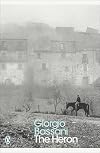
The Novel of Ferrara: The Heron by Giorgio Bassani
The Novel of Fera is a collection of six books in which the narrator looks back on Jewish life in Ferrara before and during WWII. This book, the fifth, differs from the previous four in that it is recounted in the first person by a named narrator, and is set outside Ferrara. The middle-aged Edgardo Limentani is a disappointed man. His wife, a Catholic peasant whom he feels is beneath him, is having an affair with her accountant. She is the show more nominal owner of Limentani's properties, an arrangement put in place at the outbreak of WWII. Limentani has a young daughter, but he is alienated from her and isn't sure whether he really is her father.
The story takes place over one day. Limentani has arranged a day's duck shooting in a swamp outside Ferrara, near a village where his cousin, once his closest friend, lives. He hasn't seen his cousin since before the war. The day starts badly, with Limentani being delayed by a conversation with his wife. As the day goes on, his own lethargy and apathy delay him further. He focuses on his misery, his bodily functions, and his disgust for himself, his surroundings and the people he meets. When he eventually meets his guide, hours late, and the shooting begins, the death of a heron brings him a revelation.
The Heron was so very depressing. Limentani is an unsympathetic character, but Bassani makes his misery real and the clumsy translation can't quite dull the intensity. I so wish that a better writer had translated this book. show less
The Novel of Fera is a collection of six books in which the narrator looks back on Jewish life in Ferrara before and during WWII. This book, the fifth, differs from the previous four in that it is recounted in the first person by a named narrator, and is set outside Ferrara. The middle-aged Edgardo Limentani is a disappointed man. His wife, a Catholic peasant whom he feels is beneath him, is having an affair with her accountant. She is the show more nominal owner of Limentani's properties, an arrangement put in place at the outbreak of WWII. Limentani has a young daughter, but he is alienated from her and isn't sure whether he really is her father.
The story takes place over one day. Limentani has arranged a day's duck shooting in a swamp outside Ferrara, near a village where his cousin, once his closest friend, lives. He hasn't seen his cousin since before the war. The day starts badly, with Limentani being delayed by a conversation with his wife. As the day goes on, his own lethargy and apathy delay him further. He focuses on his misery, his bodily functions, and his disgust for himself, his surroundings and the people he meets. When he eventually meets his guide, hours late, and the shooting begins, the death of a heron brings him a revelation.
The Heron was so very depressing. Limentani is an unsympathetic character, but Bassani makes his misery real and the clumsy translation can't quite dull the intensity. I so wish that a better writer had translated this book. show less
The Garden of the Finzi-Continis (Everyman's Library Classics & Contemporary Classics) by Giorgio Bassani
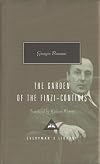
The ancient Greek word temenos suggests what lies at the heart of Giorgio Bassani’s melancholy novel: a walled reserve, a sacred space unmolested by the bustle of everyday political concerns surrounding it. A garden, in other words, is not only symbolic of a refuge; it is that refuge in the most ancient and material sense of the word. The garden of the Finzi-Contini family is indeed a reserve and refuge, its high walls holding at bay the implacable banality of fascism and anti-semitism show more that surges beyond its bricks.
In 1938, after knowing the Finzi-Continis for years, the young, unnamed narrator whom critics have come to call B, is invited within the walls. The daughter of the Finzi-Continis, Micòl, suggests they play tennis in order to divert themselves from finishing their theses. The Finzi-Contini garden becomes a temple of tennis: the young people gathering and playing in the garden are all Jews banned by fascist law from playing at the community courts in their Italian city of Ferrara.
A summer in the garden does indeed temporarily stave off the gathering dark. And in that summer an unrequited love blooms in the soul of B for the independent-minded, Emily Dickinson-loving Micòl. It’s easy to forget what we’ve read on the first page, to hold out hope that these two will find a way to be together. But that first page of the novel is always there….
Bassani structures the novel as a reminiscence of a long-ago sorrow. In the context that swallows the events of the novel—Italy’s descent into fascism and the murder of its Jewish population—the author is remarkably circumspect. B and Micòl are not emblematic of some larger issue; they are the focus, pure and simple. And that’s precisely what makes Bassani’s novel particularly moving: the adolescent sexual politics, the reserved if awkward teenage dance that takes place within the walls is all there is. B tells his story not to guide us, for he himself is, even as he looks back across the decades, lost, but to “seal here what little the heart has been able to remember.”
This beautiful, deceptively short novel is sumptuously translated by William Weaver, who has perfectly captured Bassani’s terse syntax as well as B’s quavering, melancholy tone. Bassani’s mastery was to superimpose, without seeming forced, the voice of the adolescent B with the narrator’s middle-aged memorializing. And Everyman’s Library has, as usual, risen to the occasion, presenting the book in a perfectly designed and bound (with sewn in ribbon for a bookmark) edition that is nevertheless inexpensive. For those in despair over the quackery of contemporary fiction and the fakery of its marketing, enter the temenos.
Originally published in Curled Up with a Good Book show less
In 1938, after knowing the Finzi-Continis for years, the young, unnamed narrator whom critics have come to call B, is invited within the walls. The daughter of the Finzi-Continis, Micòl, suggests they play tennis in order to divert themselves from finishing their theses. The Finzi-Contini garden becomes a temple of tennis: the young people gathering and playing in the garden are all Jews banned by fascist law from playing at the community courts in their Italian city of Ferrara.
A summer in the garden does indeed temporarily stave off the gathering dark. And in that summer an unrequited love blooms in the soul of B for the independent-minded, Emily Dickinson-loving Micòl. It’s easy to forget what we’ve read on the first page, to hold out hope that these two will find a way to be together. But that first page of the novel is always there….
Bassani structures the novel as a reminiscence of a long-ago sorrow. In the context that swallows the events of the novel—Italy’s descent into fascism and the murder of its Jewish population—the author is remarkably circumspect. B and Micòl are not emblematic of some larger issue; they are the focus, pure and simple. And that’s precisely what makes Bassani’s novel particularly moving: the adolescent sexual politics, the reserved if awkward teenage dance that takes place within the walls is all there is. B tells his story not to guide us, for he himself is, even as he looks back across the decades, lost, but to “seal here what little the heart has been able to remember.”
This beautiful, deceptively short novel is sumptuously translated by William Weaver, who has perfectly captured Bassani’s terse syntax as well as B’s quavering, melancholy tone. Bassani’s mastery was to superimpose, without seeming forced, the voice of the adolescent B with the narrator’s middle-aged memorializing. And Everyman’s Library has, as usual, risen to the occasion, presenting the book in a perfectly designed and bound (with sewn in ribbon for a bookmark) edition that is nevertheless inexpensive. For those in despair over the quackery of contemporary fiction and the fakery of its marketing, enter the temenos.
Originally published in Curled Up with a Good Book show less

4.5 Stars
The second book in the Novel of Ferrara series of books, even better than the first one—which was also good—and I would like to thank Ilse and Teresa for encouraging me to read the books after I had finished [b:The Garden of the Finzi-Continis|355789|The Garden of the Finzi-Continis|Giorgio Bassani|https://i.gr-assets.com/images/S/compressed.photo.goodreads.com/books/1388301186l/355789._SY75_.jpg|345967]. As he’s done in the two previous books I have read, Bassani takes a show more character—in this case Dr. Athos Fadigati, and the city of Ferrara and intertwines the life of the character with that of the city, building the story around the characters and how they are perceived by and interact with the other inhabitants of the city.
Dr. Fadigati is a homosexual in Fascist Italy. Originally from Venice he settles in Ferrara, establishes an exemplary professional standing in the town, is the director of the ENT department of the Sant’Anna Hospital and has established a successful clinic of his own, and is also well liked for his affability, his refinement, and for the general way in which he carries himself and conducts his business. Over the years, the inhabitants of the town begin to speculate about his bachelor status as the man becomes middle-aged with no pretty bejewelled wife to complement the heteronormative image that the town, of course, has for the lives of upper class professional men. Soon enough, rumours begin to be heard of his “secret vice” and the town’s surprisingly tolerant reaction, at first, because of the measures Fadigati takes to be discreet:
“What above all disposed them to indulgence toward Fadigati and, after the first recoil of alarmed dismay, almost to admiration, was precisely that, his style, and by style first and foremost they meant one thing: his discretion, the evident care he had taken and continued to take in concealing his tastes, so as not to cause scandal. Yes–they said–now that his secret was no longer a secret, now that everything was clear as could be, at last one could be sure how to behave toward him.”
All of this changes when Fadigati, who had always had relationships with other discreet middle-aged men like him, falls for a young university student, Deliliers, who is abusive, haughty, and who constantly humiliates him in public. The false sense of standing that Fadigati had built through the years disintegrates quickly while that aspect both he and the town cherished most, discretion, disappears, leading to tragedy.
Giorgio Bassani’s voice, that of a young Jewish man growing up in Fascist Italy and observing the happenings and people of his town, becomes even more solid in this book as it leads up to [b:The Garden of the Finzi-Continis|355789|The Garden of the Finzi-Continis|Giorgio Bassani|https://i.gr-assets.com/images/S/compressed.photo.goodreads.com/books/1388301186l/355789._SY75_.jpg|345967], which follows this one and the best from him I’ve read so far, and the Finzi-Continis even get a little shout out here which was a nice foreshadowing to their own tale. Again, as with the other books, Bassani shows how fascism became norm in Italy. How insidious its spread and acceptance became, the different ways those who are targeted by its policies, especially the racial laws discriminatory against Jews, react to this. As our narrator grapples with the threat this development means to him as a Jew and his future. Both homophobia and anti-semitism being explored in this context. Fadigati is so self-loathing that he accepts the abuse and discrimination that he is subjected to. Our narrator refuses to accept the anti-semitism levelled against him, as anything other than it is—hatred.
It was strange reading this book whilst Kenyan lawmakers were blatantly calling for the murder of queer people and the Kenyan press gave themselves over as a mouthpiece to every vitriolic bigotry that they could get from religious and political leaders. Over the weeks I’ve been bombarded by violent anti-queer discourse in every place I spend time in, making it virtually inescapable, and I can’t remember encountering the level of hatred I’ve seen these past few weeks. Which is the reason I have decided to set my account here to private, which sucks as it restricts the interaction I enjoy with other readers, but which I think is necessary for some peace of mind. Granted that if the state does want to find me it will given the resources at its disposal, but I intend to keep on reading and writing reviews of books with queer themes, and I probably shouldn’t make surveillance for them easier given that being a refugee/immigrant/foreigner does put me in a more precarious situation. I hate that most of my recent reviews have my personal life and the books themselves entwined, but reading this book while all this bigotry unfolded was both eerie and overwhelming, which made this review even harder to write, but what a phenomenal book and what a phenomenal writer and I can’t wait to read more by him. show less
The second book in the Novel of Ferrara series of books, even better than the first one—which was also good—and I would like to thank Ilse and Teresa for encouraging me to read the books after I had finished [b:The Garden of the Finzi-Continis|355789|The Garden of the Finzi-Continis|Giorgio Bassani|https://i.gr-assets.com/images/S/compressed.photo.goodreads.com/books/1388301186l/355789._SY75_.jpg|345967]. As he’s done in the two previous books I have read, Bassani takes a show more character—in this case Dr. Athos Fadigati, and the city of Ferrara and intertwines the life of the character with that of the city, building the story around the characters and how they are perceived by and interact with the other inhabitants of the city.
Dr. Fadigati is a homosexual in Fascist Italy. Originally from Venice he settles in Ferrara, establishes an exemplary professional standing in the town, is the director of the ENT department of the Sant’Anna Hospital and has established a successful clinic of his own, and is also well liked for his affability, his refinement, and for the general way in which he carries himself and conducts his business. Over the years, the inhabitants of the town begin to speculate about his bachelor status as the man becomes middle-aged with no pretty bejewelled wife to complement the heteronormative image that the town, of course, has for the lives of upper class professional men. Soon enough, rumours begin to be heard of his “secret vice” and the town’s surprisingly tolerant reaction, at first, because of the measures Fadigati takes to be discreet:
“What above all disposed them to indulgence toward Fadigati and, after the first recoil of alarmed dismay, almost to admiration, was precisely that, his style, and by style first and foremost they meant one thing: his discretion, the evident care he had taken and continued to take in concealing his tastes, so as not to cause scandal. Yes–they said–now that his secret was no longer a secret, now that everything was clear as could be, at last one could be sure how to behave toward him.”
All of this changes when Fadigati, who had always had relationships with other discreet middle-aged men like him, falls for a young university student, Deliliers, who is abusive, haughty, and who constantly humiliates him in public. The false sense of standing that Fadigati had built through the years disintegrates quickly while that aspect both he and the town cherished most, discretion, disappears, leading to tragedy.
Giorgio Bassani’s voice, that of a young Jewish man growing up in Fascist Italy and observing the happenings and people of his town, becomes even more solid in this book as it leads up to [b:The Garden of the Finzi-Continis|355789|The Garden of the Finzi-Continis|Giorgio Bassani|https://i.gr-assets.com/images/S/compressed.photo.goodreads.com/books/1388301186l/355789._SY75_.jpg|345967], which follows this one and the best from him I’ve read so far, and the Finzi-Continis even get a little shout out here which was a nice foreshadowing to their own tale. Again, as with the other books, Bassani shows how fascism became norm in Italy. How insidious its spread and acceptance became, the different ways those who are targeted by its policies, especially the racial laws discriminatory against Jews, react to this. As our narrator grapples with the threat this development means to him as a Jew and his future. Both homophobia and anti-semitism being explored in this context. Fadigati is so self-loathing that he accepts the abuse and discrimination that he is subjected to. Our narrator refuses to accept the anti-semitism levelled against him, as anything other than it is—hatred.
It was strange reading this book whilst Kenyan lawmakers were blatantly calling for the murder of queer people and the Kenyan press gave themselves over as a mouthpiece to every vitriolic bigotry that they could get from religious and political leaders. Over the weeks I’ve been bombarded by violent anti-queer discourse in every place I spend time in, making it virtually inescapable, and I can’t remember encountering the level of hatred I’ve seen these past few weeks. Which is the reason I have decided to set my account here to private, which sucks as it restricts the interaction I enjoy with other readers, but which I think is necessary for some peace of mind. Granted that if the state does want to find me it will given the resources at its disposal, but I intend to keep on reading and writing reviews of books with queer themes, and I probably shouldn’t make surveillance for them easier given that being a refugee/immigrant/foreigner does put me in a more precarious situation. I hate that most of my recent reviews have my personal life and the books themselves entwined, but reading this book while all this bigotry unfolded was both eerie and overwhelming, which made this review even harder to write, but what a phenomenal book and what a phenomenal writer and I can’t wait to read more by him. show less

This novel plays with the idea of time in ways I like very much. It begins with deep historical time, a visit to the Etruscan caves, a summer holiday trip among family and friends. It tells time in retrospect, as all history does. It attempts to recover a lost time: not lost time, but a lost milieu. The narrator is both present as the teller and present as a character, or let’s say a witness.
Interestingly, the Etruscan burial caves were discovered only a decade or so before the novel was show more set. Even more odd the discovery coincided with the early days of Italian fascism which loved to delve into deep (usually vague) historical time to find its meaning. The little girl on the trip says something that collapses time, as though the Etruscan dead are with us. (I’m speculating, but perhaps the vanquishing of the Etruscans by the Romans helped the fascists send a message to minorities that they too will disappear.)
The community whose milieu we are witnessing is the Jewish community of Ferrara and by extension, and distant relations a bit of Venice, too. The time is the 1930s. Most of the narration takes place in a concentrated period of time between the implementation of racial laws in 1938 and the summer of 1939 before the invasion of Poland.
The effect of these laws is as yet unknown, and subject to speculation among the narrator’s family and friends. Antisemitism is well-known among the community, but most of its members appear assimilated and they take part in the politics and social issues of the (quite modern) Italian state. They are in a sense fully immersed in the problems of Italy. The narrator’s father appears unconcerned about the racial laws since he is a card-carrying member of the local fascist group. Though we learn late in the novel that he became an insomniac at the time the laws were announced. Such details make the story as tragic in the telling since no matter how engaged this community is in the Italian state can save them. (I have a friend whose grandfather served in the German army and received an Iron Cross in WW1 who lost his identity and fled, ending up in America. No matter what he did as a loyal German wasn’t enough).
Most of the story is told as though it is the present. But the narrator is re-telling, knowing the fate of everyone, yet this intervention in the narrative time is sparse, allowing the reader to experience the moment, while the tension builds that we know what will happen. The narrator has hinted along the way, only becoming explicit after the halfway point when the extended family gathers for a miserable pre-war Passover dinner with no servants (due to racial laws no non-Jew is allowed to work for a Jewish family). We already know the fate of everyone
The narrator’s world in 1938, as a young man fully immersed in his literary studies, is a busy one. He writes his thesis without despair, he engages in a thrilling relationship with Micol, the daughter of the Finzi-Contini household and becomes a regular guest at the house first to play tennis, then to finish his thesis in the giant billiard room.
The Finzi-Contini house and garden is enormous. The reason our narrator ends up there playing tennis is that Jews are not allowed to be members of the local courts and so afternoon events are quickly arranged at the house. There the first spark of something emerges between Micol and the narrator. They speak all the time on the phone when not meeting until she heads off to her uncle’s house in Venice to finish her thesis. She is very clever and receives perfect scores until her study of Emily Dickinson’s poetry and translations is caught in the tide of 1938 politics.
Bassani takes his sweep of history approach in a manner very much like Lampedusa does in The Leopard. Bassani was in fact The Leopard’s publisher, after it was rejected by dozens of others. Perhaps he saw an affinity in the lost world of Sicily and the Lampedusa class in the Leopard. And Bassani doesn’t hold back in his descriptions. The are often richly details. Especially early on, I got the feeling that everything needed capturing, not just the names of people, but their ancestry, the tone of their voice, the clothes they wore, the temperature of the air and on and on. The book comes out as both historical record and a fictional telling of a historical moment. Bassani does pretty well to manage both. show less
Interestingly, the Etruscan burial caves were discovered only a decade or so before the novel was show more set. Even more odd the discovery coincided with the early days of Italian fascism which loved to delve into deep (usually vague) historical time to find its meaning. The little girl on the trip says something that collapses time, as though the Etruscan dead are with us. (I’m speculating, but perhaps the vanquishing of the Etruscans by the Romans helped the fascists send a message to minorities that they too will disappear.)
The community whose milieu we are witnessing is the Jewish community of Ferrara and by extension, and distant relations a bit of Venice, too. The time is the 1930s. Most of the narration takes place in a concentrated period of time between the implementation of racial laws in 1938 and the summer of 1939 before the invasion of Poland.
The effect of these laws is as yet unknown, and subject to speculation among the narrator’s family and friends. Antisemitism is well-known among the community, but most of its members appear assimilated and they take part in the politics and social issues of the (quite modern) Italian state. They are in a sense fully immersed in the problems of Italy. The narrator’s father appears unconcerned about the racial laws since he is a card-carrying member of the local fascist group. Though we learn late in the novel that he became an insomniac at the time the laws were announced. Such details make the story as tragic in the telling since no matter how engaged this community is in the Italian state can save them. (I have a friend whose grandfather served in the German army and received an Iron Cross in WW1 who lost his identity and fled, ending up in America. No matter what he did as a loyal German wasn’t enough).
Most of the story is told as though it is the present. But the narrator is re-telling, knowing the fate of everyone, yet this intervention in the narrative time is sparse, allowing the reader to experience the moment, while the tension builds that we know what will happen. The narrator has hinted along the way, only becoming explicit after the halfway point when the extended family gathers for a miserable pre-war Passover dinner with no servants (due to racial laws no non-Jew is allowed to work for a Jewish family). We already know the fate of everyone
The narrator’s world in 1938, as a young man fully immersed in his literary studies, is a busy one. He writes his thesis without despair, he engages in a thrilling relationship with Micol, the daughter of the Finzi-Contini household and becomes a regular guest at the house first to play tennis, then to finish his thesis in the giant billiard room.
The Finzi-Contini house and garden is enormous. The reason our narrator ends up there playing tennis is that Jews are not allowed to be members of the local courts and so afternoon events are quickly arranged at the house. There the first spark of something emerges between Micol and the narrator. They speak all the time on the phone when not meeting until she heads off to her uncle’s house in Venice to finish her thesis. She is very clever and receives perfect scores until her study of Emily Dickinson’s poetry and translations is caught in the tide of 1938 politics.
Bassani takes his sweep of history approach in a manner very much like Lampedusa does in The Leopard. Bassani was in fact The Leopard’s publisher, after it was rejected by dozens of others. Perhaps he saw an affinity in the lost world of Sicily and the Lampedusa class in the Leopard. And Bassani doesn’t hold back in his descriptions. The are often richly details. Especially early on, I got the feeling that everything needed capturing, not just the names of people, but their ancestry, the tone of their voice, the clothes they wore, the temperature of the air and on and on. The book comes out as both historical record and a fictional telling of a historical moment. Bassani does pretty well to manage both. show less
Lists
Awards


You May Also Like


Associated Authors
Statistics
- Works
- 45
- Also by
- 5
- Members
- 4,021
- Popularity
- #6,271
- Rating
- 3.8
- Reviews
- 106
- ISBNs
- 249
- Languages
- 17
- Favorited
- 12

