
Alberto Moravia (1907–1990)
Author of The Time of Indifference
About the Author
Born in Rome of Jewish-Roman Catholic parents, Moravia was not much affected by the "Fascist racial laws" until Mussolini's fall in 1943 and the consequent German occupation of Rome. Under fascism, Moravia published his first novel, The Time of Indifference (1929), at his own expense when he was show more only 22; yet it was a great success and remains his most characteristic work. He produced nothing to match it until after World War II, when he emerged as the leading Italian neorealist, publishing in rapid order The Woman of Rome (1947), Disobedience (1948), The Conformist (1951), Ghost at Noon (1948), Roman Tales (1954), and Two Women (1957). Many believe the latter is his best novel, telling of the efforts of a shopkeeper and her daughter, raped by Italy's liberators and learning to adapt themselves to the postwar new order. Moravia made a great stir in world literary circles after World War II by announcing his conversion to Roman Catholicism, which had given him solace and protection during the German occupation. Among his more recent publications is 1984. In 1941 Moravia married ~Elsa Morante. They separated in 1962. (Bowker Author Biography) show less
Image credit: cultura.panorama.it
Series
Works by Alberto Moravia
Rimljanka 6 copies
Het einde van een verhouding 5 copies
Una cosa è una cosa 5 copies
Rzecz jest tylko rzeczą 4 copies
Alberto Moravia - La Provinciale (Unabridged reading in Italian) Audiobook, 3 hours and 22 minutes, CD mp3 (2007) 4 copies
Relatos 1 3 copies
I racconti - Volume 1 3 copies
O Autómato 3 copies
Rooma novelle 3 copies
Viaggio in Inghilterra 3 copies
Ein anderes Leben 2 copies
الحالمة 2 copies
A Revolução Cultural Chinesa 2 copies
Relatos I 2 copies
Moravia inedito 2 copies
Fra cultura e businnes 2 copies
Moravia 2 copies
L'amante infelice 2 copies
Det forlorne liv 2 copies
Indisk resa 2 copies
Vida de Moravia 2 copies
A Double Game 2 copies
LA COSA Y OTROS CUENTOS 2 copies
Nuovi racconti romani (Vol 1) 2 copies
Mario (in Racconti romani) 2 copies
Obras de Alberto Moravia 2 copies
Romans : Agostino suivi de "Les Indifférents" - "Le Mépris" - "L'Amour conjugal" - "L'Homme qui regarde" - "La Femme-Léopard" (1998) 2 copies
Cina 1937-1938 2 copies
A Ciociara 2 copies
Εγώ κι αυτός 1 copy
HLa Iromana 1 copy
RACCONTI 1 copy
Pozornost 1 copy
La Iciociara 1 copy
El dios Kurt 1 copy
La disobbedienza 1 copy
La Provinciale 1 copy
Una scandalosa giovinezza 1 copy
Amore coniugale. Conjugal Love. Translated by Angus Davidson (Penguin Books. no. 2072.) (1964) 1 copy
Promašene ambicije 1 copy
La mascherata : romanzo 1 copy
Opere complete 1 copy
Η Προσήλωση 1 copy
Kaksi naista 1 copy
Evlilik Aşkı 1 copy
Relatos II 1 copy
La noche de Don Juan 1 copy
Roboten och andra noveller 1 copy
Zakonska ljubezen 1 copy
L'home com a finalitat 1 copy
Avtomat 1 copy
Dolgčas 1 copy
Ja i on 1 copy
Romalı Kadın 1 copy
Agostino 1974 1 copy
Viaggio a Roma 1 copy
La Desobediencia 1 copy
Los sueños del Haragan 1 copy
Racconti romani di Moravia 1 copy
Alberto Moravia. L'Amour conjugal : L'Amore coniugalee. Roman traduit de l'italien par Claude Poncet (1963) 1 copy
The empty canvas 1 copy
Américas 1 copy
Eu e ele 1 copy
BEATRICE CENCI, a Play. 1 copy
Gefährliches Spiel. 1 copy
Recz Jest Tylko Rzeczą 1 copy
um mês na urss 1 copy
A megalkuvó 1 copy
HLa Inoia 1 copy
O PARAÍSO 1 copy
Italia — Contributor — 1 copy
Pažnja 1 copy
Novos contos romanos 1 copy
NUOVI RACCONTI ROMANI 2 1 copy
NUOVI RACCONTI ROMANI 1 1 copy
El hombre como fin. 1 copy
Romerinnn 1 copy
Alberto Moravia. Poesie 1 copy
Välinpitämättömät : romaani 1 copy
Romanzi e racconti. Vol. 1 1 copy
Racconti vol.2 1 copy
FAQJA TJETËR E HËNËS 1 copy
Verachtung, Die 1 copy
LA MASCARADA. Vol 7 SALVAT 1 copy
A coisa 1 copy
Obras de Moravia 1 copy
Relatos 1 1 copy
A figyelem 1 copy
ravnodusni ljudi 1 copy
7. La Mascarada 1 copy
El perro chino 1985 1 copy
HISTÓRIAS DA PRÉ- HISTÓRIA 1 copy
CIOCIOARA 1 copy
cocara 1 copy
maskarada i bracna ljubav 1 copy
L'epidemia 1 copy
1961 Vtg Empty Canvas Alberto Moravia Italian Modernist Writer Abstract Painter [Hardcover] Alberto Moravia (1961) 1 copy
La rivoluzione culturale in Cina: ovvero il convitato di pietra (Tascabili Vol. 484) (Italian Edition) (2013) 1 copy
El engaño 1 copy
KISKANCLIK 1 copy
El aburrimiento 1 copy
Det tomme lerret 1 copy
شباب امرأة 1 copy
Pignolo (in Racconti romani) 1 copy
La gita (in Racconti romani) 1 copy
16: Teatro 1 copy
Tabù (in Racconti romani) 1 copy
Moravia Alberto 1 copy
Racconti e romanzi 1 copy
Il pupo (in Racconti romani) 1 copy
Il naso (in Racconti romani) 1 copy
Venice, The Naya Collection 1 copy
A virgem guerreira 1 copy
KISKANÇLIK 1 copy
La Polémique des poulpes: et autres histoires (Littérature étrangère) (French Edition) (1993) 1 copy
Uppmärksamheten : roman 1 copy
Il professore senza stivali 1 copy
La noia: L'attenzione 1 copy
Alberto Moravia. La Belle Romaine : La Romana, roman traduit de l'italien par Juliette Bertrand (1953) 1 copy
Prähistorische Histörchen 1 copy
Foragtet 1 copy
Ο Παράδεισος 1 copy
Reis naar Rome 1 copy
33 žien, rozpráva o sebe 1 copy
Nové rimske poviedky 1 copy
Augustín 1 copy
O Autómato 1 copy
Třídílné zrcadlo 1 copy
Římské povídky 1 copy
AYLAKLAR 1 copy
nuovi argomenti 1 copy
A Romana - Primeira parte 1 copy
The Wayward Wife 1 copy
Siciliano=mafioso? 1 copy
Racconti brevi 1 copy
Noveller 1 copy
Il pupo = A pici ; La ciociara = A csocsára : Az eredeti teljes szöveg és hű magyar fordítása 1 copy
Ma non fu un vero caso 1 copy
OBRAS: EL ENGAÑO - LOS SUEÑOS DEL HARAGAN - LA MASCARADA - LOS INDIFERENTES - LAS AMBICIONES DEFRAUDADAS (1967) 1 copy
Speilet 1 copy
Neposlusnost 1 copy
Ravnodušni 1 copy
Homage to Moravia 1 copy
L'Inde comme je l'ai vue 1 copy
Un borghese molto strano 1 copy
Noveller 1 copy
Romanzi e racconti - Vol. 5 1 copy
Romanzi e racconti - Vol. 4 1 copy
Romanzi e racconti - Vol. 2 1 copy
Romanzi e racconti - Vol. 3 1 copy
Associated Works
Crime and Punishment [Norton Critical Edition, 3rd ed.] (1989) — Contributor — 1,331 copies, 6 reviews
Death Dealer: The Memoirs of the SS Kommandant at Auschwitz (0204) — Translator, some editions — 752 copies, 19 reviews
The Art of the Tale: An International Anthology of Short Stories (1986) — Contributor — 381 copies, 3 reviews
The Ragionamenti: The Lives of Nuns, The Lives of Married Women, The Lives of Courtesans (1534) — Introduction, some editions — 280 copies, 4 reviews
Great Tours and Detours: The Sophisticated Traveler Series (1985) — Contributor — 35 copies, 1 review
New World Writing: Third Mentor Selection - Poetry, Fiction, Drama, Criticism (1953) — Contributor — 8 copies
Meesters der vertelkunst : zevenendertig verhalen uit de moderne wereldliteratuur (1975) — Contributor — 2 copies
Pondichery, Chandernagor, Karikal, Mahe, Yanaon. Les anciens Comptoirs franȧis de l'Inde (1992) — Citation — 2 copies
50 seltsame Geschichten — Contributor — 1 copy
Tagged
Common Knowledge
- Canonical name
- Moravia, Alberto
- Legal name
- Pincherle, Alberto
- Other names
- Moravia, Alberto
- Birthdate
- 1907-11-28
- Date of death
- 1990-09-26
- Gender
- male
- Education
- Liceo Tasso (licenza ginnasiale)
- Occupations
- journalist
novelist
short story writer - Organizations
- La Stampa
- Awards and honors
- Premio Strega (1952)
American Academy of Arts and Letters (1964) - Relationships
- Morante, Elsa (1st wife)
Maraini, Dacia (lover)
Llera Moravia, Carmen (2nd wife) - Nationality
- Italy
- Birthplace
- Rome, Italy
- Places of residence
- Rome, Italy
- Place of death
- Rome, Italy
- Burial location
- Verano Cemetery, Rome, Italy
- Map Location
- Italy
Members
Reviews
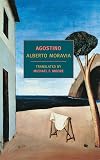
Young Agostino is enjoying a summer vacation with his mother, a beautiful widow whose elegance attracts admiration he likes basking in. But that all changes when a young man begins a flirtation with Agostino's mother. Ashamed and hurt, Agostino takes up acquaintance with a bunch of boys around his age, but who have lived a very different life from his wealthy, privileged one. Their savagery and obscenity both repulses and compels him to spend more time in their world.
I don't recall anymore show more why I wanted to read this book; I have a dim memory of reading an article about essential books in translation to read. So when I actually got around to reading it, I didn't really have any particular expectations. The book is really more of a novella, clocking in at just a hundred pages. Somehow it still felt long in a way though; perhaps because nothing much really happens in the book. Nominally, it is a "coming of age" type story for Agostino, except that becoming a man for him simply means sexual relations, not anything else about responsibility or awareness of the world. Arguably, there is something contained within the book about class distinctions, but it is slight (and not flattering for anyone depicted). Mostly, the narrative is just full of Agostino's angst about how he's suddenly aware that his mother has a life outside of being a mother, aka that she also has sexual desire. Poor Agostino (in sarcasm).
Moravio's prose reads smoothly and evocatively, and a note from the translator puts his writing into context, explaining how Moravio was trying something new for 1940s Italy -- a break away from the classical and lyrical style based on poetry with a more realistic, colloquial bent. Still, I didn't enjoy this book all the much and I'm not sure I would recommend it, even though it was an award winner back in its day. The sexist attitude toward women in general and the mother (literally how she is referred to all the time -- the mother, with no name) in particular were off-putting. Men don't get a much better portrait, with the wild and violent boys depicted: "He found it utterly unjust that on such a sea, beneath such a sky, a boat like theirs should be so full of spite, cruelty, and malicious corruption. A boat overflowing with boys acting like monkeys, gesticulating and obscene, helmed by the blissful and bloated Saro, created between the sea and sky a sad unbelievable vision." It's not a pretty view of humanity, and it's certainly not a feel-good kind of book by any stretch. show less
I don't recall anymore show more why I wanted to read this book; I have a dim memory of reading an article about essential books in translation to read. So when I actually got around to reading it, I didn't really have any particular expectations. The book is really more of a novella, clocking in at just a hundred pages. Somehow it still felt long in a way though; perhaps because nothing much really happens in the book. Nominally, it is a "coming of age" type story for Agostino, except that becoming a man for him simply means sexual relations, not anything else about responsibility or awareness of the world. Arguably, there is something contained within the book about class distinctions, but it is slight (and not flattering for anyone depicted). Mostly, the narrative is just full of Agostino's angst about how he's suddenly aware that his mother has a life outside of being a mother, aka that she also has sexual desire. Poor Agostino (in sarcasm).
Moravio's prose reads smoothly and evocatively, and a note from the translator puts his writing into context, explaining how Moravio was trying something new for 1940s Italy -- a break away from the classical and lyrical style based on poetry with a more realistic, colloquial bent. Still, I didn't enjoy this book all the much and I'm not sure I would recommend it, even though it was an award winner back in its day. The sexist attitude toward women in general and the mother (literally how she is referred to all the time -- the mother, with no name) in particular were off-putting. Men don't get a much better portrait, with the wild and violent boys depicted: "He found it utterly unjust that on such a sea, beneath such a sky, a boat like theirs should be so full of spite, cruelty, and malicious corruption. A boat overflowing with boys acting like monkeys, gesticulating and obscene, helmed by the blissful and bloated Saro, created between the sea and sky a sad unbelievable vision." It's not a pretty view of humanity, and it's certainly not a feel-good kind of book by any stretch. show less

Alberto Moravia - [The Conformist]
Bernado Bertolucci - [Il conformista]
My last read of a book published in 1951 in the year 2020; proved to be one of the best reads of the year and I got to see an impressive film to boot. Facist Italy in 1937 forms the backdrop to much of Moravia's The Conformist although there is also a sojourn in Paris. The novelist focuses on Marcello who works for the state and drifts into espionage, but this is a story of Marcello's voyage of self discovery as he show more scrutinises his own actions in an attempt to fit in; to achieve a much sought after normalcy after believing himself to be abnormal. Moravia shows us everything through Marcello's eyes and yet the writing keeps just a little distance from him, because of Marcello's tight control of his emotions and one wonders if he is a character without a soul; perhaps a character like Meursault in Camus L'etranger. It has a feeling of an exercise in existentialism although Moravia does not stray into absurdism. The novel bristles with themes and ideas as we follow Marcello's journey through life; the grimy world of espionage, homosexuality, desire, religion, a tightly controlled police state and the inevitability of reactions as a result of actions taken.
In a prolog to the main action of the novel we meet Marcello as an innocent thirteen year old who is bullied at school and whose father is well on the way to his insanity and his mother has her own issues. Marcello takes pleasure in killing lizards and to his surprise discovers that his behaviour is seen as abnormal by his friend next door. He is picked up while walking home from school by a man driving an impressive car and bargains with him to obtain a hand gun. He avoids being raped by shooting his adversary Lino (a defrocked priest) and escapes any consequences. This incident remains with him all his life. We pick up Marcello's story in his early thirties; he has graduated and is a government employee, a member of the facist party and about to get married. He concentrates his efforts into being a good husband and model employee, but his enthusiasm to do what is expected of him is derailed by his selection to carry out a clandestine operation by his employers and the sexual desire of his fiancé.
His acceptance of his part in a mission to kill his old and revered professor who is making anti-fascist waves in Paris and his attraction to the professors wife (Lina) leads to further complications, but Marcello's psychopathic tendencies enable him to find his way through. It is a complicated situation made more so by the professor's young wife wanting to seduce Marcello's fiancé Giulia and the professor himself refusing to acknowledge the machinations of the fascist plot. There are some brilliant set piece incidents in the book which make great subject matter for the film: Marcello must go to confession before his marriage and decides to confess to the murder of Lino, the professor and his wife take Marcello and his wife who are on their honeymoon to a lesbian club in Paris, the fall of Mussolini and Marcello's flight to the countryside. These incidents along with the earlier one of Marcello's seduction by Lina are used by Bertolucci's to create a sort of cut and paste cinema style. Marcello just appears to move on to the next thing he must do, hardly questioning anything, sleepwalking almost in his desire to be seen as normal. He enjoys the regularity of life as a government employee, he looks forward to a settled marriage, but must exert an almost iron willed control on his emotions and feeling that threaten to disrupt his life. This is a tightly controlled novel with sinister overtones that is unsettling in its depiction of Marcello as a man just on the outer edge of normalcy.
The film released in 1970 is an impressive piece of artwork. The director uses a backdrop of modernist monumental architecture with its impeccable clean lines and grandeur that dwarf the human characters. It lends an added depth to the character of Marcello who is a character with a vital something missing. It expresses the would be power of the fascist state and its overriding feeling of control permeates throughout. It is also a good backdrop to the decadence of the principal characters, both morale and physical. Like the book the film has an unsettling edge to it enhanced by the performance of Jean-Louis Trintignant as Marcello. I think it is a visual masterpiece; a delight to the senses. I viewed the film just after finishing the book and although the film is not exactly faithful to the book I found my imagination bouncing around between the two. You can hardly have a better compliment to the film maker.
There is no doubting the erotic charge to the book which the film does not quite capture in all its complexities but here is an example:
In Lina, was the purity he seemed to perceive there - mortified in the prostitute, triumphant in Lina. He now understood that only the radiant light emanating from Lina's forehead could dissipate the disgust for decadence, corruption and impurity that had burdened him all his life and which his marriage to Giulia had in noway mitigated.
The eroticism is set by the female characters, they make the decisions, they make the first move, they look to satisfy their desires. They threaten Marcello's ideal world of order and conformity, but they don't threaten his inviolable inner world. This is a novel that would benefit from a re-read and it would go back on my shelf, however I note that I have got the kindle version, my old penguin orange and white cover hard copy must have bitten the dust some time ago - 5 stars. show less
Bernado Bertolucci - [Il conformista]
My last read of a book published in 1951 in the year 2020; proved to be one of the best reads of the year and I got to see an impressive film to boot. Facist Italy in 1937 forms the backdrop to much of Moravia's The Conformist although there is also a sojourn in Paris. The novelist focuses on Marcello who works for the state and drifts into espionage, but this is a story of Marcello's voyage of self discovery as he show more scrutinises his own actions in an attempt to fit in; to achieve a much sought after normalcy after believing himself to be abnormal. Moravia shows us everything through Marcello's eyes and yet the writing keeps just a little distance from him, because of Marcello's tight control of his emotions and one wonders if he is a character without a soul; perhaps a character like Meursault in Camus L'etranger. It has a feeling of an exercise in existentialism although Moravia does not stray into absurdism. The novel bristles with themes and ideas as we follow Marcello's journey through life; the grimy world of espionage, homosexuality, desire, religion, a tightly controlled police state and the inevitability of reactions as a result of actions taken.
In a prolog to the main action of the novel we meet Marcello as an innocent thirteen year old who is bullied at school and whose father is well on the way to his insanity and his mother has her own issues. Marcello takes pleasure in killing lizards and to his surprise discovers that his behaviour is seen as abnormal by his friend next door. He is picked up while walking home from school by a man driving an impressive car and bargains with him to obtain a hand gun. He avoids being raped by shooting his adversary Lino (a defrocked priest) and escapes any consequences. This incident remains with him all his life. We pick up Marcello's story in his early thirties; he has graduated and is a government employee, a member of the facist party and about to get married. He concentrates his efforts into being a good husband and model employee, but his enthusiasm to do what is expected of him is derailed by his selection to carry out a clandestine operation by his employers and the sexual desire of his fiancé.
His acceptance of his part in a mission to kill his old and revered professor who is making anti-fascist waves in Paris and his attraction to the professors wife (Lina) leads to further complications, but Marcello's psychopathic tendencies enable him to find his way through. It is a complicated situation made more so by the professor's young wife wanting to seduce Marcello's fiancé Giulia and the professor himself refusing to acknowledge the machinations of the fascist plot. There are some brilliant set piece incidents in the book which make great subject matter for the film: Marcello must go to confession before his marriage and decides to confess to the murder of Lino, the professor and his wife take Marcello and his wife who are on their honeymoon to a lesbian club in Paris, the fall of Mussolini and Marcello's flight to the countryside. These incidents along with the earlier one of Marcello's seduction by Lina are used by Bertolucci's to create a sort of cut and paste cinema style. Marcello just appears to move on to the next thing he must do, hardly questioning anything, sleepwalking almost in his desire to be seen as normal. He enjoys the regularity of life as a government employee, he looks forward to a settled marriage, but must exert an almost iron willed control on his emotions and feeling that threaten to disrupt his life. This is a tightly controlled novel with sinister overtones that is unsettling in its depiction of Marcello as a man just on the outer edge of normalcy.
The film released in 1970 is an impressive piece of artwork. The director uses a backdrop of modernist monumental architecture with its impeccable clean lines and grandeur that dwarf the human characters. It lends an added depth to the character of Marcello who is a character with a vital something missing. It expresses the would be power of the fascist state and its overriding feeling of control permeates throughout. It is also a good backdrop to the decadence of the principal characters, both morale and physical. Like the book the film has an unsettling edge to it enhanced by the performance of Jean-Louis Trintignant as Marcello. I think it is a visual masterpiece; a delight to the senses. I viewed the film just after finishing the book and although the film is not exactly faithful to the book I found my imagination bouncing around between the two. You can hardly have a better compliment to the film maker.
There is no doubting the erotic charge to the book which the film does not quite capture in all its complexities but here is an example:
In Lina, was the purity he seemed to perceive there - mortified in the prostitute, triumphant in Lina. He now understood that only the radiant light emanating from Lina's forehead could dissipate the disgust for decadence, corruption and impurity that had burdened him all his life and which his marriage to Giulia had in noway mitigated.
The eroticism is set by the female characters, they make the decisions, they make the first move, they look to satisfy their desires. They threaten Marcello's ideal world of order and conformity, but they don't threaten his inviolable inner world. This is a novel that would benefit from a re-read and it would go back on my shelf, however I note that I have got the kindle version, my old penguin orange and white cover hard copy must have bitten the dust some time ago - 5 stars. show less

Húszas éveim elején volt egy moralista időszakom, akkoriban faltam az egzisztencialistákat és Moraviát – de ez a könyv valahogy kimaradt. Talán mert nem egy szóból áll a címe, és ezt az eljárást egy moralistához méltatlannak találtam. Másfelől meg háborús, ami akkoriban még mérsékelten érdekelt. Most viszont elolvastam, és ennek örülök.
Cesira és lánya, Rosetta ’43-ban elindul Rómából vidékre, mert tartanak attól, hogy a szőnyegbombázásoknak show more egészségügyi következményei lesznek rájuk nézve. Ezzel aztán számos nem előre kalkulálható problémába futnak bele – Moravia pedig fokozatosan tunkolja hőseit egyre mélyebbre a szaftba. Ennyi a cselekmény. Nem is kell több. Ami engem első körben meglepett, hogy mennyire stimmel az a történelmi háttér (az evakuáltak élete, a német megszállás következményei, a szövetségesek csigalassú előrenyomulása, valamint a marokkói katonák viselkedése), amit az író finoman a történet mögé rajzolt. Másodsorban meg az lepett meg, hogy Cesirát még úgy is kénytelen vagyok Sophia Loren arcával elképzelni, hogy a vonatkozó filmet nem is láttam.
A regénynek amúgy van egy evidens olvasata: himnusz a kemény nőről, aki a jég hátán is megél, nem rejti véka alá a véleményét, és a lánya érdekében még az ördöggel is birokra kel. Ez a nő megragadó, hamar elnyeri az olvasó szimpátiáját, lehet drukkolni neki. De van egy bújtatott olvasata is: az állampolgárról, akinek mindegy, hogy Mussolini vagy Badoglio van hatalmon, mindegy (legalábbis eleinte), hogy a tengelyhatalmak vagy a szövetségesek győznek – csak az üzlet menjen. Feketézik, halászgat a zavarosban, ellenne ő napestig a fasizmusban, ha azok a fránya bombázók nem hatolnának be illetéktelenül a privát szférájába. Ő az apolitikus ember, aki elhitte a Duce szólamait – kényelmességből, mert hát miért ne hinnénk el mindent, az nem kerül semmibe. Egy ideig. De aztán eljön a pillanat, amikor bizonyos erők (nevezzük őket Történelemnek, csak így kutyafuttában) benyújtják a számlát, és ő meglepődve veszi észre, hogy amit ő valami távolinak és absztraktnak vélt, az nagyon közeli és fájdalmas is tud lenni. Ez az állampolgár utólag okos – akkoriban, amikor még számított volna egy icipicit, még nem volt az. A mi dolgunk, hogy okosak legyünk helyette is. show less
Cesira és lánya, Rosetta ’43-ban elindul Rómából vidékre, mert tartanak attól, hogy a szőnyegbombázásoknak show more egészségügyi következményei lesznek rájuk nézve. Ezzel aztán számos nem előre kalkulálható problémába futnak bele – Moravia pedig fokozatosan tunkolja hőseit egyre mélyebbre a szaftba. Ennyi a cselekmény. Nem is kell több. Ami engem első körben meglepett, hogy mennyire stimmel az a történelmi háttér (az evakuáltak élete, a német megszállás következményei, a szövetségesek csigalassú előrenyomulása, valamint a marokkói katonák viselkedése), amit az író finoman a történet mögé rajzolt. Másodsorban meg az lepett meg, hogy Cesirát még úgy is kénytelen vagyok Sophia Loren arcával elképzelni, hogy a vonatkozó filmet nem is láttam.
A regénynek amúgy van egy evidens olvasata: himnusz a kemény nőről, aki a jég hátán is megél, nem rejti véka alá a véleményét, és a lánya érdekében még az ördöggel is birokra kel. Ez a nő megragadó, hamar elnyeri az olvasó szimpátiáját, lehet drukkolni neki. De van egy bújtatott olvasata is: az állampolgárról, akinek mindegy, hogy Mussolini vagy Badoglio van hatalmon, mindegy (legalábbis eleinte), hogy a tengelyhatalmak vagy a szövetségesek győznek – csak az üzlet menjen. Feketézik, halászgat a zavarosban, ellenne ő napestig a fasizmusban, ha azok a fránya bombázók nem hatolnának be illetéktelenül a privát szférájába. Ő az apolitikus ember, aki elhitte a Duce szólamait – kényelmességből, mert hát miért ne hinnénk el mindent, az nem kerül semmibe. Egy ideig. De aztán eljön a pillanat, amikor bizonyos erők (nevezzük őket Történelemnek, csak így kutyafuttában) benyújtják a számlát, és ő meglepődve veszi észre, hogy amit ő valami távolinak és absztraktnak vélt, az nagyon közeli és fájdalmas is tud lenni. Ez az állampolgár utólag okos – akkoriban, amikor még számított volna egy icipicit, még nem volt az. A mi dolgunk, hogy okosak legyünk helyette is. show less
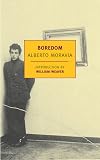
In the quest to escape the monotonous grip of boredom, one must strive for transcendence. But how can we break free from nothingness? Our primal impulses often serve as our only guide, and unfortunately, they tend to lean towards the carnal side. Those who seek purpose through sexual encounters often find that it's only a fleeting solution, and they are left feeling unfulfilled and uninspired. Alberto Moravia's masterful novel delves deep into this cycle of ennui and transcendence through show more the life of a protagonist who grapples with the futility of his existence. With its succinct prose and insightful narrative, the book serves as a powerful reminder of the human struggle to find meaning in a world devoid of it. show less
Lists
1920s (1)
First Novels (1)
1950s (1)
Erotic Fiction (1)
1960s (1)
Short and Sweet (1)
Summer Books (1)
1940s (2)
Existentialism (4)
Awards


You May Also Like


Associated Authors
Statistics
- Works
- 465
- Also by
- 43
- Members
- 10,521
- Popularity
- #2,264
- Rating
- 3.6
- Reviews
- 190
- ISBNs
- 853
- Languages
- 25
- Favorited
- 27
