
Luigi Pirandello (1867–1936)
Author of The Late Mattia Pascal
About the Author
Born in Sicily, Pirandello attended the universities of Palermo, Rome, and Bonn. He obtained his doctorate in philology with a thesis on the dialect of his native town, Agrigento before settling in Rome to teach and write. In 1894, he married a Sicilian girl, Antonietta Portulano, who bore him show more three children before she went mad and afterwards provided the inspiration for many of his stories and plays. In all, Pirandello wrote 6 novels, some 250 short stories, and about 50 plays. It was a novel, Il fu Mattia Pascal (1904), that first brought him fame. Only in 1920, when he was past 50, did he turn seriously to playwriting. His first stage success had been a comedy, Liola (1917), written in the Agrigento dialect. It took its theme, if not its mood, from the Mandragola of Machiavelli (see Vols. 3 and 4). In 1921, Pirandello presented his most famous play Six Characters in Search of an Author. Here he seeks to confuse his spectators, who are forced into a paradox of reality and illusion when six "characters" search out the actors of a theatrical troupe to play out their inexorable story. The play exemplifies the Pirandellian conflict between art, which is unchanging and constant, and life, which is a continuous succession of mutations. Pirandello deliberately destroyed the traditional boundaries between audience and spectacle, reflecting the relativity and subjectivity of human existence. The play's unconventional format, which resulted in a riot, established Pirandello as Europe's leading avant-garde dramatist. The main body of Pirandello's plays falls into three overlapping categories, the first exploring the nature of the theater, the second the complexities of personality in the etymological or dramatic sense of the term, and the third rising to dramatic representation of the categorical imperatives of social, religious, and artistic community. Besides the world-famous Six Characters in Search of an Author (1918), his best plays in the three categories include Each in His Own Way (1924), It Is So (If You Think So) (1917), Henry IV (1922), The New Colony (1925), Lazarus, As You Desire Me (1930), and The Mountain Giants (1937), written after he had been awarded the Nobel Prize in 1934 and left incomplete. Pirandello is the forerunner of much modern theater and literature; among the figures who owe their roots to the innovations of Pirandello are Bertolt Brecht, Jean Genet, Jean-Paul Sartre, and Samuel Beckett (see Vol. 1). (Bowker Author Biography) show less
Series
Works by Luigi Pirandello
Six Characters in Search of an Author and Other Plays (Twentieth Century Classics) (1995) 441 copies, 4 reviews
Sei Personaggi in Cerca d'Autore / Enrico IV (Italian Edition) (1949) — Author — 304 copies, 3 reviews
Liola: Cosi E (se Vi Pare) (Oscar Tutte Le Opere Di Luigi Pirandello) (Italian Edition) (1969) 104 copies, 4 reviews
Sei Personaggi in Cerca D'Autore; Ciascuno a suo modo; Questa sera si recita a soggetto (1993) 87 copies
To Clothe the Naked and Two Other Plays (the Rules of the Game, and the Pleasure of Honesty) (1962) 42 copies
Tales of Suicide: A Selection from Luigi Pirandello's Short Stories for a Year (1988) 28 copies, 1 review
Three Plays: Six Characters in Search of an Author, Henry IV, The Mountain Giants (Oxford Worlds Classics) (2014) 25 copies
Quando si è qualcuno - La favola del figlio cambiato - I giganti della montagna (1992) — Author — 23 copies
Tre madri: Così è (se vi pare), Come prima, meglio di prima and La vita che ti diedi (1995) 16 copies
Het naakte leven en andere verhalen 16 copies
Three Plays by Luigi Pirandello: Six Characters in Search of an Author; Henry IV and Right You Are (2005) 15 copies
De medailles 14 copies
La casa del Granella e altri racconti 13 copies
Obras completas 10 copies
Seis personajes en busca de autor; Cada cual a su manera; Esta noche se improvisa (Letras Universales) (Spanish Edition) (1998) 10 copies
Contos Escolhidos 8 copies
Nobelpreis für Literatur 1934, Luigi Pirandello: Mattia Pascal, Einer, keiner, hunderttausend (1980) 7 copies
The medals and other stories 6 copies
Il figlio prigioniero. Carteggio tra Luigi e Stefano Pirandello durante la guerra 1915-1918 (2005) 5 copies
cuentos 5 copies
Collected plays 5 copies
Obras escogidas . Tomo II 5 copies
Luigi Pirandello 5 copies
Diana e la tuda. Sagra del signore della nave. Bellavita — Author — 4 copies
Resan och andra noveller 4 copies
Colecao Letras Italianas - Uma Jornada, Novelas Para Um Ano (Em Portuguese do Brasil) (2006) 3 copies
dovere del medico 3 copies
L' imbecille: commedie in un atto 3 copies
Obras escogidas 3 copies
En till : valda noveller 3 copies
Il teatro 3 copies
Tutte le novelle (1902-1904) Vol. 2: Quand'ero matto..., La balia, Scialle nero e altre novelle (2016) 3 copies
Théâtre II : un imbécile - comme tu me veux - diane et tuda - la vie que je t'ai donnée. version française de benjamin crémieux (1960) 3 copies
La ragione degli altri 3 copies
Sei personaggi in cerca d'autore-Questa sera si recita a soggetto -Ciascuno a suo modo. Ediz. integrale (2021) 3 copies
TEATRO-sei personaggi in cerca d'autore, ciascun ASUO MODO, qUESTA SERA SI RECITA A SOGGETTO (2009) 3 copies
Pirandello: Novelle per un anno - Volume primo. Scialle nero, La vita nuda, La rallegrata, L'uomo solo (2007) 3 copies
Six Plays: Six Characters in Search of an Author, Henry IV, Caps and Bells, Right You Are (if You Think You Are), The Jar, The Patent (2020) 3 copies
De pijn om zo te leven 2 copies
Théâtre 2 copies
Seis personagens ℓa procura de um autor ;: Para cada um sua verdade ;: Esta noite improvisa-se (2009) 2 copies
un matrimonio ideale 2 copies
Primera noche y otros cuentos 2 copies
Sagra del Signore della Nave 2 copies
Ciaula scopre la luna - Pallino e Mimì - La carriola (Audio-eBook) (Italian Edition) (2008) 2 copies
O Barrete de Guizos e outras peças 2 copies
1.1: [Novelle per un anno] 2 copies
Novelle per un anno: Tutt'e tre 2 copies
Novelle per un anno, Vol. II, Pt. I 2 copies
Színművek és novellák 2 copies
Il carnevale dei morti: novelle 2 copies
The Wreath 2 copies
Nebožtík Matyáš Pascal 2 2 copies
Os velhos e os mocos 2 copies
E domani, lunedi ...: novelle 2 copies
Saggi 2 copies
Novelle per un anno (vol. 1 tomo 1) 2 copies
Cece 2 copies
Novelle per un anno - vol. II 2 copies
Théâtre V : la fable de l'enfant échangé - les géants de la montagne - ce soir on improvise - l'autre fils. version française de… (1953) 2 copies
De lijfrente 2 copies
Novelle per un anno: Volume II 2 copies
Novelle per un anno Volume primo 2 copies
Théâtre III : vêtir ceux qui sont nus - comme avant, mieux qu'avant - je rêvais peut-être... - cécé - la fleur à la bouche… (1951) 2 copies
Pirandello: Novelle per un anno - Volume terzo. La giara, Il viaggio, Candelora, Berecche e la guerra, Una giornata, Appendice (2007) 2 copies
Doen alsof (Zoals je me hebben wilt; Als je iemand bent; Het verhaal van de verwisselde zoon) (2010) 2 copies
Enrico Iv 2 copies
sogno (ma forse no) 2 copies
Un cavallo nella luna: novelle 2 copies
Berecche e la guerra e altre novelle 2 copies
The Haunted House 2 copies
Nouvelles pour une anné, novelle per un anno, tome 2 (édition bilingue français/italien) (1992) 2 copies
La rosa 1 copy
Si gira...: romanzo 1 copy
Trideset novela 1 copy
'A giarra 1 copy
La trappola: novelle 1 copy
Todo sea para bien 1 copy
Erma bifronte: novelle 1 copy
P'esy. 1 copy
EPILOGU SHARTIMI BUDALLAI 1 copy
Пьесы Пер. с итал 1 copy
Erba del nostro orto 1 copy
Pirandello 1 copy
Poesie 1 copy
Quand'ero matto....: novelle 1 copy
Le opere 1 copy
Sei personaggi in cerca d'autore: I vecchi e i giovani — Author — 1 copy
Pazi snima se 1 copy
Un Anno di Novelle 1 copy
Better Think Twice About It, and twelve other stories ... Translated by Arthur and Henrie Mayne 1 copy
Maschere nude VOL 8 1 copy
Maschere nude: 1, 2 1 copy
Μονόπρακτα 1 copy
Obras completas. I 1 copy
O VELHO DEUS 1 copy
Obras Completas Vol I 1 copy
Obras escogidas. tomo 2 1 copy
Obras escogidas. tomo 1 1 copy
Obras Completas Vol II 1 copy
Maschere nude VOL 7 1 copy
Maschere nude VOL 9 1 copy
Crna marama 1 copy
Maschere nude VOL 10 1 copy
MASCHERE NUDE 1 copy
Novelle per un anno. 2 1 copy
Tutte le novelle. 1884-1901: L'amica delle mogli, Il marito di mia moglie, Lumìe di Sicilia e altre novelle (Vol. 1) (2016) 1 copy
Slunce a déšť 1 copy
Teatro: Seis personajes en busca de un autor ; Enrique IV ; Así es (si así os parece) ; El título ; Buenavida ; El otro hijo (1968) 1 copy
℗3: ℗Maschere nude 1 copy
Maschere nude VOL1 1 copy
Tutte le novelle. 1914-1918: Il treno ha fischiato..., Un matrimonio ideale e altre novelle (Vol. 5) (2017) 1 copy
Novewlle per un anno 1 copy
Maschere nude VOL 5 1 copy
℗L'℗esclusa 1 copy
3.: 1 copy
[1]: L'esclusa ; Suo marito 1 copy
Sogno di Natale 1 copy
Maschere nude VOL 4 1 copy
Yeni Elbise 1 copy
قصص ايطالية 1 copy
Maschere Nude Vol.I 1 copy
Maschere nude VOL 6 1 copy
Maschere Nude Vol II 1 copy
Maschere nud Vol. IV 1 copy
Maschere nude VOL 2 1 copy
Maschere nude VOL 3 1 copy
NOVELA PËR NJË VIT 1 copy
maschere nude Vol. III 1 copy
O DI UNO O DI NESSUNO 1 copy
TEATRO 3 1 copy
Le Opere di Pirandello 1 copy
La casa del granella 1 copy
Mož s kovčkom 1 copy
Collezione Premi Nobel 1 copy
Pensaci, Giacomino! - Lumie di Sicilia - La giara (eNewton Classici) (Italian Edition) (2012) 1 copy
Quand j'étais fou 1 copy
Novelle per un anno III 1 copy
Novelle per un anno IV 1 copy
Una giornata: Das Hörbuch zum Sprachen lernen mit ausgewählten Kurzgeschichten. Niveau B1 Fortgeschrittene (2006) 1 copy
In silenzio e altre novelle 1 copy
Il viaggio e altre novelle 1 copy
Donna Mimma e altre novelle 1 copy
Candelora e altre novelle 1 copy
Luigi Pirandello: i romanzi 1 copy
Il vitalizio 1 copy
La vita che ti diedi 1 copy
Bellavita 1 copy
The Other Son 1 copy
Personaggi in pubblico 1 copy
El humo. Relatos 1 copy
Racconti 1 copy
Plays 1 copy
La parlata dei Girgenti 1 copy
Teatro II 1 copy
Le maschere della realtà 1 copy
Ciaula scopre la luna 1 copy
Den Tod im Rücken 1 copy
L'innesto - Sogno (ma forse no) - L'amica delle mogli - La morsa - La signora Morli, uno e due 1 copy
Meisternovellen 1 copy
Il treno ha fischiato 1 copy
All'uscita, la nuova colonia, Lazzaro, La favola del figlio cambiato, I giganti della montagna 1 copy
Le bon Dieu propriétaire 1 copy
Le Mal de lune 1 copy
The Rest Is Silence 1 copy
24 Διηγήματα 1 copy
Atti Unici 1 copy
Pirandello e il Corriere 1 copy
Komedi Empat Musim 1 copy
Obras escogidas . Tomo I 1 copy
Luigi Pirandello Le Opere 1 copy
Pirandello, Joyce, Brecht 1 copy
30 novela 1 copy
Fel y tybiwch, y mae 1 copy
Nouvelles pour une anné, novelle per un anno, tome 1 (édition bilingue français/italien) (1990) 1 copy
Cuentos y ensayos 1 copy
Italia — Contributor — 1 copy
The Works of Luigi Pirandello — Author — 1 copy
Obras Completas II 1 copy
Maschere nude. 2 voll. 1 copy
I det fjerne 1 copy
1: Maschere nude 1 copy
Tutte le novelle (1919-1936) Vol. 6: Pubertà, Spunta un giorno, Soffio e altre novelle (2017) 1 copy
Tutte le novelle (1914-1918) Vol. 5: Il treno ha fischiato..., Un matrimonio ideale e altre novelle (2017) 1 copy
Tutte le novelle (1910-1913) Vol. 4: Pensaci, Giacomino!, La patente, Ciàula scopre la luna e altre novelle (2017) 1 copy
Maschere nude I - II 1 copy
Mattia Pascal kť ľete. Elbeszľšek / Luigi Pirandello ; [ford. Dřy Tibor, F si Jz̤sef et al.] ; [uts̤z ̤Szab ̤Gyr̲gy] (1975) 1 copy
Théatre IX 1 copy
Théatre II 1 copy
Maschere nude vol. 8 - Bellavita-O di uno o di nessuno-Sogno (ma forse no)-Lazzaro-Questa sera si recita a soggetto (2010) 1 copy
Crisis in the Mirror 1 copy
A Woman in Search of Herself 1 copy
Syv noveller 1 copy
I CAPOLAVORI: Sei personaggi in cerca d'autore/Così è (se vi pare)/Il giuoco delle parti (TEATRO ITALIANO) (Italian Edition) (2018) 1 copy
POEMA DE MI SID 1 copy
Teatr Pirandella 1 copy
Don Diego sogna 1 copy
Théâtre complet I 1 copy
Narrativa e Teatro 1 copy
Théatre 1 copy
L'uomo solo e altre novelle 1 copy
La alcoba en espera 1 copy
Novelle per un anno, vol. 5 1 copy
Novelle per un anno, vol. 4 1 copy
La prosa vol.1: Il fu Mattia Pascal - Uno, nessuno e centomila - Il turno - L'esclusa (Italian Edition) (2014) 1 copy
Luigi Pirandello: il teatro 1 copy
Luigi Pirandello: Le novelle 1 copy
Los paladines de Carlos XII 1 copy
A armadilha: contos 1 copy
Maschere nude : Ma non è una cosa seria. Bellavita. La patente. L'altro figlio. O di uno o di nessuno. (1993) 1 copy, 1 review
Новеллы 1 copy
Associated Works
Drama in the modern world: plays and essays (1964) — Contributor, some editions — 82 copies, 1 review
The World of Law, Volumes I-II: The Law in Literature, The Law as Literature (1960) — Contributor — 54 copies
Twenty One-Act Plays: An Anthology for Amateur Performing Groups (1978) — Contributor — 41 copies, 1 review
Out of the Best Books: An Anthology of Literature, Vol. 1: The Individual and Human Values (1964) — Contributor — 40 copies
A Very Italian Christmas: The Greatest Italian Holiday Stories of All Time (Very Christmas, 3) (2018) — Contributor — 20 copies
Het neusje van de zalm een feestelijke bloemlezing uit Querido's 'vlaggetjesreeks' (1986) — Contributor — 7 copies
Liefde en bedrog zeven hartstochtelijke verhalen — Contributor — 4 copies
Modern Short Stories — Contributor — 3 copies
Los premios Nobel de literatura. Narraciones / Los paladinos de Carlos XII / Tonio Kroger (1979) — Author — 2 copies
Antologia do conto moderno — Author — 1 copy
Tagged
Common Knowledge
- Canonical name
- Pirandello, Luigi
- Birthdate
- 1867-06-28
- Date of death
- 1936-12-10
- Gender
- male
- Education
- University of Palermo
University of Rome
University of Bonn (Ph.D|1891) - Occupations
- dramatist
novelist
short story writer - Organizations
- Istituto Superiore di Magistero di Roma
Teatro d'Arte di Roma - Awards and honors
- Nobel Prize (Literature, 1934)
- Relationships
- Pirandello, Fausto (son)
- Short biography
- Luigi Pirandello, who won the Nobel Prize in Literature in 1934, wrote many works dealing with themes of disillusionment, isolation, and madness, and is considered a forerunner of the Theater of the Absurd style.
- Nationality
- Italy
- Birthplace
- Girgenti, Sicily, Italy
- Places of residence
- Palermo, Sicily, Italy
Agrigento, Sicily, Italy
Rome, Italy
Bonn, Germany - Place of death
- Rome, Italy
- Burial location
- Agrigento, Sicily, Italy
- Associated Place (for map)
- Sicily, Italy
Members
Reviews

“Il turno” è datato 1902, la struttura è quella di un racconto lungo in quanto in pochissime pagine Pirandello riesce a concentrare un storia di intrecci, matrimoni combinati, matrimoni annullati, matrimoni sperati e sofferti. Una storia che mette in vetrina sotterfugi, intrighi, egoismi di una società borghese di provincia, dove ai sentimenti e alle passioni vengono anteposti gli interessi e le speculazioni; ma la penna di Pirandello non si limita a portare in superficie le melme show more dell'animo o le consuetudini del tempo, ma vuole mostrare al lettore cosa avviene quando la volontà dell'uomo si incontra e si scontra con il destino. Un destino beffardo, ospite indesiderato che scompagina ogni piano, spazzando via sogni e speranze.
I personaggi sono un capolavoro, una galleria umana tinteggiata di grottesco, colta con finezza psicologica sia nella solitudine dell'animo sia nel rapportarsi agli altri, in famiglia e in società; lo sfaccendato, il furbacchione, l'indolente, l'egoista, l'approfittatore si incrociano tessendo la tela di una storia il cui succo umoristico sfocia nella sconfitta. Uomini che si affannano alla costruzione di un castello dorato, progettando e mettendo in porto azioni mirate al raggiungimento di un risultato, di un profitto e di un agio; eppoi gli stessi spazzati via dai venti impetuosi del destino, che manovra gli eventi in maniera imprevedibile.
Una egregia rappresentazione di un gioco degli equivoci e degli effetti contrari, condotto dalla penna acuta e umoristica di Pirandello. Un romanzo che nonostante il secolo che si porta sulle spalle non perde smalto e freschezza, restando una lettura moderna e godibile. show less
I personaggi sono un capolavoro, una galleria umana tinteggiata di grottesco, colta con finezza psicologica sia nella solitudine dell'animo sia nel rapportarsi agli altri, in famiglia e in società; lo sfaccendato, il furbacchione, l'indolente, l'egoista, l'approfittatore si incrociano tessendo la tela di una storia il cui succo umoristico sfocia nella sconfitta. Uomini che si affannano alla costruzione di un castello dorato, progettando e mettendo in porto azioni mirate al raggiungimento di un risultato, di un profitto e di un agio; eppoi gli stessi spazzati via dai venti impetuosi del destino, che manovra gli eventi in maniera imprevedibile.
Una egregia rappresentazione di un gioco degli equivoci e degli effetti contrari, condotto dalla penna acuta e umoristica di Pirandello. Un romanzo che nonostante il secolo che si porta sulle spalle non perde smalto e freschezza, restando una lettura moderna e godibile. show less
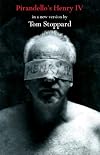
Pirandello was a complex and bizarre man when it came to penning down personality narrations. His works on theatrical post-modern genres are not only mesmerizing but quite baffling at times.
Henry IV is an engrossing masquerade about an actor/protagonist of a play who goes crazy after being knocked off his horse. The actor then wanders in a deluded world owing to the persona of Henry IV (a character he used to play before the ill-fated mishap) spanning over twelve years after the fall. Thus show more he then prefers to reside in his castle with his private counselors similar to the Henry IV of Germany. The entirety of the play consists of other characters trying to unmask the assumed persona to reveal the reality of a calamity.
**Actors in session**
Who are we? Why are we afraid of madmen? (To be noted that the term “madmen” restricts to exposing the genuineness of a character and not those preposterous junkies who play Nostradamus on street corners). When do authenticity of an individual halts and a façade is established which we perceive as reality? These questions are synonymous with Pirandello and his idea of existential artistry. Henry IV screams that he is not mad and argues as to why the world is afraid of “madmen”? Madness speaks the truth, exposes veracity that a conscious mind veils under the folds of obligatory societal façade; so asserts Pirandello. I do not know how legitimate the actor portraying Henry IV is in his actions, nevertheless I agree with Pirandello. As rational folks we premeditate our measures meticulously supervising our words and actions limiting inadvertent buffoonery. The slightest example would be people calling me a crazy bitch when my guttermouth precedes my mannerism. And that happens a lot. So am I a mad woman or is just that my courteous mask decides to shove up where it hurts the most. Am I reading way too much into this book? An interim story recounted by Henry about a priest justifies my quandary.
An Irish priest who fell asleep in the sun one day on a park bench. He was dreaming, and when a young boy walked by and brushed his cheeks with a flower, the priest woke up, but still looked happy and forgetful around him. Suddenly he straightened up and the look of seriousness returned to his face.
The priest who for couple of minutes had forgotten his “mask” dreamed blissfully until his conscious self took charge and resumed his duly disposition.
At first, the book was pretty puzzling before I got the gist of the camouflaged dramatics, as his previous work [b:Six Characters in Search of an Author and Other Plays|12113|Six Characters in Search of an Author and Other Plays (Penguin Twentieth-Century Classics)|Luigi Pirandello|http://photo.goodreads.com/books/1166491855s/12113.jpg|14456] relayed the same sentiments of illusionary realism of theatre but later contradicted on the notion of immutability of characters. Here, Pirandello tries to let the audience understand the fact that stage “reality” can be more authentic in real world. Whereas in 'Six Characters.... 'he talks about the illusion of emotive reality for its validity is corrupted by monotonous rehearsals. Nonetheless, both of them confront the essence of reality encumbered by metaphoric chimeras giving madness a therapeutic denotation. show less
Henry IV is an engrossing masquerade about an actor/protagonist of a play who goes crazy after being knocked off his horse. The actor then wanders in a deluded world owing to the persona of Henry IV (a character he used to play before the ill-fated mishap) spanning over twelve years after the fall. Thus show more he then prefers to reside in his castle with his private counselors similar to the Henry IV of Germany. The entirety of the play consists of other characters trying to unmask the assumed persona to reveal the reality of a calamity.
**Actors in session**
Who are we? Why are we afraid of madmen? (To be noted that the term “madmen” restricts to exposing the genuineness of a character and not those preposterous junkies who play Nostradamus on street corners). When do authenticity of an individual halts and a façade is established which we perceive as reality? These questions are synonymous with Pirandello and his idea of existential artistry. Henry IV screams that he is not mad and argues as to why the world is afraid of “madmen”? Madness speaks the truth, exposes veracity that a conscious mind veils under the folds of obligatory societal façade; so asserts Pirandello. I do not know how legitimate the actor portraying Henry IV is in his actions, nevertheless I agree with Pirandello. As rational folks we premeditate our measures meticulously supervising our words and actions limiting inadvertent buffoonery. The slightest example would be people calling me a crazy bitch when my guttermouth precedes my mannerism. And that happens a lot. So am I a mad woman or is just that my courteous mask decides to shove up where it hurts the most. Am I reading way too much into this book? An interim story recounted by Henry about a priest justifies my quandary.
An Irish priest who fell asleep in the sun one day on a park bench. He was dreaming, and when a young boy walked by and brushed his cheeks with a flower, the priest woke up, but still looked happy and forgetful around him. Suddenly he straightened up and the look of seriousness returned to his face.
The priest who for couple of minutes had forgotten his “mask” dreamed blissfully until his conscious self took charge and resumed his duly disposition.
At first, the book was pretty puzzling before I got the gist of the camouflaged dramatics, as his previous work [b:Six Characters in Search of an Author and Other Plays|12113|Six Characters in Search of an Author and Other Plays (Penguin Twentieth-Century Classics)|Luigi Pirandello|http://photo.goodreads.com/books/1166491855s/12113.jpg|14456] relayed the same sentiments of illusionary realism of theatre but later contradicted on the notion of immutability of characters. Here, Pirandello tries to let the audience understand the fact that stage “reality” can be more authentic in real world. Whereas in 'Six Characters.... 'he talks about the illusion of emotive reality for its validity is corrupted by monotonous rehearsals. Nonetheless, both of them confront the essence of reality encumbered by metaphoric chimeras giving madness a therapeutic denotation. show less

If you want a sure thing in the quest to discover your self, you could spend the next ten years in analysis, see a psychologist, join a cult, read every book of philosophy and physics or you can read Luigi Pirandello’s Six Characters in Search of an Author. I jest. But, this is about the illusory nature of theatre, more than the individual self. But still... We could wonder more about who we are by the end of it.
The forgotten modernist text that came out in that recent centenary of greats show more around 1922 (1921 in this case), the title sounds as good in translation as it does in the original. Clever of Pirandello to achieve that.
Plays often don’t work on the page, you miss all the staging. But in this case, the staging acts like text so you can read the extensive stage directions like you might read landscape details or even character descriptions. Again, pretty clever of Pirandello to make his work so usable.
What goes on here? Well, a theatre company is about to rehearse a play by Luigi Pirandello. They are gathering, the lead actress is late as one might expect, the stage is unfinished, stuff is kind of lying around, the lights aren’t set up right.
They are about to start and then, six characters come by. This is a big production. There’s half a dozen ‘actors’, producer, stage managers, prompters etc, so on stage at any one time there is usually around 15 people. Pirandello should know better, but you have to keep you budget down and think small cast. But, it’s not a play, it’s a “real” event we are watching, the play hasn’t started yet… the details haven’t been written, it’s all emerging.
These characters start telling everyone about their lives, only they are short on detail and big on passionate expression. So they come across as so ‘real’ that the producer abandons rehearsals and starts listening to the characters and thinks this would make a great play. At one level, the characters represent the stock in trade types, father, mother, son, daughter in law etc from which a family drama might be explored.
The producer and the characters go off and start to write and rehearse this new play. The producer becomes their author in a sense. They are raw, undetailed. They wear representative masks, they are not yet well drawn characters, or even selves. They think they are real and credible, based on their endless emotional outpourings. This makes me think I am reading at times a novel by Rachel Cusk and after reading this, I in fact read her recent book Second Place (funnily enough published 100 years after Six Characters, though unintentionally I suspect).
Pirandello loves to toy with illusions, the stage is not a stage, the actors are meagre performers, the only real is the unformed self, or the present embodiment of the self as it speaks in front of the audience, or perhaps the person speaking to you in the street is the only real we can experience, or what they say is the only thing we can know.
Best to read it, but there are no endings in the search. Oddly, as a Sicilian, Pirandello didn’t get much exposure in his native land for his theatre. show less
The forgotten modernist text that came out in that recent centenary of greats show more around 1922 (1921 in this case), the title sounds as good in translation as it does in the original. Clever of Pirandello to achieve that.
Plays often don’t work on the page, you miss all the staging. But in this case, the staging acts like text so you can read the extensive stage directions like you might read landscape details or even character descriptions. Again, pretty clever of Pirandello to make his work so usable.
What goes on here? Well, a theatre company is about to rehearse a play by Luigi Pirandello. They are gathering, the lead actress is late as one might expect, the stage is unfinished, stuff is kind of lying around, the lights aren’t set up right.
They are about to start and then, six characters come by. This is a big production. There’s half a dozen ‘actors’, producer, stage managers, prompters etc, so on stage at any one time there is usually around 15 people. Pirandello should know better, but you have to keep you budget down and think small cast. But, it’s not a play, it’s a “real” event we are watching, the play hasn’t started yet… the details haven’t been written, it’s all emerging.
These characters start telling everyone about their lives, only they are short on detail and big on passionate expression. So they come across as so ‘real’ that the producer abandons rehearsals and starts listening to the characters and thinks this would make a great play. At one level, the characters represent the stock in trade types, father, mother, son, daughter in law etc from which a family drama might be explored.
The producer and the characters go off and start to write and rehearse this new play. The producer becomes their author in a sense. They are raw, undetailed. They wear representative masks, they are not yet well drawn characters, or even selves. They think they are real and credible, based on their endless emotional outpourings. This makes me think I am reading at times a novel by Rachel Cusk and after reading this, I in fact read her recent book Second Place (funnily enough published 100 years after Six Characters, though unintentionally I suspect).
Pirandello loves to toy with illusions, the stage is not a stage, the actors are meagre performers, the only real is the unformed self, or the present embodiment of the self as it speaks in front of the audience, or perhaps the person speaking to you in the street is the only real we can experience, or what they say is the only thing we can know.
Best to read it, but there are no endings in the search. Oddly, as a Sicilian, Pirandello didn’t get much exposure in his native land for his theatre. show less

theatre troupe in search of their role in the play
Henry IV: That I’m no longer mad? Of course I’m not. Can’t you see? We’re having a bit of fun at the expense of those who believe I am.
Henry IV: Do you know what it’s like to find yourself face to face with a madman? To find yourself face to face with someone who shakes the very foundations of everything yo’ve built up in yourselves? Everything you’ve built up around you? Who challenges the logic, the logic of all that you’ve show more contructed?
Reading this play was a special reminder of how good some literature can be. Reading a play is a lesser experience than seeing it. You miss the movement, the acting, performance, the emphasis and the staging. The staging is so important here since the set is a recreation of an eleventh century estate. The substance of the play is staging the world of Henry IV for the man who thinks he is Henry IV, though we are in the twentieth century. Actors creating the illusion for him (the fourth wall of the theatre) is two thirds of the play.
We suspend disbelief by thinking that the whole thing is not even staged for us after all but this mad fellow on the stage who thinks he’s Henry IV. That illusion for us is created by the wonderful vignette early on of the actor who arrives on the stage in sixteenth century costume thinking he was performing for the historically consistent French Henry IV of that century. He complains that he swotted sixteenth century only to be told by the others that this Henry IV will tell the difference. Henry IV has the ability to tell anything out of place in this eleventh century German kingdom illusion.
Pirandello loves to explore this world of our illusions and fantasies. We all play roles in his world. Eventually that role might take over who we actually are and we lose the ability to tell the difference or when we do, consider the illusion better than reality. Then we face a choice. To stay in the role, or get back to 'reality' if we can remember what that was. That is what Henry IV is about. A riding accident twenty years earlier renders a minor aristocrat deluded and stuck acting out the role of the pageant he was performing in that day.
Everyone around Henry IV watches his performance but they must also become the performance themselves. This is a fascinating idea that reflects how we often (perhaps always) do this in daily life. So perhaps our own lives are lived as delusions, just to survive. We join in the pageant around us once we know what it is.
DI NOLLI: Madness has made a superb actor out of him. .. And a positively terrifying one.
How hard is it to step out of an illusion? It depends how good you are at it. Or how mad you become through the performance.
BELCREDI: As I see it… it was because of the immediate lucidity that comes from playing a part … from portraying some emotion … and at once put him out of touch with the very emotion he was feeling.
DONNA MATILDA: I shall never forget the scene … All our masked faces, hideous with terror, gazing at the terrible mask of his face. But it was a mask no longer .. It was the face of Madness itself.
Despite the fact that a book is a quiet personal reading experience not a theatre experience as intended, reading Henry IV offers the rich experience of its ideas.
I have a fantasy of winning the lottery and setting up a modern theatre repertoire company to perform modern works by Beckett, Pirandello, Pinter, Genet etc... one day maybe show less
Lists
Overdue Podcast (1)
1930s (1)
1910s (1)
100 knjiga (1)
Awards


You May Also Like


Associated Authors
Statistics
- Works
- 737
- Also by
- 57
- Members
- 13,697
- Popularity
- #1,693
- Rating
- 3.8
- Reviews
- 208
- ISBNs
- 1,350
- Languages
- 33
- Favorited
- 41


