
Carlo Goldoni (1707–1793)
Author of Mirandolina
About the Author
Carlo Goldoni, the great Venetian playwright, reformed the Italian theater. In his time, the reigning theatrical genres were the melodrama and the commedia dell'artecommedia dell'arte; the one stressing musicality, the other the antics of familiar "characters" who more often than not improvised show more their way through a skeletal script. Goldoni's early Servant of Two Masters (1745) served to put an end to improvised commedia dell'arte by supplying a complete script for masterful actors; but in fact, and hardly ironically, the spirit of the old improvisors lives in modern performances of that comedy. In 1752, Goldoni went to Paris to head the Italian Theater and enjoy the patronage of the royal family, which lasted until the revolution of 1789, after which he lived and died in poverty. He wrote comedies of history, intrigue, and exotic romance, but his plays are comedies of characters and manners. Pirandello praised the latter as Goldoni's triumph. Goldoni had learned from Moliere, Shakespeare, and even Machiavelli, how to set living comic protagonists before his audience; but his genius, said Pirandello, consisted rather in taking subordinate characters---a little housemaid, for instance---and suddenly making her the center of a comedy of her own. Among Goldoni's best plays are: in Italian, The Liar (1750) and The Fan (1763); in the Venetian dialect, The Tyrants; and in French, The Beneficent Bear, which was produced for the marriage of Louis XVI and Marie Antoinette in 1771. This tribute play gave Goldoni the pleasure of seeing a work of his own performed in French on the stage where Moliere's plays had triumphed. (Bowker Author Biography) show less
Image credit: Photo © ÖNB/Wien
Series
Works by Carlo Goldoni
Three Comedies: Mine Hostess (La Locandiera), The Boors (I Rusteghi), The Fan (Il Ventaglio) (1725) 10 copies
Commedie del sig Avvocato 8 copies
Le smanie per la villeggiatura 7 copies
La posadera; Los afanes del veraneo; El abanico (Letras Universales) (Spanish Edition) (1985) 6 copies
Sechs Komödien. Der Diener zweier Herren; Mirandolina; Herren im Haus; Viel Lärm in Chiozza; Der Fächer; Der herzensg (1960) 5 copies
Commedie - Vol. III 4 copies
Peças Escolhidas Volume 3 4 copies
Commedie - Vol. I 3 copies
Commedie scelte di Carlo Goldoni 3 copies
Café 2 copies
Peças escolhidas 2 2 copies
Le baruffe chiozzotte La locandiera 2 copies
Tutte lo Opere (vol. XIII) 2 copies
Le commedie: La bottega del caffè, Gli innamorati, I rusteghi, Il bugiardo, La locandiera, Il campiello (1988) 2 copies
Commedie - Vol. IV 2 copies
Teatro scelto 2 copies
El abanico obra completa 2 copies
Lukava udovica 2 copies
La casa nueva: Una de las ultimas tardes de carnaval: El hijo de Arlequin perdido y hallado (1994) 2 copies
Het pleintje 2 copies
Carlo Goldoni: La sposa persiana: Il campiello: Gl'innamorati: I rusteghi: Le smanie per la villeggiatura: Teatro 2: La locandiera (1991) 2 copies
Hall Plays 2 : A Servant to Two Masters + The Good Hope + Mr Puntila + Mother Courage (2003) — Original author — 2 copies
El Vano : comèdia en tres actes 2 copies
La bottega del caffè. Pamela nubile 2 copies
The Superior Residence 2 copies
Les Rustres. Théodore le Grondeur 2 copies
Antitheater 2: The Coffeehouse; Bremen Freedom; Blood on the Neck of the Cat [scripts] (1974) 2 copies
Commedie del sig Carla Goldini 2 copies
Commedie vol VI 2 copies
Commedie scelte vol I° 2 copies
Commedie scelte Vol II° 2 copies
L'impresario de Smyrne 1 copy
GOLDONI I capolavori 1 copy
Maestri. La casa nova 1 copy
Goldoni's Comedy The Liar 1 copy
Memorie 1 1 copy
VI 1 copy
Tο καφενείο 1 copy
Il teatro della seduzione 1 copy
V 1 copy
CAPOLAVORI 1 copy
Il ventaglio: commedia 1 copy
Il tutore commedia di tre atti in prosa. Rappresentata per la prima volta in Venezia nel Carnovale dell'anno 1751 1 copy, 1 review
Commedie, volume 02 1 copy
Commedie, volume 04 1 copy
Il teatro: La locandiera-La bottega del caffè-Il servitore di due padroni-I Rusteghi. Con Segnalibro 1 copy
Carlo Goldoni Commedie III 1 copy
Carlo Goldoni Commedie I 1 copy
Carlo Goldoni Commedie II 1 copy
Commedie di Goldoni (I-IV) 1 copy
Tutte lo Opere (vol. I) 1 copy
Tutte lo Opere (vol. II) 1 copy
Tutte lo Opere (vol. III) 1 copy
I capolavori. Vol. 3 1 copy
I capolavori di Carlo Goldoni: Il servitore di due padroni: La vedova scaltra: La putta onorata 1 copy
Tutte lo Opere (vol. V) 1 copy
Tutte lo Opere (vol. VI) 1 copy
Tutte lo Opere (vol. VIII) 1 copy
Tutte lo Opere (vol. X) 1 copy
Tutte lo Opere (vol. VII) 1 copy
Memorie Di Carlo Goldoni: Riprodotte Integralmente Dalla Edizione Originale Francese (Italian Edition) (2010) 1 copy
Υπηρέτης δύο αφεντάδων 1 copy
Afanes de verano 1 copy
Commedie scelte di Carlo Goldoni: con le note, la vita dell'autore, e l'analisi delle commedie 1 copy
Lettere 1 copy
A Venticia Comdy 1 copy
Commedie, volume 01 1 copy
Commedie 1 copy
E' gradito l'abito scuro 1 copy
COMMEDIE 1 copy
I capolavori. 5 volumi 1 copy
Il campiello/ Il ventaglio 1 copy
Tutte lo Opere (vol. IV) 1 copy
La dama prudente 1 copy
Il feudatario 1 copy
Sjetne i druge igre 1 copy
Commedie - Vol. II 1 copy
Commedie - Vol. V 1 copy
L'Arcadia in Brenta 1 copy
Delli componimenti diversi 1 copy
Commedie buffe 1 copy
Drammi giocosi per musica 1 copy
Goldoni Carlo 1 copy
Gl'innamoratiX — Author — 1 copy
Florilegio dalle "Memorie" 1 copy
Commedie - sei voll. 1 copy
Tutte le opere 1 copy
Thre 1 copy
Le cafome en trois actes 1 copy
Les amants timides: L'éventail: suivi de deux canevas, Le fils d'Arlequin perdu et retrouvé: La bague magique (1993) 1 copy
YALANCI 1 copy
Badaranii 1 copy
Le bon génie et le mauvais génie: A trompeur, trompeur et demi ou Les facéties du carnaval (1993) 1 copy
Commedie. 3: La locandiera. La cameriera brillante. Le massere. Il campiello. Gl'innamorati. I rusteghi. La casa nova — Author — 1 copy
Krčmarica 1 copy
Commedie vol. 1 e 2 1 copy
Commedie scelte vol. 1 e 2 1 copy
Sedam komedija 1 copy
El sorrut benefactor 1 copy
Commedie scelte voll. I-IV 1 copy
I capolavori, 4 1 copy
La criada amorosa, La guerra 1 copy
Dvije komedije 1 copy
Capolavori di Carlo Goldoni 1 copy
Opere - Volume 1 1 copy
VII 1 copy
Associated Works
The theatrical recorder — Contributor — 3 copies
Tagged
Common Knowledge
- Canonical name
- Goldoni, Carlo
- Legal name
- Goldoni, Carlo Osvaldo
- Birthdate
- 1707-02-25
- Date of death
- 1793-02-06
- Gender
- male
- Education
- Collegio Ghislieri, Pavia, Italy
University of Modena - Occupations
- lawyer
playwright - Nationality
- Italy
- Birthplace
- Venice, Italy
- Places of residence
- Milan, Italy
Genoa, Italy - Place of death
- Paris, France
- Associated Place (for map)
- Italy
Members
Reviews
La Vedova Scaltra / La Serva Amorosa / La Locandiera / Il Ventaglio: Quattro Commedie by Carlo Goldoni

1) La Locandiera.
La commedia è divertente, i dialoghi spiritosi, veloci, credibili, il linguaggio non è, come temevo, pesante (essendo l’italiano settecentesco).
I personaggi sono tutti interessanti, anche il Marchese che è veramente odioso!!
http://www.naufragio.it/iltempodileggere/444
2) La vedova scaltra.
Confermo la buona opinione che mi ero fatta di questo commediografo! :)
http://www.naufragio.it/iltempodileggere/3995
3) Il ventaglio.
La classica commedia degli equivoci, meno show more comica delle precedenti che ho letto di Goldoni (qui non c’è nessuna maschera), ma comunque deliziosa! Quello che mi è piaciuto di più è stata la ricchezza di personaggi nelle varie scene, alcune fatte solo di movimenti, senza dialoghi. Insomma, ancora una volta, quanto mi piacerebbe vederla rappresentata!!!!
Splendido il personaggio di Giannina: coraggiosa, appassionata, sfrontata, senza peli sulla lingua… mitico il suo botta e risposta col Conte!!! XD
http://www.naufragio.it/iltempodileggere/7213
4) La serva amorosa,
Una commedia molto gradevole, simpatica, anche se non la definirei propriamente divertente. Sicuramente comunque mi piacerebbe vederla rappresentata a teatro (lo so, lo dico praticamente ogni volta che leggo un testo teatrale!!). Il personaggio di Corallina, la serva amorosa del titolo, è sicuramente la cosa che mi è piaciuta di più: una donna coraggiosa e altruista, intelligente e intraprendente, ma soprattutto un personaggio forte che di fronte alle situazioni più diverse non si perde d’animo ed è sempre pronta a fare la cosa giusta, anche se non è proprio ortodosso, anche se potrebbe portarle dei guai, anche se significa rinunciare a qualcosa di bello. Pensando quanto spesso manchino personaggi così nella narrativa moderna, mi viene ancora di più da ammirare Goldoni per aver creato questo e altri memorabili personaggi già più di due secoli fa!
http://www.naufragio.it/iltempodileggere/19324 show less
La commedia è divertente, i dialoghi spiritosi, veloci, credibili, il linguaggio non è, come temevo, pesante (essendo l’italiano settecentesco).
I personaggi sono tutti interessanti, anche il Marchese che è veramente odioso!!
http://www.naufragio.it/iltempodileggere/444
2) La vedova scaltra.
Confermo la buona opinione che mi ero fatta di questo commediografo! :)
http://www.naufragio.it/iltempodileggere/3995
3) Il ventaglio.
La classica commedia degli equivoci, meno show more comica delle precedenti che ho letto di Goldoni (qui non c’è nessuna maschera), ma comunque deliziosa! Quello che mi è piaciuto di più è stata la ricchezza di personaggi nelle varie scene, alcune fatte solo di movimenti, senza dialoghi. Insomma, ancora una volta, quanto mi piacerebbe vederla rappresentata!!!!
Splendido il personaggio di Giannina: coraggiosa, appassionata, sfrontata, senza peli sulla lingua… mitico il suo botta e risposta col Conte!!! XD
http://www.naufragio.it/iltempodileggere/7213
4) La serva amorosa,
Una commedia molto gradevole, simpatica, anche se non la definirei propriamente divertente. Sicuramente comunque mi piacerebbe vederla rappresentata a teatro (lo so, lo dico praticamente ogni volta che leggo un testo teatrale!!). Il personaggio di Corallina, la serva amorosa del titolo, è sicuramente la cosa che mi è piaciuta di più: una donna coraggiosa e altruista, intelligente e intraprendente, ma soprattutto un personaggio forte che di fronte alle situazioni più diverse non si perde d’animo ed è sempre pronta a fare la cosa giusta, anche se non è proprio ortodosso, anche se potrebbe portarle dei guai, anche se significa rinunciare a qualcosa di bello. Pensando quanto spesso manchino personaggi così nella narrativa moderna, mi viene ancora di più da ammirare Goldoni per aver creato questo e altri memorabili personaggi già più di due secoli fa!
http://www.naufragio.it/iltempodileggere/19324 show less

This comedy brings to light the most chilling aspects of human nature and doesn't appear to be as light-hearted if seen from a different perspective. I've seen the play twice in my life, but thanks to my professor's essays I have had the pleasure to study this work in depth and discover its hidden and dark side. I don't regret reading it in a single day.
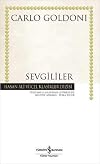
Carlo Goldoni'den okuduğum 2. oyun oldu. Bu oyunu yazarın daha önce okuduğum Lokantacı Kadın oyunu kadar etkileyici bulmadım, ama bu oyunu yine de beğendim. Klasik bir romantik-komedi olmasına rağmen oyunu okurken hiç sıkılmadım.

Goldoni wrote this as a preface to his plays, though he didn’t get it into his first volume in 1751. I bought my Mondadori edition in Milano (Mar, ’99); it includes the playwright’s autobiography Memorie italiane. His father worked as physician in Perugia (107), and even punished him for reading Machiavelli’s comedy Mandragola, “strappo dalla mani, volea abbruciarlo, e l’avrebbe fatto, se non fosse arrivato a tempo mia Madre per impedirlo”(118). His father rent his hand, wanted show more to burn it and would have, had not his mother arrived to stop him.
Did Goldoni’s father disapprove his boy reading about a young man disguising himself as a physician in order to seduce an old man’s young, beautiful wife? Or about a sleazy priest Timoteo? Or about a rascal marriage broker? While his mother let him do anything, his father enjoined her in heated argument: Mandragola was scandalous and prohibited, it dealt with illicit love and abuse of the confessional (118).
Il Teatro Comico presents meta-drama, a play about plays; also, meta-poetry, poetry about a bad poet, Lelio, who is too mannered, too conventional, having his male character begging the woman “My idol!”, the woman chasing him away. The capocomico Orazio says he can stand no more, while the Dr. says, “Mi ha fatta venire la diarrea”(I.xi. p.31).
But Lelio later recites a wonderful passage, which impresses the head, Orazio, who had doubted the poet's stage abilities. One problem: in soliloquizing, Lelio addresses the audience. "No, no," Orazio advises, the comic actor never talks to the audience; when alone, he should imagine "che nessuno lo senta e nessuno lo veda"(III.ii.p.75).
The meta-drama features actors in Commedia del’Arte masks, but no longer generic commedia actors, who speak ad lib; now they have to learn named parts in Goldoni’s play. Commedia featured old men like the Pantalone and Doctor, often competing with a young man for a young woman. Commedia also featured 1)Zanni, servants who plotted and intrigued, 2) Harlequin, the active specially dressed clown, 3) Young women, often singers, and young men, 4) Brighella, a blocking figure, and others.
To all these, Goldoni adds a Prompter, Suggeritore, since the characters in his play have parts to learn. Commedia actors complain of the extra work memorizing, thus needing a Prompter.
Many scenes invite my citation, but I’ll go to a simple opposition between two male lovers, the astute Brighella and the stupid but jaunty clown Harlequin. Vittoria (Columbina) wants to ask every woman she meets whether a shrewd or a stupid husband is better. The two opposites each argue for one like himself, Brighella saying, obviously, “Accorto,” and Arlecchino, “Ignorante.” Columbina says she’ll marry whichever one convinces her, so the scene enumerates their skills. The sharp one says, “I’ll work hard, you’ll never lack a good meal.” Arlecchino says, “I’ll bring all my friends here with food and drink.” Brighella, “For me I’ll defend honor, you’ll be respected.” Harlequin, “I’m not a fighter, I’ll make sure everyone likes you.” Brigella, “Since I’m organized, I’ll keep the house well organized.” Harlequin, “I’ll leave it for you to do what you want with the house.” Brighella, “If you want entertainment, I’ll take you there.” Harlequin, “If you want to go for a walk, you can even go on your own.” B, “If someone invades our home, I’ll kill him.” H, “I’ll light the chandelleer, so no-one dares enter.”
Columbina concludes, she can’t prefer one of the other; she needs a combination of them both (II.viii.p.64).
Last scene of Act II, a foreign (out-of-town?) singer Eleonora arrives, to do intermissions, but the Capocomico sends her packing. Eleonora observes, "I comici sono sempre nemici dei virtuosi di musica"(II.xv.p.71). Never realized musicians and comedians at odds. Here, she's a friend of the poet, also an outsider; she had sung in his Dido performed in Firenze. He suggests she follow his lead, join th troupe; she worries she'd lower herself. But poet Lelio says, there's no better music than that of cooking spoons, "L'armonia dei cuchiai"(73).
Act III contains some great acting advice, like Hamlet's to the players, "Speak the speech..trippingly on the tongue," but here also warnings about applause, not to trust it, because" some applaud from habit, others to release their feelings, some from employment, others because they're hired to applaud, "sono pagati dai prottetori"(III.iii.p.79).
The acting advice, from the head of the troupe to the newly hired former singer, Eleanora. When sharing the stage with another character, she should not distract with her body or her mind, which leaves a bad effect on the audience, and moreover keeps the prompter from his job (p.81).
What happened to make actors the lowest class? One reason women are not allowed on stage in Shakespeare, because they'd lower their class, to that of prostitutes. How did actors then the lowest class become centuries later the highest? Probably because the U.S. has no class, except fame, and of course the resultant money.
Goldoni could not write comedy at university, so he wrote poetry. His "Memorie," or autobiogrpahy, reflects on law and poetry. His relative the Milanese Senator, Marquess Goldoni, came to Pavese, and advised that poety was "Una seduzione, una distrazione dagli studi," that Goldoni should finish his legal dissertation.
I recall many literary men studied the Law--starting with some Romans, Cicero and Ovid. Moving to England, Samuel Johnson gave up law because of money, but several Renaissance playwrights studied at the Inns of Court, like Beaumont and Marston. Most provocative, those like Goldoni and Ovid who gave up law for literature.
Memorie contain innumerable details about actors and plays, for instance leading Arlecchino players in commedia; but Goldoni wrote at least one history-tragedy, Enrico Re di Sicilia, which the Prince of Poland saw, and for which he asked another performance. Goldoni had had it printed specifically for the Prince's performace, distributed to the entire audience (220). Goldoni also wrote words for intermezzo songs, such as one he adapted because there were nine singers--he called it, the Nine Muses.
He ends his autobiography with his leaving his comedies behind for the foreign military, the French who conquered Genova I think. He wrote in French, and died in France. His last page reflect on how comedy should make us wary; though he'd written a play, "L'Impostore," he was fooled by an impostor, cheated, overwhelmed,"mi sono lasciato gabbare, sovererchiare da un Frappatore!"(229). Because of war, his theater income was suspended, and even his patrons were bankrupted. So he leaves for France.
See my review of Machiavelli’s Prince for a paragraph on his comedy, published well over a century before this play. show less
Did Goldoni’s father disapprove his boy reading about a young man disguising himself as a physician in order to seduce an old man’s young, beautiful wife? Or about a sleazy priest Timoteo? Or about a rascal marriage broker? While his mother let him do anything, his father enjoined her in heated argument: Mandragola was scandalous and prohibited, it dealt with illicit love and abuse of the confessional (118).
Il Teatro Comico presents meta-drama, a play about plays; also, meta-poetry, poetry about a bad poet, Lelio, who is too mannered, too conventional, having his male character begging the woman “My idol!”, the woman chasing him away. The capocomico Orazio says he can stand no more, while the Dr. says, “Mi ha fatta venire la diarrea”(I.xi. p.31).
But Lelio later recites a wonderful passage, which impresses the head, Orazio, who had doubted the poet's stage abilities. One problem: in soliloquizing, Lelio addresses the audience. "No, no," Orazio advises, the comic actor never talks to the audience; when alone, he should imagine "che nessuno lo senta e nessuno lo veda"(III.ii.p.75).
The meta-drama features actors in Commedia del’Arte masks, but no longer generic commedia actors, who speak ad lib; now they have to learn named parts in Goldoni’s play. Commedia featured old men like the Pantalone and Doctor, often competing with a young man for a young woman. Commedia also featured 1)Zanni, servants who plotted and intrigued, 2) Harlequin, the active specially dressed clown, 3) Young women, often singers, and young men, 4) Brighella, a blocking figure, and others.
To all these, Goldoni adds a Prompter, Suggeritore, since the characters in his play have parts to learn. Commedia actors complain of the extra work memorizing, thus needing a Prompter.
Many scenes invite my citation, but I’ll go to a simple opposition between two male lovers, the astute Brighella and the stupid but jaunty clown Harlequin. Vittoria (Columbina) wants to ask every woman she meets whether a shrewd or a stupid husband is better. The two opposites each argue for one like himself, Brighella saying, obviously, “Accorto,” and Arlecchino, “Ignorante.” Columbina says she’ll marry whichever one convinces her, so the scene enumerates their skills. The sharp one says, “I’ll work hard, you’ll never lack a good meal.” Arlecchino says, “I’ll bring all my friends here with food and drink.” Brighella, “For me I’ll defend honor, you’ll be respected.” Harlequin, “I’m not a fighter, I’ll make sure everyone likes you.” Brigella, “Since I’m organized, I’ll keep the house well organized.” Harlequin, “I’ll leave it for you to do what you want with the house.” Brighella, “If you want entertainment, I’ll take you there.” Harlequin, “If you want to go for a walk, you can even go on your own.” B, “If someone invades our home, I’ll kill him.” H, “I’ll light the chandelleer, so no-one dares enter.”
Columbina concludes, she can’t prefer one of the other; she needs a combination of them both (II.viii.p.64).
Last scene of Act II, a foreign (out-of-town?) singer Eleonora arrives, to do intermissions, but the Capocomico sends her packing. Eleonora observes, "I comici sono sempre nemici dei virtuosi di musica"(II.xv.p.71). Never realized musicians and comedians at odds. Here, she's a friend of the poet, also an outsider; she had sung in his Dido performed in Firenze. He suggests she follow his lead, join th troupe; she worries she'd lower herself. But poet Lelio says, there's no better music than that of cooking spoons, "L'armonia dei cuchiai"(73).
Act III contains some great acting advice, like Hamlet's to the players, "Speak the speech..trippingly on the tongue," but here also warnings about applause, not to trust it, because" some applaud from habit, others to release their feelings, some from employment, others because they're hired to applaud, "sono pagati dai prottetori"(III.iii.p.79).
The acting advice, from the head of the troupe to the newly hired former singer, Eleanora. When sharing the stage with another character, she should not distract with her body or her mind, which leaves a bad effect on the audience, and moreover keeps the prompter from his job (p.81).
What happened to make actors the lowest class? One reason women are not allowed on stage in Shakespeare, because they'd lower their class, to that of prostitutes. How did actors then the lowest class become centuries later the highest? Probably because the U.S. has no class, except fame, and of course the resultant money.
Goldoni could not write comedy at university, so he wrote poetry. His "Memorie," or autobiogrpahy, reflects on law and poetry. His relative the Milanese Senator, Marquess Goldoni, came to Pavese, and advised that poety was "Una seduzione, una distrazione dagli studi," that Goldoni should finish his legal dissertation.
I recall many literary men studied the Law--starting with some Romans, Cicero and Ovid. Moving to England, Samuel Johnson gave up law because of money, but several Renaissance playwrights studied at the Inns of Court, like Beaumont and Marston. Most provocative, those like Goldoni and Ovid who gave up law for literature.
Memorie contain innumerable details about actors and plays, for instance leading Arlecchino players in commedia; but Goldoni wrote at least one history-tragedy, Enrico Re di Sicilia, which the Prince of Poland saw, and for which he asked another performance. Goldoni had had it printed specifically for the Prince's performace, distributed to the entire audience (220). Goldoni also wrote words for intermezzo songs, such as one he adapted because there were nine singers--he called it, the Nine Muses.
He ends his autobiography with his leaving his comedies behind for the foreign military, the French who conquered Genova I think. He wrote in French, and died in France. His last page reflect on how comedy should make us wary; though he'd written a play, "L'Impostore," he was fooled by an impostor, cheated, overwhelmed,"mi sono lasciato gabbare, sovererchiare da un Frappatore!"(229). Because of war, his theater income was suspended, and even his patrons were bankrupted. So he leaves for France.
See my review of Machiavelli’s Prince for a paragraph on his comedy, published well over a century before this play. show less
Lists
Awards


You May Also Like


Associated Authors
Statistics
- Works
- 395
- Also by
- 3
- Members
- 2,290
- Popularity
- #11,214
- Rating
- 3.8
- Reviews
- 37
- ISBNs
- 409
- Languages
- 15
- Favorited
- 5

