
Andrea Camilleri (1925–2019)
Author of The Shape of Water
About the Author
Andrea Camilleri lives in Italy. Andrea Camilleri was born in Porto Empedocle, Sicily on September 6, 1925. He began his studies at Faculty of Literature in 1944 but never finished. He started to publish poems and short stories. He studied stage and film direction at the Silvio D'Amico Academy of show more Dramatic Arts from 1948 to 1950 and soon began work as a director and screen writer. Andrea Camilleri worked on several TV productions such as Inspector Maigret wirh Gino Cervi. In 1971 he returned to the Academy of Dramatic Arts holding the chair of Movie Direction and keeping it for 20 years. In 1978 he wrote his first novel - The Way Things Go which was followed by A Thread of Smoke in 1980. In 1992 he published The Hunting Season which turned out to be a best seller. In 1994 Andrea Camilleri published the first in a long series of novels - The Shape of Water which features the character Inspector Montalbano - a ficticious Sicilian detective in the police force of Vigata, an imaginary Sicilian town. The TV adaption of this book took off in popularity and Andrea Camilleri's home town was renamed Porto Empedocle Vigata. In 1998 he won the Nino Mortoglio International Book Award. He received an honorary degree from the University of Pisa in 2005. Camilleri has worked as a television and theater director, as well as a screenwriter. In 1978 he wrote his first novel, Il Corso delle Cose. The Montalbano series, featuring the Sicilian detective Inspector Montalbano, is Camilleri's most famous work of fiction, and it has been adapted into a television series. Camilleri had written a few historical novels when, in 1994, he wrote The Shape of Water, the first book starring a Sicilian detective based in the fictional town of Vigata. Camilleri won the Nino Martoglio International Book Award in 1998. He is considered to be one of Italy's greatest contemporary writers. Andrea Camilleri passed away on July 17, 2019 at the age of 93. (Bowker Author Biography) show less
Series
Works by Andrea Camilleri
Voi non sapete. Gli amici, i nemici, la mafia, il mondo nei pizzini di Bernardo Provenzano (2007) 151 copies, 5 reviews
Boccaccio. La novella di Antonello da Palermo. Una novella che non potè entrare nel Decamerone (2007) 12 copies, 1 review
I fantasmi 10 copies
Altri casi per il commissario Montalbano: Il giro di boa-La pazienza del ragno-La luna di carta (2011) 10 copies
Experiencias. 7 copies
Teresina 7 copies
Il duello è contagioso 7 copies
L'oro a Vigàta 6 copies
Le scarpe nuove 6 copies
Lo stivale di Garibaldi 6 copies
Il palato assoluto 6 copies
I cacciatori 5 copies
Il morto viaggiatore 5 copies
Doppia indagine 5 copies
La rettitudine fatta persona 5 copies
Il boccone del povero 5 copies
La rivelazione 4 copies
In odore di santità 4 copies
Le somiglianze 4 copies
Un giro in giostra 4 copies
I duellanti 4 copies
La fine della missione 4 copies
Romeo e Giulietta 4 copies
L'asta 3 copies
Regali di Natale 3 copies
Conviene essere onesti?: (cose nostre e cose loro) — Author — 3 copies
O Metodo Siciliano. Uma Investigacao do Comissario Montalbano (Em Portugues do Brasil) (2019) 3 copies
Un Sabato con gli Amici 3 copies
Zù Cola et autres nouvelles de Andrea Camilleri ,Madeleine Rossi (Traduction) ( 26 janvier 2012 ) (2012) 2 copies
Il giovane Montalbano. Stagione 2 2 copies
L'uomo è forte 2 copies
Un filo di fumo-La Stagione della caccia-Il birraio di Preston-La concessione del telefono (1999) 2 copies
Camilleri Andrea 2 copies
La prima indagine di Montalbano 2 copies
Pierwsze śledztwo Montalbana 1 copy
De maan van papier 1 copy
Sudore 1 copy
Morze błota 1 copy
Riccardino 1 copy
Isole maggiori 1 copy
Camilleri sono 1 copy
Gran Circo Taddei 1 copy
De stem van de viool 1 copy
De vorm van water 1 copy
De gestolen twaalfuurtjes 1 copy
Het medaillon 1 copy
Sporen in het zand 1 copy
Το γκρι ταγιέρ 1 copy
Η άλλη άκρη του νήματος 1 copy
Temporada De Caça 1 copy
モンタルバーノ警部―悲しきバイオリン (ハルキ文庫) 1 copy
La prova 1 copy
La guerra privata di Samuele 1 copy
Ora dimmi di te 1 copy
Inspector Montalbano 1-17 1 copy
Ventiquattr'ore di ritardo 1 copy
Il gioco delle tre carte 1 copy
Catarella risolve un caso 1 copy
Un caso di omonimia 1 copy
Sostiene Pessoa 1 copy
Il gatto e il cardellino 1 copy
La pòvira Maria Castellino 1 copy
IL CANE RITORNA 1 copy
Montalbano si rifiuta 1 copy
Referendum popolare 1 copy
Amore e Fratellanza 1 copy
Destre e/o liberta 1 copy
Montelbano [DVD] 1 copy
Dieci Favole Sul Cavaliere 1 copy
Il commissario Montalbano e i miracoli di Trieste: Das Hörbuch zum Sprachen lernen - Ausgewählte Kurzgeschichten. Niveau A2 (2006) 1 copy
Sequestro di persona 1 copy
Una mosca acchiappata a volo 1 copy
La traduzione manzoniana 1 copy
Una brava fìmmina di casa 1 copy
La revisione 1 copy
Come fece Alice 1 copy
Stiamo parlando di miliardi 1 copy
Comisario Montalbano 1 copy
La seduta spiritica 1 copy
El comisario Montalbano: (edición estuche que incluye: La forma del agua | El perro de terracota | El ladrón de meriendas) (2021) 1 copy
L'Ombrello di Noè 1 copy
Αγνοούμενη 1 copy
Silvio Montalbano 1 copy
Το ολοδικό μου 1 copy
Associated Works
Italy: A Traveler's Literary Companion (Traveler's Literary Companions) (2003) — Contributor — 49 copies
Cinquant'anni di teatro francese — Introduction — 4 copies
Tagged
Common Knowledge
- Canonical name
- Camilleri, Andrea
- Legal name
- Camilleri, Andrea Calogero
- Birthdate
- 1925-09-06
- Date of death
- 2019-07-17
- Gender
- male
- Education
- Accademia Nazionale d'Arte Drammatica (1949-1952)
University of Palermo - Occupations
- theatre director
screenwriter
crime novelist
television director - Organizations
- Communist Party of Italy
- Awards and honors
- University of Pisa, honorary degree (2005)
Nino Martoglio International Book Award (1998)
Premio Alabarda d'oro (2009) - Agent
- Carmen Prestia (Alferjeprestia [Italy])
- Relationships
- Dello Siesto, Rosetta (wife)
- Short biography
- http://ca.wikipedia.org/wiki/Andrea_C...
- Nationality
- Italy
- Birthplace
- Porto Empedocle, Sicily, Italy
- Places of residence
- Rome, Italy
- Place of death
- Rome, Italy
- Burial location
- Cimitero acattolico, Rome, Italy
- Map Location
- Italy
Members
Reviews
Rating: 4* of five
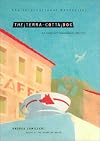
The Publisher Says: The Terra-Cotta Dog opens with a mysterious tete-a-tete with a mafioso, some inexplicably abandoned loot from a supermarket heist, and some dying words that lead inspector Montalbano to a secret grotto in a mountainous cave where two young lovers, dead fifty years and still embracing, are watched over by a life-size terra cotta dog. Montalbano's passion to solve this old crime takes him, heedless of personal danger, on a journey through the island's past show more and into a family's dark heart amid the horrors of World War II.
My Review: I am truly gruntled and kempt after reading a Montalbano novel. Sleek, in fact; one could go so far as to say consolate.
The mystery, that is the modern-day mystery of arms-dealing and law-breaking, gets short shrift in this delightful book. It gets passed to Montalbano's second-in-command, Augello, at Montalbano's discretion, after Augello pitches a hissy fit and acts like a neglected wife because Montalbano runs a team within a team to do his real work.
Things Go Badly. In fact, a character I loved very much pays the ultimate price for Augello's jealous fit. But Montalbano, whose head everything ultimately falls on, has already turned his attention to Livia, his quite extraordinary lover from Genoa, and a mystery from WWII.
One guess which of those two gets neglected.
The point of these books is how much a mystery gets hold of one, how deeply set the hook is when it's properly baited for the mysterian. (Other than the name of a one-hit wonder band, I've never actually used that word before, and "I do not think that word means what you think it means." {Princess Bride reference}) Sure, yeah, people are smuggling submachine guns and stuff, mmm-hmmm get back to me if something needs my attention but some a-hole killed two kids in the Act of Luuuv 50+ years ago, then put them in a cave where evidence assures us they were NOT shot, and with some very odd burial goods...a bowl of money, a jug of water, and a terra-cotta statue of a dog...and then sealed them up carefully and invisibly. WTF? as Montalbano most certainly wouldn't have thought, who does that? What kind of story makes that not only okay, but so urgent as to force someone to do it?
Exactly what I was wondering. Montalbano is my kinda guy. There are people to *do* the modern-day, not-very-challenging stuff, and even when they get stuff wrong (as they did, to his almost-fatal detriment when a shoot-out costs him the life of a friend and a month in the hospital) things will turn out, they always do...just learn to live with the consequences...but only he, Montalbano, cares to or can ferret out the seemingly unimportant but emotionally charged secrets of the past.
I was walloped upside my little punkin haid by the ending of this book. I could NOT believe an American publishing house would do this! Of course, they only did it ten years after it became a bestseller in *the rest of the world*, but let's let that slide. They did it, thank you Penguin, and they made a lovely object of the book, and they have published all of the series in proper order *smoochsmooch* on their corporate ham-producing-areas to boot!
I won't encourage anyone to read these books because, if you need encouragement, you're not the Right Stuff for them. (*snicker* THAT oughtta cause a stampede!) show less
The Publisher Says: The Terra-Cotta Dog opens with a mysterious tete-a-tete with a mafioso, some inexplicably abandoned loot from a supermarket heist, and some dying words that lead inspector Montalbano to a secret grotto in a mountainous cave where two young lovers, dead fifty years and still embracing, are watched over by a life-size terra cotta dog. Montalbano's passion to solve this old crime takes him, heedless of personal danger, on a journey through the island's past show more and into a family's dark heart amid the horrors of World War II.
My Review: I am truly gruntled and kempt after reading a Montalbano novel. Sleek, in fact; one could go so far as to say consolate.
The mystery, that is the modern-day mystery of arms-dealing and law-breaking, gets short shrift in this delightful book. It gets passed to Montalbano's second-in-command, Augello, at Montalbano's discretion, after Augello pitches a hissy fit and acts like a neglected wife because Montalbano runs a team within a team to do his real work.
Things Go Badly. In fact, a character I loved very much pays the ultimate price for Augello's jealous fit. But Montalbano, whose head everything ultimately falls on, has already turned his attention to Livia, his quite extraordinary lover from Genoa, and a mystery from WWII.
One guess which of those two gets neglected.
The point of these books is how much a mystery gets hold of one, how deeply set the hook is when it's properly baited for the mysterian. (Other than the name of a one-hit wonder band, I've never actually used that word before, and "I do not think that word means what you think it means." {Princess Bride reference}) Sure, yeah, people are smuggling submachine guns and stuff, mmm-hmmm get back to me if something needs my attention but some a-hole killed two kids in the Act of Luuuv 50+ years ago, then put them in a cave where evidence assures us they were NOT shot, and with some very odd burial goods...a bowl of money, a jug of water, and a terra-cotta statue of a dog...and then sealed them up carefully and invisibly. WTF? as Montalbano most certainly wouldn't have thought, who does that? What kind of story makes that not only okay, but so urgent as to force someone to do it?
Exactly what I was wondering. Montalbano is my kinda guy. There are people to *do* the modern-day, not-very-challenging stuff, and even when they get stuff wrong (as they did, to his almost-fatal detriment when a shoot-out costs him the life of a friend and a month in the hospital) things will turn out, they always do...just learn to live with the consequences...but only he, Montalbano, cares to or can ferret out the seemingly unimportant but emotionally charged secrets of the past.
I was walloped upside my little punkin haid by the ending of this book. I could NOT believe an American publishing house would do this! Of course, they only did it ten years after it became a bestseller in *the rest of the world*, but let's let that slide. They did it, thank you Penguin, and they made a lovely object of the book, and they have published all of the series in proper order *smoochsmooch* on their corporate ham-producing-areas to boot!
I won't encourage anyone to read these books because, if you need encouragement, you're not the Right Stuff for them. (*snicker* THAT oughtta cause a stampede!) show less
Ambiguity is a highly valued and well-tolerated state in Italy. (Likewise Japan.) It makes so much of the insane, illogical world the Italians have created and laughingly called a "government" and a "social fabric" function, this ability to be more than one thing at one time.
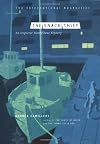
Immigrants, seldom from high ambiguity-tolerant climes, screw things up mightily. Karima certainly does, that Tunisian house cleaner-cum-sex worker. She thinks she's moved to a place away from the stark complexities she show more comes from in Tunisia, and instead ends up at the center of an only-in-Sicily clusterfuck that had me fearing for Montalbano's life, sanity, and love relationship.
I don't fear for his waistline or his palate. Yet again, he swims and savors his way through the book. The food descriptions! *sigh* I wish I could eat Adelina the housekeeper's roulades of bream. I long for the koftas that the Mazarase chef reinvents after a visitation from the Virgin Mary while he was in prison. The sheer sensual glory of Camilleri's Sicily makes a hungry gourmand into a ravening beast. Jean Anthelme Brillat-Savarin's The Physiology of Taste has not one thing on this series for sheer torture of the tastebuds.
In the end, Karima's story, which of course is so much larger than we first imagine it to be, resolves itself with losses and gains all around...death, of course, but also the slow, steady taking away that growing older in a life well lived requires us to accept and endure; the inevitable time-caused losses; but the surprises of joy and courage buoy up the other end of that cork in the wine-barrel of living emotion.
And really, in the end, isn't that what reading books is about? Experiencing living emotion, only at a safe remove; pre-feeling our feelings, or re-feeling them, in safety and without the need to explain or the desire to complain. Storytelling is, for this among many reasons, a brilliant use of language, no matter that the story told has been told before. Camilleri says as much, explicitly, on page 37: "There is no Sicilian woman alive, of any class, aristocrat or peasant, who, after her fiftieth birthday, isn't always expecting the worst. What kind of worst? Any, so long as it's the worst."
Word, as the kids of today used to say before we figured it out. show less
Immigrants, seldom from high ambiguity-tolerant climes, screw things up mightily. Karima certainly does, that Tunisian house cleaner-cum-sex worker. She thinks she's moved to a place away from the stark complexities she show more comes from in Tunisia, and instead ends up at the center of an only-in-Sicily clusterfuck that had me fearing for Montalbano's life, sanity, and love relationship.
I don't fear for his waistline or his palate. Yet again, he swims and savors his way through the book. The food descriptions! *sigh* I wish I could eat Adelina the housekeeper's roulades of bream. I long for the koftas that the Mazarase chef reinvents after a visitation from the Virgin Mary while he was in prison. The sheer sensual glory of Camilleri's Sicily makes a hungry gourmand into a ravening beast. Jean Anthelme Brillat-Savarin's The Physiology of Taste has not one thing on this series for sheer torture of the tastebuds.
In the end, Karima's story, which of course is so much larger than we first imagine it to be, resolves itself with losses and gains all around...death, of course, but also the slow, steady taking away that growing older in a life well lived requires us to accept and endure; the inevitable time-caused losses; but the surprises of joy and courage buoy up the other end of that cork in the wine-barrel of living emotion.
And really, in the end, isn't that what reading books is about? Experiencing living emotion, only at a safe remove; pre-feeling our feelings, or re-feeling them, in safety and without the need to explain or the desire to complain. Storytelling is, for this among many reasons, a brilliant use of language, no matter that the story told has been told before. Camilleri says as much, explicitly, on page 37: "There is no Sicilian woman alive, of any class, aristocrat or peasant, who, after her fiftieth birthday, isn't always expecting the worst. What kind of worst? Any, so long as it's the worst."
Word, as the kids of today used to say before we figured it out. show less
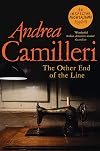
This latest Montalbano story is the one that the racists do not like. It is sympathetic towards refugees, who are shown as human beings facing hardship and tragedy, rather than as an alien “threat” to be feared or hated. Andrea Camilleri has often sprinkled his Montalbano books with the occasional critical social comment from his left-leaning perspective. But this time he wears his heart on his sleeve even more fully and explicitly than usual by conveying, I’m pleased to say, a strong show more anti-racist message.
Although the first third of the book revolves around refugees, the second two thirds centres on a more mainstream murder mystery. This “whodunnit” plot is nothing out of the ordinary, and I was actually already familiar with it because I’d already watched the TV version of this story. But even so, I still found the book well worth reading for the usual humour and for the familiar portrayal of Montalbano’s endearingly quirky personality and his relationships with his team.
I am a great fan of Montalbano, but not an uncritical one. A few of the books have not been up to the usual high standard. For example, a couple of the stories have felt like he was going through the motions; a couple have contained themes or scenes which were too dark or distasteful for my liking; and a couple have contained irritating paranormal incidents. But this book is certainly one of the good ones. show less
Although the first third of the book revolves around refugees, the second two thirds centres on a more mainstream murder mystery. This “whodunnit” plot is nothing out of the ordinary, and I was actually already familiar with it because I’d already watched the TV version of this story. But even so, I still found the book well worth reading for the usual humour and for the familiar portrayal of Montalbano’s endearingly quirky personality and his relationships with his team.
I am a great fan of Montalbano, but not an uncritical one. A few of the books have not been up to the usual high standard. For example, a couple of the stories have felt like he was going through the motions; a couple have contained themes or scenes which were too dark or distasteful for my liking; and a couple have contained irritating paranormal incidents. But this book is certainly one of the good ones. show less
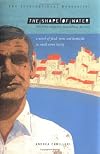
Two garbage collectors find a dead politician in a car parked on the notorious Pasture, the local place where people go to find a prostitute. Signor Lubarello died of a heart attack, but the situation surrounding his death suggests to Inspector Montalbano that all is not as it appears. He convinces the judge to let him continue his investigation, even though the death is apparently natural and all Montalbano has to go on is a hunch.
I never would have heard of this Italian police procedural show more if it hadn't been for Richardderus's recommendation based on my enjoyment of the Three Pines series. I don't read a lot of mysteries; I like them cozy, and I'm picky about it. Well, the Inspector Montalbano series is rougher around the edges than a cozy without going quite so far as the characters in The Maltese Falcon (I despised them, with no exceptions). Montalbano's informants are seedy people but trustworthy in their own fashion. Montalbano himself is not a saint, though he lives by his own code of ethics. Politics are dirty, allegiances are complicated, and it can be a little difficult to follow when you're as completely unfamiliar with Italian police and politics as I am. Even so, I was surprised that the seediness of some people and places didn't bother me more. Interactions between characters are believable and often humorous. The plot is fast-paced, keeping me reading late into the night to get just that much closer to the end, and intrigued me enough to want to continue the series. show less
I never would have heard of this Italian police procedural show more if it hadn't been for Richardderus's recommendation based on my enjoyment of the Three Pines series. I don't read a lot of mysteries; I like them cozy, and I'm picky about it. Well, the Inspector Montalbano series is rougher around the edges than a cozy without going quite so far as the characters in The Maltese Falcon (I despised them, with no exceptions). Montalbano's informants are seedy people but trustworthy in their own fashion. Montalbano himself is not a saint, though he lives by his own code of ethics. Politics are dirty, allegiances are complicated, and it can be a little difficult to follow when you're as completely unfamiliar with Italian police and politics as I am. Even so, I was surprised that the seediness of some people and places didn't bother me more. Interactions between characters are believable and often humorous. The plot is fast-paced, keeping me reading late into the night to get just that much closer to the end, and intrigued me enough to want to continue the series. show less
Lists
Italian Literature (57)
Favorite Series (1)
A Novel Cure (1)
Global Mysteries (1)
Read in 2006 (1)
Finished in 2023 (1)
Awards


You May Also Like


Associated Authors
Statistics
- Works
- 424
- Also by
- 7
- Members
- 41,992
- Popularity
- #412
- Rating
- 3.6
- Reviews
- 1,513
- ISBNs
- 2,366
- Languages
- 29
- Favorited
- 59
