
Maurizio De Giovanni
Author of I Will Have Vengeance: The Winter of Commissario Ricciardi
About the Author
Series
Works by Maurizio De Giovanni
Il tempo dell'orologiaio 5 copies
Sara le origini 2 copies
Gli altri fantasmi: La canzone di Filomena-Storia di Papo e Bimbomio-La casa è il mio regno (2012) 2 copies
Tre passi per un delitto 1 copy
I cuccioli 1 copy
In fondo al tuo cuore 1 copy
Pioggia 1 copy
L'orologiaia di Brest 1 copy
Condanna di sangue 1 copy
2017 1 copy
Robin Food (Italian Edition) 1 copy
Per amore di Nami 1 copy
2009 1 copy
Il senso del dolore 1 copy
Il Commissario Ricciardi a Fumetti N.10: Rondini D'inverno — Author — 1 copy
Il senso del dovere 1 copy
Associated Works
Tagged
Common Knowledge
- Birthdate
- 1958
- Gender
- male
- Nationality
- Italy
- Birthplace
- Naples, Italy
- Places of residence
- Naples, Italy
- Associated Place (for map)
- Naples, Italy
Members
Reviews
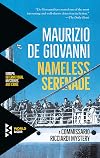
I've been hooked on this series since Book 1 (I Will Have Vengeance), recommended to me by my Italian sister-in-law (Thanks, Suki!). Slow, operatic, dark, wry, if you are looking for a fast-paced crime thriller, look elsewhere. Set in 1930s Italy under il Duce, featuring the morose, lonely Commissario Ricciardi, haunted by macabre visions of people at the moment of their violent deaths, his short-tempered, good-hearted, protective brigadier Maione, and an assortment of passionate and (of show more course... sigh) beautiful women, they meander through the streets of Naples, solving sordid, often gang-related, crimes, sometimes aided by a funny, tragic transgendered "femminiello." The straight "policier" narrative is interspersed with "arias": soliloquys voiced by unidentified characters, stream of consciousness or descriptive, duets between an elderly musician and an ambitious acolyte, or the thoughts of the women who are hooked on the gloomy, seemingly unreachable Commissario and are tormented (that word comes up a lot...) by it. Unrequited passions abound, brutal conflict occurs regularly, murder, suicide, disfigurement, and happy endings are not to be relied upon. It's quite delicious. You don't have to read them in order (though I recommend it). One quibble: I do not read Italian, so I can't well judge the translation, but the paperback edition I read has numerous editing errors - missing words, typos, etc., which were a mild and occasoinal distraction.
I know how I would end this series, but I'm not going to tell you. Buon appetito! show less
I know how I would end this series, but I'm not going to tell you. Buon appetito! show less

The most astonishing thing about this misogynistic anti-abortion screed built on laughable premises, with outdated views and stereotypical characterisation, is that it was published in 2012, actually in the 21st century. It stinks of the 60's pre-liberation fights for women's rights, although it's only fair to admit Italy still has a way to go on those.
The plot concerns killings of children of single and utterly doting parents. Although the pattern is obvious, only one cop is smart enough to show more notice it, the disgraced inspector Lojacono. We are asked to believe that Lojacono, an intelligent, honest, sensitive professional, father and husband, was overnight destroyed on the mere say-so of a two-bit mafioso who falsely claimed to have bought him. I laughed so much I almost stopped right there, but eh, it's understood that sometimes we put up with ridiculous handwaving in the background to allow for specific features; De Giovanni clearly needed his cop to be an outsider, transferred from beloved native Sicily to a chaotic and alienating Naples.
Another improbability is that Lojacono's wife of 15-16 years and teenage daughter also accept immediately that he's guilty and refuse to talk to him! His closest kin drops him without questions asked but two utter strangers, two good women there are, the motherly trattoria owner Letizia, who takes Lojacono under her wing (and would like nothing better than to include her bed) and the beautiful judge Laura, with tragedy in her past, who picks up on his unique qualities.
De Giovanni can't write women outside a connection with a romantic or, better yet, maternal passion. And these passions overwhelm them to the point of disdaining life itself should they lose them.
Nothing against depicting female characters who are man- or child-mad but I do have to quibble when there are nothing but such, or when the reality of the 2010s (or, for that matter, the 1970s) is falsified to the point it is here, with female students of medicine (or teenagers for that matter) so oblivious of or hostile to abortion. It just ain't happening.
In fact, millions of Italian women (and men) protested for decades for the right to abortion, which was legalised in the late 1970s. Universities are the most progressive loci of Italian culture and students the most socially-aware demographic (whatever political opinions they may hold). The killer's motivation in their own context may be "logical", but De Giovanni's framing of the story as a revenge for an actual crime is dishonest and false. show less
The plot concerns killings of children of single and utterly doting parents. Although the pattern is obvious, only one cop is smart enough to show more notice it, the disgraced inspector Lojacono. We are asked to believe that Lojacono, an intelligent, honest, sensitive professional, father and husband, was overnight destroyed on the mere say-so of a two-bit mafioso who falsely claimed to have bought him. I laughed so much I almost stopped right there, but eh, it's understood that sometimes we put up with ridiculous handwaving in the background to allow for specific features; De Giovanni clearly needed his cop to be an outsider, transferred from beloved native Sicily to a chaotic and alienating Naples.
Another improbability is that Lojacono's wife of 15-16 years and teenage daughter also accept immediately that he's guilty and refuse to talk to him! His closest kin drops him without questions asked but two utter strangers, two good women there are, the motherly trattoria owner Letizia, who takes Lojacono under her wing (and would like nothing better than to include her bed) and the beautiful judge Laura, with tragedy in her past, who picks up on his unique qualities.
De Giovanni can't write women outside a connection with a romantic or, better yet, maternal passion. And these passions overwhelm them to the point of disdaining life itself should they lose them.
Nothing against depicting female characters who are man- or child-mad but I do have to quibble when there are nothing but such, or when the reality of the 2010s (or, for that matter, the 1970s) is falsified to the point it is here, with female students of medicine (or teenagers for that matter) so oblivious of or hostile to abortion. It just ain't happening.
In fact, millions of Italian women (and men) protested for decades for the right to abortion, which was legalised in the late 1970s. Universities are the most progressive loci of Italian culture and students the most socially-aware demographic (whatever political opinions they may hold). The killer's motivation in their own context may be "logical", but De Giovanni's framing of the story as a revenge for an actual crime is dishonest and false. show less
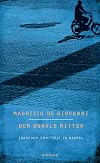
I am a huge fan of the [[[Giuseppe Lojacono e i Bastardi di Pizzofalcone]]] series. This volume also captivated me from the first page to the last.
During a school trip, ten-year-old Dodo disappears. A school friend says that a blonde woman took him away. The surveillance cameras are of no help. However, it becomes clear that Dodo left the museum with the woman of his own free will. As Inspector Lojacano and his partner are working on a mysterious apartment burglary, their spirited colleagues show more Romano and Aragona take on the case. They first get to know the little boy's family, or rather what is left of it. His mother Eva is divorced and has been living with a penniless artist ever since. Her relationship with her wealthy father is broken, as is her relationship with Dodo's father, an entrepreneur from northern Italy. So it is not surprising that mutual recriminations and hatred dominate the scene. The police struggle to get the family to focus on the kidnapping. But even after a phone call confirms that Dodo has been kidnapped, the investigators make no progress. Instead, the kidnappers increasingly lose control of the situation. Only Dodo remains completely calm. He puts his faith in Batman, the action figure he always carries with him.
Above all, the very different police officers breathe special flair into Maurizio De Giovanni's novels, all of whom, albeit for different reasons, have rather messed-up private lives. As good as they are at their jobs as police officers, they are unable to deal openly with their feelings. Various relationship issues remain unresolved, but nevertheless, we get to know some of the investigators a little better. Equally open is the private investigation of colleague Pisanelli, who, after the suicide of his seriously ill wife, wonders about the conspicuously high suicide rate in the city. He does not believe in coincidences, but rather that someone has helped along the process. Unlike in the last novel, this side story is now resolved, but (for the time being) only for the reader. show less
During a school trip, ten-year-old Dodo disappears. A school friend says that a blonde woman took him away. The surveillance cameras are of no help. However, it becomes clear that Dodo left the museum with the woman of his own free will. As Inspector Lojacano and his partner are working on a mysterious apartment burglary, their spirited colleagues show more Romano and Aragona take on the case. They first get to know the little boy's family, or rather what is left of it. His mother Eva is divorced and has been living with a penniless artist ever since. Her relationship with her wealthy father is broken, as is her relationship with Dodo's father, an entrepreneur from northern Italy. So it is not surprising that mutual recriminations and hatred dominate the scene. The police struggle to get the family to focus on the kidnapping. But even after a phone call confirms that Dodo has been kidnapped, the investigators make no progress. Instead, the kidnappers increasingly lose control of the situation. Only Dodo remains completely calm. He puts his faith in Batman, the action figure he always carries with him.
Above all, the very different police officers breathe special flair into Maurizio De Giovanni's novels, all of whom, albeit for different reasons, have rather messed-up private lives. As good as they are at their jobs as police officers, they are unable to deal openly with their feelings. Various relationship issues remain unresolved, but nevertheless, we get to know some of the investigators a little better. Equally open is the private investigation of colleague Pisanelli, who, after the suicide of his seriously ill wife, wonders about the conspicuously high suicide rate in the city. He does not believe in coincidences, but rather that someone has helped along the process. Unlike in the last novel, this side story is now resolved, but (for the time being) only for the reader. show less
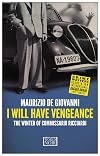
Commissario Ricciardi, a coldly efficient homicide detective in 1931 Naples, sees and hears the ghosts of the recently dead. He keeps this to himself, but the visions seem to help him solve murders and other people are aware on some level that he operates on a different level.
Arnaldo Vezzi, “Mussolini’s favorite tenor,” is killed in his dressing room during an opera performance. A “worthless man” with immense talent, there is no shortage of suspects. Ricciardi’s visions play a show more small role in building a case and solving the crime. The rest is excellent detective work and his ability to discern the motives and character of people from a glimmer of information. And when Ricciardi does figure it out, there’s a final, humanistic twist to help him achieve the best result for all involved. Except of course, Vezzi, who got what he seemingly deserved. show less
Arnaldo Vezzi, “Mussolini’s favorite tenor,” is killed in his dressing room during an opera performance. A “worthless man” with immense talent, there is no shortage of suspects. Ricciardi’s visions play a show more small role in building a case and solving the crime. The rest is excellent detective work and his ability to discern the motives and character of people from a glimmer of information. And when Ricciardi does figure it out, there’s a final, humanistic twist to help him achieve the best result for all involved. Except of course, Vezzi, who got what he seemingly deserved. show less
Lists
Awards


You May Also Like


Associated Authors
Statistics
- Works
- 103
- Also by
- 4
- Members
- 3,389
- Popularity
- #7,523
- Rating
- 3.7
- Reviews
- 189
- ISBNs
- 381
- Languages
- 11
- Favorited
- 2
