
Pier Paolo Pasolini (1922–1975)
Author of The Ragazzi
About the Author
Born in Bologna, Pasolini spent most of his childhood at his mother's birthplace in Friuli, where he learned the local dialect that he used in his first, last, and best poetry. He became a teacher in a local Communist party chapter, but was accused of blatant immorality in 1949, fired from his job, show more and expelled from the party. With his mother, he went to Rome, spending much time in the slums, mastering the Roman dialect. His novel Ragazzi di Vita (1955), based on his Roman street experience, established him as the leading neorealistic writer of the day. His second neorealistic novel, A Violent Life (1959), brought him greater success. Before long, however, he rejected neorealism and began to live for art's sake. Thereafter, except for what he called his "cat-like" nocturnal prowling for homosexual sex or love, Pasolini "did not lose a moment," as Cecelia Ross aptly said, "in his efforts to lay new directions for literature as well as for theater and television." He poured all his talents and energies into his major films, starting with The Gospel According to St. Matthew (1964), which sustains the mood of Bach's music, and running through The Hawks and the Sparrows (1966), Oedipus Rex (1967), Pigsty, Medea (1970), and a trilogy made up of The Decameron (1970), Canterbury Tales (1971), and Arabian Nights (1974). Throughout his works, Pasolini explored the culture and language of the outcasts living in the shabby Roman periphery. Shortly before he died, Pasolini published a revised and enlarged edition of his dialect poems, La nuova gioventu (The New Youth) (1975). Pasolini was murdered by being run over several times with his own car, dying on 2 November 1975 on the beach at Ostia, near Rome. Pasolini was buried in Casarsa. (Bowker Author Biography) show less
Series
Works by Pier Paolo Pasolini
The Gospel According to St. Matthew [1964 film] (1964) — Director; Screenwriter — 75 copies, 2 reviews
Trilogy of Life (The Decameron / The Canterbury Tales / Arabian Nights) (1971) — Director; Screenwriter; Actor — 64 copies, 1 review
Stories from the City of God: Sketches and Chronicles of Rome, 1950-1966 (1995) 60 copies, 2 reviews
Pasolini 101 (Accattone / Mamma Roma / Love Meetings / The Gospel According to Matthew / The Hawks and the Sparrows / Oedipus Rex / Teorema / Medea) — Director — 7 copies
La poesia popolare italiana 6 copies
Accattone / Love Meetings 4 copies
Bestemmia. Tutte le poesie. Vol. I 4 copies
Pier Paolo Pasolini: Poetry, Selected and Translated with an Afterword by Antonino Mazza (1991) 4 copies
{4}: Pasolini e i moderni: Novecento 3 copies
20: Pier Paolo Pasolini 3 copies
Corpi e luoghi 3 copies
Poesie e pagine ritrovate 3 copies
Vredens år 3 copies
Versi dal paese dell'anima 3 copies
Accattone Mamma Roma 3 copies
Vita Violenta. Roman 3 copies
La sequenza del fiore di carta 2 copies
Canzoniere Italiano 2 2 copies
O evangelho segundo São Mateus, Jesus Cristo - Grandes biografias no cinema (v.05) 2 copies, 1 review
Affabulazione ; Pilade 2 copies
Dialogo con Pasolini 2 copies
Epoca! Scritti Corsari 1 copy
Pasolini e il Corriere 1 copy
The Ragazzi. A Novel 1 copy
Dalla nebulosa all'uomo 1 copy
Nogomet po Pasoliniju 1 copy
10. La grande poesia 1 copy
Svi smo u opasnosti 1 copy
Polemica politica potere 1 copy
Scritti Politici 1 - 5 1 copy
Le grandi poesie 1 copy
Pier Paolo Pasolini. La forma dello sguardo. Catalogo della mostra (Milano, Arengario, 1993) (1993) 1 copy
Muchachos de la calle 1 copy
Canzoniere italiano 1 1 copy
Pasolini, Poeta 1 copy
Vita di Pasolini 1 copy
Últimos Escritos 1 copy
Eine Wissenschaft vom Licht - Pier Paolo Pasolinis späte Gedichte /Das Eichmann-Feld - Robert Duncan (2009) 1 copy
El caos - Contra el terror 1 copy
Il portico della morte 1 copy
DJEM JETE 1 copy
HEPİMİZ TEHLİKEDEYİZ 1 copy
Ostia [1970 film] — Screenwriter — 1 copy
JETË E DHUNSHME 1 copy
Violent Life [1962 film] 1 copy
Gramsciho popel 1 copy
Caos: Crônicas Políticas 1 copy
Intervjuji (sa Ezra Poundom) 1 copy
Antologia 1 copy
Per conoscere Pasolini 1 copy
Poesie a Casarsa 1 copy
Testamento del Corpo 1 copy
Disegni e pitture 1 copy
La ricotta 1 copy
Capriccio all'italiana. DVD 1 copy
Poetry 1 copy
Ulicznicy 1 copy
Associated Works
Queer: A Collection of LGBTQ Writing from Ancient Times to Yesterday (2021) — Contributor, some editions — 66 copies
Requiescant [1967 film] — Actor — 4 copies
Dark Ages Clasp the Daisy Root #6, second series, issue one, June 1991 — Contributor — 2 copies
Tagged
Common Knowledge
- Canonical name
- Pasolini, Pier Paolo
- Legal name
- Pasolini, Pier Paolo
- Birthdate
- 1922-03-05
- Date of death
- 1975-11-02
- Gender
- male
- Education
- University of Bologna (BA|1945)
- Occupations
- film director
writer
poet - Relationships
- Vincenzo Cerami (mentor)
- Cause of death
- murder
- Nationality
- Italy
- Birthplace
- Bologna, Italy
- Places of residence
- Bologna, Italy
Rome, Italy - Place of death
- Ostia, Italy
- Burial location
- Cimitero di Casarsa Della Delizia, Casarsa, Friuli, Italy
- Associated Place (for map)
- Italy
Members
Reviews

I had had this book on my reading list for quite some time. First of all, I would like to say that you need strong nerves to read it.
The German translator (Moshe Kahn) writes the following in the afterword:
The novel is full of strong language, which one has to endure, because it corresponds to the lowest social class that Paolini writes about in this novel. The novel is set in the suburbs of Rome from the end of World War II to the early 1950s. We follow a group of young people from their early teens until they are young adults. Life was brutally hard. There was unemployment, extreme poverty, homelessness, children left to fend for themselves or taken under the wing of youth gangs, and a great deal of violence. The themes of homosexuality, rape and death also feature in the novel.
And despite all this brutality, you learn to love the protagonists. You develop an understanding of why they are the way they are and fear with them that they will survive the next low point. The boys were very resourceful in finding food, new clothes and shelter.
Their motto was usually not to work and to obtain money or the things they needed in other ways. Of course, there was a lot of rivalry in this system, but they still cared for each other.
Even though it wasn't an easy read, I'm glad I read it and would highly recommend it. show less
The German translator (Moshe Kahn) writes the following in the afterword:
Even before its publication at the end of May 1955, an Italian literary scandal was brewing. The initial reactions of booksellers who had read the galley proofs questioned whether the novel should be published at all.show more
After revising the manuscript, Paolini wrote to his friend, the poet
Vittorio Sereni: '... So now the galley proofs lie before me like half-dead corpses, and I am supposed to correct and castrate them. True despair ...'
Kahn goes on to write that the German translation corresponds to Paolini's original and that nothing has been shortened or altered.
The novel is full of strong language, which one has to endure, because it corresponds to the lowest social class that Paolini writes about in this novel. The novel is set in the suburbs of Rome from the end of World War II to the early 1950s. We follow a group of young people from their early teens until they are young adults. Life was brutally hard. There was unemployment, extreme poverty, homelessness, children left to fend for themselves or taken under the wing of youth gangs, and a great deal of violence. The themes of homosexuality, rape and death also feature in the novel.
And despite all this brutality, you learn to love the protagonists. You develop an understanding of why they are the way they are and fear with them that they will survive the next low point. The boys were very resourceful in finding food, new clothes and shelter.
Their motto was usually not to work and to obtain money or the things they needed in other ways. Of course, there was a lot of rivalry in this system, but they still cared for each other.
Even though it wasn't an easy read, I'm glad I read it and would highly recommend it. show less
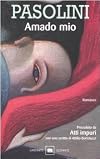
Devo confessare che si tratta del mio primo Pasolini, e forse non è stata una scelta felice. Le due opere che compongono il libro, Atti impuri e Amado mio, sono scritte meravigliosamente, ma le ho trovate faticose lo stesso. Forse perché giovanili e autobiografiche, relative ad un periodo in cui Pasolini scopriva la propria omosessualità e ne era tormentato, anche grazie alla morale dell'epoca, forse perché la sensualità derivante dalla commistione di eros e thanatos che è tipica dei show more tempi di guerra è lontana dal mio sentire.
In ogni caso una lettura necessaria per avvicinarmi finalmente a un grande scrittore. show less
In ogni caso una lettura necessaria per avvicinarmi finalmente a un grande scrittore. show less

You know that Ed Sheeran song, "Castle on the Hill"- the bright dreams of the young, soon quashed and sublimated by Real Life....this was my impression as I came to the end.
Set in 1948-9, in a village in Friuli ( N Italy) this tells of a group of teenage chums growing up after the War. Tradition and the Church hold sway...but, too, an increasing turning to Communism and protests against the poverty.
The boys take off abroad- to a grim, hungry Yugoslavia and to Switzerland - wealthy but cold show more hearted- and return home, to friends, family, love...
As I read, it felt disjointed, like random separate episodes...but keep on to the end and it all comers together. Beautifully. show less
Set in 1948-9, in a village in Friuli ( N Italy) this tells of a group of teenage chums growing up after the War. Tradition and the Church hold sway...but, too, an increasing turning to Communism and protests against the poverty.
The boys take off abroad- to a grim, hungry Yugoslavia and to Switzerland - wealthy but cold show more hearted- and return home, to friends, family, love...
As I read, it felt disjointed, like random separate episodes...but keep on to the end and it all comers together. Beautifully. show less
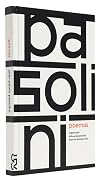
Normalmente em livros de poemas costumo colocar como "resenha" a minha poesia favorita de todo o livro tendo em mente que nada do que eu possa mencionar das qualidades ou defeitos do poeta se equipará a um exemplo prático que o diz por si só. Eu não posso fazer isso com esse livro do Pasolini, pois cada página desse exemplar é elaborado com uma qualidade poética, política e social que é humanamente imposível escolher um trecho que seja. Antologia impecável e nunca pensei que um show more dia diria isso, mas Pasolini é melhor poeta do que cineasta. show less
Lists
1950s (2)
Books for Birute (1)
Awards


You May Also Like


Associated Authors
Statistics
- Works
- 350
- Also by
- 8
- Members
- 6,064
- Popularity
- #4,057
- Rating
- 4.1
- Reviews
- 87
- ISBNs
- 707
- Languages
- 23
- Favorited
- 17


