
John Lanchester
Author of The Debt to Pleasure
About the Author
John Lanchester was the deputy editor of the London Review of Books and the restaurant critic for the London Observer. He is the author of a second novel, Mr. Phillips, and his work has appeared in The New Yorker. He lives in London. (Publisher Provided)
Works by John Lanchester
Signal 3 copies
Associated Works
Peking Story: The Last Days of Old China (1960) — Introduction, some editions — 241 copies, 7 reviews
Tagged
Common Knowledge
- Canonical name
- Lanchester, John
- Legal name
- Lanchester, John Henry
- Birthdate
- 1962-02-25
- Gender
- male
- Education
- St John's College, University of Oxford (BA|1980)
- Occupations
- novelist
journalist - Organizations
- Daily Telegraph
The Observer
London Review of Books - Awards and honors
- E. M. Forster Award (2008)
Julia Child Award (1996) - Relationships
- Carter, Miranda (wife)
- Nationality
- UK
- Birthplace
- Hamburg, Germany
- Places of residence
- Hamburg, Germany
Hong Kong
London, England, UK - Associated Place (for map)
- London, England, UK
Members
Reviews
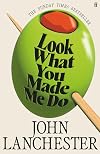
Kate and Jack have a happy middle class life and marriage until the day that Jack dies. Coming from the depths of grief Kate becomes aware of a popular Netflix show and is horrified to find that details of her marriage are portrayed in it. Phoebe is the writer of the show, relishing her success but worried about a follow-up. There is a link between them and it goes back many years but will Phoebe get the last laugh?
How fabulous a read is this? It starts as a portrait of a marriage, the smug show more middle-aged and middle class, then descends into a lovely description of grief and than blows up. Very cleverly plotted with a lovely twist at the end, I just felt that there was a real victim here and it wasn't either of the two protagonists. It's deliciously dark and very pointed. show less
How fabulous a read is this? It starts as a portrait of a marriage, the smug show more middle-aged and middle class, then descends into a lovely description of grief and than blows up. Very cleverly plotted with a lovely twist at the end, I just felt that there was a real victim here and it wasn't either of the two protagonists. It's deliciously dark and very pointed. show less

A first novel by a literary journalist, which looks suspiciously as though it was written in response to a drunken challenge to incorporate the essential elements of as many stereotypical British bestsellers as possible into a single story. Cookery with recipes and menus, middle-class English people in rural France, artists, romance, servants, boarding-school, cottages in Norfolk, social snobbery, food snobbery, and — oh yes, I nearly forgot — a body-count that would put Midsomer to show more shame. All ruthlessly sent up via an appalling, unreliable narrator, very clever and often wickedly funny. The only thing Lanchester seems to have forgotten is that a novel like this should have a clergyman in it somewhere. Purists might also be disappointed to find that there's only one small scene of canine interest.
I'm not much of a foodie, so I suspect I missed some of the more subtle jokes, but this is obviously meant as a parody of those novels where you get a recipe in every chapter: our helpful narrator Tarquin never quite gets all the way through the essential details of a recipe before being distracted into telling us about something else, and you would probably get into a terrible mess if you were so silly as to try to reproduce any of his menus.
When it first appeared, this would have been an ideal Christmas present for those pretentious friends or relatives who are always going on about their cottage in France and the little restaurants they have "discovered" there. By now they've probably read it already, unfortunately, and they are more worried about Brexit and their 90 days than about aubergines or cheeses, but it's still good fun for a couple of hours. show less
I'm not much of a foodie, so I suspect I missed some of the more subtle jokes, but this is obviously meant as a parody of those novels where you get a recipe in every chapter: our helpful narrator Tarquin never quite gets all the way through the essential details of a recipe before being distracted into telling us about something else, and you would probably get into a terrible mess if you were so silly as to try to reproduce any of his menus.
When it first appeared, this would have been an ideal Christmas present for those pretentious friends or relatives who are always going on about their cottage in France and the little restaurants they have "discovered" there. By now they've probably read it already, unfortunately, and they are more worried about Brexit and their 90 days than about aubergines or cheeses, but it's still good fun for a couple of hours. show less
John Lanchester is one of those authors that I keep forgetting that I love. Every one of his books is like a fresh, delightful new voice in my head and then I remember that I have admired his work before. Part of the reason for this may be because each of his books is quite different. I still recommend [b:The Debt to Pleasure|169510|The Debt to Pleasure|John Lanchester|http://photo.goodreads.com/books/1312009160s/169510.jpg|163686] often as though it came out yesterday rather than 15 years show more ago. It is a sly and witty mystery about a cookbook writer who is not quite what he seems.
Family Romance is a smart memoir about a complex set of parents. Lanchester discovers his mother's past after her death and spends the book unraveling the person that she was from the person that he thought he knew. Absolutely filled with witty, observent asides about the choices that we make in life. I just loved this book on so many different levels. My poor husband had to listen to me read paragraphs aloud at least ten times, and that is a rare enough occasion to distinguish the book as a new favorite. show less
Family Romance is a smart memoir about a complex set of parents. Lanchester discovers his mother's past after her death and spends the book unraveling the person that she was from the person that he thought he knew. Absolutely filled with witty, observent asides about the choices that we make in life. I just loved this book on so many different levels. My poor husband had to listen to me read paragraphs aloud at least ten times, and that is a rare enough occasion to distinguish the book as a new favorite. show less
Whoops!: Why everyone owes everyone and no one can pay by Lanchester, John (2010) by John Lanchester
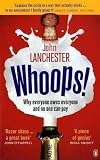
Lanchester writes regularly for the London Review of Books: a magazine that can be very left of centre in its approach and so it is no surprise that in his history of the 2008 credit crunch Lanchester is clear in his views that it was the fault of the bankers; aided and abetted by the insane right wing governments of Thatcher in the UK and Reagan in the US. Thatcher and Reagan were both history when the crash happened, but unfortunately the Americans had George W Bush and England had show more Chancellor Brown (Blair was probably on his welcome home hero tour after the glorious Iraqi war). When the “too big to fail” banks actually failed, neither government would consider nationalisation although both the US and the UK had to partially take control of the most desperate cases by becoming major shareholders. The result was taxpayers money being pumped into the banks (and their inflated bonuses) as a rescue package and the tax paying public are still footing the bill.
Lanchester’s book has the clearest explanation that I have read as to what actually went wrong. He starts off by reminding people about the mysteries of double entry bookkeeping and how this is the basis of much of the banks business; he goes on to explain about derivatives and how this led to CDS’s, CDO’s and the subprime loan market in the US. The bigger the risk the better the profit and if you can sell off the risk to other people then you really have touched the philosophers stone. He spices his explanation with actual events and some witty asides from the calamitous crash year. I have read other histories of the events in 2008, but Lanchester has simplified it enough for me to understand. It made me no less angry.
Lanchester has other strings to his bow; he ties up the crash within the context of events in the late 20th century, surmising that the fall of communism had left capitalism as the only viable working system and an increasing belief in the power of market forces. He also spends some time thinking about the psychology of the finance men (I am presuming that they were mostly men) who worked in the banks and the financial industry and who really believed that they were “Masters of the Universe”. They could not or would not believe that they were doing anything wrong. He also talks about the difference between an industry and a business: people who make things generally see themselves as an industry and people who make money are in business. Capitalism needs both to work, but government support has tipped the balance too far over to the business side and the banks are big, big business.
It all seems pretty simple now; a consistent policy in the US and the UK of deregulating the banks gave the green light for industry insiders to make lots of money. When the gravy train really picked up speed nobody wanted it to stop; too many people in the industry were getting very rich and they all believed that the money making spiral could go on forever. There were warnings, there were plenty of voices in the wilderness, but nobody wanted to listen. It seems obvious that if you are basing your business on extremely risky loans in the form of mortgages to people who are likely to default (the sub prime market in the US) then something has got to give. It beggars belief that regulatory bodies and government watchdogs went along for the ride. They must have realised it was not a question of if but when the crash would occur, although they might not have realised how big it was going to be.
This is a fascinating piece of recent history, but like most historical events it is one we are reluctant to heed in the future. My own view is that while culture in the Western world (and particularly the UK and The US) are based around greed then the credit crunch will certainly occur again. Nobody was held responsible within the banking industry (at the time I would have been happy to see some of them strung up) now I think that a more fitting punishment would have been to put them in specially built prisons (funded by their bonuses) with a sentence that stipulated that they must play roulette on a giant roulette wheel every day until they lost all their money (it would make great television). Shame and blame is the order of the day for me.
I really enjoyed getting angry again with John Lanchester. A Four star read show less
Lanchester’s book has the clearest explanation that I have read as to what actually went wrong. He starts off by reminding people about the mysteries of double entry bookkeeping and how this is the basis of much of the banks business; he goes on to explain about derivatives and how this led to CDS’s, CDO’s and the subprime loan market in the US. The bigger the risk the better the profit and if you can sell off the risk to other people then you really have touched the philosophers stone. He spices his explanation with actual events and some witty asides from the calamitous crash year. I have read other histories of the events in 2008, but Lanchester has simplified it enough for me to understand. It made me no less angry.
Lanchester has other strings to his bow; he ties up the crash within the context of events in the late 20th century, surmising that the fall of communism had left capitalism as the only viable working system and an increasing belief in the power of market forces. He also spends some time thinking about the psychology of the finance men (I am presuming that they were mostly men) who worked in the banks and the financial industry and who really believed that they were “Masters of the Universe”. They could not or would not believe that they were doing anything wrong. He also talks about the difference between an industry and a business: people who make things generally see themselves as an industry and people who make money are in business. Capitalism needs both to work, but government support has tipped the balance too far over to the business side and the banks are big, big business.
It all seems pretty simple now; a consistent policy in the US and the UK of deregulating the banks gave the green light for industry insiders to make lots of money. When the gravy train really picked up speed nobody wanted it to stop; too many people in the industry were getting very rich and they all believed that the money making spiral could go on forever. There were warnings, there were plenty of voices in the wilderness, but nobody wanted to listen. It seems obvious that if you are basing your business on extremely risky loans in the form of mortgages to people who are likely to default (the sub prime market in the US) then something has got to give. It beggars belief that regulatory bodies and government watchdogs went along for the ride. They must have realised it was not a question of if but when the crash would occur, although they might not have realised how big it was going to be.
This is a fascinating piece of recent history, but like most historical events it is one we are reluctant to heed in the future. My own view is that while culture in the Western world (and particularly the UK and The US) are based around greed then the credit crunch will certainly occur again. Nobody was held responsible within the banking industry (at the time I would have been happy to see some of them strung up) now I think that a more fitting punishment would have been to put them in specially built prisons (funded by their bonuses) with a sentence that stipulated that they must play roulette on a giant roulette wheel every day until they lost all their money (it would make great television). Shame and blame is the order of the day for me.
I really enjoyed getting angry again with John Lanchester. A Four star read show less
Lists
Fiction For Men (1)
1990s (1)
To Read (1)
Nineties (1)
Favourite Books (1)
Franklit (1)
Asia (1)
Europe (1)
Ocean Setting (1)
Five star books (1)
One Day (1)
Walls (1)
A Novel Cure (1)
Awards


You May Also Like


Associated Authors
Statistics
- Works
- 13
- Also by
- 10
- Members
- 6,483
- Popularity
- #3,789
- Rating
- 3.7
- Reviews
- 249
- ISBNs
- 234
- Languages
- 14
- Favorited
- 9