
Michael Frayn
Author of Headlong
About the Author
Michael Frayn is the author of the award-winning "Copenhagen" & twelve other plays, including "Noises Off". The most recent of his nine novels is "Headlong", a New York Times Editor's Choice & Booker Prize finalist. He lives in London. (Bowker Author Biography)
Series
Works by Michael Frayn
Chekhov plays : The cherry orchard + The seagull + Three sisters + Uncle Vanya + vaudevilles (1988) — Translator, Introduction — 98 copies
Speak After the Beep: Studies in the Art of Communicating with Inanimate and Semi-animate Objects (1995) 23 copies
L.A. Theatre Works : Frayn : Copenhagen {2012 sound recording} (2011) — Dramatist — 3 copies, 1 review
The Best of Michael Frayn 1 copy
Kataskopoi 1 copy
Chinamen, a one-act comedy 1 copy
Zwei Briten in Moskau. Roman 1 copy
Madness and Civilisation 1 copy
Never put off to Gomorrah 1 copy
Here [theatre programme] 1 copy
Frayn : Copenhagen : Hampstead Theatre : 27 Mar - 2 May 2026 {theatre programme} (2026) — Interviewee; Contributor [Copenhagen revisited] — 1 copy
Associated Works
The Seagull + Uncle Vanya + Three Sisters + The Cherry Orchard (1895) — Translator, some editions; Introduction, some editions — 1,290 copies, 3 reviews
Michael Frayn: Matchbox theatre : thirty short entertainments [theatre programme] — Contributor — 1 copy
Tagged
Common Knowledge
- Canonical name
- Frayn, Michael
- Legal name
- Frayn, Michael J.
- Birthdate
- 1933-09-08
- Gender
- male
- Education
- Emmanuel College, Cambridge University (BA|1957|Philosophy)
- Occupations
- photojournalist
translator
novelist
playwright
critic - Organizations
- Manchester Guardian
The Observer - Awards and honors
- Fellow, Royal Society of Literature (1969)
Somerset Maugham Award (1966)
Hawthornden Prize (1967)
London Evening Standard Award for Best Comedy (1975, 1980, 1982, 1998, 2003)
Laurence Olivier Award for Comedy of the Year (1976, 1982)
Tony Award for Best Play (1984, 2000) (show all 19)
New York Drama Critics' Circle Award for Best Foreign Play (1986, 2000)
International Emmy Award for Best Drama (1990)
Sunday Express Book of the Year (1991)
Critics' Circle Theatre Award for Best New Play (1998)
Prix Molière (1999)
The Heywood Hill Literary Prize (2002)
Bollinger Everyman Wodehouse Prize (2002)
Whitbread Prize for Fiction (2002)
Golden PEN Award (2003)
Commonwealth Writers' Prize (2003)
St. Louis Literary Award (2006)
Writer's Guild Lifetime Achievement Award (2010)
South Bank Show Outstanding Achievement Award (2012) - Agent
- Carol Greene (Greene & Heaton)
Rose Cobbe (United Agents) - Relationships
- Tomalin, Claire (wife)
Frayn, Rebecca (daughter) - Nationality
- UK
- Birthplace
- Mill Hill, Middlesex, England, UK
- Places of residence
- London, England, UK
Ewell, Epsom, Surrey, England, UK - Map Location
- England, UK
Members
Discussions
Skios by Michael Frayn in Booker Prize (August 2013)
Reviews
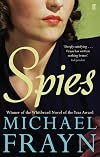
Another from the 2002 Booker longlist, this one is a quiet revelation and a masterly piece of storytelling.
The action is narrated by an old man revisiting the scene and remembering his childhood adventures in suburban England during the Second World War. The story is narrated from the childhood Stephen's perspective, with occasional interludes in which the older man reflects on the story, the nature of childhood memories and what he did and didn't know when.
Stephen is a follower, not a show more leader, a second child prey to bullies at school, who is befriended by Keith, a lonely child from a better school. Keith develops a fantasy that his mother is a German spy, and co-opts Stephen into a scheme to spy on her. The game becomes more serious because she does indeed have secrets, and the nature of these secrets and their gradual revelation form the core of the book, along with what Stephen learns about his own family.
Some of the key revelations are held back until very late in the book, others are hinted at earlier, but the whole is very satisfying. A lovely book which deserved better than a mere longlisting. show less
The action is narrated by an old man revisiting the scene and remembering his childhood adventures in suburban England during the Second World War. The story is narrated from the childhood Stephen's perspective, with occasional interludes in which the older man reflects on the story, the nature of childhood memories and what he did and didn't know when.
Stephen is a follower, not a show more leader, a second child prey to bullies at school, who is befriended by Keith, a lonely child from a better school. Keith develops a fantasy that his mother is a German spy, and co-opts Stephen into a scheme to spy on her. The game becomes more serious because she does indeed have secrets, and the nature of these secrets and their gradual revelation form the core of the book, along with what Stephen learns about his own family.
Some of the key revelations are held back until very late in the book, others are hinted at earlier, but the whole is very satisfying. A lovely book which deserved better than a mere longlisting. show less
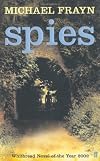
An elderly man goes back to the English village of his childhood and looks back at events during WWII. He recounts and examines his friendship with Keith, another boy in the village and an only child (and he is basically Keith's only friend). Everything changes when one day Keith announces his mother is a German spy.
This is a story that plays with perspective. It was interesting how the narrator sometimes referred to his childhood self in the 3rd person - distancing himself, examining this show more stranger's actions, looking back in puzzlement or dismay at who this person was. Other times he tells the story in the 1st person - bringing the reader in to the immediacy and urgency of the events, the importance that the boys gave them at the time, but also to keep the reader from fully knowing what is really going on (though we clearly know more than the boys). Frayn creates a tense atmosphere and mounting dread about what the truth behind the boys' suspicions is. He takes a fun child's game of spying on and tailing neighbors and makes it ominous, laden with layers & real dangers that the narrator only understands better in his adulthood. At the same time, he brings you in to his frustrations - those moments as a child when you want to do the right thing (or something other than what you actually do) but find yourself doing something else. Highly recommended. show less
This is a story that plays with perspective. It was interesting how the narrator sometimes referred to his childhood self in the 3rd person - distancing himself, examining this show more stranger's actions, looking back in puzzlement or dismay at who this person was. Other times he tells the story in the 1st person - bringing the reader in to the immediacy and urgency of the events, the importance that the boys gave them at the time, but also to keep the reader from fully knowing what is really going on (though we clearly know more than the boys). Frayn creates a tense atmosphere and mounting dread about what the truth behind the boys' suspicions is. He takes a fun child's game of spying on and tailing neighbors and makes it ominous, laden with layers & real dangers that the narrator only understands better in his adulthood. At the same time, he brings you in to his frustrations - those moments as a child when you want to do the right thing (or something other than what you actually do) but find yourself doing something else. Highly recommended. show less
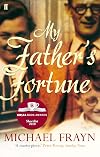
Extremely well written memoir, not just of Frayn's father, but naturally the whole family too and the early years of the author. The history of the family and the times they live though, particulaly in the 30's and 40's are fascinating. Frayn has a sense of timing and self-doubt that makes the book very funny at times, which is perhaps why the sad parts are all the more devastating, even when you see them coming. I rarely laugh out loud or cry at books, but this made me do both.
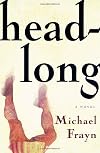
The protagonist, Martin Clay, an academic philosopher, believes he has found the "missing" 6th panel of a Bruegel painting in the home of his neighbor. The book examines the lengths Clay is willing to go to secure the painting for himself. While interesting, there are many too long ramblings about Renaissance art history, the geography of the Netherlands, etc. I guess we should expect that as Clay is a philosopher. The book depicts his mad obsession with this painting. Those who want a tidy show more ending will be disappointed. This book contained brilliant chapters and snoozer chapters. As an aside, I listened to this on audio. The reader was good, except I have never heard "Renaissance" pronounced "ruh NAY sonce. Yes, just like the first name Renee! 11 hours 15 min (400 pages) show less
Lists
A Novel Cure (1)
Booker Prize (3)
Plays I Like (2)
Non-fiction (1)
Dead narrators (1)
AP Lit (1)
Sonlight Books (1)
Pants on fire (1)
Awards


You May Also Like


Associated Authors
Statistics
- Works
- 86
- Also by
- 13
- Members
- 9,685
- Popularity
- #2,467
- Rating
- 3.7
- Reviews
- 276
- ISBNs
- 382
- Languages
- 16
- Favorited
- 29

