
Paul Muldoon
Author of The Lyrics: 1956 to the Present
About the Author
Paul Muldoon was born in Northern Ireland in 1951. He lives with his wife, the novelist Jean Hanff Korelitz, & his two children in New Jersey, & teaches at Princeton University. In 1999 he was elected Professor of Poetry at the University of Oxford. (Bowker Author Biography)
Image credit: From Wikipedia
Works by Paul Muldoon
The best American poetry — Editor — 15 copies
Collected Poems 3 copies
Selected Poems 1 copy
3 Poems [Printout] 1 copy
Epithalamium 1 copy
Johnny Cash, Forever Words 1 copy
Binge 1 copy
Immram 1 copy
Associated Works
Poetry Speaks Expanded: Hear Poets Read Their Own Work from Tennyson to Plath (2007) — Contributor — 158 copies, 2 reviews
Answering Back: Living Poets Reply to the Poetry of the Past (2007) — Contributor — 119 copies, 1 review
Buzz Words: Poems About Insects (Everyman's Library Pocket Poets Series) (2021) — Contributor — 56 copies
The Artists' and Writers' Cookbook: A Collection of Stories with Recipes (2016) — Contributor — 19 copies
Tagged
Common Knowledge
- Birthdate
- 1951-06-20
- Gender
- male
- Education
- Queen's University, Belfast, Northern Ireland, UK
- Occupations
- arts producer
poet
professor (Poetry)
professor (Humanities) - Organizations
- Belfast Group of poets
Bread Loaf School of English
University of Oxford
Princeton University - Awards and honors
- Faber Memorial Prize (1982)
Faber Memorial Prize (1992)
American Academy of Arts and Letters Academy Award (Literature, 1996) - Relationships
- Korelitz, Jean Hanff (wife)
- Nationality
- UK
- Birthplace
- Portadown, Armagh, Northern Ireland, UK
- Places of residence
- Portadown, Armagh, Northern Ireland, UK
Griggstown, New Jersey, USA - Map Location
- Northern Ireland, UK
Members
Reviews
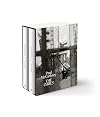
I should have known that I wouldn't be satisfied with simply borrowing a copy of The Lyrics: 1956 to the Present by Paul McCartney (with help from Paul Muldoon). Even though I've only had a chance to look at the first volume which covers his songs from A-K I know that this book set is one that I will most definitely be adding to my personal collection. Beautifully designed and executed, this is exactly what it purports to be: a collection of the lyrics that he's written from 1956 to the show more present day. I guess it must have been Paul Muldoon who suggested they arrange the songs alphabetically which was an excellent decision as it allows the reader to feel like they're sitting with Paul and hearing his reminiscences rather than a backlog of albums chronologically. Arranged into chapters by letter, each song lists the writer(s), vocal artist, recording studio, album, and year along with the entire lyrics. Following that is a short recollection from Paul about the story behind the song as well as various photographs and ephemera (some of which has never been seen before!). This is a gorgeous masterpiece of literature in my opinion. [A/N: And if you love a book that lays down flat then you're going to melt with rapture.] As you could probably guess, this is a 10/10 from me (and I haven't even gotten my hands on L-K yet!). show less
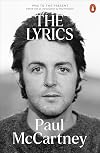
It doesn't take much for me to relapse into one of my occasional bouts of obsessive Beatlemania. The latest one, which has caused me to finally pick up Paul McCartney's definitive collection of his lyrics, was triggered by seeing the man himself live in concert a few weeks ago, finally fulfilling a lifelong goal. What The Lyrics: 1956 to the Present shows is something that also became apparent when witnessing Paul play live: he has shouldered the unprecedented burden of being a Beatle with show more dignity, and throughout the years has remained a good and open man at heart.
This essential goodness, it is true, makes him rather limited as an autobiographer. Paul is kind and optimistic, meaning there's none of the unfortunate (though juicy) muck-raking or score-settling that usually adds colour to rock autobiographies. He's endearingly upbeat, willing to embrace some of his sillier moments without apology. He's diplomatic, able to see things from others' perspectives, so anecdotes of band infighting are delivered with the caveat of the enjoyable memories they still made together. (Even his attempts at revisionism of aspects of the Beatles story are mild, gently suggesting an alternative view rather than arguing for one.) Paul's also able to take the sting out of any approaching controversy, and present his life story on his own terms, so much so that many readers won't even notice the complete absence of Heather Mills, his second wife, from mention in the book - even from a list of women who have shaped his life. (Good riddance, to be sure, but it also means this is an incomplete picture.)
In one sense, that's completely fine – there's already enough Philip Normans out there willing to dig through the bins and present that as the 'real' story. An autobiography – for Paul has said The Lyrics is the closest he'll ever get to an autobiography – that reflects the moderation and fundamental decency of its author is all well and good. It's also the case that much of this story has already been told: there are few surprises in these pages for dedicated Beatles fans, and even some of Paul's anecdotes are repeated – like how John Lennon was really a softie who would let down his glasses and say "it's only me" during arguments.
What we have, then, is not so much an autobiography – or even a lyric book – but a golden opportunity to spend some time with a man who has lived one of the most well-lived lives of the 20th century (and, happily, well into the 21st). Collated from a series of conversations Paul had with ghostwriter Paul Muldoon between 2015 and 2020 (with seven extra songs added for this paperback edition), the book is alphabetical rather than chronological, but most importantly it is conversational. We are left with, well, The Lyrics of some of the most remarkable songs of the 20th century in the company of the man who wrote (or sometimes co-wrote) them.
Fans already know the story of 'Yesterday', but to hear it told once more, for posterity, from the man himself feels historic. To hear Paul McCartney speak casually of the conception of Sgt. Pepper, of meeting John Lennon, of Revolver and Beatlemania and 'Hey Jude', is disconcertingly mundane, and only makes those creative achievements – and so many more – seem all the more remarkable. One of the most fascinating things about McCartney, particularly but not solely in the Beatles era, was how essential many of the tracks immediately felt to the culture. His solo song 'Maybe I'm Amazed' seems so right and simple, so effortless, that anyone could have done it – and yet only one man did, or could.
The reader doesn't finish The Lyrics with a different, or even a deeper, understanding of Paul McCartney or his life – at least, assuming their pre-existing view was a positive one. What they will have is their existing view reinforced: some of those incredible songs were indeed created simply, sometimes even idly, by young men who found themselves together at a moment where everything complemented everything else perfectly, and they made the most of that moment. As much as I would have liked a more conventional autobiography, with more of a raconteur angle that unpacked stories with greater depth than is allowed in The Lyrics' brief two- or three-page snippets per song, I can't blame Paul for taking the only approach he could to try to make sense of it all. The songs themselves. They are the evidence that it wasn't just an impossible dream. show less
This essential goodness, it is true, makes him rather limited as an autobiographer. Paul is kind and optimistic, meaning there's none of the unfortunate (though juicy) muck-raking or score-settling that usually adds colour to rock autobiographies. He's endearingly upbeat, willing to embrace some of his sillier moments without apology. He's diplomatic, able to see things from others' perspectives, so anecdotes of band infighting are delivered with the caveat of the enjoyable memories they still made together. (Even his attempts at revisionism of aspects of the Beatles story are mild, gently suggesting an alternative view rather than arguing for one.) Paul's also able to take the sting out of any approaching controversy, and present his life story on his own terms, so much so that many readers won't even notice the complete absence of Heather Mills, his second wife, from mention in the book - even from a list of women who have shaped his life. (Good riddance, to be sure, but it also means this is an incomplete picture.)
In one sense, that's completely fine – there's already enough Philip Normans out there willing to dig through the bins and present that as the 'real' story. An autobiography – for Paul has said The Lyrics is the closest he'll ever get to an autobiography – that reflects the moderation and fundamental decency of its author is all well and good. It's also the case that much of this story has already been told: there are few surprises in these pages for dedicated Beatles fans, and even some of Paul's anecdotes are repeated – like how John Lennon was really a softie who would let down his glasses and say "it's only me" during arguments.
What we have, then, is not so much an autobiography – or even a lyric book – but a golden opportunity to spend some time with a man who has lived one of the most well-lived lives of the 20th century (and, happily, well into the 21st). Collated from a series of conversations Paul had with ghostwriter Paul Muldoon between 2015 and 2020 (with seven extra songs added for this paperback edition), the book is alphabetical rather than chronological, but most importantly it is conversational. We are left with, well, The Lyrics of some of the most remarkable songs of the 20th century in the company of the man who wrote (or sometimes co-wrote) them.
Fans already know the story of 'Yesterday', but to hear it told once more, for posterity, from the man himself feels historic. To hear Paul McCartney speak casually of the conception of Sgt. Pepper, of meeting John Lennon, of Revolver and Beatlemania and 'Hey Jude', is disconcertingly mundane, and only makes those creative achievements – and so many more – seem all the more remarkable. One of the most fascinating things about McCartney, particularly but not solely in the Beatles era, was how essential many of the tracks immediately felt to the culture. His solo song 'Maybe I'm Amazed' seems so right and simple, so effortless, that anyone could have done it – and yet only one man did, or could.
The reader doesn't finish The Lyrics with a different, or even a deeper, understanding of Paul McCartney or his life – at least, assuming their pre-existing view was a positive one. What they will have is their existing view reinforced: some of those incredible songs were indeed created simply, sometimes even idly, by young men who found themselves together at a moment where everything complemented everything else perfectly, and they made the most of that moment. As much as I would have liked a more conventional autobiography, with more of a raconteur angle that unpacked stories with greater depth than is allowed in The Lyrics' brief two- or three-page snippets per song, I can't blame Paul for taking the only approach he could to try to make sense of it all. The songs themselves. They are the evidence that it wasn't just an impossible dream. show less
I adore this book. I'm not the world's biggest Paul fan — I've always been more partial to John, despite his destructive ways — but like nearly any person born in the last half of the 20th century, the Beatles (and to a far lesser extent, Paul's post-Beatles work) have formed a big part of the soundtrack to my life, and this book brings that background to the foreground in the most pleasant, and often enlightening, way. Far more than a collection of lyrics, this is the closest to a show more memoir McCartney is ever likely to give us, and it's a well done job. Each of the hundreds of songs here comes with a story: sometimes a couple of paragraphs and sometimes several pages. Naturally many of them tell the story of the song: how it came to be, where Paul was at (physically and mentally) at the time, why he made the musical choices he did. But there's a surprising amount of material, often very candid, about Paul's own life and, frankly, what it's like being Paul. I found most of this interesting and some of it moving. McCartney is a famously amiable man, but he's not without his depths and surprises. If you've ever hummed a Beatles song to yourself, I suspect you'd enjoy dipping into this. show less
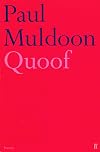
Paul Muldoon is a lover of language and its many forms, interpretations, and interminglings. In QUOOF, he explores animal sounds-as-language, punctuation, cultural word-use variations, and differences in English, from his native Northern Ireland and the United States. The titular poem refers to a private, family term for a hot water bottle, and the poet writes about taking the word into strange beds, not just as a literal object of warmth, but as a symbol of connection through communication. show more The word links him to his past, and to the future. In every poem, he takes language and symbolism to extremes, making fun and folly of it while still expressing the light and dark of human experience. QUOOF is a brilliant, playful, and at times absurd collection that adores and challenges language and our expression and understanding of it. show less
Lists
Awards


You May Also Like


Associated Authors
Statistics
- Works
- 85
- Also by
- 32
- Members
- 3,235
- Popularity
- #7,905
- Rating
- 3.8
- Reviews
- 23
- ISBNs
- 194
- Languages
- 6
- Favorited
- 3


