
Eavan Boland (1944–2020)
Author of The Making of a Poem: A Norton Anthology of Poetic Forms
About the Author
Eavan Boland, author of, most recently, "The Lost Land", is professor of English at Stanford University. (Bowker Author Biography)
Works by Eavan Boland
Falene e altre poesie 1 copy
Sal oceànica (Ocean Salt) 1 copy
Boland, Eavan Archive 1 copy
Trinity Workshop Poets 1 1 copy
Associated Works
Literary Genius: 25 Classic Writers Who Define English & American Literature (2007) — Contributor — 96 copies, 2 reviews
Ink Knows No Borders: Poems of the Immigrant and Refugee Experience (2019) — Contributor — 87 copies, 1 review
Orpheus and Company: Contemporary Poems on Greek Mythology (1999) — Contributor — 52 copies, 1 review
And We Came Outside and Saw the Stars Again: Writers from Around the World on the COVID-19 Pandemic (2020) — Contributor — 16 copies
Tagged
Common Knowledge
- Birthdate
- 1944-09-24
- Date of death
- 2020-04-27
- Gender
- female
- Education
- Trinity College, Dublin
- Occupations
- poet
writer
professor (English) - Organizations
- Irish Academy of Letters (Member)
Irish Arts Council (Board Member)
Washington University (Advisory Board Member - International Writers Center)
Stanford University (Director, Creative Writing Program) - Awards and honors
- Lannan Literary Award (Poetry, 1994)
American Ireland Fund Literary Award - Nationality
- Ireland
- Birthplace
- Dublin, Ireland
- Places of residence
- Dublin, Ireland
Stanford, California, USA - Associated Place (for map)
- Ireland
Members
Reviews
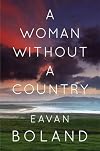
I am, like Eavan Boland, an Irishwoman of the diaspora—away from home in part because of opportunity, in part because of requirement. Those poems in this collection which deal with displacement, of not knowing where is home any more, resonated with me most strongly. Boland's phrasing doesn't always work for me, but when it does, I wish I had someone sitting next to me to whom I could turn and read snatches aloud because of the sheer rightness of them. The poems in her cycle on women and/in show more history give me the urge to write essays of my own inspired by them—some in celebration but some in critique, because Boland's view of women's history doesn't entirely accord with my own. I don't know if that's because her take on (Irish) women's history has changed over the years, or if mine now are different after several years spent slogging away at a dissertation on medieval women. It's not that I think Boland too pessimistic, too cynical at times—I write recovery history, but I'm not digging to find the lost Golden Age—but because in some poems (say, "Anonymity") I fear that her representation of the past can obscure the very women she's trying to foreground. Women were constricted, but they were not wholly constrained. Still, these are few poets who write with as much deftness and thought as does Boland—highly recommended. show less
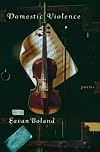
Atlantis – A Lost Sonnet
How on earth did it happen, I used to wonder
that a whole city–arches, pillars, colonnades,
not to mention vehicles and animals–had all
one fine day gone under?
I mean, I said to myself, the world was small then.
Surely a great city must have been missed?
I miss our old city–
white pepper, white pudding, you and I meeting
under fanlights and low skies to go home in it. Maybe
what really happened is
this: the old fable-makers searched hard for a word
to convey that what show more is gone is gone forever and
never found it. And so, in the best traditions of
where we come from, they gave their sorrow a name
and drowned it.
Incredible, no? One of the best poems I have ever read. It would be near impossible to have another poem that great in a collection, but there were still some very good poems collected here. Most of which deal with national identity, Irish national identity to be precise, and which would have turned me away as I tend to stay away from whatever has a whiff of nationalism. But national identity here isn't rooted in tales of past glories and victories and superiority, instead it's that of survival focusing on ordinary lives and deaths, not shying away from moments of great pain as famine and defeat for instance. Also collected here are poems on grief, death, and change. A good introduction to this writer. show less
How on earth did it happen, I used to wonder
that a whole city–arches, pillars, colonnades,
not to mention vehicles and animals–had all
one fine day gone under?
I mean, I said to myself, the world was small then.
Surely a great city must have been missed?
I miss our old city–
white pepper, white pudding, you and I meeting
under fanlights and low skies to go home in it. Maybe
what really happened is
this: the old fable-makers searched hard for a word
to convey that what show more is gone is gone forever and
never found it. And so, in the best traditions of
where we come from, they gave their sorrow a name
and drowned it.
Incredible, no? One of the best poems I have ever read. It would be near impossible to have another poem that great in a collection, but there were still some very good poems collected here. Most of which deal with national identity, Irish national identity to be precise, and which would have turned me away as I tend to stay away from whatever has a whiff of nationalism. But national identity here isn't rooted in tales of past glories and victories and superiority, instead it's that of survival focusing on ordinary lives and deaths, not shying away from moments of great pain as famine and defeat for instance. Also collected here are poems on grief, death, and change. A good introduction to this writer. show less
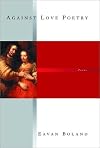
This is such a finely-crafted collection of poems, a meditation on the ordinariness of love, on the tension that exists between "womanhood" and the "servitudes of custom." Boland's observations are keen, picking apart not love but the conventions of love poetry, the expectations that lie behind relationships. 'Irish Poetry', 'Thanked Be Fortune' and especially 'Quarantine' are the stand-out poems for me—'Quarantine' startled me into near tears. I'm a generation or so further removed from show more the Famine than Boland is, but it's still a part of the landscape I grew up in, and Boland's writing about it always has a fierce power for me. show less
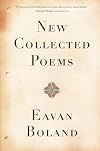
This anthology brings together dozens of poems from across four decades of Eavan Boland's career. As is to be expected with such a diverse collection, many of Boland's poems here don't quite work for me—particularly the earlier ones where she's struggling to find an independent voice, and some of the later ones, where she seems to become constrained by the expectations she seems to feel that her public persona places on her—and I sometimes get frustrated with Boland's tendency to opt for show more the blunt anvil of the sentence fragment when a subtler tool would have worked better. But when the poems are good, they're great, and returning to some I first encountered as a teenager I can see again the beginnings of my own grapplings with feminism, history, myth and colonialism. show less
Lists
Poetry Corner (4)
01 (1)
Craft Books (1)
Female Author (3)
War Literature (1)
Irish writers (1)
Women in War (1)
Awards


You May Also Like


Associated Authors
Statistics
- Works
- 41
- Also by
- 16
- Members
- 3,035
- Popularity
- #8,410
- Rating
- 3.9
- Reviews
- 29
- ISBNs
- 90
- Languages
- 2
- Favorited
- 8