
Howard Fast (1914–2003)
Author of April Morning
About the Author
Howard Fast was born on November 11, 1914 in Manhattan. At the age of 17, he sold his first story to Amazing Stories magazine. The next year he sold his first novel, Two Villages, to the Dial Press for a $100 advance. During his lifetime, he wrote more than 80 books, including Conceived in Liberty, show more The Unvanquished, Citizen Tom Paine, Freedom Road, April Morning, The Immigrants, Second Generation, The Establishment, The Legacy, and Greenwich. He won the Stalin International Peace Prize in 1953. A member of the Communist party, he served three months in a federal prison in 1950 for refusing to testify about his political activity. Blacklisted as a result, he founded his own publishing house, Blue Heron Press, which released his novel Spartacus in 1951. In 1957, he wrote a book about his political experiences entitled The Naked God. He also wrote a series of detective stories under the name E. V. Cunningham. He died on March 12, 2003 at the age of 88. (Bowker Author Biography) show less
Disambiguation Notice:
E.V. Cunningham and Walter Ericson are pseudonyms for Howard Melvin Fast.
Image credit: Howard Fast (1914-2003) from Life in Legacy
Series
Works by Howard Fast
The Call of Fife and Drum: Three Novels of the Revolution, the Unvanquished, Conceived in Liberty, the Proud and the Free (1987) 11 copies
The Bookman 8 copies
The Masao Masuto Mysteries Volume Two: The Case of the Sliding Pool, The Case of the Kidnapped Angel, and The Case of the Murdered Mackenzie (2018) 3 copies
AADIVIDROHI 3 copies
May day, 1947 3 copies
Collected Stories of Fantasy and Science Fiction: The General Zapped an Angel and A Touch of Infinity (2018) 3 copies
The Hollywood blacklist 2 copies
In Freiheit gezeugt 1 copy
اسپارتاکوس 1 copy
Az utolsó határ regény 1 copy
1942 UNVANQUISHED HOWARD FAST REVOLUTIONARY WAR GEORGE WASHINGTON WITH MAPS [Hardcover] HOWARD FAST 1 copy
Za slobodou : román 1 copy
A Filha do Imigrante 1 copy
Spartacus. Regňy 1 copy
The Wound 1 copy
Biblioteca de selecciones. Sally. El capricho del rey. Christiaan Barnard, mi vida. La selva cruel 1 copy
Samar Gatha 1 copy
স্বপ্ন যুদ্ধ স্বাধীনতা 1 copy
TARAMUL SPERANTEI 1 copy
Karriere : Roman. 1 copy
La última cena 1 copy
O jantar do senador 1 copy
Immigranterne - Bind II 1 copy
Lugar de sacrificio 1 copy
ברניקה : בתו של אגריפס 1 copy
The Imigrants 1 copy
Konec stopy 1 copy
الحشرة الغريبة 1 copy
Le Serment 1 copy
הדור השני 1 copy
המהגרים 1 copy
המימסד 1 copy
Sahitya Aur Yatharth 1 copy
Associated Works
The Jewish caravan : great stories of twenty-five centuries (1965) — Contributor, some editions — 141 copies
Reader's Digest Condensed Books 1967 v02: My Boy John That Went to Sea / One Summer in Between / The Broken Seal / Dibs in Search of Self / The Road / Sally (1967) — Author — 51 copies
Reader's Digest Condensed Books 1972 v04: The Waltz Kings / The Terminal Man / The Dwelling Place / A World to Care For / The Hessian (1972) — Contributor — 31 copies
The Magazine of Fantasy and Science Fiction November 1969, Vol. 37, No. 5 (1969) — Contributor — 15 copies
The Magazine of Fantasy and Science Fiction June 1960, Vol. 18, No. 6 (1960) — Contributor — 12 copies
Reader's Digest Condensed Books: In The Frame • Baker's Hawk • Bring on the Empty Horses • Lord of the Far Island • The Hessian (1976) 4 copies
Reader's Digest Condensed Books: Flood • Sadie Shapiro, Matchmaker • Passage West • The Hessian — Author — 1 copy
The Case of the Russian Diplomat | Maigret and the Hotel Majestic | Death of an Expert Witness (1978) 1 copy
The Ethnic Image in Modern American Literature, 1900-1950, Volumes 1-2 (1984) — Contributor — 1 copy
Reader's Digest Auswahlbücher 81 - Sturm ist ihre Ernte. Nehmen Sie platz. Der Trommelknab. Shiralee (1974) — Contributor — 1 copy
Tagged
Common Knowledge
- Legal name
- Fast, Howard Melvin
- Other names
- Cunningham, E. V.
Ericson, Walter - Birthdate
- 1914-11-11
- Date of death
- 2003-03-12
- Gender
- male
- Occupations
- novelist
television writer - Organizations
- American Communist Party
- Awards and honors
- Stalin International Peace Prize (1953)
- Relationships
- Fast, Julius (brother)
Sher, Barbara (sister-in-law)
Fast, Jonathan (son)
Jong, Erica (former daughter-in-law)
Jong-Fast, Molly (granddaughter) - Nationality
- USA
- Birthplace
- Manhattan, New York, New York, USA
- Places of residence
- California, USA
Teaneck, New Jersey, USA - Place of death
- Old Greenwich, Connecticut, USA
- Disambiguation notice
- E.V. Cunningham and Walter Ericson are pseudonyms for Howard Melvin Fast.
- Associated Place (for map)
- USA
Members
Reviews
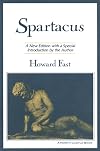
Howard Fast published Spartacus himself in 1951. He had served a short prison sentence the previous year for the crime of committing un-American activities in the McCarthy era and he could not find a publisher for the novel that he had conceived in prison. Fast says in the foreword to the 1996 edition that he owes something of its coming into being as a result of his time in prison:
war and prison are difficult for a writer to approach without seeing something of it himself.
This may account show more for his damming indictment of the Roman civilisation which was based on slavery. The Tokens of Punishment: the 6000 slaves crucified along the length of the Appian way from Rome to Capua in 71BC forms the grisly backdrop to the opening scenes of the novel and they are never far away as the story of the slave revolt led by Spartacus unrolls.
Stanley Kubrick's film has become more famous than the book on which it is based and as good as the film is, it is conceived as an entertainment: albeit with a moral message. The message from the film is the fight against injustice and the right to be free. Fast's book covers these themes too but also attacks the whole moral fibre of the Roman Empire. The story of the slave revolt is told largely from the viewpoint of those people who knew Spartacus or the history of the uprising. Caius the son of a wealthy patrician and his two sister decide to travel to Capua down the Appian way that has just been reopened with the decaying bodies of the crucified slaves lining the route. After a days travelling they stay at the Villa of their wealthy uncle just off the road where they meet Crassus the Roman general who crushed the revolt, Grachus an elderly politician and the younger Cicero a representative of the younger power brokers who had pushed forward the idea of the Tokens of Punishment. Caius and the sisters have no interest in the the 'servile war' they are hedonistic young people who are only interested in their own comfort and entertainment, but find themselves surrounded by a group of people who cannot get the revolt free from their minds. Crassus is pressed to tell how he defeated the army of Spartacus which seemed invincible at one stage and he tells how he set about knowing his enemy by searching out his history, by interviewing his slave master. There follows a story of the young Caius who witnessed Spartacus fight as a gladiator and others chip in with their knowledge of the war and what they have heard about Spartacus.
Crassus offers to escort the young people on the final leg of the journey to Capua and when they arrive they witness the crucifixion of the last of the beaten gladiators. This turns out to be David: Spartacus right hand man and through the agony of his crucifixion he tells his story. Finally Crassus and Grachus become obsessed with tracking down Varinia; Spartacus wife who it was rumoured survived the final battle. It would seem they are hoping in their own way for perhaps some sort of redemption. Fast therefore tells the story of Spartacus from the viewpoints of those that got closest to him. He skilfully fills in a short history of the wars while examining the relationships of the three generations of Romans that are shaken by the recent events. The patricians and the most wealthy citizens still believe in the power of the Roman state and are proud of the civilisation that has given them such a good life style. The telling of the story of Spartacus however reveals the rot at the core of Roman power. The Tokens of punishment present throughout the novel, the crucifixion of David, and the story of Spartacus is juxtaposed with the superabundances of the lifestyles of the wealthy Romans. The rich are getting richer at the expense of the poor, but the impoverished Roman citizens can still look down on the vast slave population, but the slaves have become a threat.
The story of the slave revolt is told by witnesses to the events, which may be unreliable, for example David and Varinia who paint a picture of Spartacus as the most gentle of human beings, a father figure to all those who served him and a shinning example of a civilised man. The fight for freedom is altruistic in their eyes and Fasts prose can become a little sentimental even a little naive, especially when contrasted with the young Cicero's view of the world which is Machiavellian:
"There is an elite—a group of superior men. Whether the gods made them that way or circumstances made them that way is not something to argue. But they are men fit to rule, and because they are fit to rule, they do rule.
We rationalize the irrational. We convince the people that the greatest fulfillment in
life is to die for the rich. We convince the rich that they must part with some of their riches to keep the rest. We are magicians. We cast an illusion, and the illusion is foolproof. We say to the people—you are the power. Your vote is the source of Rome’s strength and glory. You are the only free people in the world. There is nothing more precious than your freedom nothing more admirable than your civilization. And you control it; you are the power. And then they vote for our candidates. They weep at our defeats. They laugh with joy at our victories. And they feel proud and superior because they are not slaves."
Howard Fast's prose does justice to the story that unfolds, the battle scenes are realistically described and Spartacus experiences as a gladiator and a slave in the mines are moving and disturbing, the agony of David on the cross whose troubled mind is shot through with pain is as close to realism as I want to get. The back story of the profligate life styles and sexual mores of the wealthy Romans and their illicit encounters are also well documented. This is a novel of Historical Fiction and while Fast is keen not to stray too far from what is known about Spartacus he is also aware he is writing a novel that needs to appeal to a majority of readers and so he makes it an engrossing read, fleshing out his characters to fit the historical facts. He ended up with a best selling novel and as he has one of his character say:
“No, indeed. Two things all men are convinced they have talent for, with neither preparation nor study involved. Writing a book and leading an army. And with good reason, since such an amazing number of idiots get to do both.
Howard Fast is not one of the idiots and not only did he write a most entertaining novel but he also made some political points as well. I was surprised at how well he made his story undermine the idea of glorious classical antiquity. This was a society that was based on slavery with a rigid class system and Fast does not let his readers escape without acknowledging these facts. A thoroughly enjoyable read and a well thought out novel 4.5 stars. show less
war and prison are difficult for a writer to approach without seeing something of it himself.
This may account show more for his damming indictment of the Roman civilisation which was based on slavery. The Tokens of Punishment: the 6000 slaves crucified along the length of the Appian way from Rome to Capua in 71BC forms the grisly backdrop to the opening scenes of the novel and they are never far away as the story of the slave revolt led by Spartacus unrolls.
Stanley Kubrick's film has become more famous than the book on which it is based and as good as the film is, it is conceived as an entertainment: albeit with a moral message. The message from the film is the fight against injustice and the right to be free. Fast's book covers these themes too but also attacks the whole moral fibre of the Roman Empire. The story of the slave revolt is told largely from the viewpoint of those people who knew Spartacus or the history of the uprising. Caius the son of a wealthy patrician and his two sister decide to travel to Capua down the Appian way that has just been reopened with the decaying bodies of the crucified slaves lining the route. After a days travelling they stay at the Villa of their wealthy uncle just off the road where they meet Crassus the Roman general who crushed the revolt, Grachus an elderly politician and the younger Cicero a representative of the younger power brokers who had pushed forward the idea of the Tokens of Punishment. Caius and the sisters have no interest in the the 'servile war' they are hedonistic young people who are only interested in their own comfort and entertainment, but find themselves surrounded by a group of people who cannot get the revolt free from their minds. Crassus is pressed to tell how he defeated the army of Spartacus which seemed invincible at one stage and he tells how he set about knowing his enemy by searching out his history, by interviewing his slave master. There follows a story of the young Caius who witnessed Spartacus fight as a gladiator and others chip in with their knowledge of the war and what they have heard about Spartacus.
Crassus offers to escort the young people on the final leg of the journey to Capua and when they arrive they witness the crucifixion of the last of the beaten gladiators. This turns out to be David: Spartacus right hand man and through the agony of his crucifixion he tells his story. Finally Crassus and Grachus become obsessed with tracking down Varinia; Spartacus wife who it was rumoured survived the final battle. It would seem they are hoping in their own way for perhaps some sort of redemption. Fast therefore tells the story of Spartacus from the viewpoints of those that got closest to him. He skilfully fills in a short history of the wars while examining the relationships of the three generations of Romans that are shaken by the recent events. The patricians and the most wealthy citizens still believe in the power of the Roman state and are proud of the civilisation that has given them such a good life style. The telling of the story of Spartacus however reveals the rot at the core of Roman power. The Tokens of punishment present throughout the novel, the crucifixion of David, and the story of Spartacus is juxtaposed with the superabundances of the lifestyles of the wealthy Romans. The rich are getting richer at the expense of the poor, but the impoverished Roman citizens can still look down on the vast slave population, but the slaves have become a threat.
The story of the slave revolt is told by witnesses to the events, which may be unreliable, for example David and Varinia who paint a picture of Spartacus as the most gentle of human beings, a father figure to all those who served him and a shinning example of a civilised man. The fight for freedom is altruistic in their eyes and Fasts prose can become a little sentimental even a little naive, especially when contrasted with the young Cicero's view of the world which is Machiavellian:
"There is an elite—a group of superior men. Whether the gods made them that way or circumstances made them that way is not something to argue. But they are men fit to rule, and because they are fit to rule, they do rule.
We rationalize the irrational. We convince the people that the greatest fulfillment in
life is to die for the rich. We convince the rich that they must part with some of their riches to keep the rest. We are magicians. We cast an illusion, and the illusion is foolproof. We say to the people—you are the power. Your vote is the source of Rome’s strength and glory. You are the only free people in the world. There is nothing more precious than your freedom nothing more admirable than your civilization. And you control it; you are the power. And then they vote for our candidates. They weep at our defeats. They laugh with joy at our victories. And they feel proud and superior because they are not slaves."
Howard Fast's prose does justice to the story that unfolds, the battle scenes are realistically described and Spartacus experiences as a gladiator and a slave in the mines are moving and disturbing, the agony of David on the cross whose troubled mind is shot through with pain is as close to realism as I want to get. The back story of the profligate life styles and sexual mores of the wealthy Romans and their illicit encounters are also well documented. This is a novel of Historical Fiction and while Fast is keen not to stray too far from what is known about Spartacus he is also aware he is writing a novel that needs to appeal to a majority of readers and so he makes it an engrossing read, fleshing out his characters to fit the historical facts. He ended up with a best selling novel and as he has one of his character say:
“No, indeed. Two things all men are convinced they have talent for, with neither preparation nor study involved. Writing a book and leading an army. And with good reason, since such an amazing number of idiots get to do both.
Howard Fast is not one of the idiots and not only did he write a most entertaining novel but he also made some political points as well. I was surprised at how well he made his story undermine the idea of glorious classical antiquity. This was a society that was based on slavery with a rigid class system and Fast does not let his readers escape without acknowledging these facts. A thoroughly enjoyable read and a well thought out novel 4.5 stars. show less

Howard Fast (1914-2003) fue una figura titánica y controvertida de las letras estadounidenses del siglo XX. Conocido primordialmente por su compromiso político y sus novelas históricas —siendo Espartaco su obra más imperecedera—, Fast fue un autor marcado por la persecución durante el macartismo, lo que forjó en él una sensibilidad aguzada hacia la injusticia y la deshumanización. Su incursión en la ciencia ficción y el relato fantástico no debe entenderse como una huida de la show more realidad, sino como una sofisticada herramienta alegórica para diseccionar las contradicciones de la civilización moderna desde un prisma ético y, a menudo, mordaz.
Este libro no es la típica colección de naves espaciales y batallas galácticas. Howard Fast utiliza la ciencia ficción para explorar la ética, la política y la psicología. Sus historias suelen partir de un hecho cotidiano o un invento científico que, de repente, pone en jaque todo lo que creemos saber sobre nuestra importancia en el universo. Es un libro sobre la humildad y la ceguera humana.
Howard Fast no era un científico, era un humanista que usaba la ciencia como escenario. Lo que hace que este libro sea especial para un lector actual es que no ha envejecido en sus temas. Mientras que otros autores de los 70 se centraban en máquinas que hoy parecen calculadoras viejas, Fast se centraba en la soberbia, el miedo y la esperanza.
Estos son los 13 relatos incluidos en "Un toque de infinito" (A Touch of Infinity: Thirteen New Stories of Fantasy and Science Fiction, 1973):
El aro (The Hoop, 1972): Es una sátira brillante sobre la burocracia. Un científico inventa un aro que "curva" el espacio (lo que entra por un lado desaparece). En lugar de usarlo para viajar a las estrellas, el gobierno de Nueva York lo usa como el vertedero definitivo para eliminar la basura. Es una crítica mordaz a cómo nuestra falta de imaginación puede arruinar lo sublime.
El precio (The Price, 1973): Plantea un dilema moral sobre el éxito y lo que estamos dispuestos a sacrificar. Fast explora aquí la ambición humana con un toque casi fáustico, recordándonos que nada es gratis en el orden del universo.
Cuestión de tamaño (A Matter of Size, 1973): Una de las piezas más inquietantes. Una mujer mata a un ser diminuto en su casa, solo para darse cuenta después de que era un hombre completo, pero a escala microscópica. Reflexiona sobre la crueldad accidental y cómo el tamaño influye en nuestra empatía.
Un agujero en el piso (The Hole in the Floor, 1973): Juega con la idea de las dimensiones paralelas. Lo que parece un accidente doméstico o un fallo en la construcción se convierte en un recordatorio de que vivimos sobre un abismo de lo desconocido.
La profesión del General Hardy (General Hardy's Profession, 1973): Aquí Fast saca su faceta más política y antibelicista. Es una crítica feroz a la mentalidad militar y a cómo la guerra despoja al individuo de su humanidad, convirtiéndolo en un engranaje frío y eficiente.
Razón vital (Show Cause, 1973): Un grupo de humanos debe defender la existencia de nuestra especie ante una entidad superior. Es un relato judicial y filosófico que nos obliga a preguntarnos: ¿Realmente merecemos ocupar un lugar en el cosmos?
No de un golpe seco (Not with a Bang, 1973): El título alude a T.S. Eliot y el fin del mundo. Fast explora el apocalipsis no como una gran explosión, sino como un proceso gradual de pérdida de sentido y agotamiento de la civilización.
El talento de Harvey (The Talent of Harvey, 1973): Una historia sobre capacidades extraordinarias en personas ordinarias. Fast se pregunta qué haríamos si alguien entre nosotros tuviera un poder que rompiera las leyes de la física, y la respuesta suele ser la incomprensión o el miedo.
La mente de Dios (The Mind of God, 1973): Un relato profundamente metafísico. Explora la relación entre la conciencia humana y la estructura del universo. Es quizás el cuento más denso, donde la ciencia y la mística se dan la mano.
OVNI (UFO, 1973): Fast se aleja de los clichés de hombrecillos verdes para tratar el fenómeno desde la perspectiva del impacto social y el miedo a lo "otro". Es una pieza sobre la incomunicación.
Cephes 5 (Cephes 5, 1973): Trata sobre la colonización y el contacto con inteligencias alienígenas. Lo interesante es cómo el autor proyecta los pecados del colonialismo terrestre en el espacio exterior.
La semilla pragmática (The Pragmatic Seed, 1973): Una reflexión sobre la ecología y la supervivencia. ¿Qué pasa cuando la naturaleza, o algo más allá de ella, decide que el pragmatismo humano es una amenaza para la vida?
El huevo (The Egg, 1973): El libro cierra con una nota de maravilla y fragilidad. El descubrimiento de algo antiguo y hermoso (un ave de otro tiempo o lugar) sirve como espejo para la capacidad de asombro de la humanidad.
Su estilo es limpio y directo. No se pierde en explicaciones técnicas complejas (el "aro" de Hepplemeyer funciona porque sí, y eso basta para la historia). Lo que le interesa es qué hace el alcalde de Nueva York con ese aro. Es una lectura recomendada para quienes disfrutan de historias que dejan una pregunta rondando en la cabeza antes de dormir. No es un libro de respuestas, sino de preguntas muy bien planteadas sobre nuestro toque personal de infinito. show less
Este libro no es la típica colección de naves espaciales y batallas galácticas. Howard Fast utiliza la ciencia ficción para explorar la ética, la política y la psicología. Sus historias suelen partir de un hecho cotidiano o un invento científico que, de repente, pone en jaque todo lo que creemos saber sobre nuestra importancia en el universo. Es un libro sobre la humildad y la ceguera humana.
Howard Fast no era un científico, era un humanista que usaba la ciencia como escenario. Lo que hace que este libro sea especial para un lector actual es que no ha envejecido en sus temas. Mientras que otros autores de los 70 se centraban en máquinas que hoy parecen calculadoras viejas, Fast se centraba en la soberbia, el miedo y la esperanza.
Estos son los 13 relatos incluidos en "Un toque de infinito" (A Touch of Infinity: Thirteen New Stories of Fantasy and Science Fiction, 1973):
El aro (The Hoop, 1972): Es una sátira brillante sobre la burocracia. Un científico inventa un aro que "curva" el espacio (lo que entra por un lado desaparece). En lugar de usarlo para viajar a las estrellas, el gobierno de Nueva York lo usa como el vertedero definitivo para eliminar la basura. Es una crítica mordaz a cómo nuestra falta de imaginación puede arruinar lo sublime.
El precio (The Price, 1973): Plantea un dilema moral sobre el éxito y lo que estamos dispuestos a sacrificar. Fast explora aquí la ambición humana con un toque casi fáustico, recordándonos que nada es gratis en el orden del universo.
Cuestión de tamaño (A Matter of Size, 1973): Una de las piezas más inquietantes. Una mujer mata a un ser diminuto en su casa, solo para darse cuenta después de que era un hombre completo, pero a escala microscópica. Reflexiona sobre la crueldad accidental y cómo el tamaño influye en nuestra empatía.
Un agujero en el piso (The Hole in the Floor, 1973): Juega con la idea de las dimensiones paralelas. Lo que parece un accidente doméstico o un fallo en la construcción se convierte en un recordatorio de que vivimos sobre un abismo de lo desconocido.
La profesión del General Hardy (General Hardy's Profession, 1973): Aquí Fast saca su faceta más política y antibelicista. Es una crítica feroz a la mentalidad militar y a cómo la guerra despoja al individuo de su humanidad, convirtiéndolo en un engranaje frío y eficiente.
Razón vital (Show Cause, 1973): Un grupo de humanos debe defender la existencia de nuestra especie ante una entidad superior. Es un relato judicial y filosófico que nos obliga a preguntarnos: ¿Realmente merecemos ocupar un lugar en el cosmos?
No de un golpe seco (Not with a Bang, 1973): El título alude a T.S. Eliot y el fin del mundo. Fast explora el apocalipsis no como una gran explosión, sino como un proceso gradual de pérdida de sentido y agotamiento de la civilización.
El talento de Harvey (The Talent of Harvey, 1973): Una historia sobre capacidades extraordinarias en personas ordinarias. Fast se pregunta qué haríamos si alguien entre nosotros tuviera un poder que rompiera las leyes de la física, y la respuesta suele ser la incomprensión o el miedo.
La mente de Dios (The Mind of God, 1973): Un relato profundamente metafísico. Explora la relación entre la conciencia humana y la estructura del universo. Es quizás el cuento más denso, donde la ciencia y la mística se dan la mano.
OVNI (UFO, 1973): Fast se aleja de los clichés de hombrecillos verdes para tratar el fenómeno desde la perspectiva del impacto social y el miedo a lo "otro". Es una pieza sobre la incomunicación.
Cephes 5 (Cephes 5, 1973): Trata sobre la colonización y el contacto con inteligencias alienígenas. Lo interesante es cómo el autor proyecta los pecados del colonialismo terrestre en el espacio exterior.
La semilla pragmática (The Pragmatic Seed, 1973): Una reflexión sobre la ecología y la supervivencia. ¿Qué pasa cuando la naturaleza, o algo más allá de ella, decide que el pragmatismo humano es una amenaza para la vida?
El huevo (The Egg, 1973): El libro cierra con una nota de maravilla y fragilidad. El descubrimiento de algo antiguo y hermoso (un ave de otro tiempo o lugar) sirve como espejo para la capacidad de asombro de la humanidad.
Su estilo es limpio y directo. No se pierde en explicaciones técnicas complejas (el "aro" de Hepplemeyer funciona porque sí, y eso basta para la historia). Lo que le interesa es qué hace el alcalde de Nueva York con ese aro. Es una lectura recomendada para quienes disfrutan de historias que dejan una pregunta rondando en la cabeza antes de dormir. No es un libro de respuestas, sino de preguntas muy bien planteadas sobre nuestro toque personal de infinito. show less

Howard Fast (1914-2003) fue un prolífico escritor estadounidense cuya obra abarca géneros tan diversos como la novela histórica, el thriller, la ciencia ficción y el ensayo político. Nacido en Nueva York en el seno de una familia obrera, Fast destacó desde joven por su compromiso social y su activismo político, lo que lo llevó a afiliarse al Partido Comunista en la década de 1940, una decisión que marcó tanto su vida como su carrera. Durante el macartismo, fue perseguido y show more encarcelado por sus ideas, lo que no impidió que continuara escribiendo, incluso bajo seudónimos como E.V. Cunningham. Su novela más conocida, Espartaco (1951), adaptada al cine por Stanley Kubrick, refleja su interés por las luchas de clases y la resistencia frente a la opresión. En el ámbito de la ciencia ficción, Fast exploró temas filosóficos y éticos, como la naturaleza de la humanidad, el impacto del entorno en el desarrollo humano y las implicaciones de los avances tecnológicos, a menudo con un enfoque humanista y crítico.
"Al borde del futuro" (The Edge of Tomorrow, 1961), traducido al español por Luis Echávarri y publicado en 1964 con ilustración de Alberto Pujolar, es una antología de siete relatos de ciencia ficción escritos por Howard Fast entre 1959 y 1960. Cada historia, impregnada de un tono especulativo y filosófico, explora los límites de la humanidad, la ciencia y la sociedad, abordando cuestiones como la evolución, la identidad, el contacto extraterrestre y las paradojas del progreso tecnológico.
En "Los primeros hombres" (The First Men, 1960), se narra un ambicioso experimento para criar a niños con un potencial intelectual excepcional en un entorno aislado, con el objetivo de liberar capacidades humanas hasta entonces reprimidas. "La gran hormiga" (The Large Ant, 1960) plantea un inquietante encuentro con una criatura alienígena que desafía las nociones humanas de moralidad y violencia. "Del tiempo y de los gatos" (Of Time and Cats, 1959) combina humor y ciencia ficción para explorar las consecuencias imprevistas de la manipulación temporal. En "Catón el marciano" (Cato the Martian, 1960), un supuesto habitante de Marte ofrece una perspectiva externa sobre la humanidad, cuestionando su comportamiento belicoso. "La caja fría, fría" (The Cold, Cold Box, 1959) examina el sacrificio y la resistencia humana frente a una amenaza tecnológica opresiva. "La tienda marciana" (The Martian Shop, 1959) presenta un misterioso establecimiento comercial que desencadena una crisis global al revelar secretos extraterrestres. Finalmente, "La visión del edén" (The Sight of Eden, 1960) sigue a una tripulación espacial que descubre un planeta idílico, enfrentándose a preguntas sobre la naturaleza del paraíso y el lugar de la humanidad en el cosmos.
A través de estas narraciones, Fast teje una reflexión sobre el potencial y las limitaciones de la especie humana, cuestionando si el progreso científico y social puede redimir o condenar a la humanidad. Con un estilo accesible pero cargado de simbolismo, la antología invita al lector a reconsiderar los fundamentos de la civilización y su relación con lo desconocido.
"Al borde del futuro" se erige como una obra paradigmática dentro de la ciencia ficción de la Guerra Fría, un período marcado por la ansiedad tecnológica, el temor a la aniquilación nuclear y la fascinación por lo extraterrestre. Esta colección de relatos no solo refleja las inquietudes de su tiempo, sino que trasciende su contexto histórico para ofrecer una meditación atemporal sobre la condición humana, la ética de la ciencia y el impacto del entorno en la identidad. Fast, conocido por su compromiso social y su aguda crítica a las estructuras de poder, traslada estas preocupaciones al terreno especulativo, utilizando la ciencia ficción como un lente para examinar las contradicciones inherentes a la humanidad.
Cada relato de la antología se distingue por su capacidad para combinar una narrativa accesible con una profundidad filosófica que invita a la reflexión. En "Los primeros hombres", Fast explora la hipótesis de que el entorno social moldea de manera decisiva la mente humana, planteando una pregunta que resuena a lo largo de la obra: "¿Cuál es entonces la esencia del hombre?". Esta interrogante, formulada en una carta ficticia dentro del relato, encapsula el núcleo temático de la antología: la búsqueda de la esencia humana en un mundo donde la ciencia y la cultura pueden tanto liberar como aprisionar. La historia, estructurada como una serie de correspondencias, utiliza un tono epistolar que otorga verosimilitud a su premisa especulativa, mientras que su final abierto deja al lector sumido en un asombro inquietante.
Otros relatos, como "La gran hormiga" y "Catón el marciano", adoptan un enfoque más alegórico, utilizando encuentros con lo alienígena para reflejar los defectos humanos. En el primero, Fast cuestiona la moralidad de la violencia a través de un incidente aparentemente trivial que escala hasta revelar verdades perturbadoras sobre la naturaleza humana: "Si matamos por instinto, ¿qué nos distingue de las bestias?". En el segundo, la perspectiva externa de un supuesto marciano sirve como un espejo crítico que expone la beligerancia y la hipocresía de la humanidad: "Hombre, ¿qué es un hombre? Una suma de recuerdos encerrados en la mente". Estos relatos resuenan con obras contemporáneas de autores como Ray Bradbury o Philip K. Dick, pero Fast se distingue por su enfoque humanista, que evita el cinismo y apuesta por la posibilidad de redención, aunque esta sea incierta.
"La tienda marciana" y "La visión del edén" destacan por su capacidad para imaginar lo extraterrestre no como una amenaza, sino como un catalizador para la introspección. En el primero, la aparición de una misteriosa tienda en Nueva York desencadena una crisis global que pone en entredicho las estructuras de poder terrestres, mientras que en el segundo, la descripción de un planeta idílico confronta a los personajes con sus propios anhelos y limitaciones. Este último relato culmina con una reflexión melancólica sobre la humanidad: "Todos los hombres esperan", un eco de la esperanza frágil que permea toda la antología.
Desde un punto de vista estilístico, Fast demuestra un dominio notable del relato corto, utilizando una prosa clara pero evocadora que equilibra la especulación científica con el drama humano. Su habilidad para construir mundos creíbles en pocas páginas, combinada con su interés por los dilemas éticos, recuerda a las mejores obras de la ciencia ficción de los años 50 y 60, como las de Isaac Asimov o Arthur C. Clarke. Sin embargo, Fast impregna sus historias de un trasfondo político y social que refleja su experiencia como activista, lo que confiere a la antología un tono distintivo.
En conjunto, Al borde del futuro es una obra que captura la imaginación y desafía al lector a reconsiderar los fundamentos de la humanidad. Su mezcla de especulación científica, crítica social y humanismo la convierte en una contribución significativa al género. show less
"Al borde del futuro" (The Edge of Tomorrow, 1961), traducido al español por Luis Echávarri y publicado en 1964 con ilustración de Alberto Pujolar, es una antología de siete relatos de ciencia ficción escritos por Howard Fast entre 1959 y 1960. Cada historia, impregnada de un tono especulativo y filosófico, explora los límites de la humanidad, la ciencia y la sociedad, abordando cuestiones como la evolución, la identidad, el contacto extraterrestre y las paradojas del progreso tecnológico.
En "Los primeros hombres" (The First Men, 1960), se narra un ambicioso experimento para criar a niños con un potencial intelectual excepcional en un entorno aislado, con el objetivo de liberar capacidades humanas hasta entonces reprimidas. "La gran hormiga" (The Large Ant, 1960) plantea un inquietante encuentro con una criatura alienígena que desafía las nociones humanas de moralidad y violencia. "Del tiempo y de los gatos" (Of Time and Cats, 1959) combina humor y ciencia ficción para explorar las consecuencias imprevistas de la manipulación temporal. En "Catón el marciano" (Cato the Martian, 1960), un supuesto habitante de Marte ofrece una perspectiva externa sobre la humanidad, cuestionando su comportamiento belicoso. "La caja fría, fría" (The Cold, Cold Box, 1959) examina el sacrificio y la resistencia humana frente a una amenaza tecnológica opresiva. "La tienda marciana" (The Martian Shop, 1959) presenta un misterioso establecimiento comercial que desencadena una crisis global al revelar secretos extraterrestres. Finalmente, "La visión del edén" (The Sight of Eden, 1960) sigue a una tripulación espacial que descubre un planeta idílico, enfrentándose a preguntas sobre la naturaleza del paraíso y el lugar de la humanidad en el cosmos.
A través de estas narraciones, Fast teje una reflexión sobre el potencial y las limitaciones de la especie humana, cuestionando si el progreso científico y social puede redimir o condenar a la humanidad. Con un estilo accesible pero cargado de simbolismo, la antología invita al lector a reconsiderar los fundamentos de la civilización y su relación con lo desconocido.
"Al borde del futuro" se erige como una obra paradigmática dentro de la ciencia ficción de la Guerra Fría, un período marcado por la ansiedad tecnológica, el temor a la aniquilación nuclear y la fascinación por lo extraterrestre. Esta colección de relatos no solo refleja las inquietudes de su tiempo, sino que trasciende su contexto histórico para ofrecer una meditación atemporal sobre la condición humana, la ética de la ciencia y el impacto del entorno en la identidad. Fast, conocido por su compromiso social y su aguda crítica a las estructuras de poder, traslada estas preocupaciones al terreno especulativo, utilizando la ciencia ficción como un lente para examinar las contradicciones inherentes a la humanidad.
Cada relato de la antología se distingue por su capacidad para combinar una narrativa accesible con una profundidad filosófica que invita a la reflexión. En "Los primeros hombres", Fast explora la hipótesis de que el entorno social moldea de manera decisiva la mente humana, planteando una pregunta que resuena a lo largo de la obra: "¿Cuál es entonces la esencia del hombre?". Esta interrogante, formulada en una carta ficticia dentro del relato, encapsula el núcleo temático de la antología: la búsqueda de la esencia humana en un mundo donde la ciencia y la cultura pueden tanto liberar como aprisionar. La historia, estructurada como una serie de correspondencias, utiliza un tono epistolar que otorga verosimilitud a su premisa especulativa, mientras que su final abierto deja al lector sumido en un asombro inquietante.
Otros relatos, como "La gran hormiga" y "Catón el marciano", adoptan un enfoque más alegórico, utilizando encuentros con lo alienígena para reflejar los defectos humanos. En el primero, Fast cuestiona la moralidad de la violencia a través de un incidente aparentemente trivial que escala hasta revelar verdades perturbadoras sobre la naturaleza humana: "Si matamos por instinto, ¿qué nos distingue de las bestias?". En el segundo, la perspectiva externa de un supuesto marciano sirve como un espejo crítico que expone la beligerancia y la hipocresía de la humanidad: "Hombre, ¿qué es un hombre? Una suma de recuerdos encerrados en la mente". Estos relatos resuenan con obras contemporáneas de autores como Ray Bradbury o Philip K. Dick, pero Fast se distingue por su enfoque humanista, que evita el cinismo y apuesta por la posibilidad de redención, aunque esta sea incierta.
"La tienda marciana" y "La visión del edén" destacan por su capacidad para imaginar lo extraterrestre no como una amenaza, sino como un catalizador para la introspección. En el primero, la aparición de una misteriosa tienda en Nueva York desencadena una crisis global que pone en entredicho las estructuras de poder terrestres, mientras que en el segundo, la descripción de un planeta idílico confronta a los personajes con sus propios anhelos y limitaciones. Este último relato culmina con una reflexión melancólica sobre la humanidad: "Todos los hombres esperan", un eco de la esperanza frágil que permea toda la antología.
Desde un punto de vista estilístico, Fast demuestra un dominio notable del relato corto, utilizando una prosa clara pero evocadora que equilibra la especulación científica con el drama humano. Su habilidad para construir mundos creíbles en pocas páginas, combinada con su interés por los dilemas éticos, recuerda a las mejores obras de la ciencia ficción de los años 50 y 60, como las de Isaac Asimov o Arthur C. Clarke. Sin embargo, Fast impregna sus historias de un trasfondo político y social que refleja su experiencia como activista, lo que confiere a la antología un tono distintivo.
En conjunto, Al borde del futuro es una obra que captura la imaginación y desafía al lector a reconsiderar los fundamentos de la humanidad. Su mezcla de especulación científica, crítica social y humanismo la convierte en una contribución significativa al género. show less

"We’re a nation of a hundred minorities held together by the simple principle that all men are created equal – politically, so that we won’t quibble on the word. Right now, every armed force the United States controls in the plains country is devoted to the single object of destroying an Indian village whose only crime is that they wish to live in peace in their own land"
First published in 1948, The Last Frontier is based on a true story – the fate of three hundred Cheyenne Indians, show more who set out from Indian Territory in the autumn of 1878, seeking to return to their homelands in the Black Hills of Wyoming. Post civil war was a bad time for Native Americans, there had been the land grab of the gold rush, buffalo had been hunted to near extinction, a cattle ranche expansion and the growing railroads. They were shunted onto small, baron reserves under the supervision of the Indian Bureau. Starving and tired of broken promises, the Cheyenne upped sticks and left their reserve, led by two chiefs - Little Wolf and Dull Knife. The group contained over 200 women and children. What followed was an extraordinary journey where memory proved superior to maps, and it became a ghost hunt for over 10,000 soldiers. Their 1500-mile flight is a heartbreaking story. Eventually the group split in two, half the group were caught, howitzer diplomacy being used against 149 starving, half frozen (mostly) women and children. You might think you can guess the rest, but the horror continues after they are caught. Incredibly the other group made it back to their homelands.
Howard Fast was a fascinating character. Born and raised in New York, he was self-taught and a prolific writer of novels, the most of famous being Spartacus. He spent a little time in prison for upsetting the House Committee on In-American Activities in 1950. This is a fantastically researched book. It’s an extremely moving account of a courageous journey, a book I couldn't put down and one that brought out the crazy in me. show less
First published in 1948, The Last Frontier is based on a true story – the fate of three hundred Cheyenne Indians, show more who set out from Indian Territory in the autumn of 1878, seeking to return to their homelands in the Black Hills of Wyoming. Post civil war was a bad time for Native Americans, there had been the land grab of the gold rush, buffalo had been hunted to near extinction, a cattle ranche expansion and the growing railroads. They were shunted onto small, baron reserves under the supervision of the Indian Bureau. Starving and tired of broken promises, the Cheyenne upped sticks and left their reserve, led by two chiefs - Little Wolf and Dull Knife. The group contained over 200 women and children. What followed was an extraordinary journey where memory proved superior to maps, and it became a ghost hunt for over 10,000 soldiers. Their 1500-mile flight is a heartbreaking story. Eventually the group split in two, half the group were caught, howitzer diplomacy being used against 149 starving, half frozen (mostly) women and children. You might think you can guess the rest, but the horror continues after they are caught. Incredibly the other group made it back to their homelands.
Howard Fast was a fascinating character. Born and raised in New York, he was self-taught and a prolific writer of novels, the most of famous being Spartacus. He spent a little time in prison for upsetting the House Committee on In-American Activities in 1950. This is a fantastically researched book. It’s an extremely moving account of a courageous journey, a book I couldn't put down and one that brought out the crazy in me. show less
Lists
Awards


You May Also Like


Associated Authors
Statistics
- Works
- 182
- Also by
- 53
- Members
- 8,228
- Popularity
- #2,937
- Rating
- 3.8
- Reviews
- 108
- ISBNs
- 765
- Languages
- 18
- Favorited
- 6

