
Anthony Burgess (1) (1917–1993)
Author of A Clockwork Orange
For other authors named Anthony Burgess, see the disambiguation page.
About the Author
Anthony Burgess was born in 1917 in Manchester, England. He studied language at Xaverian College and Manchester University. He had originally applied for a degree in music, but was unable to pass the entrance exams. Burgess considered himself a composer first, one who later turned to literature. show more Burgess' first novel, A Vision of Battlements (1964), was based on his experiences serving in the British Army. He is perhaps best known for his novel A Clockwork Orange, which was later made into a movie by Stanley Kubrick. In addition to publishing several works of fiction, Burgess also published literary criticism and a linguistics primer. Some of his other titles include The Pianoplayers, This Man and Music, Enderby, The Kingdom of the Wicked, and Little Wilson and Big God. Burgess was living in Monaco when he died in 1993. (Bowker Author Biography) show less
Series
Works by Anthony Burgess
Here Comes Everybody: An Introduction to James Joyce for the Ordinary Reader (1965) 563 copies, 7 reviews
The Complete Enderby: Inside Mr. Enderby; Enderby Outside; The Clockwork Testament; Enderby's Dark Lady (1996) 298 copies, 3 reviews
Enderby (Inside Mr. Enderby | Enderby Outside | The Clockwork Testament, or, Enderby's End) (1982) 122 copies, 2 reviews
Stanley Kubrick Collection — Writer — 12 copies
Sinfonía Napoleónica (vol. II) 4 copies
They Wrote in English (Vols. I-II) 4 copies
The Eve of Saint Venus / Abba Abba 3 copies
An Elegy for X 2 copies
BBC Proms 1981 1 copy
2002 1 copy
They Wrote in English. Volume 2. L'antologia: i campioni — Editor — 1 copy
Hun [novella] 1 copy
The Endless Voyager 1 copy
I Could Viddy It Was - - - 1 copy
A Meeting In Valladolid 1 copy
The Most Beautified 1 copy
The Cavalier Of The Rose 1 copy
1889 And The Devil's Mode 1 copy
Wine of the Country 1 copy
Musique d'un écrivain anglais sur la Riviera = Music of an English writer on the Riviera [CD] 1 copy
Snow 1 copy
Nadsat Dictionary 1 copy
Associated Works
Literature: An Introduction to Fiction, Poetry, and Drama (1995) — Contributor, some editions — 1,012 copies, 7 reviews
Jesus of Nazareth: Based on the Film Directed by Franco Zeffirelli (1977) — Scriptwriter — 495 copies, 5 reviews
His Monkey Wife (Or, Married to a Chimp) (1930) — Introduction, some editions — 226 copies, 8 reviews
The Book of Tea: Revised and Updated Edition (1992) — Preface, some editions — 109 copies, 3 reviews
The Graphic Canon of Crime & Mystery, Vol. 1: From Sherlock Holmes to A Clockwork Orange to Jo Nesbø (2017) — Contributor — 38 copies, 2 reviews
Great Tours and Detours: The Sophisticated Traveler Series (1985) — Contributor — 35 copies, 1 review
Die Fußangeln der Zeit. Die schönsten Zeitreise- Geschichten I. (1984) — Contributor, some editions — 11 copies
Die englische Literatur 10 in Text und Darstellung. 20. Jahrhundert 2. (2001) — Contributor — 6 copies
A Clockwork Orange / Glengarry Glen Ross / Massage / Kvetch / Macbeth / The Maids / Disco Pigs (2000) — Contributor — 3 copies
Tagged
Common Knowledge
- Legal name
- Wilson, John Anthony Burgess
- Other names
- Wilson, John Anthony
Kell, Joseph - Birthdate
- 1917-02-25
- Date of death
- 1993-11-22
- Gender
- male
- Education
- Victoria University of Manchester (BA ∙ English language and literature ∙ 1940)
Xaverian College - Occupations
- writer
author
novelist
lecturer (Birmingham University)
teacher (Banbury Grammar School)
education officer (Malaya and Brunei) (show all 13)
composer
librettist
translator
essayist
literary critic
screenwriter
playwright - Organizations
- Royal Army Medical Corps
Army Educational Corps
Mid-West School of Education (lecturer in speech and drama)
Banbury Grammar School (teacher of English literature) - Awards and honors
- Royal Society of Literature (Companion of Literature, 1991)
Ordre des Arts et des Lettres (Commandeur)
Royal Society of Literature (Fellow, 1969)
Commandeur de Merite Culturel
Charles Baudelaire Prize (1981)
Prix du Meilleur Livre Etranger (1981) (show all 10)
National Arts Club Medal of Honor for Literature (1973)
Critic of the Year Prize (1979)
Premio Scanno (1981)
J. R. Ackerley Prize (1988) - Agent
- David Higham Associates
- Relationships
- Taylor, A. J. P. (teacher)
Burgess, Liana (second spouse; widow) - Cause of death
- lung cancer
- Nationality
- UK
- Birthplace
- Harpurhey, Manchester, England, UK
- Places of residence
- Harpurhey, Manchester, England, UK
Birmingham, England, UK
Malaya
Brunei
Monaco
Oxfordshire, England, UK (show all 7)
Etchingham, East Sussex, England, UK - Place of death
- St. John's Wood, London, Middlesex, England, UK
- Burial location
- Monaco Cemetery, La Colle, Monaco
- Map Location
- England, UK
Members
Discussions
Anthony Burgess fans?? in Book talk (January 2024)
Anthony Burgess in Legacy Libraries (July 2020)
BRITISH AUTHOR CHALLENGE JUNE 2015 - BAINBRIDGE & BURGESS in 75 Books Challenge for 2015 (July 2015)
Anthony Burgess in Le Salon Littéraire du Peuple pour le Peuple (May 2013)
Earthly Powers Group Read: first 42 chapters in Literary Snobs (September 2012)
Earthly Powers Group Read: whole book in Literary Snobs (August 2012)
Earthly Powers Group Read: first 10 chapters in Literary Snobs (August 2012)
August Group Read: A Clockwork Orange in 1001 Books to read before you die (August 2011)
Reviews

Ich vermute, daß ich nicht der einzige sehr junge Mann gewesen bin, der von ›Lady Chatterley‹ enttäuscht wurde: zu plakativ die Reklame für dieses lange indizierte ›erotische Meisterwerk‹, das erst 1961 offiziell erscheinen durfte, im Vergleich zur dort gemachten Beute: meiner mittlerweile verblassten Erinnerung nach gab es dort ein, zwei Stellen, die das Attribut ›erotisch‹ verdienten. Wie viel ergiebiger war dagegen Henry Miller: bei ihm gab es praktisch nur ›Stellen‹, show more und Paris war auch ein ungleich spannenderer Schauplatz als die englische Provinz.
Wie schön, daß nun dieser Zufallsfund aus dem Antiquariat wieder den Blick auf Lawrence lenkt & die hormongesteuerte Wahrnehmungsstörung eines Siebzehnjährigen in ein anderes Licht rückt. Burgess’ biographischer Essay hält die perfekte Balance zwischen Werk-Analyse und Lebensbildnis; er ist sehr gut geschrieben und übersetzt, und trotz der profunden Gelehrsamkeit des Autors von gänzlich uneitler Haltung. Integriert in diese Werk- & Lebensbetrachtung ist auch eine kleine Geschichte des englischen Geisteslebens und seiner intellektuellen Zirkel von der Jahrhundertwende bis zum Vorabend des Zweiten Weltkriegs. Er macht gleichermaßen Lust, den Portraitierten (neu) zu entdecken, als auch den Autor selbst, dessen ›Clockwork Orange‹ die bisher einzige Lektüre war. show less
Wie schön, daß nun dieser Zufallsfund aus dem Antiquariat wieder den Blick auf Lawrence lenkt & die hormongesteuerte Wahrnehmungsstörung eines Siebzehnjährigen in ein anderes Licht rückt. Burgess’ biographischer Essay hält die perfekte Balance zwischen Werk-Analyse und Lebensbildnis; er ist sehr gut geschrieben und übersetzt, und trotz der profunden Gelehrsamkeit des Autors von gänzlich uneitler Haltung. Integriert in diese Werk- & Lebensbetrachtung ist auch eine kleine Geschichte des englischen Geisteslebens und seiner intellektuellen Zirkel von der Jahrhundertwende bis zum Vorabend des Zweiten Weltkriegs. Er macht gleichermaßen Lust, den Portraitierten (neu) zu entdecken, als auch den Autor selbst, dessen ›Clockwork Orange‹ die bisher einzige Lektüre war. show less

Burgess is one of our most underrated novelists and this is a million miles away from his best known work, A Clockwork Orange. Spanning some of the great events of the 20th Century, this book follows the fortunes of a family of Welsh-Russians, the Jones, as they become bound up with the ancient sword of King Arthur, Excalibur, Welsh Nationalism and Anglo-Russian relations. There is also the small matter of the birth of the state of Israel and the Jewish family who's fortunes become entangled show more with the Joneses.
If all this sounds slightly fantastic, it is a credit to Burgess' talent that he makes the whole thing immensely readable and enjoyable. Burgess takes the position that the world went to Hell in a handcart after the second world war and makes that point over and over again through the travails of the Jones family as they are buffeted by the events of the First and Second World Wars and their aftermath.
A note to Dan Brown: this is how you weave a pseudo-historical mystery into your narrative and invest it with meaning and symbolism. Recommended. show less
If all this sounds slightly fantastic, it is a credit to Burgess' talent that he makes the whole thing immensely readable and enjoyable. Burgess takes the position that the world went to Hell in a handcart after the second world war and makes that point over and over again through the travails of the Jones family as they are buffeted by the events of the First and Second World Wars and their aftermath.
A note to Dan Brown: this is how you weave a pseudo-historical mystery into your narrative and invest it with meaning and symbolism. Recommended. show less
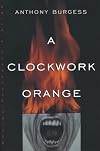
This novel asks the questions 'If a person's free will to choose evil is taken away, does that make them a good person?
Is a person who chooses good because they feel compelled to by some outside force (religion, punishment, etc.) actually good?
Should a person's free will be taken away for the good of society?'
I know Burgess was anti-communist, and in this book it's the government doing these horrible experiments to try and make society 'homogenous'. I've read this book 4 or 5 times, and it show more was only right before this most current re-read that I read up on Burgess himself and found out about his political leanings. This novel reads (to me) more like a conservative government trying to control the population, although I know that Burgess most likely intended it to be a liberal government.
Ultimately, this book answers all of the above questions, and makes you truly think about the world and how it works. And it gives hope in the fact that people can and do change, not because they have to, but because they want to. show less
Is a person who chooses good because they feel compelled to by some outside force (religion, punishment, etc.) actually good?
Should a person's free will be taken away for the good of society?'
I know Burgess was anti-communist, and in this book it's the government doing these horrible experiments to try and make society 'homogenous'. I've read this book 4 or 5 times, and it show more was only right before this most current re-read that I read up on Burgess himself and found out about his political leanings. This novel reads (to me) more like a conservative government trying to control the population, although I know that Burgess most likely intended it to be a liberal government.
Ultimately, this book answers all of the above questions, and makes you truly think about the world and how it works. And it gives hope in the fact that people can and do change, not because they have to, but because they want to. show less
Anthony Burgess once described this as a ‘jeu d’esprit’; a curious way to describe a book which consists of unrelenting ultra-violence, tolchocking, dratsing, and the old in-out in-out, but apt nonetheless. A Clockwork Orange is a short ride in a fast machine; an exuberant display of verbal virtuosity and music-making so brilliant that it makes you want to sing praises to Bog in his Heaven; a lethally funny black comedy, and adroitly sustained exercise in parodic excess, which dances show more with vertiginous energy around themes of violence, creativity, and freedom. The book is itself an act of creative violence: Burgess climbs into his clockwork vehicle and drives it straight at the reader.
Little Alex is a wonderfully seductive creation: a preternaturally articulate fifteen-year-old aesthete, dandy, and thug. It’s part of the subversive brilliance of the book that Burgess shows you how unutterably evil Alex is and then successfully makes you empathise with him when he is turned into a conditioned passive victim of violence. He may be a grahzny murdering bratchny but he is also cultured, a free spirit and, in a certain sense, a true innocent. He is far more likeable than the brainless millicents and corrupt politicos running society. Alex tells his story in Nadsat, Burgess’s highly colourful invented teen argot. It’s a device which transmutes repellent behaviour into surreal and exhilarating prose poetry. The horrors under description are rendered abstract, highlighting their fictiveness. The reader’s attention is drawn away from violence and towards the creative vitality of language. It’s a trick which can only be worked successfully on the page. It really can’t be emphasised enough that this is an extremely playful work, characterised as much by inventive high spirits as destructive dark forces, and often very funny. Kubrick’s movie was a bold yet flawed attempt to film an ultimately unfilmable novel. (The last word in futuristic chic on its release, the film now seems frozen in time, a sort of glam rock classic).
Burgess wrote it in 1961, which was quite early to be exploring this territory of dandified, chemically enhanced, music obsessed, and violent youth tribes: three years before the mods and rockers staged their own ballets of ritualised violence on the beaches of Southern England, and long before the skinheads or the ecstatic nihilism of punk. The model for Alex and his droogs were the Teddy Boys, those original working-class dandies who adopted the uniform of the upper-class Edwardian man-about-town, and combined a passion for rock ‘n’ roll with a matching passion for the britva, the nozh, and the oozy. In some ways this was odd subject matter for Burgess. Throughout his literary career, which began when he was already pushing forty, he delighted in his contempt for pop music, youth culture, and youth in general (‘youth know nothing’). This was such an obsessively recurring tick that you couldn’t help wondering if he was secretly envious of the new freedoms being enjoyed by youth from the sixties onwards. Ironic, then, that the novel came to have such a big influence on pop and youth culture. Not surprising, though, as it crackles and fizzes with the transgressive energy, wit and studied panache of great pop music. There is clearly a strong imaginative identification taking place between author and protagonist. Burgess even gives Alex his own taste in music: Ludwig Van and all that starry cal. Orange, a work of literature disguised as pulp fiction, is Burgess’s unique contribution to pop culture, though he probably wouldn’t have thanked me for saying so.
At the risk of sounding completely bezoomny, I don’t think A Clockwork Orange is really about violence at all. It’s about the conflict between the individual and society, and our right to be our authentic selves. Burgess simply chose a deliberately extreme example to prove his point. He tended to express the themes of the book in theological terms, he was a Catholic albeit a lapsed one, but questions of freedom and moral choice are equally relevant to agnostics like myself. He was clearly genuinely alarmed by the state’s apparent desire to turn us all into good little clockwork citizens. When he wrote the book gay people were being subjected to aversion therapy to ‘cure’ them of being gay, and there was talk of using it on juvenile delinquents. His eccentric but innocuous poet Enderby, the antithesis of Alex, meets the same brainwashing fate at the end of Inside Mr Enderby. The harmless Enderby and the lethal Alex are opposites, but they do have one thing in common that an excessively controlling state finds troubling: they both make their own rules; they are both free.
(Spoilers coming up, my brothers and only true friends). The edition I read included the original twenty-first chapter in which the now eighteen-year-old Alex grows tired of ultra-violence and decides to settle down with a nice devotchka and raise a malchick. It was omitted from the first American edition of the book, the film, and the Penguin paperback published in the early 1970’s in the wake of the film’s success. Burgess should also have left it out as it has a perfunctory and tacked-on feel. It’s as though he was alarmed by the breathtaking force of the like Dionysian energy he had unleashed and felt compelled to spell things out unless we all got the like wrong idea. It’s a shame, as a vivacious allegory ends as an unconvincing morality tale. That one false note apart, however, this is real horrorshow stuff: a malenky masterpiece that hasn’t dated one bit. show less
Little Alex is a wonderfully seductive creation: a preternaturally articulate fifteen-year-old aesthete, dandy, and thug. It’s part of the subversive brilliance of the book that Burgess shows you how unutterably evil Alex is and then successfully makes you empathise with him when he is turned into a conditioned passive victim of violence. He may be a grahzny murdering bratchny but he is also cultured, a free spirit and, in a certain sense, a true innocent. He is far more likeable than the brainless millicents and corrupt politicos running society. Alex tells his story in Nadsat, Burgess’s highly colourful invented teen argot. It’s a device which transmutes repellent behaviour into surreal and exhilarating prose poetry. The horrors under description are rendered abstract, highlighting their fictiveness. The reader’s attention is drawn away from violence and towards the creative vitality of language. It’s a trick which can only be worked successfully on the page. It really can’t be emphasised enough that this is an extremely playful work, characterised as much by inventive high spirits as destructive dark forces, and often very funny. Kubrick’s movie was a bold yet flawed attempt to film an ultimately unfilmable novel. (The last word in futuristic chic on its release, the film now seems frozen in time, a sort of glam rock classic).
Burgess wrote it in 1961, which was quite early to be exploring this territory of dandified, chemically enhanced, music obsessed, and violent youth tribes: three years before the mods and rockers staged their own ballets of ritualised violence on the beaches of Southern England, and long before the skinheads or the ecstatic nihilism of punk. The model for Alex and his droogs were the Teddy Boys, those original working-class dandies who adopted the uniform of the upper-class Edwardian man-about-town, and combined a passion for rock ‘n’ roll with a matching passion for the britva, the nozh, and the oozy. In some ways this was odd subject matter for Burgess. Throughout his literary career, which began when he was already pushing forty, he delighted in his contempt for pop music, youth culture, and youth in general (‘youth know nothing’). This was such an obsessively recurring tick that you couldn’t help wondering if he was secretly envious of the new freedoms being enjoyed by youth from the sixties onwards. Ironic, then, that the novel came to have such a big influence on pop and youth culture. Not surprising, though, as it crackles and fizzes with the transgressive energy, wit and studied panache of great pop music. There is clearly a strong imaginative identification taking place between author and protagonist. Burgess even gives Alex his own taste in music: Ludwig Van and all that starry cal. Orange, a work of literature disguised as pulp fiction, is Burgess’s unique contribution to pop culture, though he probably wouldn’t have thanked me for saying so.
At the risk of sounding completely bezoomny, I don’t think A Clockwork Orange is really about violence at all. It’s about the conflict between the individual and society, and our right to be our authentic selves. Burgess simply chose a deliberately extreme example to prove his point. He tended to express the themes of the book in theological terms, he was a Catholic albeit a lapsed one, but questions of freedom and moral choice are equally relevant to agnostics like myself. He was clearly genuinely alarmed by the state’s apparent desire to turn us all into good little clockwork citizens. When he wrote the book gay people were being subjected to aversion therapy to ‘cure’ them of being gay, and there was talk of using it on juvenile delinquents. His eccentric but innocuous poet Enderby, the antithesis of Alex, meets the same brainwashing fate at the end of Inside Mr Enderby. The harmless Enderby and the lethal Alex are opposites, but they do have one thing in common that an excessively controlling state finds troubling: they both make their own rules; they are both free.
(Spoilers coming up, my brothers and only true friends). The edition I read included the original twenty-first chapter in which the now eighteen-year-old Alex grows tired of ultra-violence and decides to settle down with a nice devotchka and raise a malchick. It was omitted from the first American edition of the book, the film, and the Penguin paperback published in the early 1970’s in the wake of the film’s success. Burgess should also have left it out as it has a perfunctory and tacked-on feel. It’s as though he was alarmed by the breathtaking force of the like Dionysian energy he had unleashed and felt compelled to spell things out unless we all got the like wrong idea. It’s a shame, as a vivacious allegory ends as an unconvincing morality tale. That one false note apart, however, this is real horrorshow stuff: a malenky masterpiece that hasn’t dated one bit. show less
Lists
Futurism Works (1)
100 knjiga (1)
Films (1)
Unread books (1)
Gen X Library (1)
Fiction For Men (1)
Science Fiction (1)
Big Jubilee List (1)
Best Dystopias (1)
. (1)
Banned Books (1)
Metafiction (1)
Overdue Podcast (1)
1980 great books (1)
Fave Books (1)
Short and Sweet (1)
United Kingdom (1)
Must read (1)
el (1)
Best Satire (1)
To Read (1)
music to my eyes (1)
1960s (1)
My TBR (3)
Favourite Books (2)
Read (2)
Folio Society (1)
Booker Prize (1)
Five star books (1)
Books I've Read (1)
. (1)
Allie's Wishlist (1)
Favourite Books (1)
um actually (1)
Awards


You May Also Like


Associated Authors
Statistics
- Works
- 120
- Also by
- 49
- Members
- 48,427
- Popularity
- #325
- Rating
- 3.9
- Reviews
- 708
- ISBNs
- 914
- Languages
- 31
- Favorited
- 123


