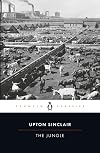
Functions as more of a political treatise of sorts rather than a straightforward narrative, which exposes the ill-treatment of low-wage workers, particularly cheated immigrants, in early 20th century America. Through the medium of a tragic fable, Sinclair strives to represent Capitalism at its worst, and with bitter and explicit detail, sheds light on the injustice and evils that would be potentially concealed by the untrained eye. He advocates the cause of Socialism in its place and he makes a remarkably convincing argument for the undecided.
Personally, I found the story itself too tedious and predictable, and the characters a bit cold and detached; too much of a cautionary tale to make for a pleasurable read (like Black Beauty or The Red Pony for people). Nonetheless, the book is well-written with a sense of poignancy, and the concepts are both significant and inspiring.
Personally, I found the story itself too tedious and predictable, and the characters a bit cold and detached; too much of a cautionary tale to make for a pleasurable read (like Black Beauty or The Red Pony for people). Nonetheless, the book is well-written with a sense of poignancy, and the concepts are both significant and inspiring.
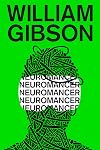
The Ulysses for sci-fi fans. A bit too esoteric for me, though I admire the spaghetti-like prose, and the spaghetti-like cover (that should definitely be a word). I enjoyed most of the first part, but every added section left me more and more confused until I eventually lost interest and decided to cook some spaghetti instead.
I don’t think of this as a diary, or any book as you would characterize it, but a monument in recent history. Is it even appropriate to rate something like this? I’m not sure. I have the deepest respect for the esteemed Anne Frank, and I would not desire to malign her memory in any way. Miss Frank, God rest her soul, was truly an inspiration and a perfect heroine in terms of her innocent good will, remarkably prescient literary power and transcending influence.
I recommend the definitive edition for a more thorough understanding of Anne Frank as a person rather than the “purified” standard edition the puritans would have us read.
I recommend the definitive edition for a more thorough understanding of Anne Frank as a person rather than the “purified” standard edition the puritans would have us read.
The Aeneid by Virgil
I’ve never been a fan of epic poetry (besides The Divine Comedy), but coming from an insomniac, I found this one the perfect bedtime companion.
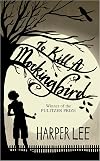
I didn’t realize just what a compliment it was when once my personality was compared to Atticus Finch. I’m not sure how true it is, but it is always something I’m striving for.
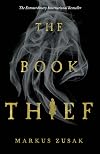
Apparently I'm the only one who feels this way (which I don't mind really), but I consider this novel to be utter rubbish and it deserves no place in the literary canon. I felt almost as if I were reading a screenplay instead of a novel, or perhaps the first draft of a novel that was never revised, because there was so little feeling or atmosphere in this book, as if the author was expecting the reader to put in all the emotion that he was too lazy to put in. It is rare to find characters so dry and lifeless as the ones represented here, who maybe have one adjective used to describe each of them, cardboard cut-outs positioned in a typical "dark" setting as if to try and emulate Nazi Germany by that alone. In fact, it was more like Nazi Germany from a modern schoolboy's limited perspective, very mass-market, made for Hollywood kind of deal, something that everyone can feel good about. And the ending was so predictable, the classic "everyone dies at the end", but it is placed there randomly with no arc to a culmination like some reversed deus ex machina, when the author ran out of the little sketches he strewed throughout the book so just decided to put a stop to it.
And don't get me started on that reviewer who compared this book to Anne Frank's diary, who venerated the former as being as good as the latter. It is sacrilege to compare the two and an insult to Anne Frank's memory, to compare her real experiences to something as staggeringly fictional as The Book Thief. Say show more what you will about the novel's quality, but don't ever confuse fact with fiction, especially with something as devastating as the events of the Holocaust. show less
And don't get me started on that reviewer who compared this book to Anne Frank's diary, who venerated the former as being as good as the latter. It is sacrilege to compare the two and an insult to Anne Frank's memory, to compare her real experiences to something as staggeringly fictional as The Book Thief. Say show more what you will about the novel's quality, but don't ever confuse fact with fiction, especially with something as devastating as the events of the Holocaust. show less
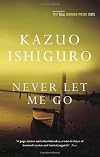
Considering I have a natural distaste for a lot of contemporary literature (with some reasonable exceptions), especially books that are way too matter-of-fact to be taken seriously, I must say that this novel was a pleasant surprise. But in terms of the book itself, that's about as far as the pleasantry goes here. There is a certain ominousness which surrounds this book from start to finish, but you, as the reader, never quite pick up on it until it strikes you like a snake in the grass. Ishiguro's delivery is exquisite yet distinctly human, which may be accused as being overly simplistic from a non-writer's standpoint, but the result is a masterfully subtle commentary on human nature represented at its worst. The writing style and general ambience, in fact, reminded me a bit of A Tree Grows in Brooklyn, another novel which is quite simple when viewed outwardly, but encompasses a structure which is buttressed with a series of seemingly unrelated events which strengthen the consummate whole. Ishiguro is very much deserving of the Nobel for this novel alone, not to mention anything else he's written (which I've yet to read).
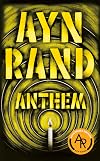
What I like (and dislike) about Anthem is that, as a dystopian novel, it gets to the point. When it comes to dystopias, who're all too similar to one another, I'm notoriously picky about characterization and plot and am forever in search of some moral, which is why I'm not overly fond of Nineteen-Eighty Four or Brave New World. Anthem, however, doesn't screw around wasting your time with particulars but gives you the gist of what's going on in a single sitting. It's a simple book with a simple purpose, and that's exactly what I think a book like this should be.
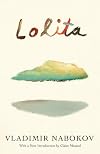
I think what the scariest thing about this book is not what actually happens in it (which is thankfully fictional), but what it reveals about ourselves. We, the readers, are the real jury here, with the power of either condemning or acquitting Humbert ditto. But Humbty-Dumbty is so suave and such a smooth operator that he spellbinds us into his little game of sensational excuses and slippery lies. I'm ashamed to admit at times I actually found myself sympathizing with old wily Humblepie. Like a demon he tempts us with poisoned candy apples and Turkish delights and we gormandize them ravenously, and we only realize what we've done once it's too late. What a exceptional, ghastly book.

I can't help but imagine this spine-tingling Shirley Jackson collection like a series of episodes from the original Twilight Zone, with a grainy, black-and-white presentation, an ordinary John/Jane Doe with strange psychic abilities, Rod Sterling's quirky narration, and Bernard Hermann tick-tocking in the background (just give it a try, and you'll see what I mean). Also like the Twilight Zone, Jackson likes to give us little tidbits of oddball comedy that offset the more sinister tales, which may be received in poor taste, but for me, this just magnifies the whole and integrates everything together, where Jackson is able to brandish her own unique and weird imagination.
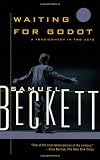
Samuel Beckett is like the John Cage of literature; their work can be looked at as either absurdly intricate or blatantly daft, which as a result, causes a lot of contentions for the ostentatious critics and breezy consumers alike. I'm personally very much on the fence when it comes to minimalism in general; there's a point where I have to draw the line and say this is too much. Fortunately for Beckett, he falls comfortably on the side of brilliance for this work alone and deserves his leather armchair in Irish heaven amongst the likes of Joyce and Yeats.
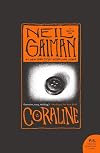
Good thing I didn't read this as a child, or it would have scared me witless. I would not consider myself to have been a brave child, by any stretch of language, and above all, I loathed being scared. I remember watching the film when it first came out, and I found it particularly unsettling, and I was eleven then. I'm sure a great deal of people can relate to the dark fantasies presented in this novel in some way or form, I know I can. So vigorous in a child's imagination are the shadowed recesses of one's home, and what lies beyond what we can't see. As an adult, I must confess, I just managed to pull through this one without scurrying under the covers. Mission accomplished (nervous sigh).
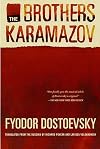
This novel has been profoundly instrumental in the shaping of my own existential philosophy and Christian faith, perhaps more than any other, and easily falls into my top ten favourite novels. On the surface, the plot is quite simple and it contains two primary aspects: one is a drama of patricide and the other is the conflicting development of three brothers, the libertine, the intellectual and the faithful. But underneath all of this, and what determines the actions of the characters, is the philosophical ideology which Dostoevsky expresses primarily in the renowned essay, "The Grand Inquisitor", which is a masterpiece of writing in and of itself. It is as a result of these findings that we are invited into the unique psyches of our characters to find out what determines each one's behaviour, and we are thus met with Dostoevsky's own view of life, expressed most acutely in the brothers' separate destinies.
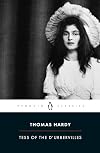
I have a great admiration for this novel. Hardy doesn’t hold back with this one; it’s edgy, it’s dark and it’s merciless. In this allegorical tale, Tess is your loveable scapegoat, the Christ-figure if you will, that evokes our inmost pity. All she innocently desires is to do the right thing, and we martyr her because we won’t compromise our "armoured" regulations. Yes, Hardy goes way over the top here, and some may criticize him as overly romantic, but considering he was working within the confines of Victorian censorship and he didn't have much choice, this novel was ground-breaking for cleverly breaking the rules.
As a feminist, I consider this novel seminal to the movement in the late 19th century, much like I consider Huckleberry Finn seminal to racial awareness of the same period. They may not sound robust enough to our modern ears, but they were amongst the ideas that got the gears turning in the first place.
As a feminist, I consider this novel seminal to the movement in the late 19th century, much like I consider Huckleberry Finn seminal to racial awareness of the same period. They may not sound robust enough to our modern ears, but they were amongst the ideas that got the gears turning in the first place.
I have great respect for the way the theme of mental illness is harshly portrayed in this book, only I wish it had been a little less abrupt in its execution. Mental illness is a lifelong battle (I would know), and although I understand it wasn't always well understood (and still isn't, really), I just think Esther Greenwood a bit too spiteful in the handling of her situation. If she were a more active participant in her healing, she might have met with better results.
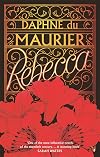
Rebecca is the world of film-noir as described in a single novel, and it is surpassed by none across the board of crime fiction and mystery alike. Du Maurier as a writer made Alfred Hitchcock the director that he would become, except that the latter always gets the credit over the former. As the reader, you share the same psychosis that imperils the narrator and are just as naïve, helpless and disoriented as you live her journey through grey, somber Cornwall and the silent, enigmatic corridors of Manderley. With Rebecca, Du Maurier transformed the romantic-gothic trope popularized by the likes of Jane Eyre and embellished it with a sensational modern air, and so became the birth of the thriller.
I like to pretend sometimes that I know what on Earth is going on in this novel, and I feel so proud of myself in these rare moments. It's a little known fact that you're IQ actually increases when you think about reading this novel, let alone trying to read it. And if you do try to read it (because you can only ever try), you can actually feel the sprouting of brain cells inside your head. Just be careful not to push yourself too far at once though, or you might end up with brain aneurysm. Happy reading!
Coincidently enough, a neck-bearded misanthrope is exactly the picture that comes to mind when I imagine how eccentric a man must be to inflict such a wacky self-flagellation upon himself as to slough himself off in a kettle hole within a stone's throw of civilization, for the haphazard purpose of a "spiritual awakening". I don't know, but it sounds to me like he might have been cultivating more than just beans.
The Great Gatsby is like the Queen (the band, I mean, though Her Majesty might work just the same) of literature: they're both exceedingly overrated (hope I'm not ruffling too many feathers here, but I had to say it). That's not to say they're bad, per se, I just don't understand all the hype. Honestly, the only reason I think the Great Gatsby gets all the acclaim is because it was so American at the time, and so of course, the Yankees went wild (it's just a joke; please don't kill me). But I would never consider this novel the "Great American Novel" over the Grapes of Wrath, especially with lines like this:
“I was within and without, simultaneously enchanted and repelled by the inexhaustible variety of life.”
Help, I'm dying of hyperbole!
“I was within and without, simultaneously enchanted and repelled by the inexhaustible variety of life.”
Help, I'm dying of hyperbole!
Hemingway is one of those divisive writers that you either love or you hate, and I happen to fall in the latter category. There is a point where literary realism and description can be taken so far as to reach the point of utter ennui, and nobody does this better than Hemingway. He has no intention of entertaining anybody, especially himself, and appears to write for no other reason but to record the most blandest and pointless conversations and events he can latch onto. Personally, as a reader, I'm far too lazy to make the inferences on my own that Hemingway wants me to, and what the critics love so much about him; I like to be shown everything I'm supposed to see and not have to play a guessing game. As far as I could tell, this novel has nothing more to do with a bunch of people drinking and watching bullfights, because I wasn't at all interested in figuring out the context of it all.
Another haunting and unsettling read by Dame du Maurier of the romantic gothic disposition and a fitting counterpart to the transcendental Rebecca. Philip Ashley bubbles over with unreliability here as the cynical teller of this bleak tale, which is made worse in twofold due to his gullibility and inexperience of a sickly sheltered lifestyle. I feel I know even less of the ever-elliptical cousin Rachel having finished the novel than I did before, and it is stunning to think du Maurier was able to pull it off so sleekly in this fashion without any serrated edges. To keep this review spoiler-free, I will say little more, only that I found at times the plot dragged a bit in the middle, but it makes up for it in its exemplary and disconcerting denouement.
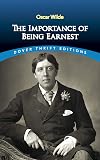
To convey humour in writing is notoriously difficult to achieve without sounding flat and unemotional, and I don't find myself laughing for most writers who try desperately to be funny. Wilde, Twain and Wodehouse are some exceptions, however, whose characters jump out of the page with seemingly little effort. But if there is one play you should read (or better, watch), more than any other, it should be this one. Earnest is a chef-d'oeuvre of artful dialogue and titillating witticisms whose only dry moments are those minutely premeditated scenes served for pure deadpan sweetness. With this play and An Ideal Husband alone, they serve to elevate Wilde in my estimations as the world's greatest playwright (sorry for all you dramatic Shakespeare-lovers).
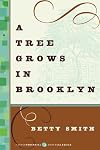
Among the most fervent and outspoken of coming-of-age novels in American literature that I've read, full to the brim with life sketches as pictorial as David Copperfield and with an epic scope as sweeping as East of Eden. Betty Smith invites us into a breathtaking depiction of New York with the same richness that Woody Allen's Manhattan did for the big screen, visualized from the perspective of an aspiring and headstrong Francie Nolan raised in the heart of poverty-stricken Brooklyn. This novel expresses a hope for American immigrants at the turn of the century that isn't to be found in Upton Sinclair's the Jungle, and although Francie's relatives are far from perfect, their love and care for each other is irrefutable and irrepressible. Francie is met with experiences and choices that are as various and unique as any uncommon family, and their stories are forever memorable as the small things that are best in a simple life.
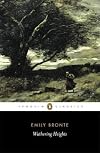
Wuthering Heights is classic literature's crowning achievement about spiteful people doing spiteful things to each other, unrestrained vengefulness forever untamed from front to back. There isn't a friendly character in the funereal cast and there's nothing to love about anybody or anything, and it's absolutely brilliant. Brontë teases you with a flossy romance dipped in mud and mire and then turns it on its head and and plunges you down in the marshland until she drowns you in it. Heathcliff is a harrowing villain with whom the reader develops a love-hate relationship, much like Catherine Earnshaw's own emotional volatility, but can you really blame him for who he becomes? A novel full of gothic tragedy and morbid mystery, this is a tight and solid read which safeguards its standing amongst my most beloved novels.
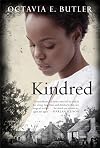
Kindred has been falsely branded under the classification of a genre novel (genre-bending or not), just because it happens to incorporate some seemingly fantastical ingredients as part of the wordsmith's brew, and in so doing, has belittled its rightful status as a masterstroke of modern art and educational significance. There is so much gravity in the historical depictions contained within these pages smeared with blood and tears, portrayed with a harrowing present-day voice which is so identifiable, that it is an earthshaking experience for anyone to leaf through with at least an ounce of pity in their heart. This is a staggering story of the realities of slavery and an eye-opening portrayal of a demoralizing human cruelty. Why there are so many contenders which take Kindred's place as required academic reading I'll never comprehend.
I didn't realize my edition of this book was abridged until I was nearly finished it, and by then it was too late; now I have a justified animosity towards abridgements of any sort. I had a feeling there was something missing; it was just short of a masterpiece and I wondered how could Dumas have been such a first-rate writer yet so short-sighted in its delivery. But if any character in literature can give the outwardly unparagoned Jean Valjean a run for his money, it's Edmond Dantès, undeniably self-sacrificing and virtuous, and who is just as versatile and resilient in the face of cataclysmic peril. Unrighteously persecuted by those resentful of his purity and success, Dantès is destroyed and incarcerated, but he is not defeated. He bides his time for his reprisal and when it is time, he rebounds with impenetrable authority, reclaiming everything that was his, and more. But he is then led to wonder, was it worth it after all? He tried to play God and set everything right, but the past cannot be changed. Did he just become the villain, exactly what he hated in those who victimized him?
I applaud the ethereal quality of the prose and Cather's talent in beautifying a seemingly vapid scene on the prairie, shrouded in a rustic mistiness which is tailored to a wistful resonance of an age long gone by, but what ruined it all was the ever-platonic and flabby narrator, stifling me with his misguided zeal. I would not have opted for Jim's schmaltzy narration, which felt unsuitable and degrading at times, and particularly presumptuous to Ántonia's character, walking around goggle-eyed as a second-hand observer with no intentions of actually living his own life. I think Antonia might have sufficed for a spirited puppy instead of a loitering loafer.
Being an obnoxious outlier is ever so invigorating to my little selfdom. I would normally consider myself fairly easygoing and versatile, and thus I give out one-star reviews sparingly, reserving those lucky contestants for books which lack for me at least one meritorious quality, but congratulations to Le Guin for achieving this brilliant honour. There is a certain amount of attention to tedium and exasperation that must be observed in proper proportion to make it onto my list of woes without a single redeeming quality, and the Dispossessed is welcomed comfortably with open arms into a company with similar unpleasant interests.

I like to think of Matilda as Carrie in her formative years before she went on her murderous rampage; she was just testing her weapons. So be warned: if you mess with the wrong girl, you might be dealing with a telekinetic psycho.

A counterculture children's novel that may be an acquired taste for some, like, for example, the Catcher in the Rye, but nonetheless unique and potentially avant-garde for its time. Its rebellious kookiness fits in perfectly with the estranged youth of the 60s, paving the way for kaleidoscopic Beatlemania, and Harriet's cocky stride on the iconic cover is the perfect bookend to Abbey Road. I didn't enjoy this novel much at first and thought its humour tasteless and crude, but when everything started to unravel about halfway through, after Harriet loses her notebook, I was forced to reassess my initial opinion. You don't really know the real Harriet till she hits rock bottom, and then you get to see just how emotionally blunted she has become as a result of her buried intelligence. Without a facet through which to express herself, Harriet becomes nothing but a vegetable (literally, an onion), and it takes Ole Golly's alternative methods to bring her back to herself.