
Henry Miller (1) (1891–1980)
Author of Tropic of Cancer
For other authors named Henry Miller, see the disambiguation page.
About the Author
Image credit: Henry Miller in California, mid twentieth century
Series
Works by Henry Miller
Always merry and bright : the life of Henry Miller : an unauthorized biography (1978) — Contributor — 57 copies
Order and chaos chez Hans Reichel 16 copies
Myrd morderen 4 copies
O mundo do sexo e outros textos 3 copies
Achter het woord ligt de chaos 3 copies
The Nightmare Notebook 3 copies
Ler na retrete 2 copies
Henry Miller: A Big Sur interview 2 copies
Breve 1 copy
Blaise Cendrars zum Gruß 1 copy
Moderne Amerikaanse verhalen 1 copy
Prvi utisci o Grčkoj 1 copy
A Nation of Lunatics 1 copy
Exus 1 copy
Zwrotnik Raka 1 copy
La sabiduría del corazón 1 copy
Intimate Henry Miller 1 copy
Obras maestras del siglo xx 1 copy
Miller Henry 1 copy
O Lake of Light 1 copy
Sexo em Clichy 1 copy
Sämtliche Erzählungen 1 copy
Miscellanea 1 copy
Selected prose 1 copy
Mirni dani na Klišiju 1 copy
Zrodenie Grécka 1 copy
Bordmonologer 1 copy
Henry Miller: Three Decades of Criticism - Edited and with an Introduction By Edward B. Mitchell (1971) 1 copy
חצות וחצי 1 copy
Associated Works
First Fiction: An Anthology of the First Published Stories by Famous Writers (1994) — Contributor — 196 copies, 1 review
Writing New York: A Literary Anthology (Expanded 10th-Anniversary Edition) (2008) — Contributor — 101 copies, 1 review
The World of Law, Volumes I-II: The Law in Literature, The Law as Literature (1960) — Contributor — 54 copies
Years of Protest: A Collection of American Writings of the 1930's (1967) — Contributor — 44 copies, 1 review
This Is Henry, Henry Miller from Brooklyn: Conversations With the Author from the Henry Miller Odyssey (1974) — Author — 29 copies
Kapitein Bilbo, de eeuwige rebel : relaas van een roekeloos leven (1965) — Foreword, some editions — 3 copies
The Ethnic Image in Modern American Literature, 1900-1950, Volumes 1-2 (1984) — Contributor — 1 copy
Reichel Par Brassai Miller Durrell Bissiere — Contributor — 1 copy
Tagged
Common Knowledge
- Canonical name
- Miller, Henry
- Legal name
- Miller, Henry Valentine
- Birthdate
- 1896-12-26
- Date of death
- 1980-06-07
- Gender
- male
- Education
- City College of New York
- Occupations
- novelist
essayist
letter-writer
painter - Organizations
- American Academy of Arts and Letters (Literature, 1957)
Socialist Party - Nationality
- USA
- Birthplace
- New York, New York, USA
- Places of residence
- Paris, Île-de-France, France
Big Sur, California, USA - Place of death
- Pacific Palisades, California, USA
- Burial location
- cremated (ashes scattered off Big Sur, California)
- Map Location
- New York, USA
Members
Discussions
Henry Miller in Bug Collectors (January 2015)
Reviews
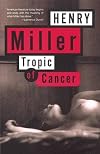
What can be said about Henry Miller? He had talent. The words slid over his acid tongue, dripped from his pen, and spouted effortlessly from his worn old typewriter. And he was honest. Well, if you believe perception is reality.... he was honest. He viewed life from the dismal darkness of the gutter. His reality was only the vulgar, the sordid, and the negative side of life.
And he didn’t pretend to be writing a great book in "Tropic of Cancer". He admits, “my idea has been to get off show more the gold standard of literature... to present a resurrection of the emotions, to depict the conduct of a human being in the stratosphere of ideas... in the grip of delirium” (pg. 243) And perhaps he described it best when he wrote “This is not a book. This is libel, slander, defamation of character... this is a prolonged insult, a gob of spit in the face of the Art, a kick in the pants of God, Man, Destiny, Time, Love, Beauty. I am going to sing for you, a little off key perhaps, but I will sing... while you croak... I will dance over your dirty corpse.” (Pg. 2)
What a shame! In one fell-swoop he managed to tip the scale of literature from the stratosphere of pure gold to the cloying, degrading, putrid, filthy depths of the sewer. Henry Miller had mental diarrhea and this dreck stinks to high heaven!
The book contains no plot, no emotion, no romance, and actually... not even erotica. It is no more erotic than a little boy thinking he is cute talking about “poo-poo” and “farts”. Henry Miller tries to be clever like the “shock jock” Howard Stern by throwing around as many filthy words as he can... banal descriptions of his daily exploits of cold hearted bestial fornication with prostitutes, bouts of sexual diseases, and depressing visuals of life in Paris in the 1930’s as a homeless, financially destitute expatriate just waiting for an occasional check from his second wife to cover his self indulgent contemptuous behavior, as he brags about being free, white, and broke - living off anyone who will foot the bills - while he writes this book. He laughs at an acquaintance's tragic death and nonchalantly shrugs off his room-mates brief affair with a 15 year old virgin stating, “Everywhere I go people are making a mess of their lives... the atmosphere is saturated with disaster, frustration, futility. The effect upon me is exhilarating. Instead of being discouraged, or depressed, I enjoy it. I am crying for more and more disasters, for bigger calamities, for grander failures.” (pg. 12)
This book is celebrated as a great novel? If it were purely fiction it could be categorized along with "Lolita" - the story of a mentally deranged dirty sex fiend - but knowing this smutty wretched story is semi-autobiographical makes it uncultured and ignorant. I can only assume that besides having zero respect for anyone or anything on this lovely earth (including his five wives and himself, and anything that represented the respectable establishment), Henry Miller would agree that having "Tropic of Cancer" listed on the Modern Library list of best 100 novels is a colossal joke. show less
And he didn’t pretend to be writing a great book in "Tropic of Cancer". He admits, “my idea has been to get off show more the gold standard of literature... to present a resurrection of the emotions, to depict the conduct of a human being in the stratosphere of ideas... in the grip of delirium” (pg. 243) And perhaps he described it best when he wrote “This is not a book. This is libel, slander, defamation of character... this is a prolonged insult, a gob of spit in the face of the Art, a kick in the pants of God, Man, Destiny, Time, Love, Beauty. I am going to sing for you, a little off key perhaps, but I will sing... while you croak... I will dance over your dirty corpse.” (Pg. 2)
What a shame! In one fell-swoop he managed to tip the scale of literature from the stratosphere of pure gold to the cloying, degrading, putrid, filthy depths of the sewer. Henry Miller had mental diarrhea and this dreck stinks to high heaven!
The book contains no plot, no emotion, no romance, and actually... not even erotica. It is no more erotic than a little boy thinking he is cute talking about “poo-poo” and “farts”. Henry Miller tries to be clever like the “shock jock” Howard Stern by throwing around as many filthy words as he can... banal descriptions of his daily exploits of cold hearted bestial fornication with prostitutes, bouts of sexual diseases, and depressing visuals of life in Paris in the 1930’s as a homeless, financially destitute expatriate just waiting for an occasional check from his second wife to cover his self indulgent contemptuous behavior, as he brags about being free, white, and broke - living off anyone who will foot the bills - while he writes this book. He laughs at an acquaintance's tragic death and nonchalantly shrugs off his room-mates brief affair with a 15 year old virgin stating, “Everywhere I go people are making a mess of their lives... the atmosphere is saturated with disaster, frustration, futility. The effect upon me is exhilarating. Instead of being discouraged, or depressed, I enjoy it. I am crying for more and more disasters, for bigger calamities, for grander failures.” (pg. 12)
This book is celebrated as a great novel? If it were purely fiction it could be categorized along with "Lolita" - the story of a mentally deranged dirty sex fiend - but knowing this smutty wretched story is semi-autobiographical makes it uncultured and ignorant. I can only assume that besides having zero respect for anyone or anything on this lovely earth (including his five wives and himself, and anything that represented the respectable establishment), Henry Miller would agree that having "Tropic of Cancer" listed on the Modern Library list of best 100 novels is a colossal joke. show less

It's clear pretty much from the start that Henry Miller is a contested and contentious character. Always worse than scholarly introductions are those "this book is a big deal!" popular-edition freeform essay introductions, and here we get one from somebody Shapiro that makes Miller a prophet of joy--blurgh, followed up for lagniappe by the foreword by Anaïs Nin, who does her love a solid in her rickety prose by--ricketily--making him sound like one hell of a party (which is better.)
Is this show more a song of joy? Shapiro, writing in the sixties, seems willfully blind a bit in a hippie way—Miller’s joy is barely sublimated rage, as his curses are Biblical—“I will spit upon your corpse.” All that is, is good, and hey shove it up your ass for good measure. I get that. And sure he had plenty of sexy times, but it strikes me that this is less a song of the uncoiling snake or whatever than the reverse—it’s the sex that’s the pretext—for the stories, for having something to talk about, for the up your face to bourgeois Amerika on some level obviously but much more about the homosociality for which the “cunt” is pretext. Moldorf may be word drunk, lost in the w-hole, but Miller himself is word-tipsy and feeling gregarious. Less libidinist than raconteur.
He also uses words to subjugate, of course, and I’m not talking about “cunt,” though it is indexical. It’s when he gets all “Stick a lizard up your ass! Shitza blitza!” and frothing at the mouth like something out of The Exorcist that it’s a downer. He’s taking an aggressive pose, and I won’t dwell on the misogyny because, again, the women are by the by and the point is to talk tough and turn hard livin’ heartily embraced into a literary regalia—to peacock. He would have lasted long in the torture chambers if he’d looked good and gotten ladies and had other aspiring poets say things like “Ol’ Hank Miller, hooo boy” within earshot. I wish I’d been younger when I got to this book and it would have hit me all different like in interesting ways, but then I also wish he’d been younger when he wrote it, and it would seem less belligerent in its self-conscious solipsism.
But the self is still previous, and the story of the self and the world is still one of survival against the odds, for the transient and for the suburbanest accountant with his RRSP—thus is Rimbaud the flip side of Goethe. And sorry, Henry Miller of “Brooklyn, Paris, and Big Sur,” you will not get away with pretending you’re not another arm of the capitalist millipus, the one whose whoring and anti-Semitism and weird rage about the gays show the most exquisite concern with propriety, the one who launched a thousand gap years. Some parts of this are just so “I am a massive penis other men are faggot jew betas” and he might as well be trolling on the internet and we are supposed to kiss his dick just because he writes with swears.
And even when there’s a crash in his careful balance and he ends up stealing the baby’s food or whatever, this should be hangover catharsis, but not so because he’s trading in glamour and the mood of self-aggrandizement has already been set. Shapiro quotes Orwell’s essay on Miller semi-approvingly except that he doesn’t like that Orwell doesn’t like that Miller doesn’t like to talk about “the social,” because it’s all about the centre of the mind, man! Wavy gravy! And I guess I don’t blame Miller for that, but it’s nevertheless true that a little excursion into the third person or so would have done him well.
BUT NEVERTHELESS. Miller is very, very, very good for paragraphs at a time. And the level of vicious blaggery mellows throughout. And then sometimes he cuts through it completely and produces something sensitive like his vignette of Van Norden and the woman who won’t sleep with him—and then it’s back to autonomy through this needy-ass, diffident, never entirely convincing misanthropy.
Tho you know it’s not just Van N., his people are quite good often—the Irish painter and his wife who is more talented who he hates, a whole heartbreaker of an I-remember-this-guy where the only thing that goes wrong is that all the characters regardless of idiom say the word “cunt” in exactly the same way. This is Miller’s way of being undone by cunt, I guess.
He is worse on places than people; has something to prove. Blasé on China one minute, exoticizing it the next, in the way of so many people from our big continent who take their one trip to Rome or Hawaii and present it like a sailor’s logbook. His Paris is jolly and reeking and cruel and all that, but it’s limited both by the persona and by the fact that he’s writing what he knows, which is whoring and apes-together male shit leavened with moments of joy … and, let me say, this postlapsarian wist that goes with the Paris trip too, for Proust and Matisse—and of course Miller’s followers had their attenuated experience too, it’s in the nature of this stuff, like vampires weakening by the number of their generations from Cain—but still, Miller came in the thirties and not the twenties and he could have easily been a balding John Glassco and you should thank him for putting his balls into it.
Like, that magnificent scene two thirds in with the two women, the one he meets outside the café and the one he goes home with—short, spare, self-loathing without exploiting or apologizing for it. Cunt only used once.
And cunt drops precipitously from then on in fact and the last part of this book is so special—a paean, a soulsong. Starting with the bit on Goether and Whitman, through the loving and magnificent description of one particular cunt (his wife’s), and then into a description of Dijon that’s architectural and painterly, laying down roads like bones like rock and splattering them with sickish greys. The book should have started with Goethe, we should have seen a young Hank Miller go over to France to teach English and then go off the rails—instead it’s not till he’s proved whatever it is he had to prove and stopped with the Tourette’s that he can show us what a writer he is.
And after we’ve grown eyes all over and fallen to bits in a mystic apotheosis, it’s back to cunt, but this time with a wink and a barrel of previously withheld charm, instead of coming on like a … fuck, dog track crack addict or something. Miller at his best woos with smiles and box wine invincibility. You can see why cunts go for him. show less
Is this show more a song of joy? Shapiro, writing in the sixties, seems willfully blind a bit in a hippie way—Miller’s joy is barely sublimated rage, as his curses are Biblical—“I will spit upon your corpse.” All that is, is good, and hey shove it up your ass for good measure. I get that. And sure he had plenty of sexy times, but it strikes me that this is less a song of the uncoiling snake or whatever than the reverse—it’s the sex that’s the pretext—for the stories, for having something to talk about, for the up your face to bourgeois Amerika on some level obviously but much more about the homosociality for which the “cunt” is pretext. Moldorf may be word drunk, lost in the w-hole, but Miller himself is word-tipsy and feeling gregarious. Less libidinist than raconteur.
He also uses words to subjugate, of course, and I’m not talking about “cunt,” though it is indexical. It’s when he gets all “Stick a lizard up your ass! Shitza blitza!” and frothing at the mouth like something out of The Exorcist that it’s a downer. He’s taking an aggressive pose, and I won’t dwell on the misogyny because, again, the women are by the by and the point is to talk tough and turn hard livin’ heartily embraced into a literary regalia—to peacock. He would have lasted long in the torture chambers if he’d looked good and gotten ladies and had other aspiring poets say things like “Ol’ Hank Miller, hooo boy” within earshot. I wish I’d been younger when I got to this book and it would have hit me all different like in interesting ways, but then I also wish he’d been younger when he wrote it, and it would seem less belligerent in its self-conscious solipsism.
But the self is still previous, and the story of the self and the world is still one of survival against the odds, for the transient and for the suburbanest accountant with his RRSP—thus is Rimbaud the flip side of Goethe. And sorry, Henry Miller of “Brooklyn, Paris, and Big Sur,” you will not get away with pretending you’re not another arm of the capitalist millipus, the one whose whoring and anti-Semitism and weird rage about the gays show the most exquisite concern with propriety, the one who launched a thousand gap years. Some parts of this are just so “I am a massive penis other men are faggot jew betas” and he might as well be trolling on the internet and we are supposed to kiss his dick just because he writes with swears.
And even when there’s a crash in his careful balance and he ends up stealing the baby’s food or whatever, this should be hangover catharsis, but not so because he’s trading in glamour and the mood of self-aggrandizement has already been set. Shapiro quotes Orwell’s essay on Miller semi-approvingly except that he doesn’t like that Orwell doesn’t like that Miller doesn’t like to talk about “the social,” because it’s all about the centre of the mind, man! Wavy gravy! And I guess I don’t blame Miller for that, but it’s nevertheless true that a little excursion into the third person or so would have done him well.
BUT NEVERTHELESS. Miller is very, very, very good for paragraphs at a time. And the level of vicious blaggery mellows throughout. And then sometimes he cuts through it completely and produces something sensitive like his vignette of Van Norden and the woman who won’t sleep with him—and then it’s back to autonomy through this needy-ass, diffident, never entirely convincing misanthropy.
Tho you know it’s not just Van N., his people are quite good often—the Irish painter and his wife who is more talented who he hates, a whole heartbreaker of an I-remember-this-guy where the only thing that goes wrong is that all the characters regardless of idiom say the word “cunt” in exactly the same way. This is Miller’s way of being undone by cunt, I guess.
He is worse on places than people; has something to prove. Blasé on China one minute, exoticizing it the next, in the way of so many people from our big continent who take their one trip to Rome or Hawaii and present it like a sailor’s logbook. His Paris is jolly and reeking and cruel and all that, but it’s limited both by the persona and by the fact that he’s writing what he knows, which is whoring and apes-together male shit leavened with moments of joy … and, let me say, this postlapsarian wist that goes with the Paris trip too, for Proust and Matisse—and of course Miller’s followers had their attenuated experience too, it’s in the nature of this stuff, like vampires weakening by the number of their generations from Cain—but still, Miller came in the thirties and not the twenties and he could have easily been a balding John Glassco and you should thank him for putting his balls into it.
Like, that magnificent scene two thirds in with the two women, the one he meets outside the café and the one he goes home with—short, spare, self-loathing without exploiting or apologizing for it. Cunt only used once.
And cunt drops precipitously from then on in fact and the last part of this book is so special—a paean, a soulsong. Starting with the bit on Goether and Whitman, through the loving and magnificent description of one particular cunt (his wife’s), and then into a description of Dijon that’s architectural and painterly, laying down roads like bones like rock and splattering them with sickish greys. The book should have started with Goethe, we should have seen a young Hank Miller go over to France to teach English and then go off the rails—instead it’s not till he’s proved whatever it is he had to prove and stopped with the Tourette’s that he can show us what a writer he is.
And after we’ve grown eyes all over and fallen to bits in a mystic apotheosis, it’s back to cunt, but this time with a wink and a barrel of previously withheld charm, instead of coming on like a … fuck, dog track crack addict or something. Miller at his best woos with smiles and box wine invincibility. You can see why cunts go for him. show less
"After everything had quietly sifted through my head a great peace came over me. Here, where the river gently winds through the girdle of hills, lies a soil so saturated with the past that however far back the mind roams one can never detach it from its human background."
I first read this book while in my 20s when I wasn't such a close reader and the romanticism of Henry Miller overshadowed anything he actually wrote. I wanted to be young and free and sexed in Paris. This used to be one of show more my favorite books to recommend not that I really cared if anyone read it, I was just so cool for recommending it. So I read this book now, in my thirties, to see if there was anything worth keeping beyond the personality of the book.
Certainly the appeal of being hungover in a flea bag motel without any money has worn off the most. Probably because once you've been hungover in a flea bag motel without any money you realize how distinctly uncool any of it actually is. Miller's prose flows on like the Seine and at times he merely seems to be rambling but at others, when he has caught certain elements of an actual narrative, the writing is transcendent.
I'm a little pickier now about what I consider to be good fiction and this book doesn't cut it for me. However, that isn't to say it isn't wonderful on it's own terms. If you've never read anything by Miller this is worth the read. The particular timbre of an American stream-of-conscious: it's doubt, it's passion, and it's vulgarity, is an important voice for anyone to hear. We suffer apart from our European or Asian contemporaries and I think Tropic of Cancer captures that suffering very well.
The lines on this book typically mention just how honest it is. It is an honest book, they say. I don't understand that (sign of the times?) but perhaps they mean this is an emotionally appealing book. From my 10 years ago to today that is what has remained when all else has dropped away. Tropic of Cancer begs its readers to drop all conceit and examine, emotionally, what shapes we are. show less
I first read this book while in my 20s when I wasn't such a close reader and the romanticism of Henry Miller overshadowed anything he actually wrote. I wanted to be young and free and sexed in Paris. This used to be one of show more my favorite books to recommend not that I really cared if anyone read it, I was just so cool for recommending it. So I read this book now, in my thirties, to see if there was anything worth keeping beyond the personality of the book.
Certainly the appeal of being hungover in a flea bag motel without any money has worn off the most. Probably because once you've been hungover in a flea bag motel without any money you realize how distinctly uncool any of it actually is. Miller's prose flows on like the Seine and at times he merely seems to be rambling but at others, when he has caught certain elements of an actual narrative, the writing is transcendent.
I'm a little pickier now about what I consider to be good fiction and this book doesn't cut it for me. However, that isn't to say it isn't wonderful on it's own terms. If you've never read anything by Miller this is worth the read. The particular timbre of an American stream-of-conscious: it's doubt, it's passion, and it's vulgarity, is an important voice for anyone to hear. We suffer apart from our European or Asian contemporaries and I think Tropic of Cancer captures that suffering very well.
The lines on this book typically mention just how honest it is. It is an honest book, they say. I don't understand that (sign of the times?) but perhaps they mean this is an emotionally appealing book. From my 10 years ago to today that is what has remained when all else has dropped away. Tropic of Cancer begs its readers to drop all conceit and examine, emotionally, what shapes we are. show less
Okay, so no plot, and the characters are mostly detestable misogynists. Almost everything I hated about "On the Road" is present in this book as well. But, holy cow, this guy can write! There are plenty of long slogs through filler material, but then, BOOM, he will throw in two or three golden pages where, as he stares into yet another woman's naked crotch, he suddenly glimpses the entire universe in perfect clarity. One of the few books I've read where, upon finishing it, I'm left with the show more urge to read it again to pick up all the stuff I missed the first time. A really hate the way the book ends, by the way. The fact I would still want to reread it despite hating the narrator is a testament to just how good the book is when the writing really sings. show less
Lists
. (1)
. (1)
to get (1)
Favourite Books (1)
French Books (1)
banned books (1)
el (3)
Unread books (2)
Erotic Fiction (2)
sexuality (1)
1930s (1)
Awards


You May Also Like


Associated Authors
Statistics
- Works
- 223
- Also by
- 43
- Members
- 31,880
- Popularity
- #621
- Rating
- 3.7
- Reviews
- 365
- ISBNs
- 1,096
- Languages
- 31
- Favorited
- 159


