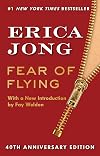
Erica Jong
Author of Fear of Flying
About the Author
Erica Jong was born on March 26, 1942. She received a B.A. from Barnard College and a M.A. in 18th Century English Literature from Columbia University. She also attended Columbia University's graduate writing program where she studied poetry. She has written numerous volumes of poetry, novels, and show more non-fiction works including Fruits and Vegetables, Fear of Flying, How to Save Your Own Life, Parachutes and Kisses, Sappho's Leap, Seducing the Demon: Writing for My Life, and It Was Eight Years Ago Today (But It Seems Like Eighty). She has received numerous awards including the United Nations Award for Excellence in Literature, Poetry magazine's Bess Hokin Prize, the Deauville Award for Literary Excellence, and the Sigmund Freud Award for Literature. (Bowker Author Biography) show less
Image credit: Marion Ettlinger
Series
Works by Erica Jong
Fanny: Being the True History of the Adventures of Fanny Hackabout-Jones (1980) 665 copies, 7 reviews
Here Comes and Other Poems (Originally Published As Fruits & Vegetables and Half-Lives) (1975) 56 copies, 1 review
Signet 2 copies
Charlotte Bronte [graphic] — Introduction — 2 copies
U postelji sa demonom 1 copy
O Que As Mulheres Querem? 1 copy
MEDO DE VOAR 1 copy
Associated Works
Fanny Hill, or, Memoirs of a Woman of Pleasure (1748) — Introduction, some editions — 3,631 copies, 65 reviews
Cries of the Spirit: A Celebration of Women's Spirituality (2000) — Contributor — 403 copies, 2 reviews
Drinking, Smoking and Screwing: Great Writers on Good Times (1994) — Contributor — 353 copies, 5 reviews
The Writer on Her Work, Volume I: Contemporary Women Writers Reflect on their Art and Situation (1980) — Contributor — 199 copies, 1 review
The Mark Twain Anthology: Great Writers on His Life and Work (2010) — Contributor — 157 copies, 1 review
About Women: An Anthology of Contemporary Fiction, Poetry, and Essays (1973) — Contributor — 25 copies
Im Zeichen der Venus. Frauen schreiben erotische Geschichten ( Anthologie). (2001) — Contributor — 1 copy
Tagged
Common Knowledge
- Canonical name
- Jong, Erica
- Legal name
- Jong, Erica Mann
- Other names
- Mann, Erica
- Birthdate
- 1942-03-26
- Gender
- female
- Education
- Barnard College (BA)
Columbia University (MA)
High School of Music and Art, New York - Occupations
- author
teacher - Organizations
- PEN
Authors League of America
Authors Guild
Dramatists Guild of America
Writers Guild of America
Poetry Society of America (show all 9)
National Writers Union
Poets and Writers
Phi Beta Kappa - Agent
- Ed Victor
Elizabeth Sheinkman (WME) - Relationships
- Fast, Jonathan (husband|divorced)
Jong-Fast, Molly (daughter)
Fast, Howard (former father-in-law) - Short biography
- Erica Jong is an American novelist, satirist, and poet, known particularly for her 1973 novel Fear of Flying. The book became famously controversial for its attitudes towards female sexuality and figured prominently in the development of second-wave feminism. According to The Washington Post, it has sold more than 20 million copies worldwide.
- Nationality
- USA
- Birthplace
- New York, New York, USA
- Places of residence
- New York, New York, USA
Heidelberg, Germany - Associated Place (for map)
- USA
Members
Reviews

To my surprise, the book left me with a different impression when I reread it a generation later. Yes, it’s packed with what a superficial juvenile might think is “liberating” sexual talk, and even by today’s standards it’s no tamer than ever. But now I just see a poor, lonely woman’s cry for help. She has no real friends, male or female, and the men in her life are all jerks to whom she offers sex because she can. But then, somewhere after having been used over and over by men show more who *she* thought she was using, she loses interest.
You won't understand this book if you're reading for prurient reasons, and if that's what you're looking for, I suggest you wait a few decades and read it after you know more about the awful mess some people make of their lives. show less
Jong summarizes the plot of “Fear of Flying” very well in the afterword of this edition: “Isadora grew up in a fourteen-room apartment on Central Park West. She heavy pets (let’s call it) at thirteen, remorsefully tries to starve herself at fourteen, embarks upon a series of psychiatrists (the first one is Dr. Schrift; he’s short, of course, and tells her, ‘Aczept being a wohman’), enters Barnard at seventeen, meets the brilliant Brian Stollerman when she is a freshman, seduces show more him and terminates her virginity, marries him after graduation, endures his growing madness while she attends graduate school, commits and divorces him at twenty-two, takes up with an unwashed musical loser called Charlie Fielding, is betrayed by him, embarks upon a swinging tour of Europe with a girlfriend at the age of twenty-three, returns to New York, meets a silent thirty-one-year-old Chinese psychiatrist named Bennett Wing, marries him, and now, five years later, at the age of twenty-nine, in 1971, attends with her husband an international congress of psychologists in Vienna, where she meets, loves at first sight, and runs away with an English Laingian psychiatrist called (yes) Adrian Goodlove.”
The book grabbed me from the start, popping on many levels, but I liked it primarily for its depictions of the difficulties of marriage and infidelity, as well as the difficulties of feminism in light of having a natural desire for men and a fear of loneliness. It was a groundbreaking book in 1973, and “feels” very 1970’s and “intelligent New York feminist Jew”, both in good ways. I only knocked its rating down a bit because it got a little whine-y in places, and because it’s a bit harsh to Germans, although even that was a strong reminder of how little time had actually passed between WWII and the 70s in a larger sense, something I had a different perspective on growing up.
Quotes (warning, please don’t read if you’re offended by language, explicit sex, etc):
On adultery:
“What a fraud I was! Real adultery couldn’t be worse than these nightly deceptions. To fuck one man and think of another and keep the deception a secret – it was far, far worse than fucking another man within your husband’s sight.”
On feminism:
“Don’t you see that men have always defined femininity as a means of keeping women in line? Why should I listen to you about what it means to be a woman? Are you a woman? Why shouldn’t I listen to myself for once?”
“Really, I thought, sometimes I would like to have a child. A very wise and witty little girl who’d grow up to be the woman I could never be. A very independent little girl with no scars on the brain or the psyche. With no toadying servility and no ingratiating seductiveness. A little girl who said what she meant and meant what she said. A little girl who was neither bitchy nor mealymouthed because she didn’t hate her mother or herself.”
“Because that was how I so often felt about men. Their minds were hopelessly befuddled, but their bodies were so nice. Their ideas were intolerable, but their penises were silky. I had been a feminist all my life (I date my ‘radicalization’ to the night in 1955 on the IRT subway when the moronic Horace Mann boy who was my date asked me if I planned to be a secretary), but the big problem was how to make your feminism jibe with your unappeasable hunger for male bodies. It wasn’t easy.”
On guilt:
“If I were really an exceptional person, I thought, I wouldn’t spend hours worrying my head about marriage and adultery. I would just go out and snatch life with both hands and feel no remorse or guilt for anything. My guilt only showed how thoroughly bourgeois and contemptible I was. All my worrying this sad old bone only showed my ordinariness.”
On inspiration:
“I would sniff around the houses of the great like a bloodhound, trying to catch the scent of genius. Somewhere between the bathroom and the bedroom, somewhere between eating an egg and taking a crap, the muse alights. She does not usually appear where your banal Hollywood notions have led you to most expect her: in a gorgeous sunset over Ischia, in the pounding surf of Big Sur, on a mountaintop in Delphi (right between the navel of the earth and the place where Oedipus killed his papa) – but she wings in while you are peeling onions or eating eggplant or lining the garbage can with the book-review section of The New York Times. The most interesting modern writers know this. Leopold Bloom fries kidneys, takes a crap, and considers the universe.”
On Jewish culture:
“’The Jewish science,’ as anti-Semites call it. Turn every question upside down and shove it up the asker’s ass. Analysts all seem to be Talmudists who flunked out of seminary in the first year. I was reminded of one of my grandfather’s favorite gags:
Q: ‘Why does a Jew always answer a question with a question?’
A: ‘And why should a Jew not answer a question with a question?’”
On living life, having courage:
“…I decided that for once I was going to be brave and follow my feelings no matter what the consequences. I thought of Dr. Happe saying: ‘You’re not a secretary, you’re a poet – why do you expect your life to be uncomplicated?’ I thought of D.H. Lawrence running off with his tutor’s wife, of Romeo and Juliet dying for love, of Aschenbach pursuing Tadzio through plaguey Venice, of all the real and imaginary people who had picked up and burned their bridges and taken off into the wild blue yonder. I was one of them! No scared housewife, I. I was flying.”
On love:
“People don’t complete us. We complete ourselves. If we haven’t the power to complete ourselves, the search for love becomes a search for self-annihilation; and then we try to convince ourselves that self-annihilation is love.”
On love, or lust:
“And I am saying all the silly things you say while necking in parking lots, trying somehow to express a longing which is inexpressible – except maybe in poetry. And it all comes out so lame. I love your mouth. I love your hair. I love your ears. I want you. I want you. I want you. Anything to avoid saying: I love you. Because this is almost too good to be love. Too yummy and delicious to be anything as serious and sober as love.”
On marriage:
“What was it about marriage anyway? Even if you loved your husband, there came that inevitable year when fucking him turned as bland as Velveeta cheese: filling, fattening even, but no thrill to the taste buds, no bittersweet edge, no danger. And you longed for an overripe Camembert, a rare goat cheese: luscious, creamy, cloven-hoofed.
I was not against marriage. I believed in it in fact. It was necessary to have one best friend in a hostile world, one person you’d be loyal to no matter what, one person who’d always be loyal to you. But what about all those other longings which after a while marriage did nothing much to appease? The restlessness, the hunger, the thump in the gut, the thump in the cunt, the longing to be filled up, to be fucked through every hole, the yearning for dry champagne and wet kisses … The sardonic, bittersweet vocabulary of Cole Porter love songs, the sad sentimental Rodgers and Hart lyrics, all the romantic nonsense you yearned for with half your heart and mocked bitterly with the other half.”
“I know some good marriages. Second marriages mostly. Marriages where both people have outgrown the bullshit of me-Tarzan, you-Jane and are just trying to get through their days by helping each other, being good to each other, doing the chores as they come up and not worrying too much about who does what. Some men reach that delightfully relaxed state of affairs about age forty or after a couple of divorces. Maybe marriages are best in middle age. When all the nonsense falls away and you realize you have to love one another because you’re going to die anyway.”
On miscommunication:
“Bennett wanted to know if I had traveler’s checks and my American Express card. Was I all right? He was trying to say ‘Stay, I love you.’ This was his way of saying it, but I was so bewitched that I read it to mean ‘Go!’”
On psychosis:
“But when he finally flipped his cookies (as we politely said in my immediate family) or showed symptoms of schizophrenia (as one of his many psychiatrists put it) or woke up to the real meaning of life (as he put it) or had a nervous breakdown (as his Ph.D. thesis advisor put it) or became-exhausted-as-a-result-of-being-married-to-that-Jewish-princess-from-New York (as his parents put it) – then he never stopped talking even to sleep.”
On sex:
“Ah, travel, adventure, romance! I was glowing with health and well-being, as a woman will glow when she’s been fucked four times in one day by two different men, but my mind was a welter of contradictions. I couldn’t make sense of all the contradictions.”
“Because I wouldn’t have known how to say it then, but Steve’s finger in my cunt felt good. At the same time, I knew that soft, mushy feeling to be the enemy. If I yielded to that feeling, it would be good-bye to all the other things I wanted. ‘You have to choose,’ I told myself sternly at fourteen. Get thee to a nunnery. So, like all good nuns, I masturbated. ‘I am keeping myself free of the power of men,’ I thought, sticking two fingers deep inside each night.”
“’Look – I fucked Judy as one might have coffee after dinner. And not very good coffee at that.’
‘Then why bother?’
‘Why not?’
‘Because if you reduce everything to that level of indifference, everything becomes meaningless. It’s not existentialism, it’s numbness. It just ends by making everything meaningless.’
‘So?’
‘So you wind up with the opposite of what you wanted. You wanted intensity, but you get numbness. It’s self-defeating.’”
On women:
“If only men knew! All women think they’re ugly, even pretty women. A man who understood this could fuck more women than Don Giovanni. They all think their cunts are ugly. They all find fault with their figures. They all think their asses are too big, their breasts too small, their thighs too fat, their ankles too thick. Even models and actresses, even the women you think are so beautiful that they have nothing to worry about do worry all the time.” show less
The book grabbed me from the start, popping on many levels, but I liked it primarily for its depictions of the difficulties of marriage and infidelity, as well as the difficulties of feminism in light of having a natural desire for men and a fear of loneliness. It was a groundbreaking book in 1973, and “feels” very 1970’s and “intelligent New York feminist Jew”, both in good ways. I only knocked its rating down a bit because it got a little whine-y in places, and because it’s a bit harsh to Germans, although even that was a strong reminder of how little time had actually passed between WWII and the 70s in a larger sense, something I had a different perspective on growing up.
Quotes (warning, please don’t read if you’re offended by language, explicit sex, etc):
On adultery:
“What a fraud I was! Real adultery couldn’t be worse than these nightly deceptions. To fuck one man and think of another and keep the deception a secret – it was far, far worse than fucking another man within your husband’s sight.”
On feminism:
“Don’t you see that men have always defined femininity as a means of keeping women in line? Why should I listen to you about what it means to be a woman? Are you a woman? Why shouldn’t I listen to myself for once?”
“Really, I thought, sometimes I would like to have a child. A very wise and witty little girl who’d grow up to be the woman I could never be. A very independent little girl with no scars on the brain or the psyche. With no toadying servility and no ingratiating seductiveness. A little girl who said what she meant and meant what she said. A little girl who was neither bitchy nor mealymouthed because she didn’t hate her mother or herself.”
“Because that was how I so often felt about men. Their minds were hopelessly befuddled, but their bodies were so nice. Their ideas were intolerable, but their penises were silky. I had been a feminist all my life (I date my ‘radicalization’ to the night in 1955 on the IRT subway when the moronic Horace Mann boy who was my date asked me if I planned to be a secretary), but the big problem was how to make your feminism jibe with your unappeasable hunger for male bodies. It wasn’t easy.”
On guilt:
“If I were really an exceptional person, I thought, I wouldn’t spend hours worrying my head about marriage and adultery. I would just go out and snatch life with both hands and feel no remorse or guilt for anything. My guilt only showed how thoroughly bourgeois and contemptible I was. All my worrying this sad old bone only showed my ordinariness.”
On inspiration:
“I would sniff around the houses of the great like a bloodhound, trying to catch the scent of genius. Somewhere between the bathroom and the bedroom, somewhere between eating an egg and taking a crap, the muse alights. She does not usually appear where your banal Hollywood notions have led you to most expect her: in a gorgeous sunset over Ischia, in the pounding surf of Big Sur, on a mountaintop in Delphi (right between the navel of the earth and the place where Oedipus killed his papa) – but she wings in while you are peeling onions or eating eggplant or lining the garbage can with the book-review section of The New York Times. The most interesting modern writers know this. Leopold Bloom fries kidneys, takes a crap, and considers the universe.”
On Jewish culture:
“’The Jewish science,’ as anti-Semites call it. Turn every question upside down and shove it up the asker’s ass. Analysts all seem to be Talmudists who flunked out of seminary in the first year. I was reminded of one of my grandfather’s favorite gags:
Q: ‘Why does a Jew always answer a question with a question?’
A: ‘And why should a Jew not answer a question with a question?’”
On living life, having courage:
“…I decided that for once I was going to be brave and follow my feelings no matter what the consequences. I thought of Dr. Happe saying: ‘You’re not a secretary, you’re a poet – why do you expect your life to be uncomplicated?’ I thought of D.H. Lawrence running off with his tutor’s wife, of Romeo and Juliet dying for love, of Aschenbach pursuing Tadzio through plaguey Venice, of all the real and imaginary people who had picked up and burned their bridges and taken off into the wild blue yonder. I was one of them! No scared housewife, I. I was flying.”
On love:
“People don’t complete us. We complete ourselves. If we haven’t the power to complete ourselves, the search for love becomes a search for self-annihilation; and then we try to convince ourselves that self-annihilation is love.”
On love, or lust:
“And I am saying all the silly things you say while necking in parking lots, trying somehow to express a longing which is inexpressible – except maybe in poetry. And it all comes out so lame. I love your mouth. I love your hair. I love your ears. I want you. I want you. I want you. Anything to avoid saying: I love you. Because this is almost too good to be love. Too yummy and delicious to be anything as serious and sober as love.”
On marriage:
“What was it about marriage anyway? Even if you loved your husband, there came that inevitable year when fucking him turned as bland as Velveeta cheese: filling, fattening even, but no thrill to the taste buds, no bittersweet edge, no danger. And you longed for an overripe Camembert, a rare goat cheese: luscious, creamy, cloven-hoofed.
I was not against marriage. I believed in it in fact. It was necessary to have one best friend in a hostile world, one person you’d be loyal to no matter what, one person who’d always be loyal to you. But what about all those other longings which after a while marriage did nothing much to appease? The restlessness, the hunger, the thump in the gut, the thump in the cunt, the longing to be filled up, to be fucked through every hole, the yearning for dry champagne and wet kisses … The sardonic, bittersweet vocabulary of Cole Porter love songs, the sad sentimental Rodgers and Hart lyrics, all the romantic nonsense you yearned for with half your heart and mocked bitterly with the other half.”
“I know some good marriages. Second marriages mostly. Marriages where both people have outgrown the bullshit of me-Tarzan, you-Jane and are just trying to get through their days by helping each other, being good to each other, doing the chores as they come up and not worrying too much about who does what. Some men reach that delightfully relaxed state of affairs about age forty or after a couple of divorces. Maybe marriages are best in middle age. When all the nonsense falls away and you realize you have to love one another because you’re going to die anyway.”
On miscommunication:
“Bennett wanted to know if I had traveler’s checks and my American Express card. Was I all right? He was trying to say ‘Stay, I love you.’ This was his way of saying it, but I was so bewitched that I read it to mean ‘Go!’”
On psychosis:
“But when he finally flipped his cookies (as we politely said in my immediate family) or showed symptoms of schizophrenia (as one of his many psychiatrists put it) or woke up to the real meaning of life (as he put it) or had a nervous breakdown (as his Ph.D. thesis advisor put it) or became-exhausted-as-a-result-of-being-married-to-that-Jewish-princess-from-New York (as his parents put it) – then he never stopped talking even to sleep.”
On sex:
“Ah, travel, adventure, romance! I was glowing with health and well-being, as a woman will glow when she’s been fucked four times in one day by two different men, but my mind was a welter of contradictions. I couldn’t make sense of all the contradictions.”
“Because I wouldn’t have known how to say it then, but Steve’s finger in my cunt felt good. At the same time, I knew that soft, mushy feeling to be the enemy. If I yielded to that feeling, it would be good-bye to all the other things I wanted. ‘You have to choose,’ I told myself sternly at fourteen. Get thee to a nunnery. So, like all good nuns, I masturbated. ‘I am keeping myself free of the power of men,’ I thought, sticking two fingers deep inside each night.”
“’Look – I fucked Judy as one might have coffee after dinner. And not very good coffee at that.’
‘Then why bother?’
‘Why not?’
‘Because if you reduce everything to that level of indifference, everything becomes meaningless. It’s not existentialism, it’s numbness. It just ends by making everything meaningless.’
‘So?’
‘So you wind up with the opposite of what you wanted. You wanted intensity, but you get numbness. It’s self-defeating.’”
On women:
“If only men knew! All women think they’re ugly, even pretty women. A man who understood this could fuck more women than Don Giovanni. They all think their cunts are ugly. They all find fault with their figures. They all think their asses are too big, their breasts too small, their thighs too fat, their ankles too thick. Even models and actresses, even the women you think are so beautiful that they have nothing to worry about do worry all the time.” show less
Call me Isadora.
Reading Erica Jong’s Fear of Flying, there were times when I thought to myself this is me! This is how I feel! This is what I think! Finally, a female protagonist who’s reclaiming the word “slut!” Long before Lisbeth Salander blazed her own sexual trail and her own moral code, accepting no alternatives, there was Isadora Zelda White Stollerman Wing.
Historically speaking, men have had to suffer through very few social changes in terms of their sexual standing. With a show more very few exceptions (namely a couple of tribes in Africa), men never had to contest their place as head of the family, or their superiority in the realms of physical strength, virility, and even intelligence. Women, on the other hand, have had a much rougher go of it. Even as recently as the late nineteenth century, women only accounted for 15% of the total workforce in the U.S. In the beginning of the twentieth century, women were still considered the “keepers of morality”, effectively giving men free rein to develop their sexual identity, while the women were expected to keep their virginity until they married. Any woman who failed to do so became a pariah, a poster child for sexual looseness, little better than a prostitute. “It is heresy in America to embrace any way of life except as half a couple. Solitude is un-American. It may be condoned in a man….but a woman is always presumed to be alone as a result of abandonment, not choice. And she is treated that way: as a pariah” (10). Men seemingly became more manly with each notch on their belts, yet women became less than women, almost monsters, if they followed the same path. Over a hundred years later, in a new millennium, where women can vote and even be president, how much have things really changed? What happens when a woman follows her sexual desires, straying outside the bounds of traditional marriage and social expectations? What becomes of a woman who is, to use a term that’s been used frequently from Shakespeare to 50 Cent, a slut?
In this novel, which, when it came out in 1973, became an instant controversy because of it’s blatant female sexuality, Isadora Wing finds herself choosing between her husband and her “zipless fuck.”
The zipless fuck was more than a fuck. It was a platonic ideal. Zipless because when you came together zippers fell away like rose petals, underwear blew off in one breath like dandelion fluff. Tongues intertwined and turned liquid….For the true, ultimate zipless A-1 fuck, it was necessary that you never get to know the man very well….So another condition for the zipless fuck was brevity. And anonymity made it even better (11).
Does she do what society demands of her and stay with her husband? Or does she live out her own sexual fantasy and see what happens? In the first half of the novel, the reader follows Isadora as she goes back and forth between her husband, Bennett, and her lover, Adrian. This is where she started to lose me a little. What I first saw as a devil may care, sexual, independent woman seemed to shrink into a woman whose sexual waffling was really just the age-old drugstore romance-esque attempt to find “her other half.” Even though she leaves her husband and goes off on a cross-European road trip with Adrian, I had all but lost faith in Isadora.
The next part of the book is Isadora describing to Adrian her past loves, including her first marriage to Brian, who turned out to think he was Jesus Christ and had to be committed, and her romance with Charlie, the conductor with a faulty baton (double entendre intended). Thus, we come to understand two main themes in the novel: sanity v. insanity and virility v. impotency, both of which are intimately connected to Isadora’s situation.
What is sanity in a woman? Is it finding a good man, starting a monogamous relationship which culminates in marriage, popping out some babies, and having dinner on the table when the hubby gets back from his hard day of bread-winning? Or is it being independent, sleeping with whomever you please whenever you please, doing what you love for its own sake, and living the life you want?
I suddenly had a passion to be that ordinary girl. To be that good little housewife, that glorified American mother, that mascot from Mademoiselle, that matron from McCall’s, that cutie from Cosmo, that girl with the Good Housekeeping Seal tattooed on her ass and advertising jingles programmed in her brain….I had a fantasy then of myself as a happy housewife….Me in apron and gingham shirtwaist waiting on my husband and kiddies while the omnipresent TV set sings out the virtues of the American home and the American slave-wife with her tiny befuddled brains (253).
This is why I began to lose faith in Isadora. I thought she was falling into the trap of thinking that it was EASIER to be what women are told they’re supposed to be. That instead of feeling that terrible loneliness that any independent woman feels after sleeping with the wrong guy or not sleeping with anybody for a while and missing that kind of contact, that instead she should be that ideal American housewife, that life must be easier that way. And then, I was very pleasantly surprised. She turned out to be the woman I hoped she was in the beginning, only better, because now she was real. Not some new-age sexual Joan of Arc. She was me. She was any woman who dared to be more than what was expected of her:
But then the fantasy exploded. It burst like the bubble it was. I thought of all those mornings in New York when I had awakened with my husband and felt just as lonely….All those lonely moments measured out in coffee spoons, in laundry bills, in used toilet paper rolls, in dirty dishes, in broken plates, in canceled checks, in empty Scotch bottles. Marriage could be lonely too. Marriage could be desolate. All those happy housewives making breakfasts for husbands and kiddies were dreaming of running off with lovers to sleep in tents in France!….They constantly dreamed of escape. They constantly seethed with resentment. Their lives were pickled in fantasy (253).
Isadora: 1, Housewives of America: 0. Moral? We are all lonely. It’s up to us to find a way to be happy in spite of loneliness.
Next up, virility v. impotency. The ultimate male nightmare. In this story, the males get more manly when they feel that their woman is interested in another man. Adrian can do no better than half-mast whenever Isadora is practically falling over herself to have him, but becomes a sex God whenever he’s trying to convince her to run away with him. Bennett takes it even further by bursting in on Adrian and Isadora in bed together and actually fucking her while Adrian watches. Isadora’s crazy ex-husband only sleeps with her when he thinks that Isadora believes that he can no longer satisfy her, and then he practically assaults her in his violent attempt to prove himself. Men feel threatened by independent women because the idea that a woman doesn’t NEED them is terrifying. It’s impotency at its finest. Everyone likes to feel needed, but women don’t necessarily feel less female if they don’t.
I’m going to stop now. I could go on and on and on, but I won’t. I’ll just say this: it’s the classic case of woman versus society. In the end, Isadora Wing succeeds in doing what Edna Pontelier failed to do in The Awakening. She foregoes what she should do for what she desires to do. She realizes that, contrary to what she was brought up to believe and thought she did, she does not need anyone to complete her. “You did not have to apologize for wanting to own your own soul. Your soul belonged to you–for better or worse. When all was said and done, it was all you had” (288). And after a lot of wishy-washy “I love him/I love him not” in which I almost gave up on her as the feminist ideal, and instead of committing suicide a la Edna, she comes into herself, and realizes that she doesn’t need another half. She’s a whole all on her own. Women are a whole, all on their own.
For more book reviews (err... book musings?), including some Freudian feasting, visit my blog For Love and Allegory at http://www.forloveandallegory.wordpress.com/ show less
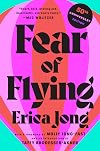
Reading Erica Jong’s Fear of Flying, there were times when I thought to myself this is me! This is how I feel! This is what I think! Finally, a female protagonist who’s reclaiming the word “slut!” Long before Lisbeth Salander blazed her own sexual trail and her own moral code, accepting no alternatives, there was Isadora Zelda White Stollerman Wing.
Historically speaking, men have had to suffer through very few social changes in terms of their sexual standing. With a show more very few exceptions (namely a couple of tribes in Africa), men never had to contest their place as head of the family, or their superiority in the realms of physical strength, virility, and even intelligence. Women, on the other hand, have had a much rougher go of it. Even as recently as the late nineteenth century, women only accounted for 15% of the total workforce in the U.S. In the beginning of the twentieth century, women were still considered the “keepers of morality”, effectively giving men free rein to develop their sexual identity, while the women were expected to keep their virginity until they married. Any woman who failed to do so became a pariah, a poster child for sexual looseness, little better than a prostitute. “It is heresy in America to embrace any way of life except as half a couple. Solitude is un-American. It may be condoned in a man….but a woman is always presumed to be alone as a result of abandonment, not choice. And she is treated that way: as a pariah” (10). Men seemingly became more manly with each notch on their belts, yet women became less than women, almost monsters, if they followed the same path. Over a hundred years later, in a new millennium, where women can vote and even be president, how much have things really changed? What happens when a woman follows her sexual desires, straying outside the bounds of traditional marriage and social expectations? What becomes of a woman who is, to use a term that’s been used frequently from Shakespeare to 50 Cent, a slut?
In this novel, which, when it came out in 1973, became an instant controversy because of it’s blatant female sexuality, Isadora Wing finds herself choosing between her husband and her “zipless fuck.”
The zipless fuck was more than a fuck. It was a platonic ideal. Zipless because when you came together zippers fell away like rose petals, underwear blew off in one breath like dandelion fluff. Tongues intertwined and turned liquid….For the true, ultimate zipless A-1 fuck, it was necessary that you never get to know the man very well….So another condition for the zipless fuck was brevity. And anonymity made it even better (11).
Does she do what society demands of her and stay with her husband? Or does she live out her own sexual fantasy and see what happens? In the first half of the novel, the reader follows Isadora as she goes back and forth between her husband, Bennett, and her lover, Adrian. This is where she started to lose me a little. What I first saw as a devil may care, sexual, independent woman seemed to shrink into a woman whose sexual waffling was really just the age-old drugstore romance-esque attempt to find “her other half.” Even though she leaves her husband and goes off on a cross-European road trip with Adrian, I had all but lost faith in Isadora.
The next part of the book is Isadora describing to Adrian her past loves, including her first marriage to Brian, who turned out to think he was Jesus Christ and had to be committed, and her romance with Charlie, the conductor with a faulty baton (double entendre intended). Thus, we come to understand two main themes in the novel: sanity v. insanity and virility v. impotency, both of which are intimately connected to Isadora’s situation.
What is sanity in a woman? Is it finding a good man, starting a monogamous relationship which culminates in marriage, popping out some babies, and having dinner on the table when the hubby gets back from his hard day of bread-winning? Or is it being independent, sleeping with whomever you please whenever you please, doing what you love for its own sake, and living the life you want?
I suddenly had a passion to be that ordinary girl. To be that good little housewife, that glorified American mother, that mascot from Mademoiselle, that matron from McCall’s, that cutie from Cosmo, that girl with the Good Housekeeping Seal tattooed on her ass and advertising jingles programmed in her brain….I had a fantasy then of myself as a happy housewife….Me in apron and gingham shirtwaist waiting on my husband and kiddies while the omnipresent TV set sings out the virtues of the American home and the American slave-wife with her tiny befuddled brains (253).
This is why I began to lose faith in Isadora. I thought she was falling into the trap of thinking that it was EASIER to be what women are told they’re supposed to be. That instead of feeling that terrible loneliness that any independent woman feels after sleeping with the wrong guy or not sleeping with anybody for a while and missing that kind of contact, that instead she should be that ideal American housewife, that life must be easier that way. And then, I was very pleasantly surprised. She turned out to be the woman I hoped she was in the beginning, only better, because now she was real. Not some new-age sexual Joan of Arc. She was me. She was any woman who dared to be more than what was expected of her:
But then the fantasy exploded. It burst like the bubble it was. I thought of all those mornings in New York when I had awakened with my husband and felt just as lonely….All those lonely moments measured out in coffee spoons, in laundry bills, in used toilet paper rolls, in dirty dishes, in broken plates, in canceled checks, in empty Scotch bottles. Marriage could be lonely too. Marriage could be desolate. All those happy housewives making breakfasts for husbands and kiddies were dreaming of running off with lovers to sleep in tents in France!….They constantly dreamed of escape. They constantly seethed with resentment. Their lives were pickled in fantasy (253).
Isadora: 1, Housewives of America: 0. Moral? We are all lonely. It’s up to us to find a way to be happy in spite of loneliness.
Next up, virility v. impotency. The ultimate male nightmare. In this story, the males get more manly when they feel that their woman is interested in another man. Adrian can do no better than half-mast whenever Isadora is practically falling over herself to have him, but becomes a sex God whenever he’s trying to convince her to run away with him. Bennett takes it even further by bursting in on Adrian and Isadora in bed together and actually fucking her while Adrian watches. Isadora’s crazy ex-husband only sleeps with her when he thinks that Isadora believes that he can no longer satisfy her, and then he practically assaults her in his violent attempt to prove himself. Men feel threatened by independent women because the idea that a woman doesn’t NEED them is terrifying. It’s impotency at its finest. Everyone likes to feel needed, but women don’t necessarily feel less female if they don’t.
I’m going to stop now. I could go on and on and on, but I won’t. I’ll just say this: it’s the classic case of woman versus society. In the end, Isadora Wing succeeds in doing what Edna Pontelier failed to do in The Awakening. She foregoes what she should do for what she desires to do. She realizes that, contrary to what she was brought up to believe and thought she did, she does not need anyone to complete her. “You did not have to apologize for wanting to own your own soul. Your soul belonged to you–for better or worse. When all was said and done, it was all you had” (288). And after a lot of wishy-washy “I love him/I love him not” in which I almost gave up on her as the feminist ideal, and instead of committing suicide a la Edna, she comes into herself, and realizes that she doesn’t need another half. She’s a whole all on her own. Women are a whole, all on their own.
For more book reviews (err... book musings?), including some Freudian feasting, visit my blog For Love and Allegory at http://www.forloveandallegory.wordpress.com/ show less
Sugar In My Bowl by various women 2 Reviews in one!
This starts when I read "The Devil At Large" by Erica Jong. It is about Henry Miller. If you don't know who either Erica Jong or Henry Miller is then there is no point in reading much beyond this. Sorry.
I was surprised to read Erica Jong taking up cudgels on behalf of Henry Miller. Yes, you read that right. It's funny how you can read something and it is not until years later that someone points out the obvious.
Henry Miller is an show more unredeemed writer. Look at all those "Top 100" book lists and you'll be lucky to see him mentioned. He is conspicuous by his absence everywhere. Except in Erica Jong's estimation. Henry Miller is unredeemed because he wrote about Sex (with a capital S). He wrote about sex in an explicit way. His novels were banned for around 30 years and are still banned is schools throughout most of the western world. Yet millions of copies of his books have been sold. "Ha!", you might say, they sold because they were full of sex. Yes, that may be true but it's not the whole story.
Erica Jong mentions that in one of the classes she teaches on English Literature her students, after working their way through the required reading list, always remark about how much sex there is in older works. She points out that it was the Victorians who gave us our current distorted view on sex. You can also work out that as soon as the Victorians removed sex from literature, an industry sprang up to meet the sudden demand for the forbidden fruit. That industry we now refer to "the porn industry".
Anyway, if you know who those two people are it is a good read. It is intelligent, honest and thought provoking. It sheds light on Henry Miller's life and work and indeed who he was outside of the infamous novels. She not only defends his stance on sex and women but also puts it in a wider context so you can understand why she sees his work and both groundbeaking and prophetic.
Interestingly both od them think that not much has changed. Henry Miller is quoted as saying that in terms of sexual attitudes and mores the western world has actually gone backwards since the sixties. Also, lets not miss how the sixties is painted by the media in these "enlightened" times.
At the end of that book was a blurb about all the other books she wrote apart from the one that made her famous. I saw a recent one called "Sugar In My Bowl" which was a collection of essays that she edited. The collection of essays is about "real women write about the best sex they ever had in their lives".
So I read that. It was NOT like the current deluge of women porn on Amazon that has phrases such as "his throbbing member" or "her hot pussy" scattered over a bare framework called a story. They do not sell in their millions over many years I might point out.
The many accounts of real or imagined sex or of no sex at all that make up this collection are both touching and illuminating. It is like a kaleidoscope of colour compared to the monotone image of sex that is broadcast via the media in all its forms. This in turn lead me to an interview by an American female journalist and a French single woman talking about sex. She says that in her world (Paris) if you date a man you have sex as soon as you can. Within an hour at the most you are on your way to either your place or his place. If the sex is good you may consider attempting a relationship or not. That was the rule. She said that when she had dated Americans they went on several dates to dinner and the movies and the man never touched her and she wondered whay was going on. She was incredulous to discover that on an "American date" the women do not have sex on the first date because that would mean they are sluts, but they may give the man a blowjob. "An unreciprocated blowjob! unbelievable", she says. She was surprised and shocked to discover this repressive attitude towards women in America.
When you take into account that the most pervasive culture in the West is the American culture and I guess if you knew who Henry Miller and Erica Jong are, then you can see that indeed we haven't come very far.
The constant repression of sex in our culture has given us the now all pervasive world of porn and its rendition of naked womens' bodies being purely for sex. Womens bodies are sexualised in advertising, movies, tv, fashion, you name it and if there is a woman's body in the picture it is sexualised. Recently, here, we saw bathing suits for young girls being advertised with padded tops and I'm talking about 8 year olds. I honestly think that in our culture it is now impossible to see nakedness or sex in anything other than that repressive context. The irony is that implied sex is used against us daily in every advertising image we are confronted with yet real sex is banned!
We take all this for granted and our moralistic christian outlook is considered normal, yet, without its constant judgemental glare how else could we even have a porn industry? And look at those christian establishments, what have we seen in them over the last few years when it comes to morality?
We have no problem understanding what happened when they introduced the prohibition of alcohol in the US. I'm optimistic that we also see the sense in the legalisation of marijuana. And yet we are blind when it comes to the repression of sex.
Ponder on this, when Cook first came to the Pacific and before those damned missionaries came, the locals would have sex anywhere at any time irrespective of who was around but would only eat in private! The locals were both shocked and outraged at the sight of the English people eating in public. While the English were shocked to see them fucking all over the place.
Sandwich anyone? show less
This starts when I read "The Devil At Large" by Erica Jong. It is about Henry Miller. If you don't know who either Erica Jong or Henry Miller is then there is no point in reading much beyond this. Sorry.
I was surprised to read Erica Jong taking up cudgels on behalf of Henry Miller. Yes, you read that right. It's funny how you can read something and it is not until years later that someone points out the obvious.
Henry Miller is an show more unredeemed writer. Look at all those "Top 100" book lists and you'll be lucky to see him mentioned. He is conspicuous by his absence everywhere. Except in Erica Jong's estimation. Henry Miller is unredeemed because he wrote about Sex (with a capital S). He wrote about sex in an explicit way. His novels were banned for around 30 years and are still banned is schools throughout most of the western world. Yet millions of copies of his books have been sold. "Ha!", you might say, they sold because they were full of sex. Yes, that may be true but it's not the whole story.
Erica Jong mentions that in one of the classes she teaches on English Literature her students, after working their way through the required reading list, always remark about how much sex there is in older works. She points out that it was the Victorians who gave us our current distorted view on sex. You can also work out that as soon as the Victorians removed sex from literature, an industry sprang up to meet the sudden demand for the forbidden fruit. That industry we now refer to "the porn industry".
Anyway, if you know who those two people are it is a good read. It is intelligent, honest and thought provoking. It sheds light on Henry Miller's life and work and indeed who he was outside of the infamous novels. She not only defends his stance on sex and women but also puts it in a wider context so you can understand why she sees his work and both groundbeaking and prophetic.
Interestingly both od them think that not much has changed. Henry Miller is quoted as saying that in terms of sexual attitudes and mores the western world has actually gone backwards since the sixties. Also, lets not miss how the sixties is painted by the media in these "enlightened" times.
At the end of that book was a blurb about all the other books she wrote apart from the one that made her famous. I saw a recent one called "Sugar In My Bowl" which was a collection of essays that she edited. The collection of essays is about "real women write about the best sex they ever had in their lives".
So I read that. It was NOT like the current deluge of women porn on Amazon that has phrases such as "his throbbing member" or "her hot pussy" scattered over a bare framework called a story. They do not sell in their millions over many years I might point out.
The many accounts of real or imagined sex or of no sex at all that make up this collection are both touching and illuminating. It is like a kaleidoscope of colour compared to the monotone image of sex that is broadcast via the media in all its forms. This in turn lead me to an interview by an American female journalist and a French single woman talking about sex. She says that in her world (Paris) if you date a man you have sex as soon as you can. Within an hour at the most you are on your way to either your place or his place. If the sex is good you may consider attempting a relationship or not. That was the rule. She said that when she had dated Americans they went on several dates to dinner and the movies and the man never touched her and she wondered whay was going on. She was incredulous to discover that on an "American date" the women do not have sex on the first date because that would mean they are sluts, but they may give the man a blowjob. "An unreciprocated blowjob! unbelievable", she says. She was surprised and shocked to discover this repressive attitude towards women in America.
When you take into account that the most pervasive culture in the West is the American culture and I guess if you knew who Henry Miller and Erica Jong are, then you can see that indeed we haven't come very far.
The constant repression of sex in our culture has given us the now all pervasive world of porn and its rendition of naked womens' bodies being purely for sex. Womens bodies are sexualised in advertising, movies, tv, fashion, you name it and if there is a woman's body in the picture it is sexualised. Recently, here, we saw bathing suits for young girls being advertised with padded tops and I'm talking about 8 year olds. I honestly think that in our culture it is now impossible to see nakedness or sex in anything other than that repressive context. The irony is that implied sex is used against us daily in every advertising image we are confronted with yet real sex is banned!
We take all this for granted and our moralistic christian outlook is considered normal, yet, without its constant judgemental glare how else could we even have a porn industry? And look at those christian establishments, what have we seen in them over the last few years when it comes to morality?
We have no problem understanding what happened when they introduced the prohibition of alcohol in the US. I'm optimistic that we also see the sense in the legalisation of marijuana. And yet we are blind when it comes to the repression of sex.
Ponder on this, when Cook first came to the Pacific and before those damned missionaries came, the locals would have sex anywhere at any time irrespective of who was around but would only eat in private! The locals were both shocked and outraged at the sight of the English people eating in public. While the English were shocked to see them fucking all over the place.
Sandwich anyone? show less
Lists
Awards
You May Also Like
Associated Authors
Statistics
- Works
- 45
- Also by
- 32
- Members
- 8,911
- Popularity
- #2,696
- Rating
- 4.1
- Reviews
- 146
- ISBNs
- 501
- Languages
- 19
- Favorited
- 17